Mastering Handmade Product Collections: The Golden Rules for Turning One-Time Buyers into Repeat Fans
yassy
Crafters!

Hello, everyone! It’s Yassy from Crafters! (・∀・)
When you pour your heart into making handcrafted items, it’s only natural to eventually think, "I want to share these with someone," or "I’d love to try selling my work!" But almost every creator stumbles upon the exact same question right at the beginning: Where and how should I actually sell my crafts?
There are so many sales channels available today. You can list items effortlessly on online platforms, put them on consignment in local Japanese boutique shops, or sell face-to-face at bustling craft fairs. However, each sales method comes with distinct advantages and disadvantages. Choosing the wrong venue can lead to the disappointing result of selling nothing at all, no matter how wonderful your creations are.
As someone who makes craft items and has bought countless handmade pieces, I can tell you with certainty: the ideal sales path tailored to your craft genre and creative lifestyle already exists!
In this guide, we will thoroughly compare the six main methods for selling handmade items in Japan, breaking down their features, commission fees, key pitfalls, and the ultimate roadmap for beginners to succeed without failure.
Selling methods generally fall into two broad categories: Online Sales and In-Person / Physical Retail Sales. Broken down further, there are six main avenues:
You don't have to restrict yourself to just one channel forever. However, if a beginner tries to tackle multiple channels at once right out of the gate, inventory management and customer service will quickly fall apart. Understanding how each platform works and choosing the best starting point for your current situation is the fastest route to success.
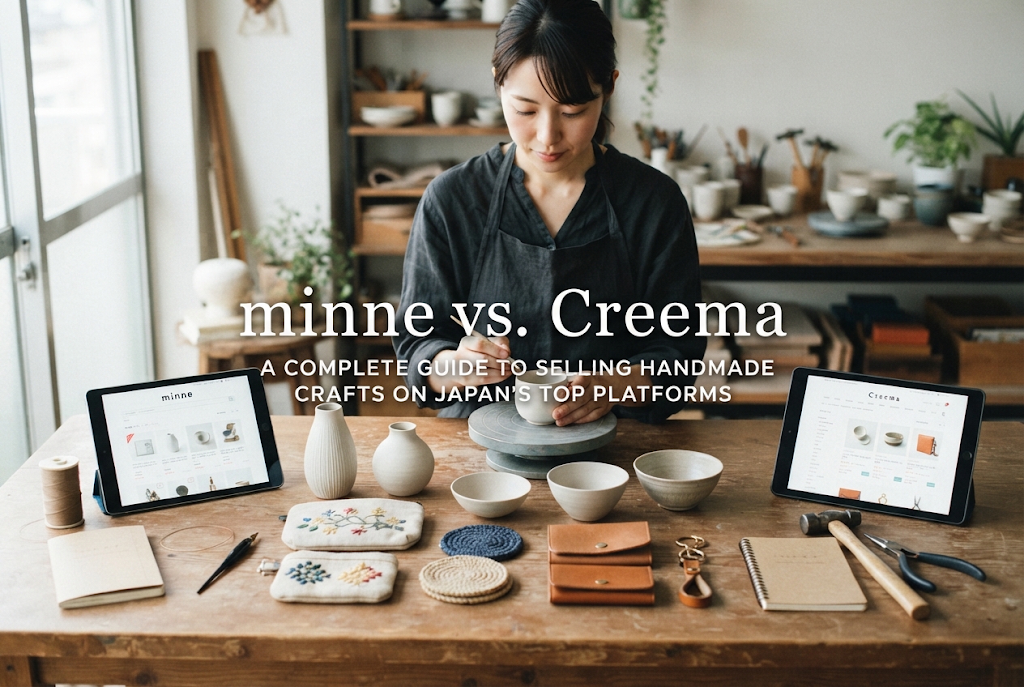
When Japanese crafters think about selling online, specialized handmade platforms like minne and Creema are usually the first that come to mind. Because these sites attract active buyers specifically looking for handcrafted goods, beginners have a great opportunity to get discovered.
The biggest advantage is that the audience consists entirely of handmade enthusiasts. Visitors appreciate the time, care, and craftsmanship behind handmade items, meaning they are willing to pay fair prices if your work is valued correctly. In addition, these platforms offer complete seller infrastructure—including item listing pages, secure payment processing, and streamlined shipping tools—allowing you to start selling immediately without technical setup.
The main downside is heavy competition. Thousands of items in similar categories are listed daily. If your photos, descriptions, and designs do not stand out, your work can easily get buried in the crowds.
Platform commissions are generally set around 10% to 12% (excluding tax) of the item price plus shipping fee. Monthly listing fees are usually free, so you incur no costs until an item actually sells, which offers great peace of mind.
While the platform brings organic visitor traffic, relying solely on site popularity isn't enough. Crafting accurate product titles and descriptions optimized for search keywords (SEO) and site search algorithms is essential to reaching potential buyers.
A frequent mistake beginners make is assuming that listing an item automatically guarantees sales. No matter how many visitors browse the site, if there is no clear path leading them to your specific shop, you won't make sales.
To succeed, optimize your shop pages with relevant search keywords and create bright, clean, high-quality photographs that capture attention instantly.
While flea market apps in Japan are widely known for second-hand items, they are also incredibly active hubs for handmade transactions.
The primary advantage is the massive user base and rapid sales speed. Because millions of users browse these apps constantly, listing a product can instantly lead to views and quick sales. Everything can be managed directly from a smartphone, making it the easiest way to start.
The main drawback is that users are frequently looking for lower prices. Price negotiations are common, making it harder to sell intricate, high-end, or high-priced items that take hours to craft.
The golden rule on flea market apps is never to give in easily to excessive discount requests. Lowering prices carelessly leads to working hard for negligible profit.
Instead of discounting individual items, offer bundle discounts or focus on affordable, everyday items that appeal to casual shoppers—such as daily accessories, fabric pouches, or kids' craft items.
E-commerce shop builders like BASE or STORES allow you to build your own dedicated online storefront, creating an independent brand experience without competing directly alongside other creators on the same screen.
The greatest advantage is complete creative control over your brand's image. You can customize design layouts freely, cultivate repeat customers, and price higher-end items confidently. You also maintain access to your customer data, enabling direct newsletter marketing and loyalty incentives.
The downside is that initial store traffic is essentially zero. Because the store builder does not bring built-in marketplace shoppers, no one will visit unless you drive traffic yourself via social media or a blog.
To succeed with a standalone shop, active social media marketing is essential. Sharing your crafting process and brand story on platforms like Instagram builds a dedicated fanbase eager to click your store link and purchase.
While transaction fees are lower—typically around 3% to 6%—the time and effort required to attract shoppers are significantly higher.
This method involves renting space in handmade boutiques, craft stores, or shop display boxes ("rental boxes") in Japan, where store staff handle day-to-day sales on your behalf.
The best part of consignment is letting customers see, feel, and inspect your physical products. Textures, weight, color variations, and craftsmanship details that online photos cannot fully convey are immediately obvious to shoppers. Plus, your products sell automatically while the store is open, even when you aren't there.
The drawback comes from fixed expenses and higher sales commissions. Monthly box rental fees usually run a few thousand yen regardless of sales, and shop commissions can range from 20% to 50% of the sale price.
Consignment requires careful financial planning. For instance, with a 30% commission, selling a ¥1,000 item leaves you with ¥700. After deducting material costs and monthly space rental fees, profits can vanish quickly if sales volume is low.
Price your items to account for commissions, and design eye-catching, vertical 3D displays within your assigned space to maximize visibility.
Renting a booth at local community craft markets or large-scale Japanese craft expos allows you to display and sell your items face-to-face.
The highlight of real events is hearing direct feedback from customers. Hearing real-time reactions like "This is so cute!" or "This looks so practical!" boosts creative motivation immensely. Engaging in friendly conversation builds loyal brand fans, and you can potentially sell dozens or hundreds of items in a single day.
On the flip side, upfront costs for booth rentals, transportation, and display equipment can be substantial, alongside the physical effort required for setup. Bad weather can also impact crowd turnout significantly.
Local community markets may charge booth fees between ¥2,000 and ¥5,000, while major regional craft events can cost ¥10,000 to ¥30,000 or more. Set target sales goals that comfortably cover booth fees, travel, and packaging expenses.
On event day, warmly greeting visitors and sharing the story behind your materials and crafting techniques dramatically increases sales compared to simply waiting quietly in your booth.
This approach involves posting your work on platforms like Instagram or X and handling transactions directly with buyers through direct messages (DMs) or simple payment links.
The main advantage is eliminating platform commission fees almost entirely. Direct communication fosters strong, personal relationships with buyers. It is also ideal for custom orders or limited one-of-a-kind releases.
The drawback is handling all transaction, payment, and shipping risks personally without platform mediation. If a payment is delayed or an item arrives damaged, you must resolve the issue yourself.
When selling directly via social media, clearly state your shop rules, payment options, and delivery timelines upfront on pinned posts or profile highlights. In Japan, providing standard seller identification transparency in line with commercial transaction guidelines helps reassure buyers who might hesitate to transfer funds to personal accounts.
Here is a quick overview comparing costs, commissions, traffic difficulty, and target audiences for all six options:
As this chart illustrates, no single sales method is perfect across every category. Channels with low commission fees usually require high marketing effort, whereas channels with built-in traffic often come with higher fees or tougher price competition.
If I were starting over today as a new craft creator, here is the exact step-by-step roadmap I would follow to minimize risk and build steady sales:
Start on risk-free flea market apps like Mercari. The main goal isn't massive profit right away, but gaining the practical experience of turning your handmade work into income and collecting positive buyer reviews. You'll master packaging, shipping routines, and customer communication risk-free.
Once comfortable with packing and shipping, launch your shop on dedicated craft sites like minne or Creema. Use feedback and sales data from Step 1 to refine your best-sellers, take bright professional photos, and treat this shop as your brand's official online catalog.
Alongside listing products on marketplace sites, start posting behind-the-scenes videos and finished item photos on Instagram. Use relevant hashtags and place your main shop link clearly in your profile bio.
When your monthly sales on marketplace sites become steady and your social media following grows, expand into lower-fee standalone e-commerce sites or book booths at live craft fairs to connect directly with your audience.
Avoid jumping straight to expensive consignment spaces or standalone online shops at the very start, as lack of immediate traffic can be discouraging.
If you're still undecided, ask yourself these three questions:
Q1: Can you commit to posting consistently on social media?・YES: You are well-suited for Standalone E-commerce or Direct Social Media Sales.・NO: Stick with Handmade Marketplaces, Flea Apps, or Consignment Shops with built-in shoppers.
Q2: Do you enjoy chatting face-to-face with customers?・YES: In-Person Craft Fairs and Markets will be your strong suit.・NO: Focus entirely on Online Sales channels.
Q3: What is your average item price range?・Under ¥1,000 (Casual budget items): Flea market apps are ideal.・¥2,000 to ¥8,000 (Detailed craft items): Specialized handmade marketplaces are ideal.・¥10,000+ (High-end or intricate one-of-a-kind items): Standalone e-commerce, direct SNS sales, or boutique gallery consignments are ideal.
Every craft selling method serves a specific purpose in your journey. Flea market apps give you speed and simplicity; specialized handmade marketplaces connect you with craft enthusiasts; standalone web shops let you build your distinct brand; consignment shops give physical presence; craft fairs bring unforgettable face-to-face joy; and direct social media sales build intimate connection with fans.
The key is simply to take a comfortable first step today. You don't need a flawless shop on day one. Pick one platform, list your first piece, and experience the thrill of connecting with your very first customer!
I truly hope the items you create with so much passion find their way into the hands of someone who will cherish them!
If you found this article helpful, sharing it with fellow crafters on social media would mean the world to me. See you in the next article! This was Yassy from Crafters!

For example, if you are looking for articles about mizuhiki, try searching for "mizuhiki"; if you are interested in tools, try keywords like "nippers" or "pliers."
