How to Choose a Japanese Handmade Shop Name: Golden Naming Rules & Step-by-Step Guide
yassy
Crafters!

Hello, everyone! This is Yassy from Crafters! (・∀・)
The world of handmade crafts is truly magical. Personally, I love making things with my own hands, but I also adore looking at wonderful creations from other makers, purchasing them, and wearing or displaying them in my home. Handmade brands, packed with warmth and a maker's unique passion, hold a special value that mass-produced commercial items simply cannot match.
However, despite crafting amazing items, an endless number of handmade brands stop their activities after just a few short years. It is incredibly sad and wasteful when a brand launched with so much passion disappears. What you need to run a brand for the long haul isn't just exceptional artistic taste or technical skill. Whether you succeed or fail comes down to whether you have the right mindset and operational framework to keep running for years to come.
In this guide, I will share an in-depth breakdown of the mindsets and practical methods needed to transform your beloved handmade brand into one that remains cherished for 5, 10, or more years. I'll share these fundamental rules without holding anything back, helping you stay active and fulfilled without burning out along the way.
First, let's face a sobering reality: over 80% of people who start as handmade creators stop or pause their activities within three years. Why do so many brands launched with intense passion fail to last? The reasons are very clear.
The biggest reason is starting out driven purely by passion ("love for crafting") without designing a business model that is sustainable over time. In the beginning, crafting itself is fun, and the joy of making a sale serves as your top motivation. However, as business takes off, you become overwhelmed by a massive amount of non-crafting tasks.
Specifically, you have to handle material sourcing, product photography, writing descriptions, social media promotion, customer messaging, packaging, shipping, and managing finances—all by yourself. When you squeeze your time and physical stamina to their absolute limits, you lose the mental space to enjoy creating. Then, one day, you suddenly break down.
The most common trap beginners fall into is believing that if sales grow, all their problems will be solved. This is a huge mistake. If your order volume increases while you still have unreasonable pricing or a craft style that takes far too much effort, every sale makes your working conditions worse. You end up trapped in a negative loop of high labor and low profit margins.
Even if revenue goes up, keeping up a routine where you sacrifice sleep to keep making items while earning barely any profit cannot last long. The difference between a brand that lasts and one that vanishes isn't the size of its revenue, but whether it has a sustainable system in place.
Makers who maintain their brands over many years all share a strong core identity without exception. Brands without an anchor get pulled around by trends and other people's opinions, eventually getting lost and losing their foothold.
To build an unshakeable core, you need to find the sweet spot where the following three elements overlap:
The area where these three overlap is the "Sustainability Zone" where your brand can survive long-term. Even if there is high demand, you must not force yourself to continuously make things you don't enjoy creating. If an item doesn't excite you while making it, the crafting process becomes painful, ultimately leading to the end of your brand.
If there's one thing I insist on prioritizing in brand management, it's asking yourself: "Is this an item I can realistically keep making?" It is dangerous to jump on designs going viral on social media or temporarily trendy materials. Running a business style that chases trends forces you to constantly spot new fads and produce work at high speed, causing rapid exhaustion.
Establish designs and concepts that you will still love and want to craft 5 or 10 years from now. Building your own unique worldview that doesn't fade as times change is the only path to creating a long-lasting brand.
The ultimate enemy of long-term handmade activities is burnout. Your time and energy are limited resources. You must thoroughly manage your time to allocate these resources wisely.
The three main factors putting pressure on creators are inefficient crafting processes, unorganized order taking, and vague boundaries between work and personal life. You need to improve these step by step.
Finishing a product from scratch one item at a time is very inefficient. Professional makers who sustain their craft for years always organize their work into batch processing, completing specific tasks in groups.
For example, you can assign different tasks to specific days or time slots:
By standardizing your tasks like this, it becomes much easier to stay focused, and your workflow speed improves dramatically. Higher production efficiency means creating more pieces in the same amount of time, giving you valuable mental space.
Many handmade creators spend 24/7, 365 days a year thinking about crafting or social media, even on weekends and late at night. This approach is guaranteed not to last.
Set clear rules in advance, such as making every Wednesday and Sunday complete days off. State these off days clearly in your shop profile, and have the courage not to reply to inquiries received on days off until the next business day. Customers won't be upset; instead, they respect and trust shops that operate under proper, professional rules.
Additionally, if you are flooded with orders, don't try to accept them all and risk crashing. Set intake limits by capping order quantities or temporarily closing your shop periodically. Taking orders beyond your capacity leads to lower quality and shipping delays, which damages your brand's trust.
To keep a brand going long-term, financial health is essential. If you don't build a profitable business model and treat it merely as volunteer work or an extension of a hobby, your operating funds will run dry, making it impossible to continue.
The biggest cause of failure among beginners is improper pricing. Setting low prices under the simple assumption that "cheaper items sell better" results in losing money on every sale or working under grueling conditions for an equivalent hourly wage of just a few dozen yen.
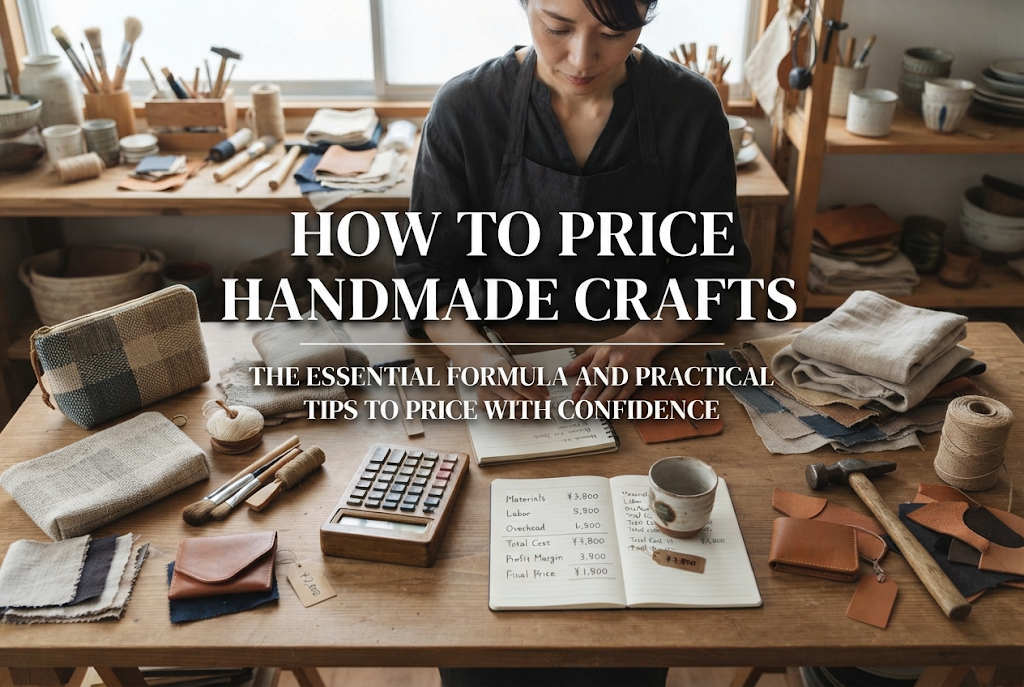
As a rule of thumb, sales prices for handmade items should be calculated using the following basic formula:
Sales Price = (Material Costs + Labor Costs) ÷ (1 − Target Profit Margin)
When calculating labor costs, set a fair hourly wage based on your skills (at the very least, higher than minimum wage). Furthermore, always add extra to cover packaging supplies, platform selling fees, fixed costs like electricity and internet, and a profit margin reserved for future brand investment.
Only when you secure proper profits can you make investments in your future, such as buying new tools, sourcing higher-quality materials, or participating in craft exhibitions. Profit is the fuel that keeps a maker's passion burning and the capital needed to grow the brand.
Holding onto excess materials or unsold finished stock is a major culprit behind bad cash flow. It's easy to buy large amounts of rare parts or cute fabrics when you see them, but unused inventory sitting in storage is just frozen cash.
The rule of thumb for sourcing is to purchase what you need, when you need it. When introducing new products, start with small test batches. Only produce more of the items that receive a strong response. Adopting a made-to-order (pre-order) model is also an extremely effective way to eliminate inventory risk and stabilize your cash flow.
The foundation supporting your brand over the long run isn't brand-new buyers, but loyal, repeat customers who purchase from you time and time again. A business strategy that constantly relies on bringing in new customers requires massive effort and advertising expenses, which severely drains a creator's energy.
On the other hand, if you have a reliable base of fans who deeply understand your brand's worldview and value, you don't need to put excessive effort into constant customer acquisition, allowing your business operations to stabilize significantly.
The moment someone buys your product isn't the finish line—it's the starting line of your relationship with that fan. Providing an unforgettable, delightful experience to buyers is the key to turning them into repeat customers.
Make sure to implement the following practices:
Speaking from my own experience, I have bought many handmade pieces over the years. Beyond how wonderful the items were, I've frequently become a lifelong fan of a brand because I was so touched by the gorgeous packaging and heartfelt message that arrived with my order. When you offer a delightful experience that makes people think, "I'm so glad I bought this!", customers will always return to your brand.
Building a fan base doesn't mean you have to project a flawless, ultra-polished image. Share human posts that communicate the backstory behind your work, the feelings poured into your designs, your trial-and-error process, and even occasional failure stories or everyday thoughts.
Customers aren't just buying an object; they are connecting with the story behind it, as well as your passion and personality as a maker. When people find charm in who you are as a person, you won't get caught up in price wars or competition from similar products.
As you run a brand over time, you will occasionally encounter unreasonable complaints or customers making excessive demands. It's not uncommon for makers to be deeply hurt by a single harsh comment and quit crafting altogether. Building mental safeguards in advance is essential to protect yourself from emotional burnout.
The best way to prevent trouble before it happens is to have clear store policies and FAQs in place (such as commercial terms and standard policies):
Furthermore, you do not need to give in to unreasonable demands. Trying to make every single person happy dilutes your brand's core values and places a burden on the true fans who deserve your genuine care. Maintain the strength to politely but firmly decline unreasonable requests to protect your brand.
A maker's lifestyle changes over time due to various life events—marriage, pregnancy, childbirth, childcare, career changes, or caring for family members. You don't need to give up your brand just because your environment changes. Makers who stick around for the long run flexibly adjust their workload and style to fit their current life stage.
The key is to let go of the fixed mindset that you must operate at 100% full speed at all times. When your life priorities shift, simply adjust the scale and pace of your brand.
If your available time becomes limited, you can keep your brand alive through simple adaptations:
If you need to take a temporary break, post a positive update on social media like: "I am taking a temporary break from crafting until [Month] for childcare. I will share updates here when I reopen!" Your fans will happily look forward to your return. Keeping a small flame burning steadily without letting it go out completely is the ultimate path to growing a strong, deeply loved brand.
Here is a quick checklist to help you evaluate whether your brand is set up for long-term sustainability. Review this regularly to fine-tune your operations:
You don't need to make every item perfect right away. By improving missing pieces one at a time, your brand will steadily evolve into a resilient, sustainable business.
The essence of running a long-lasting handmade brand is not sacrificing yourself. When you enjoy crafting, stay healthy in mind and body, and feel fulfilled, that positive energy flows directly into your creations, bringing genuine happiness to the customers who receive them.
You don't need to aim for explosive, short-term sales spikes. Protect your own pace, build your fan base step by step, and savor the joy of making things with your hands. Continuing steadily over time is a unique value in itself—and the greatest form of success.
I am cheering you on from the bottom of my heart, hoping your brand continues to be loved by many and enriches your life for years to come!
If you found this article helpful, I'd be so grateful if you shared it with your friends on social media! See you in the next article! This was Yassy from Crafters!

For example, if you are looking for articles about mizuhiki, try searching for "mizuhiki"; if you are interested in tools, try keywords like "nippers" or "pliers."
