Batch Crafting Without Compromise: How to Build an Efficient Production Workflow for Handmade Goods
yassy
Crafters!

Hello crafters, it's Yassy! (・∀・)
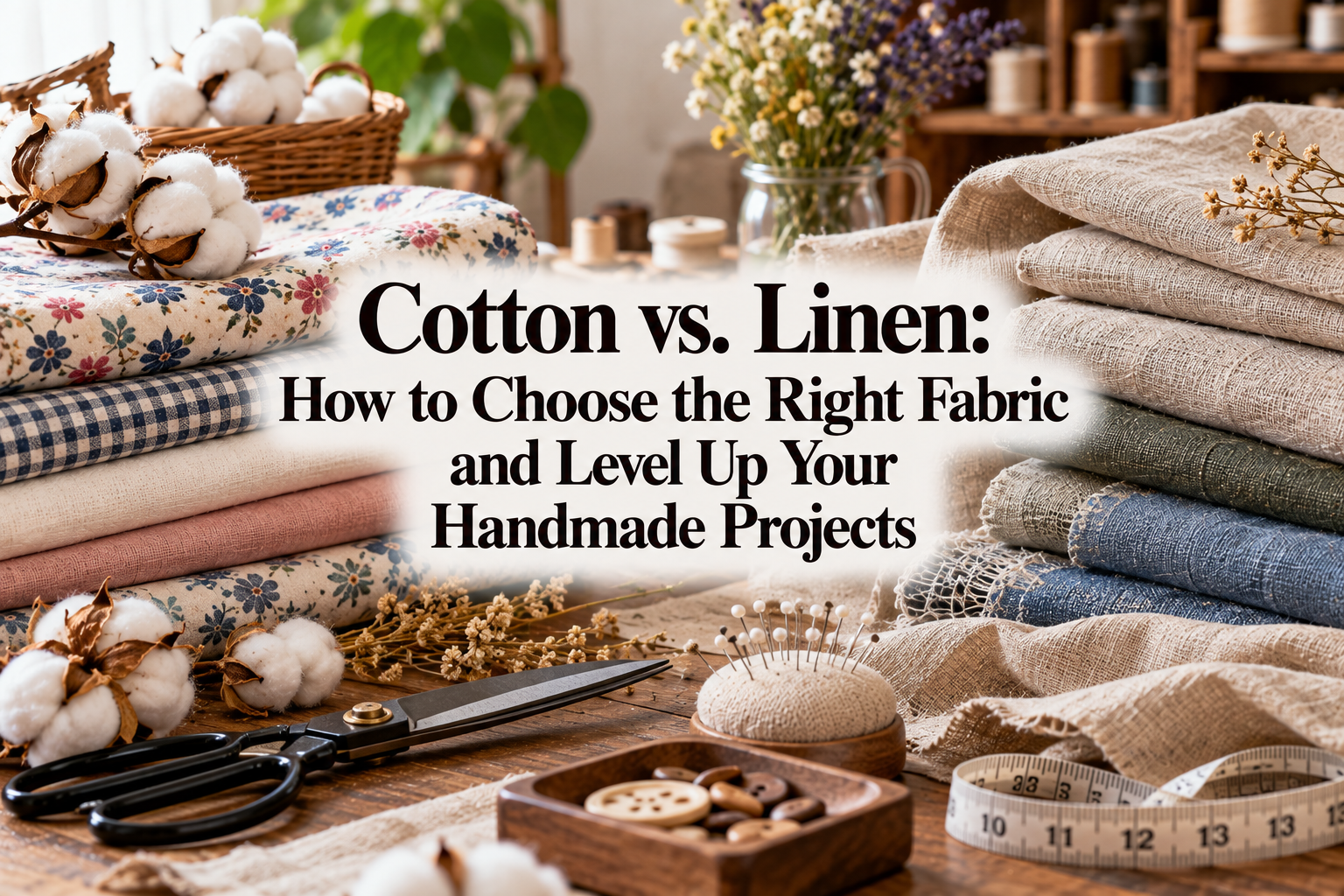
When you start making sewn projects, the very first challenge you encounter is choosing the right fabric. Among all the textiles out there, the two undisputed heavyweights in the handmade world are cotton and linen.
Browse any fabric store or online shop, and you will see shelves packed with charming, gorgeous textiles. But if you choose a fabric solely based on cute patterns or appealing colors, you may run into frustrating problems when you actually sit down at the sewing machine—or worse, after your finished piece is washed for the first time.
While cotton and linen both share a warm, natural aesthetic, their fiber properties, handling at the machine, durability, and care requirements are completely different. Knowing how to tell them apart and choosing the right one for each project is the single most effective way to dramatically elevate the quality of your handmade items.
Over the years, I have worked with countless bolts of cotton and linen, making everything from daily accessories to garment pieces. Because I truly love making, admiring, and buying fabrics, I want to share this comprehensive guide breaking down the exact differences between cotton and linen, along with foolproof tips for using each one successfully!
Let us begin by exploring cotton—a timeless favorite among crafters ranging from complete beginners to seasoned pros. Cotton is a natural fiber harvested from the seed pods (cotton bolls) of plants belonging to the mallow family (genus Gossypium).
The defining strength of cotton lies in its soft, pillowy texture and incredible ease of handling. Because the fiber ends are naturally rounded, cotton feels completely smooth against the skin with zero prickliness, making it the safest choice for baby goods and items intended for sensitive skin.
When it comes to sewing, cotton offers exceptional stability. It holds its shape without stretching unpredictably, and sewing machine needles glide through it with ease. Because the fabric resists shifting and slipping under the presser foot, even basic domestic sewing machines can stitch it smoothly without hassle.
Furthermore, cotton takes dye exceptionally well. Beyond solid colors, you will find cotton in a dizzying array of styles: playful graphic prints, classic florals, intricate Scandinavian-inspired patterns, and more. Being able to find a print that matches your creative vision with pinpoint precision is one of cotton's greatest perks.
However, cotton does have distinct vulnerabilities: shrinkage in water and post-wash creasing.
Cotton fibers swell when they absorb moisture, and as they dry, they pull tightly together. If you skip proper pre-washing and grain straightening (known as mizutoshi and jinaoshi in Japanese sewing practice) before cutting, your finished project will shrink noticeably after its first wash, distorting the entire silhouette. Whenever you sew with cotton, treat fabric prep as an essential step.
Next, let us look at linen, a perennial favorite among makers who gravitate toward refined, natural textiles. Here is a crucial point every crafter should know: while various plant fibers are often grouped loosely under terms like "hemp" or "bast fibers" (in Japanese, collectively called asa), flax-based linen is by far the most suitable for everyday handmade sewing.
The coarse, stiff fibers used for utility sacks and rough cords are typically jute or hemp. High-quality sewing fabrics labeled as linen—such as French linen—are woven from flax fibers. Among all bast fibers, flax linen is the softest, most pliable, and most luxurious.
Linen's unique charm comes from its distinctive crisp hand (often described in Japan as shari-kan), gentle body, and subtle natural luster. Because the hollow interior of flax fibers contains tiny air pockets, linen boasts roughly twice the moisture absorbency and drying speed of cotton. It wicks away perspiration and dries almost instantly, making it the ideal choice for warm-weather apparel and kitchen textiles.
What makes linen truly special is that it gets better with age. When new, linen can feel slightly stiff, but with repeated washing and use, the fibers loosen, soften, and develop a gorgeous, lived-in drape that feels wonderful in your hands. Instead of wearing out over time, it gains personality and charm—a quality unique to linen.
On the flip side, linen requires a bit more technique for beginners. Its looser weave means cut edges fray quickly, and its natural crispness makes it prone to shifting off-grain during cutting. It also forms sharp folds easily and retains deep creases unless ironed damp. Without an understanding of these quirks, you risk cutting off-grain and ending up with twisted seams.
To help you pick the right fabric without hesitation at the craft shop, let us compare cotton and linen across six essential categories.
Cotton feels plush, soft, and warm to the touch. Because it is virtually non-irritating, it works wonderfully for items worn close to the skin, such as masks, inner layers, and infant apparel. Linen, by contrast, feels cool, dry, and crisp against the skin. It does not cling in humid conditions, providing unparalleled breathability for summer garments, pillowcases, and bed linens.
For beginners, cotton is substantially easier to sew. Its dense, stable weave keeps pinned layers firmly in place, allowing for neat, predictable stitching. Linen can skew off-grain depending on its weave, and raw edges fray rapidly, requiring prompt and careful edge-finishing with a serger or zigzag stitch.
Both fibers absorb water well, but linen easily wins in drying speed. Because it dries so rapidly, it discourages bacterial growth and stays fresh longer. For tea towels and kitchen cloths, linen is clearly superior from a hygiene standpoint.
Linen is the strongest natural textile fiber available. Interestingly, its tensile strength increases by roughly 60% when wet. This allows it to withstand frequent, vigorous washing without deteriorating, giving everyday items like aprons, market totes, and utility bags exceptional longevity. Cotton is plenty durable for general use, but linen handles hard, repeated laundering far better.
Cotton typically looks its crispest when brand new; over time, repeated laundering gradually leads to surface fuzzing and color fading. Linen, on the other hand, improves the more it is washed and handled. It relaxes into a supple, subtly textured fabric with a soft luster. If you want a piece that develops character over years of use, linen is the hands-down choice.
Generally speaking, cotton is widely accessible and affordable, available in countless varieties both online and in brick-and-mortar shops. Cultivating and processing flax into fine linen is far more labor-intensive, making linen two to three times more expensive than standard cotton. When working on budget-friendly multi-piece batches, cotton is ideal; when crafting a special, elevated statement piece, linen is well worth the investment.
With those characteristics in mind, here is how I decide whether to reach for cotton or linen based on what I am making.
If you want to showcase playful printed motifs or add precise embroidery, cotton is your best option. Its dimensional stability prevents warping, making zipper installation and lining assembly clean and stress-free.
If you prefer an understated, sophisticated tote, market bag, or minimalist drawstring pouch, opt for medium- to heavy-weight linen. Linen's relaxed wrinkles and elegant drape lend effortless luxury even to simple unlined bags made from sturdy linen canvas.
For kitchen and dining projects, my absolute recommendation is linen. Its rapid drying speed, high absorbency, and increased wet strength make it unbeatable for wiping damp hands or taking repeated washes after cooking splatters. Better yet, linen aprons look stylish even when air-dried without ironing, turning everyday chores into a pleasure.
For baby gear and children's accessories, stick strictly to cotton. Cotton double gauze and soft cotton twill cushion delicate skin gently. Lower-grade linen can feel scratchy or stiff initially, so cotton is the safest and most reliable way to avoid skin irritation.
When crafting warm-weather garments where breathability and cooling comfort come first, linen reigns supreme. It allows air to circulate freely and will not stick to clammy skin. A breezy linen dress keeps a beautiful, relaxed silhouette without clinging awkwardly to the body.
If you love the ease and value of cotton but crave the breezy, natural texture of linen, there is an ideal middle ground: cotton-linen blends (known as men-asa in Japanese sewing stores).
Cotton-linen is a hybrid textile woven with both cotton and flax yarns. Common blend ratios include 45% cotton / 55% linen, or 80% cotton / 20% linen.
This hybrid balances cotton's easy handling, smooth needle penetration, and softness with linen's slubby texture, airy hand, and subtle crispness. It is more budget-friendly than 100% linen and far less prone to shifting while you cut, making it delightfully beginner-friendly.
If you want to create linen-style pieces but feel intimidated by pure linen, start with a cotton-linen blend first. It serves as a gentle stepping stone before graduating to 100% pure linen.
One of the most common pitfalls for beginning crafters is cutting and sewing brand-new yardage straight off the bolt.
Because cotton and linen are natural fibers woven under mechanical tension, they contract significantly once exposed to water. If you sew a project without pre-washing, the finished item will shrink unevenly upon its first wash, pulling your zipper into ripples and distorting your seams. Before cutting, you must always perform mizutoshi (water soaking) and jinaoshi (grain straightening).
The pre-wash process is straightforward, but timing varies between cotton and linen:
Taking the time for this step ensures your cuts remain true to measurement and keeps your finished piece completely free of post-wash warping. It may feel like an extra chore, but this step is what separates amateur sewing from professional craftwork.
Using the right machine needle size and thread weight is just as vital as selecting the fabric itself. The wrong pairing can lead to skipped stitches, fabric snags, or thread breakage.
For standard medium-weight cotton (such as sheeting, broadcloth, or cotton oxford), the standard pairing is:
If you are working with lightweight cotton lawns or gauzes, downsize to a size 9 (65/9) needle and size 90 thread. For heavy cotton canvas or duck, move up to a size 14 (90/14) needle and size 30–50 thread.
Because linen yarns are naturally thicker and slightly irregular, using an undersized needle can cause thread friction and skipped stitches over slubs. Even for light-to-medium linen, using a slightly sturdier needle helps:
If you are unsure with linen, switching to a size 14 needle helps power through thick slubs and firm weaves without bending needles or skipping stitches.
Finally, let us address two common traps beginner sewists face when working with these textiles, along with reliable fixes.
This is a widespread misconception often caused by handling cheap, low-grade linen or starched display yardage. High-grade French linen or fabrics labeled as "pre-washed" or "tumble-softened" feel wonderfully supple right from the start. Look for fabrics marked as "soft-washed" or "garment-washed" to enjoy that relaxed, skin-friendly hand immediately.
Because linen has a looser weave, cutting along a printed line or an eye-balled mark with shears often cuts diagonally across the weave. When you assemble pieces cut off-grain, the finished garment or bag will twist out of shape after laundering.
Here is an indispensable trick: snip about 1 cm into the selvage edge at your cutting point, then carefully grip a single weft (or warp) thread with tweezers and gently pull it out completely. Pulling that thread leaves a subtle, straight gap running all the way across the cloth. Simply cut along that empty channel with your shears to achieve a 100% straight, true-to-grain cut every single time!
Both cotton and linen offer remarkable characteristics that can transform your sewing projects:
When you select fabric with a clear understanding of its unique traits, your sewing projects will look more polished, hold up longer, and feel far more satisfying to create. Have fun exploring different weaves and creating pieces you will cherish for years to come!

For example, if you are looking for articles about mizuhiki, try searching for "mizuhiki"; if you are interested in tools, try keywords like "nippers" or "pliers."
