Essential Guide to Needle Threaders and Thimbles for Hand Sewing, Embroidery, and Sashiko
yassy
Crafters!

Hello, this is Yassy from Crafters! (・∀・)
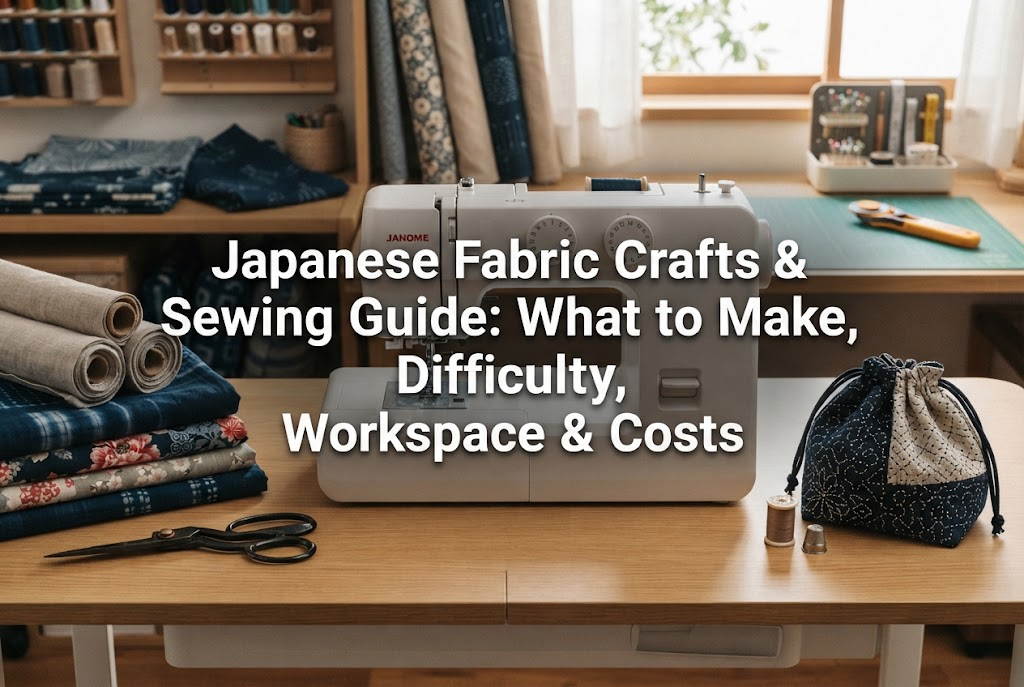
When it comes to the ultimate staple of the handmade world, nothing is more accessible yet remarkably deep than fabric crafts and sewing. Personally, I love browsing through various textile shops, collecting my favorite fabrics to turn into creations myself, and buying and using beautiful items made by talented sewing artists. I love every single part of it!
Fabric as a material can transform from a single flat sheet into an infinite variety of forms—3D bags, clothing, and adorable accessories. Choosing fabrics with your favorite colors, patterns, and textures, and crafting practical everyday items with your own hands is the true joy unique to sewing.
However, beginners who are thinking about starting fabric crafts often come to me with many questions and concerns: "Can I start without a sewing machine?" "Is it difficult to wash and care for handmade fabric items?" "Can I work in a small room with limited space?" "How much money will it cost to gather all the tools and materials?"
So today, as a writer for a comprehensive handmade craft media, I will share the charm of fabric crafts and sewing in detail while fully explaining everything you need to know—from project ideas and fabric care to difficulty levels, required workspace, and initial costs! After reading this guide, all your sewing doubts will be cleared, and you will undoubtedly want to pick out some fabric and start creating right away.
The main reason fabric crafts and sewing maintain unshakable popularity in the handmade world lies in their overwhelming practical utility and design freedom. Not only can you use what you make in your daily life, but they also make wonderful, deeply appreciated gifts for family and friends.
There are countless types of textiles available, such as cotton, linen, nylon, canvas, and wool. Even when making a simple pouch of the same shape, changing the fabric material or pattern allows you to freely switch the style between natural, pop, or elegant. This joy of selecting materials is the very first step that draws us into the world of fabric crafts.
Furthermore, fabric items are directly tied to daily living. Bags you carry every day, cushion covers that brighten your room, aprons, and clothing—you can create essential lifestyle items in your ideal size and design. The ability to give 100% physical form to thoughts like "Store-bought items don't fit quite right" or "I want an accessory in my exact favorite color" is the ultimate appeal of sewing.
The world of fabric crafts combines the fun of looking, buying, and making at a high level. With just a single hand-sewing needle, thread, and one piece of your favorite fabric, you can step into this wonderful world starting today.
To answer the question, "What specifically can I make when I start sewing?"—projects range widely from small, beginner-friendly accessories to authentic garments for advanced crafters. Here is a breakdown of representative items categorized by difficulty and purpose.
The best first step in sewing is making small fabric items using straight seams. Because the structure is simple, cutting and stitching take minimal effort, giving you a quick sense of accomplishment.
These items can easily be tackled either by hand-sewing or machine-sewing. Starting with fabric scraps or small cuts to make small goods is the fastest route to success.
Interior accents that easily change a room's mood and kitchen tools that make daily chores enjoyable are also popular categories in sewing.
Matching fabric colors and textures with your room's interior allows you to create a stylish, cohesive space. Crafting items that combine practicality and decoration is a major draw of interior sewing.
As a step up, making wearable garments and bags for outings brings special excitement.
As you can see, sewing projects exist for every scene of daily life. Gradually expanding your repertoire according to your skill level is what makes sewing so enjoyable.
People often ask, "Isn't washing and maintaining fabric items difficult? Won't they shrink or lose their shape?" To put it simply, if you correctly understand fabric characteristics and do proper pre-sewing preparation, care is not difficult at all. Here are the essential rules for making your projects last long.
In fabric crafts and sewing, an indispensable step is mizudoshi (soaking fabric in water prior to cutting) and jinaoshi (straightening the fabric grain). Natural fibers such as cotton and linen tend to shrink when wet. If you sew a project without pre-washing it and wash it after completion, the whole item may shrink or warp out of shape.
The correct steps for mizudoshi are as follows:
Performing this process before cutting completely prevents shrinkage and warping after completion. 100% synthetic fabrics like polyester and nylon rarely shrink, so pre-washing is unnecessary for them; however, when handling cotton or linen, always perform mizudoshi. Taking this extra moment is the line between a professional finish and a long-lasting project.
Each fabric type has suitable washing methods and ironing temperature settings. Understanding proper handling keeps your favorite creations beautiful for years.
It is crucial to keep proper laundering in mind based on your handcrafted project's fabric. Placing handmade items into a mesh laundry bag before machine washing dramatically prevents seam fraying and shape distortion.
When making bags or pouches, a common failure is that the fabric slumps over or looks worn out. The solution to this is chechaku-shin (fusible interfacing).
Fusible interfacing is a reinforcing material applied to the back of fabric using iron heat. It adds structure to lightweight fabrics, keeps bag shapes crisp, and prevents stretching around zipper attachments. If you want to create a sturdy, structured item, applying suitable interfacing to the reverse side of the fabric is an absolute rule.
The overall difficulty of fabric crafts ranges from ★☆☆☆☆ (extremely easy) to ★★★★★ (advanced technical skill), depending entirely on the project. By stepping up in the proper order, even beginners who feel intimidated by sewing can build skills smoothly without getting discouraged.
When starting out, many people wonder whether to begin with hand sewing or a machine. Here is a clear look at the difficulty and pros and cons of each.
Hand Sewing (Difficulty: ★☆☆☆☆)Hand sewing is the most accessible method—all you need are a needle, thread, and scissors to start right away. It requires no complex machine threading or mechanical operations, making the barrier to entry extremely low. Small items like coasters, stuffed charms, and small drawstring bags can be made beautifully and sturdily by hand. The downside is that stitching speed is slow, taking time for larger projects or long seams.
Machine Sewing (Difficulty: ★★☆☆☆ to ★★★☆☆)When using a sewing machine, you need to learn initial setup steps (preparing upper and lower bobbin threads, adjusting thread tension). You might feel slightly confused by machine operation at first, but once learned, you gain overwhelming speed and strong, consistent stitches. For large projects like bags, garments, or curtains, a sewing machine is essential.
My recommendation is to first make small accessories by hand to experience the joy of stitching fabric, and then introduce a sewing machine when you feel inspired to create a wider variety of items.
Here are common trouble spots beginners face and quick tricks to solve them:
1. Seams come out crookedCause: Focusing your eyes only on the tip of the needle.Solution: Instead of watching the needle tip, align the fabric edge with the machine's seam guide lines or presser foot edge, guiding the fabric smoothly to maintain that position. Placing your perspective slightly forward gives you a view of the whole line for clean, straight seams.
2. Thread tangles into a mess on the undersideCause: The upper thread is not seated properly between the tension discs, or you started sewing without lowering the presser foot.Solution: Remove both top and bottom threads completely, raise the presser foot, and rethread the upper thread from the beginning. Raising the presser foot opens the thread path properly so correct tension can be applied.
3. Difficulty sewing curvesCause: Sewing speed is too fast, or the fabric is being pulled forcibly.Solution: Reduce the machine speed to minimum. Sew a few stitches, stop with the needle down in the fabric, raise the presser foot, turn the fabric slightly, lower the foot, and continue. Taking it slow and steady is the golden rule for clean curved seams.
You don't need a huge room or a dedicated studio to sew. Here is how to secure workspace according to your project size and arrange it efficiently.
When sewing fabric items, you roughly need three main working functional areas:
Using a rotary cutter, cutting mat, and acrylic ruler will dramatically boost the accuracy and speed of straight cuts. Keep the phrase "Master cutting, master sewing" in mind!
The key difference between a beginner's work and an experienced artisan's piece lies in how frequently the iron is used. Beginners often leave ironing until the very end, but this is a big mistake.
Adopt this rule: "Sew one seam, then immediately press the seam allowance open (or to one side) with an iron.""For folded edges, press with an iron to set the crease before stitching."
Thoroughly following this "sew then iron" cycle ensures crisp, sharp seams that elevate your handmade work to store-bought quality levels.
Most machine stitching issues—tangled threads, broken threads, or puckered fabric—happen because needle and thread sizes don't match the fabric weight.
Use standard #60 sewing machine thread with a size 11 needle as your default baseline, and always switch to corresponding needle/thread sizes when handling thin or thick fabrics. Following this rule eliminates almost all thread tension headaches.
Besides making things yourself, viewing and purchasing beautiful handmade works created by talented artists is the best way to jumpstart your own technical skill and design sense!
When you purchase items from popular creators on handmade marketplaces (such as Etsy, minne, or Creema) or at craft fairs, take time to inspect the interior finishes and seam construction. You'll discover endless details: "The lining attachment is so neat!" "That's how they finished the bias tape edge!" "The tag placement is subtle yet stylish!"
Exposing yourself to excellent craftsmanship sparks endless ideas to incorporate into your own projects. Enjoying the cycle of "making, looking, and buying" is the secret to a long-lasting, deeply fulfilling craft life.
In this guide, we covered everything from basic sewing knowledge, craftable items, and material handling to difficulty levels, workspace layout, budget estimates, and pro techniques for success!
Fabric crafts and sewing are a truly charming, dream-filled craft genre where a single sheet of cloth transforms into practical items that color daily life. Starting with small hand-sewn projects like coasters or drawstring bags using fabric scraps, and gradually building your toolkit toward tote bags and garments, allows you to enjoy a lifelong hobby without frustration.
As long as you practice proper pre-washing (mizudoshi), press seams carefully with an iron, and select matching needles and threads for your fabric, the items born from your hands will become treasured pieces just as special as any store-bought product.
Why not start your wonderful sewing journey today by selecting one piece of favorite fabric at a shop?
If you enjoyed this article, sharing it with your crafting friends on social media or messaging apps would mean the world to me and keep me motivated! See you in the next article—this was Yassy from Crafters!

For example, if you are looking for articles about mizuhiki, try searching for "mizuhiki"; if you are interested in tools, try keywords like "nippers" or "pliers."
