Never Run Out of Social Media Content Ideas: A Guide for Handmade Artists
yassy
Crafters!

Hello! This is Yassy from Crafters! (・∀・)
Many creators face the same frustration: you put your heart into making wonderful handmade pieces and list them in an online shop, but hardly anyone views them. No matter how high the quality of your craft is, people won't buy if they don't know it exists. This is where combining a blog with social media becomes an essential marketing strategy.
Personally, I absolutely love making and buying handmade items, and I always find myself drawn to creators who clearly communicate the charm of their work. While the item itself must be appealing, seeing the story, dedication, and philosophy behind it dramatically accelerates how quickly someone becomes a loyal fan.
In this guide, I will explain how handmade artisans should combine blogging and social media, detailing specific approaches to build a smooth customer funnel. If you have been relying only on social media and feel stuck, or if you aren't sure how a blog fits into your craft business, please read on and put these ideas into practice!
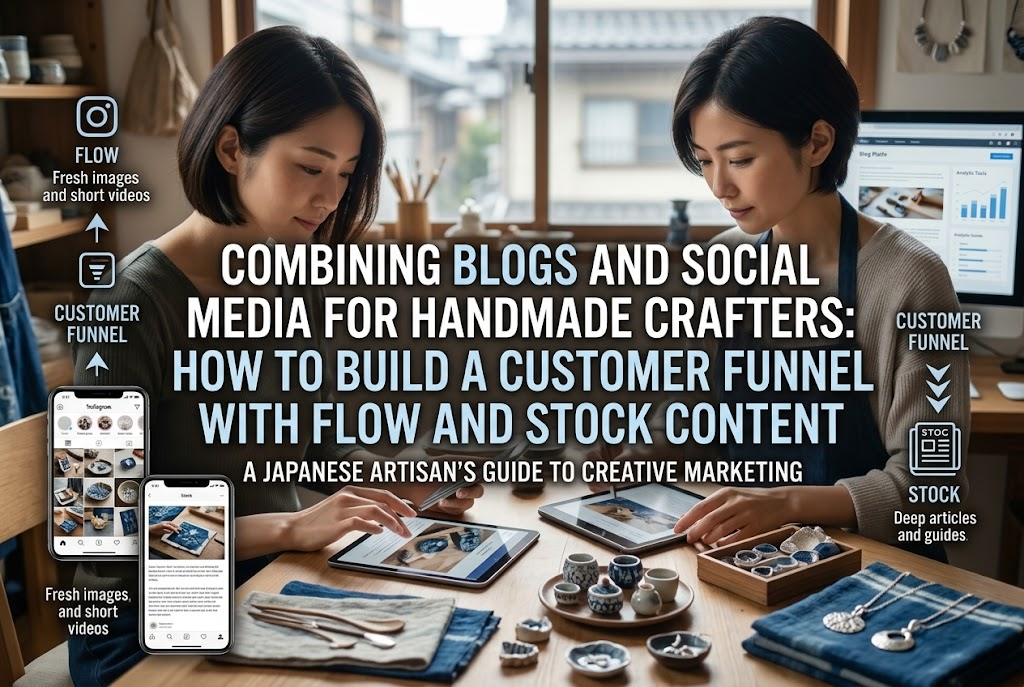
When marketing handmade items, trying to rely solely on social media or solely on a blog is a major misstep. Blogs and social networks play entirely different roles. Only when you combine them do you create a truly powerful customer acquisition engine.
Relying on just one platform creates an inevitable ceiling, no matter how hard you work. The first step toward success is understanding the fundamental differences between them.
Social media is a "flow" medium. Information moves rapidly down feeds and timelines. Posts reach many eyes the moment they are published, offering tremendous reach and immediacy. However, past posts quickly get buried and are rarely seen just a few days later.
In contrast, a blog is a "stock" medium. Articles accumulate on the internet and continue to attract readers through search engines months or even years down the road. While blogs lack immediate viral power, each post becomes a lasting asset that works around the clock to bring in visitors.
The most effective structure for handmade marketing is using "flow" social media to expand your reach, and then guiding those viewers to your "stock" blog where they can become dedicated fans.
Many beginners assume that posting on social media alone is enough, but this carries distinct risks. Because social media feeds are saturated with information, users scroll past photos in the blink of an eye.
There is also the ongoing risk that algorithm updates can suddenly slash your post reach. Furthermore, it is very difficult to convey deep details—such as your choice of materials, technical care, or brand philosophy—within short captions and brief video clips.
As a result, many crafters end up with plenty of "likes" but very few actual sales. To turn casual interest into a genuine desire to purchase, an in-depth reading medium like a blog is indispensable.
Each platform has its own strengths and audience demographics. If you post without considering these unique traits, you won't see results no matter how much time you invest.
By understanding each channel, you can assign the right roles for your handmade brand.
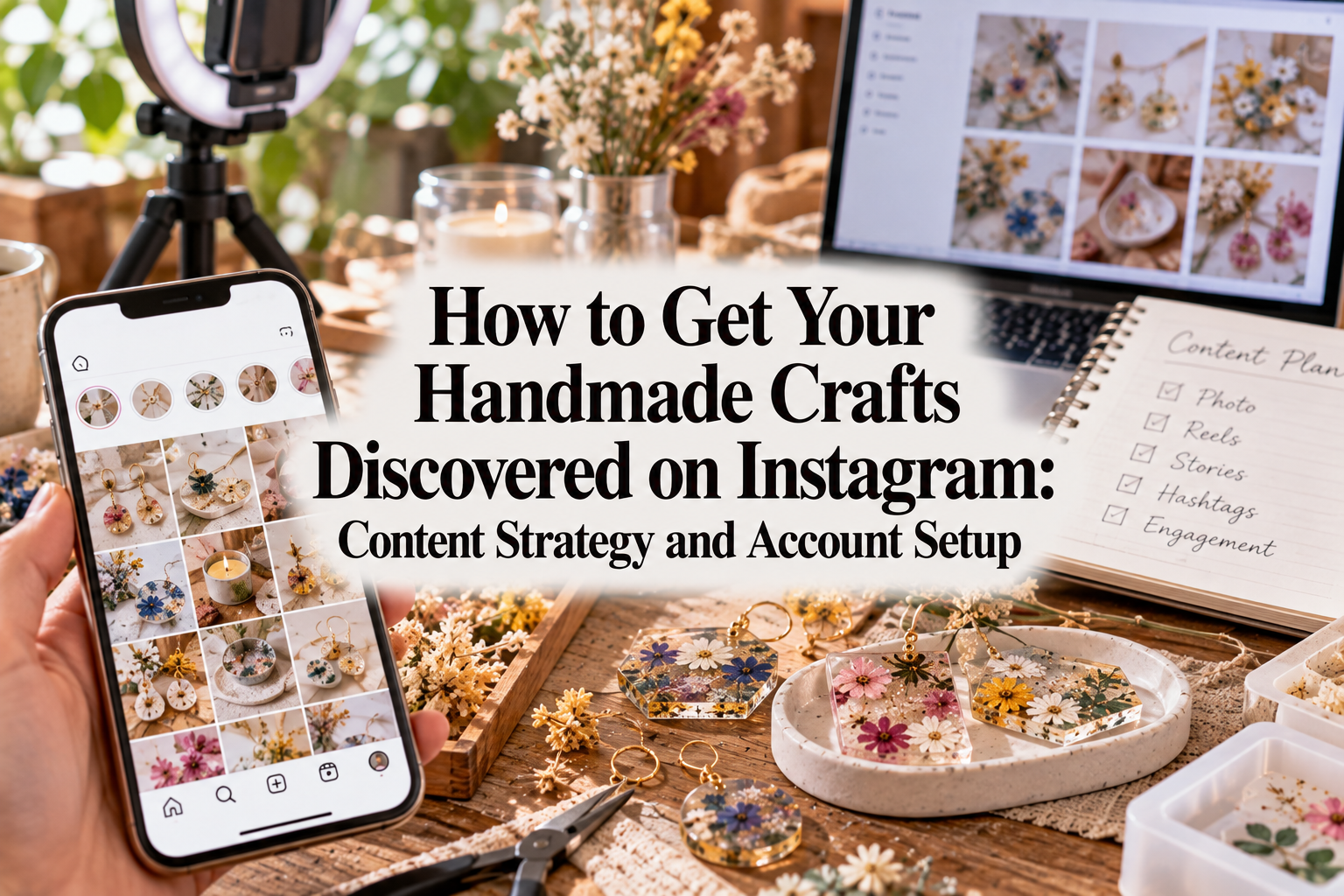
Image-driven platforms are a natural match for handmade goods. Here, share high-quality photos and short clips of finished items, hands at work during the crafting process, items being worn, or how pieces look when displayed in a room.
Your primary goal is creating a visual hook on the feed that instantly makes viewers think, "How lovely!" Keep captions concise while highlighting the main appeal of the piece.
Maintaining a cohesive brand aesthetic is essential. Keep photo tones, backgrounds, and styling themes consistent across your feed so anyone visiting your profile immediately grasps what your brand is about.
Text-based platforms and networks with high repost or share potential are ideal for conveying your personality and real-time updates. Post frequently about works-in-progress, event appearances, or small daily insights.
The main objective here is to foster familiarity by replying thoughtfully to comments and messages. When people become fans of you as a creator—not just the objects you make—they turn into long-term supporters.
Sharing the thoughts behind your pieces or behind-the-scenes stories can resonate deeply, prompting shares and retweets that expose your work to entirely new audiences.
A blog's purpose is to turn people who showed interest on social media into fully committed fans by providing comprehensive information. Without character limits, you can share the making-of stories, material selection details, care instructions, and precise sizing that photos alone cannot convey.
Explaining questions like "Why did I choose this specific gemstone?" or "Why do I stick to this particular sewing technique?" gives readers strong motivation to purchase. Rather than simply listing product specs, write about how owning the item will enrich the customer's daily life.
Writing helpful articles that answer common search queries—such as "How to care for handmade resin accessories" or "Types of hypoallergenic earring findings"—is another powerful way to attract future buyers directly from search engines.
Even if you set up every platform, they won't help if they operate in isolation. You need a clear customer journey showing where potential buyers discover you and where they ultimately purchase.
A frictionless path is required to turn visits into orders.
Here is the most effective flow for handmade creators:
When this flow is properly connected, users move toward purchasing without friction. Sending someone straight from social media to a sales page can feel overly pushy and trigger hesitation. Using your blog as a bridge lets customers fully appreciate the value of your craft before they view the price tag.
Always include clear links to your blog or shop in every social media profile bio. Never leave potential buyers wondering where to find details.
Managing both a blog and social accounts often leads creators to worry about running out of time. However, you do not need to update everything daily. Set a realistic pace tailored to each format.
For social media, post daily or every two days to maintain visibility on the timeline. For your blog, updating once or twice a week is more than enough. Instead of rushing, focus on writing thoughtful, high-value articles.
To make this a habit, map out a weekly schedule in advance. For instance: photo shoots on Monday, crafting on Tuesday and Wednesday, blog writing on Thursday, and 15 minutes of social media posting every morning. Setting a clear routine drastically cuts down operational stress.
If you post consistently but see no results, you might unknowingly be falling into common operational traps. Recognizing these mistakes helps you avoid wasted effort.
The most common mistake is posting nothing but sales notices: "New item released, please buy!" or "Listed today!" Users do not visit social media or blogs solely to shop.
Accounts that push sales too aggressively become tedious, prompting unfollows. A healthy guideline is the 80/20 rule: 80% helpful or entertaining content, and 20% sales announcements.
Share your creative process, styling ideas, and tips on materials to provide value. When you consistently entertain your audience and build trust, your occasional sales announcements will deliver dramatic results.
If you post a craft piece one day, personal lunch pictures the next, and random commentary on politics or news the day after, followers will struggle to connect. The account loses its focus.
People follow you hoping to see your brand's unique world and compelling craft updates. Overly personal updates that do not fit your brand concept dilute your identity and cause followers to leave.
If you want to share glimpses of daily life, always frame them around your brand—such as snapshots of your workshop, tools in use, or landscapes that inspired a new color palette.
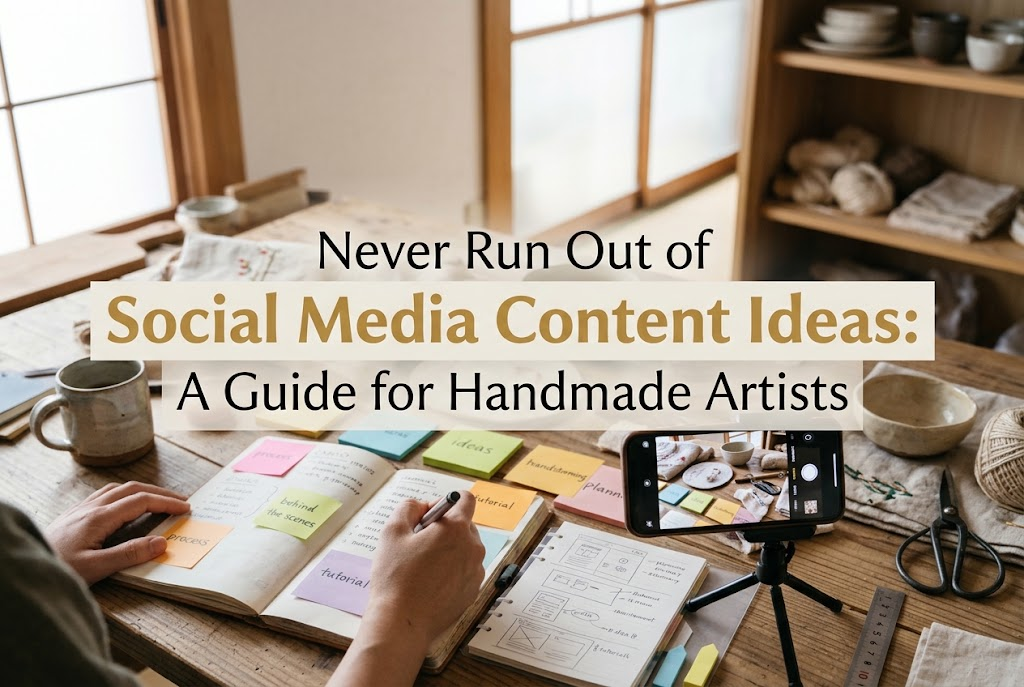
The hardest parts of blogging and social media are running out of ideas and maintaining consistency. If you try to come up with fresh concepts from scratch every time, burnout is inevitable.
Here is my method for maximizing output with minimal effort.
Whenever you complete a new piece, generate multiple pieces of content from that single item. This "one-content, multi-use" approach drastically lightens your workload.
Here is how to roll it out:
From making just one item, you create a blog post and several social media updates at once, eliminating the need to search for separate topics for every channel.
If you have to deliberate over camera angles and article structures every time you post, you will quickly run out of hours in the day. Establishing set templates solves this.
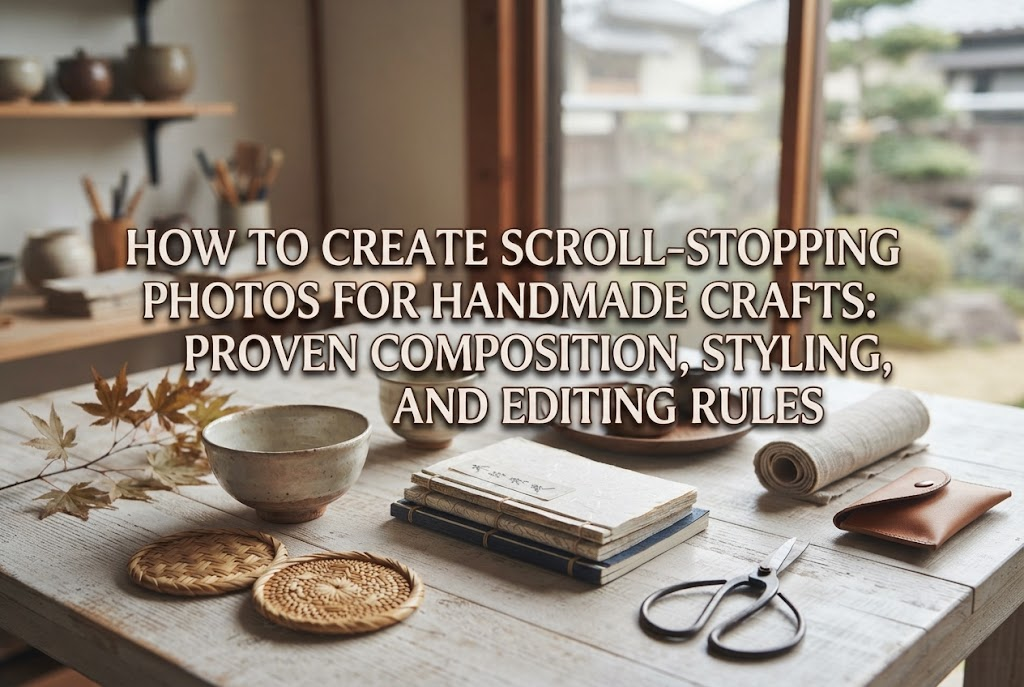
For photography, make it a rule to capture four standard shots every time: a wide full-view shot, a close-up highlighting texture and materials, a shot showing scale in hand, and a photo of the item in actual use.
For blog posts, use a fixed outline:
By fitting your information into this template, anyone can write polished, high-converting blog posts without feeling lost.
Here are clear answers to questions I frequently hear from beginner creators.
If you plan to run your handmade brand seriously over the long term, a self-hosted blog with your own domain (such as WordPress) is undoubtedly the best choice.
Free blogging platforms are easy to start, but they carry risks: terms of service changes, platform shutdowns, or restrictions on commercial links. Furthermore, unwanted third-party advertisements can clutter your site and undermine your brand's atmosphere.
Building a self-hosted blog lets you accumulate articles as permanent assets and customize the design freely, making it the safest long-term investment.
Yes, absolutely. In fact, a blog is specifically designed to create a marketing foundation that doesn't rely solely on follower counts.
A blog attracts readers not just from social media, but also through search engines like Google (SEO). People searching for specific queries—like "cute hypoallergenic earrings" or "leather wallet care instructions"—already have high buying intent.
Even if you only have a few hundred social media followers, it is very common for visitors from search engines to read your blog and purchase your items. There is no need to stress over follower numbers alone.
Not at all. Many handmade artisans build flourishing brands using a handle name without ever showing their faces.
What matters is not showing your face, but showing your hands, your workspace, and communicating your thoughts through your writing. Clear photos of your hands handling materials, views of your studio, and genuine reflections on your craft are more than enough to establish trust.
You can fully convey the appeal of your craft while protecting your personal privacy. Move forward with confidence using the style that feels comfortable for you.
Here is a recap of the key points for reaching more people and cultivating dedicated fans:
Neither a blog nor social media works like an instant magic wand. But once you understand their proper roles and connect them into a smooth funnel, steady posting will turn your platforms into powerful brand assets.
Your dedication and love for your craft will only reach people when communicated clearly. As a first step today, try writing down just one unique detail about your favorite piece! I'm cheering you on!
If you found this article helpful, please share it with fellow makers on social media! See you in the next post—this was Yassy from Crafters!

For example, if you are looking for articles about mizuhiki, try searching for "mizuhiki"; if you are interested in tools, try keywords like "nippers" or "pliers."
