20 Chic Halloween Resin Project Ideas: Elegant Autumn Crafting Ideas for Adults
yassy
Crafters!
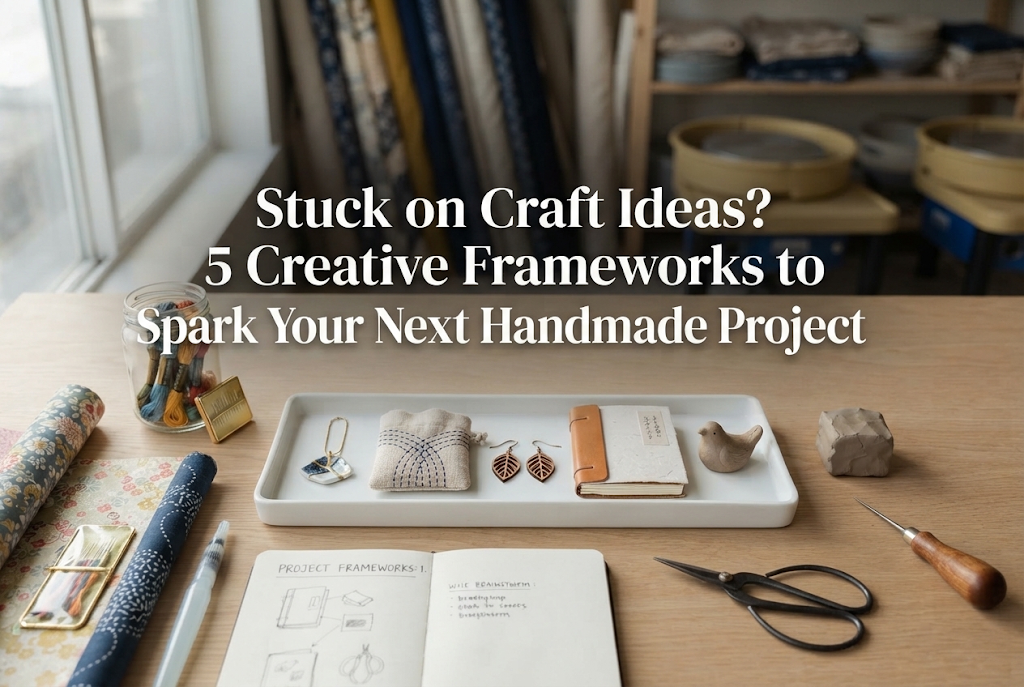

Hello, crafters! It’s Yassy! (・∀・)
Whether making my own pieces, admiring the work of fellow artisans, or shopping at favorite craft stores, I love every part of the handmade world. Today, I want to talk about a universal challenge every maker faces: what to do when you simply can’t come up with ideas for your next craft project.
Have you ever thought, "I want to make something, but I have no idea where to start," or "My creative well has run dry, and my hands are frozen"? You are definitely not alone. I have hit that exact wall countless times myself.
Let me reassure you right now: running out of ideas does not mean you lack artistic sense or talent. It simply means you haven't learned the right thought process for generating craft ideas.
In this guide, I will break down practical thinking habits and step-by-step methods that will help even beginners generate exciting ideas you can't wait to bring to life!
When starting a new project, many makers believe they have to come up with a brilliant idea completely out of nowhere. That mindset is the root of the problem.
When people get stuck, they are almost always caught in one of the following three illusions. Let’s clear those away first.
Almost every hit product and beloved handmade item in the world is simply a fresh combination of existing elements. You never need to invent an unprecedented design from absolute zero.
Consider pairings like natural gemstones with retro tassels, or a plain canvas drawstring pouch accented with Nordic-style embroidery. Originality simply means taking existing materials, colors, silhouettes, and functions and combining them through your personal lens.
Stop trying to make something nobody on Earth has ever seen. Shift your focus to asking: "How can I combine elements I already love in my own way?"
Staring at a blank sheet of paper with your arms crossed will rarely produce great ideas. Creative thoughts are sparked in the brain through physical and visual stimuli—colors, textures, and shapes.
Even with my deep passion for crafting, I cannot design a finished piece without seeing or touching anything. Trying to brainstorm without tangible input—like handling materials, lining up color swatches, or browsing inspiring shops—is largely a waste of time.
To keep your thoughts flowing, move your eyes and hands first to feed rich sensory details into your brain.
If you start a project obsessing over what will sell well or look trendy on social media, your creativity dries up instantly because your personal connection is missing.
The heart of handmade crafting is your genuine reaction: "This is adorable!" or "I would love having this in my everyday life!" If you as the maker aren't genuinely excited as a prospective user, the project will stall halfway through.
Put commercial concerns aside for a moment, and shine a spotlight on your honest desire to have and use something yourself.
Here are five mental frameworks I rely on whenever I begin planning a new handmade piece. When inspiration stalls, run through these five perspectives in order. You are bound to find a spark.
Instead of deciding what to make, choose a single material first. Rather than forcing a preconceived design onto your supplies, let the qualities of the material guide your thinking.
Visit a local craft supply or bead shop, and pick up just one piece of fabric, resin charm, or hardware simply because you think, "This is gorgeous!" or "The texture feels wonderful!" Take it home, place it on your desk, and look at it closely.
Ask yourself: "What color finding complements this translucent resin charm?" or "If I use this supple leather, what size pouch would feel most comfortable in hand?" Drawing inspiration directly from the physical material takes immense pressure off the design stage.
One of the greatest joys of handmade items is their ability to solve small, everyday inconveniences. Take a moment to list the minor annoyances in your daily routine:
Now, think of how to solve these frustrations using materials and aesthetics you love. Solutions like a compact clip-on key pouch or a tailored leather cord wrap suddenly present concrete, practical shapes to build. You end up with a project that balances utility and charm.
Vague goals like "making everyday jewelry" or "sewing a casual tote" lead to unfocused designs. Instead, narrow the usage scenario down to an exact moment.
For instance, try designing "brightly colored earrings to lift your mood during a gloomy, rainy morning commute" or "a book cover with a calm, tactile finish to hold while reading a paperback at a quiet cafe on Saturday." Pinpoint the time, place, and emotion.
Once the scene is clear, practical choices emerge naturally: water-resistant materials for the rainy day commute, or earthy tones that blend with cafe decor. Aiming for an ultra-specific moment rather than broad appeal is the secret to refined handmade work.
This technique blends contrasting mediums or craft traditions. Pieces combining different materials often possess greater visual depth and individuality than single-material works.
Try pairing your specialty craft with something completely unexpected:
Uniting materials that rarely share the same space creates an eye-catching signature look. Asking "What happens if I combine this with that?" turns brainstorming into an exciting experiment.
Because I love browsing and purchasing handmade goods just as much as making them, I continually observe the market as a customer. This perspective is a powerful source of inspiration.
When exploring artisan markets, boutique gift shops, or online storefronts, don't stop at thinking "That's cute." Dig deeper: "Why did this catch my eye? If I were to buy it, what would be the deciding factor?"
Then, look for that missing 5%: "If only this bag were slightly larger, I’d buy it immediately," or "This color scheme with brass accents instead of silver would be perfection." Turning that "almost perfect" observation into your own physical creation leads to high-satisfaction projects.
Brilliant concepts rarely strike out of thin air while agonizing at a desk. They emerge when small observations gathered during everyday life connect inside your mind.
To keep your reservoir full, here is the note-taking routine I have used for years:
Whenever something catches your attention, snap a photo or jot down a note. But writing just "cute earrings" isn't enough; you won't remember why it excited you later on.
In your notebook or smartphone notes, articulate the exact emotional reason alongside the image:
"The dusk sky had a stunning gradient. I want to recreate that soft transition between dusk blue and pink in resin." or "The contrast between the wooden cafe table and the brass tray felt so elegant. Let's use this color balance for my next project." Pairing visual evidence with emotional context is essential.
Divide your collection process into two clear phases. When out and about, record sudden sparks quickly on your phone camera or notes app.
Then, set aside a relaxing moment once a week to open a physical notebook. Print and paste your collected photos, sketch loose thumbnail designs, and list materials you would like to test.
Separating input (quick mobile gathering) from processing (structuring in a paper journal) clarifies your ideas into realistic build plans.
Never discard an idea simply because it felt beyond your current technical skill or didn't come together neatly. Dedicate a "Pending" section in your notebook for them.
Months later, when your technique has improved or you discover a new tool, flipping through old concepts often sparks an "Aha!" moment: "With the technique I learned last month, I can actually pull this off!"
The creative seeds your past self planted often turn into your most rewarding future projects.
When eager to create, beginners often fall into habits that suppress rather than stimulate creativity. Watch out for these three pitfalls:
Browsing Instagram or Pinterest and trying to replicate high-engagement pieces step-by-step is a trap.
Outright copying drains the joy of crafting. Worse, it disrespects the original maker and saddles you with the nagging guilt of producing an imitation. Use social media solely to observe broader trends—like emerging color palettes or textures—not to copy finished designs.
Envisioning a flawless final piece from the start often leads to creative paralysis. Fear of wasting supplies or falling short of your mental image freezes your hands.
At the conceptual stage, a rough 30% to 50% idea is plenty. The true charm of handmade work lies in creating quick mockups, adjusting as you go, and letting the work evolve through trial and error. Abandon perfectionism and start with the casual mindset of running a fun experiment.
Buying lovely fabric, beads, and findings only to leave them sitting in their shopping bags is a trap every crafter knows well. The act of purchasing gives a temporary rush of creative satisfaction, sapping the energy needed for actual building.
Whenever you bring new materials home, take them out of the bag that very day and lay them on your workspace. Touching them, holding them to the light, and pairing them with other items is what triggers real breakthroughs.
If you've reviewed the frameworks above and still cannot settle on a direction, pick one of these three focused prompts to begin immediately:
Choose an item you carry every single day and remake it by hand:
Because you use these items daily, you already know their flaws: "I wish this was slightly slimmer," or "If this had my favorite shade of green, it would brighten my day." Remaking a daily essential tailored perfectly to your tastes is a guaranteed win.
Designing for a general audience is paralyzing, but designing a personalized gift for one specific individual instantly clarifies every choice.
Think of your mother, a close friend, your partner, or even your pet. "They love soft pastels, so I'll make pink the main tone." "They carry a lot of gear, so I need durable, lightweight canvas." "They have sensitive skin, so I'll use nickel-free or hypoallergenic resin components." Imagining a single face establishes your materials, palette, and form effortlessly.
Total freedom can be overwhelming, while clear boundaries stimulate ingenuity. Set a strict personal rule for a quick mini-project:
Working within deliberate limits forces your mind to find clever solutions. Approached like a game, constraints often lead to surprisingly fresh results.
Inspiration for handmade creations isn't a mysterious gift bestowed on a lucky few. It is a practical skill built from everyday observations, noticing small daily needs, handling materials, and gently shifting your vantage point.
Let go of the pressure to produce something entirely revolutionary. Pick up one material you love, listen to your authentic preferences, and take the first small step with your hands.
The imperfect prototypes you make along the way are the stepping stones to signature pieces you will treasure. Embrace the joy of making, admiring, and using your handmade items!
If this guide helped spark your creative engine, please share it with your fellow makers. Until next time, happy crafting—this is Yassy signing off!

For example, if you are looking for articles about mizuhiki, try searching for "mizuhiki"; if you are interested in tools, try keywords like "nippers" or "pliers."
