The Ultimate UV Resin Curing Equation: Master Thickness and Light for Perfect Japanese Resin Crafts
yassy
Crafters!

Hello, fellow crafters! It’s Yassy from Crafters! (・∀・)
I personally love every part of the craft world: creating my own pieces, browsing gorgeous handmade shops, and treating myself to items made by my favorite artisans. Because I regularly experience all three perspectives—as a maker, a window-shopper, and a customer—I have learned firsthand why certain items sell at specific times and what makes shoppers genuinely want a design.
When you start selling handmade items, there is a common stumbling block almost everyone hits: "I made lovely seasonal items, but they just aren't selling as expected."
Listing cool, refreshing jewelry right after summer arrives, or knitting cozy yarn accessories once the weather turns freezing—this exact timing is actually the number one reason seasonal handmade products fail to sell.
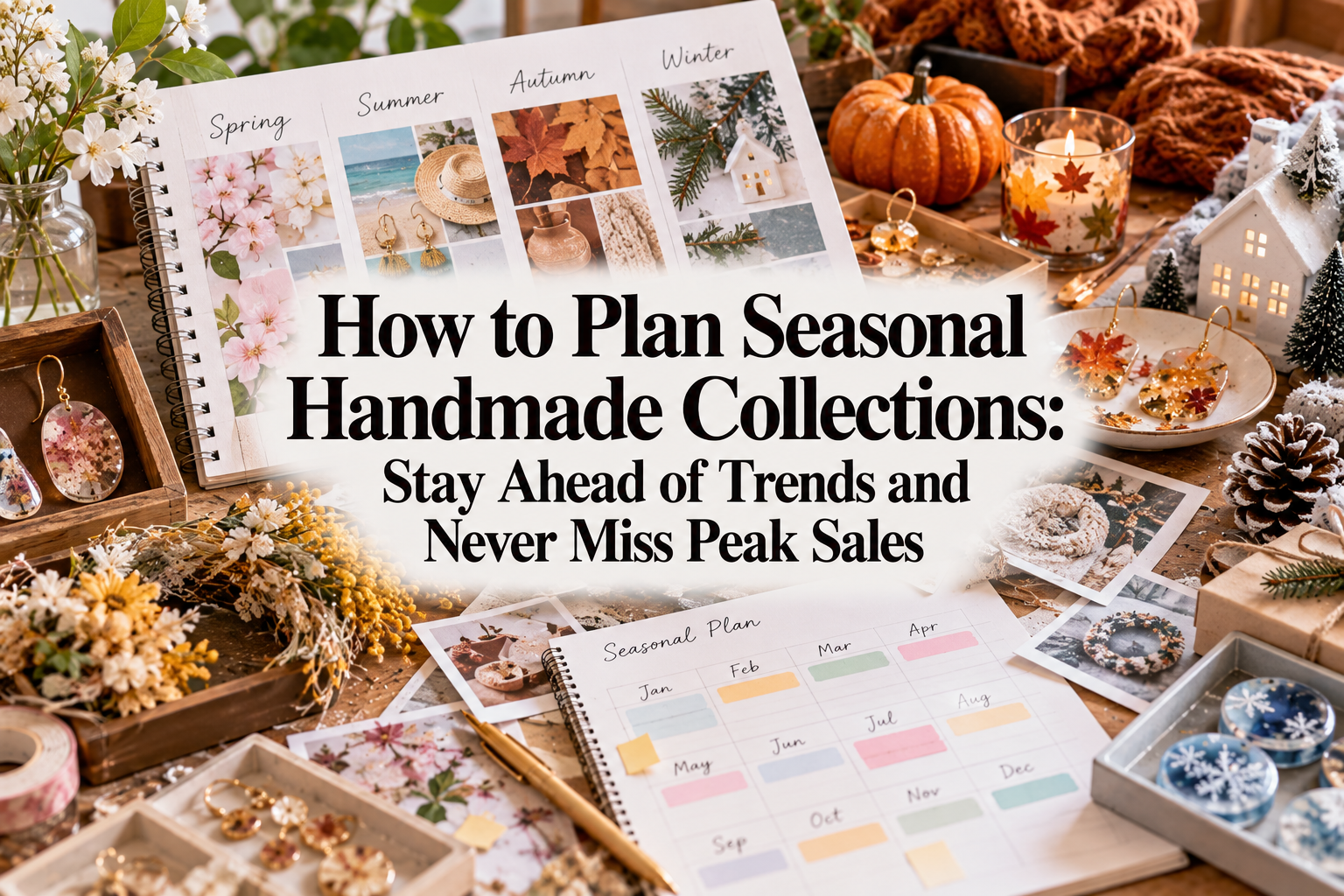
To succeed with seasonal items in the handmade market, getting ahead of trends and establishing a solid product plan are essential. Once you master the skill of planning collections well before the season arrives, your pieces will land in front of buyers right when demand hits its peak.
Today, I'll walk you through my complete guide to reading upcoming trends and crafting a seasonal lineup that actually sells!
Many beginners assume that summer items should be made in July and winter items in December. However, following that timeline means you are already far too late.
To understand how handmade sales work, you need to look at two factors: the psychological buying habits of shoppers, and the unavoidable production time lag for makers.
Customers start thinking about clothes and accessories for the upcoming season roughly one to two months before the weather actually shifts.
For example, very few people actively search for summer earrings or straw bags in the middle of a scorching July. Real shopping activity surges much earlier—between late April and May, as days begin to warm up. That is when shoppers start browsing: "What kind of jewelry should I wear this summer?" or "What bag would look nice for outings?"
The same pattern holds year-round: autumn searches peak right after mid-August, winter searches peak in October, and spring searches surge starting in late January. If you wait until the season officially begins to list your items, you will completely miss the crest of customer demand.
There is a lengthy journey between conceiving an idea and delivering a finished product to a customer's hands: brainstorming, sourcing materials, prototyping, regular production, photography, writing listings, and promoting on social media.
If you only start brainstorming after a season begins, by the time your shop is ready, that season will practically be over. Sitting on unsold inventory and taking a financial hit almost always stems from this lack of early preparation.
To have your collection perfectly staged when market demand peaks, the golden rule is simple: start planning three months in advance.
You don't need psychic powers to get ahead of trends. Trends aren't pulled out of thin air—they are patterns you gather and analyze from information already out in the world.
Whenever I design new pieces or shop for items myself, I always keep an eye on current cultural and fashion currents. Here are three accessible ways to research trends right now.
Handmade trends do not appear in isolation. They ripple out from larger movements in the fashion and interior design industries.
Apparel brands unveil their seasonal runway collections six months to a year ahead of time. By flipping through fashion magazines, browsing apparel brand websites, or looking at runway reports, you can clearly spot next season's key color palettes and standout materials (such as suede, shearling, or sheer textiles).
If deep olive green and rich suede are trending for autumn fashion, incorporating those colors or textures into your handmade jewelry and bags makes total sense. Accessories that effortlessly coordinate with trending wardrobe staples are always the most appealing to buyers.
The easiest, most reliable indicator of what is coming next is the "New Arrivals" section at major craft supply retailers, parts wholesalers, and fabric stores.
Material suppliers order stock far earlier than individual artisans do. Check the new arrivals and pre-order pages on major craft supply websites. By observing which shapes, colors, and textures suppliers are pushing, you can spot what will dominate the coming months. If supply shops are stocking up heavily on a specific finding or material, it is virtually guaranteed to trend.
Visual platforms like Instagram and Pinterest are where buyer interest surfaces first.
Pay close attention to related keywords in search suggestions and hashtags. Even when it still feels hot outside, try searching tags like #AutumnOutfit or #FallJewelry. Look closely at which posts are racking up saves and notice which compositions and palettes stand out.
Observing what aesthetics and color combinations users are saving gives you a clear picture of what your target audience is craving.
Once your research is gathered, it’s time to shape it into concrete designs. Following a structured procedure keeps you organized and helps you build a cohesive, polished lineup. I always use these four steps whenever I develop a new collection.
First, fix your launch date—the finish line when your pieces will officially go live in your shop.
For instance, if your goal is an autumn launch on October 1st, your timeline looks like this:
Plotting these dates onto your calendar early on is the single best way to keep your plans from falling apart.
When people hear "seasonal planning," they often think they must invent completely new designs from scratch. That is a misconception!
The safest, most effective way to drive sales is to dress up your brand's signature, best-selling designs in upcoming seasonal colors and materials.
Suppose your brand has a staple tassel earring design that sells year-round. For summer, you might make it with bright blue cotton thread. For your autumn release, keep the core design identical, but swap the material for wine-red velvet ribbon.
Because the structure and durability of the piece are already proven, you eliminate the risk of prototype failures while giving your audience an unmistakable seasonal feel.
When designing, think beyond just how someone will wear an item—consider whether it makes a great gift. Seasonal calendars are filled with cultural events and gift-giving occasions.
Rather than simply labeling a product "autumn earrings," positioning it as "deep bordeaux earrings for an autumn foliage date" or "a boxed necklace ready for holiday gifting" creates a far more compelling emotional hook for your buyers.
Once you finish a prototype, test it yourself by wearing or using it in everyday situations.
Seasonal materials can be tricky. Winter knits or faux fur components can shed or catch on fabric, while summer resin items can sometimes become slightly tacky in extreme heat and humidity. Testing highlights necessary improvements, such as switching to surgical stainless steel findings for hot, sweaty summer months or adjusting a clasp so it won't snag on a fluffy winter scarf.
At the same time, calculate your production costs carefully. Limited seasonal findings or specialty parts often carry a higher wholesale cost than standard supplies. Ensure your retail price leaves a healthy profit margin so seasonal releases remain sustainable for your business.
Here are three classic pitfalls I often notice beginner artisans fall into when shopping their stores, along with ways to steer clear of them.
Handmade crafts are a wonderful outlet for self-expression, but if you intend to sell, designing solely based on personal preference is risky. If the market is leaning heavily toward muted, smoky tones this season, releasing items made purely from neon acrylics—just because you personally love neon—will likely miss your target audience entirely.
Aim for a balance: 50% your unique brand identity, and 50% market trends and demand. Keep your signature voice while infusing a touch of seasonal flavor through your choice of color or texture.
Waiting until right before the season to order materials often leads to the dreaded "out of stock / backordered indefinitely" notice from suppliers. Popular seasonal supplies are snapped up by makers everywhere at the same time.
Identify your needed supplies three months ahead during your planning phase, and purchase your stock in bulk two months prior. Always formulate a "Plan B" during prototyping—such as a backup finding or alternative bead—in case your primary supply runs out.
After deep research, you might feel overflowing with inspiration, tempting you to cram every idea into a single release. However, if your shop lacks visual and conceptual coherence, shoppers get confused about what your brand actually represents.
Keep each seasonal collection focused on one (or at most two) clear concepts. If you decide on an "elegant vintage Halloween" theme, skip the playful, bright pumpkin motifs and maintain an understated, sophisticated aesthetic across the entire collection.
To help you navigate the entire crafting year, here is a quick overview of how the schedule breaks down across all four seasons. A good rule of thumb is to always be planning two seasons ahead of the current one.
During late August or late February, buyers often hesitate because they are caught between needing something right away and wanting to prepare for the upcoming season.
In those transitional weeks, I love offering 2-way convertible designs or all-season bases with interchangeable seasonal charms.
For instance, design a hoop earring where the charms can be swapped: include a clear glass bead for late summer and an interchangeable faux-fur or velvet charm for autumn. Providing extra mileage from a single purchase gives buyers incredible perceived value, making these pieces strong sellers during seasonal transitions.
Planning seasonal collections can feel daunting at first, but sticking to a three-month roadmap and collecting trend data systematically ensures you never miss peak sales periods.
Stepping away from last-minute rush production gives you breathing room, which noticeably elevates both your craft quality and your product photography.
Create pieces that make your customers genuinely excited for the season ahead! As a devoted craft enthusiast, I cannot wait to see all the imaginative work you bring into the world.
If you found this guide helpful, sharing it on social media with your fellow makers would mean the world to me! See you in the next post—this was Yassy from Crafters!


For example, if you are looking for articles about mizuhiki, try searching for "mizuhiki"; if you are interested in tools, try keywords like "nippers" or "pliers."
