Getting Started with Woodcraft: Ideas, Tools, Costs, and Zero-Failure Tips for Beginners
yassy
Crafters!
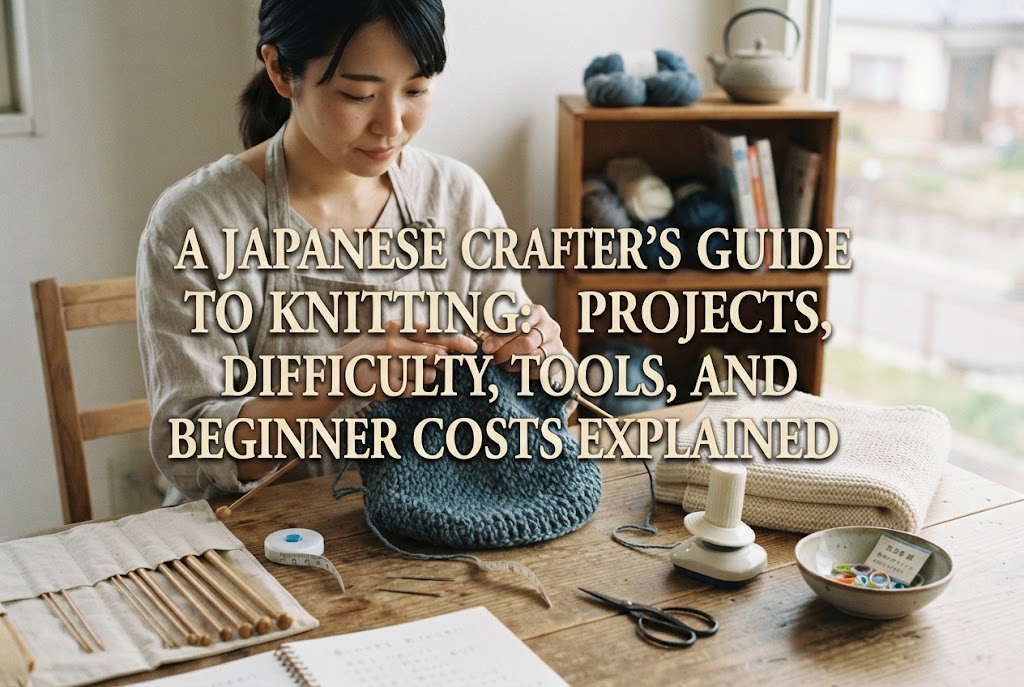

Hello, everyone! I'm Yassy from Crafters! (・∀・)
For handmade enthusiasts, living a life wrapped in soft, fluffy knitwear made with your own hands is the ultimate dream. I personally love admiring colorful skeins of yarn, hand-knitting sweaters and accessories, and wearing wonderful knit pieces created by fellow crafters.
When it comes to yarn crafts, there are two main types: knitting (using two needles) and crochet (using a single hook). The greatest strength of needle knitting lies in its unique softness, elasticity, and the ability to create beautifully smooth fabric that looks just like boutique store-bought clothing.
Yet, many beginner crafters hesitate to take their first step, worrying: "Does it look too difficult?" "What if I give up halfway?" or "Will my room get covered in yarn?"
In this article, I will fully explain the appeal of knitting, what projects you can make, the actual level of difficulty, care and handling methods, necessary workspace, and even the initial costs and material expenses. I will eliminate all vague information and provide clear answers based on my own hands-on experience. Read through to the end and take your very first step!
Knitting is a traditional craft technique where yarn loops (stitches) are repeatedly woven together using two or more straight needles. In Western countries, this is simply called "knitting," and the finished fabric or garments are referred to as "knits."
The biggest difference between knitting and crochet lies in the texture and structure of the resulting fabric. Crochet uses a single hook to finish stitches one by one, resulting in a thick, sturdy, and firm fabric. Knitting, on the other hand, keeps many active stitches held across the needles at the same time, producing an airy, soft, and highly elastic fabric.
Most of the daily items around us—such as sweaters, cardigans, scarves, and socks—are built using a knitting structure. Knitting is the exact technique that allows you to create smooth, supple, and comfortable clothing with your own hands.
While some say that "crochet is easier," knitting is overwhelmingly superior when it comes to wearing comfort and elegant silhouettes. If you want to make soft, body-conforming pieces, choosing knitting is definitely the right answer.
Once you start knitting, you will be able to make a wide variety of fashion goods and interior home decor. Here is a range of projects categorized by difficulty level:
The first items you should try are straight, linear projects without increases or decreases (adding or reducing stitches). Representative examples include scarves, snoods, knee blankets (mini blankets), and coasters.
Because you simply repeat the exact same stitch pattern, these projects are ideal for practicing consistent thread tension. Using thick yarn and thick knitting needles, you can complete a stylish snood in just a few hours over the weekend.
The sense of accomplishment when wrapping a self-knitted snood around your neck and stepping outside is truly special. The warmth that mass-produced items lack, combined with the love for something you made yourself, makes daily fashion so much more enjoyable.
Once you get used to straight knitting, move on to accessories using circular knitting (joining stitches in the round) or decreasing stitches. Specifically, these include knit hats, leg warmers, hand warmers, socks, and gloves.
Knit hats are especially popular because they take little time to finish and serve as great fashion accents. Gloves and socks involve slightly more complex steps like turning heels or separating fingers, but once you understand the structure, you can customize endless designs. Incorporating multi-colored colorwork (such as Fair Isle patterns) instantly upgrades your work to a professional quality level.
The true highlight of knitting is garment making—sweaters, cardigans, vests, and ponchos. These require a process called "toji and hagi" (seaming and joining individual panels like the body and sleeves), but the sense of joy upon completion is beyond comparison with any other handmade craft.
Interior items such as cushion covers and large throw blankets are also very popular. The wonderful thing about knitting is that you can recreate high-quality knit items seen in your favorite home decor shops using your preferred colors and materials.
Knitting is often perceived as difficult, but as long as you understand its structure and proper remedies, it is by no means impossible. Here are the three main roadblocks beginners face and how to perfectly overcome them.
Knitting requires holding a needle in each hand while throwing or picking yarn. Before getting used to it, stitches often slide off the needle tips, causing the fabric to unravel and driving beginners into a panic.
The ultimate solution to overcome this is to start with bamboo needles and chunky wool yarn. Metal or plastic needles are too slippery, making it easy for beginners to drop stitches. Bamboo needles provide gentle friction, effectively preventing accidental dropped stitches. Furthermore, if a stitch does drop, don't panic—you can easily pick it up using a single crochet hook. Knowing how to recover from mistakes beforehand completely eliminates the fear of failing.
Common beginner complaints include "the stitches are so tight I can't insert the needle" or "the fabric became super loose and giant." This happens because the pulling strength (tension) on the yarn is inconsistent.
Crafters with tight stitches tend to tighten the yarn loop at the narrow tip of the needle. Make sure to push the loop all the way onto the thicker main shaft of the needle before working the next stitch. This single habit will instantly solve tight stitching. Conversely, if your stitches are too loose, you might be using yarn that is far too thin or holding excessive tension in your wrists. Relaxing your hands and using the recommended needle size for your yarn is the absolute rule for even, beautiful stitches.
When you open a knitting book, you see grid charts filled with symbols, making many think, "It looks like a secret code, I can't do this!" However, basic knitting relies on essentially just two fundamental stitches:
Over 90% of the seemingly complex knit patterns in the world are built using combinations of just knit and purl stitches! At first, combine written text instructions with video tutorials to match the symbols with actual hand movements. Once you finish one full project, reading charts will become second nature.
Many wonder if hand-knitted items will shrink when washed or worry about losing shape and getting pilling. With proper knowledge, hand-knit items can be cherished for a lifetime.
When washing hand-knitted items (especially natural fibers like wool or alpaca), always use a neutral pH detergent designed for delicate garments. Standard weak-alkaline laundry powders or liquids will damage and stiffen the fibers, causing shrinkage.
Never machine-wash hand knits. The golden rule is gentle push-washing (oshi-arai) in lukewarm water under 30°C (86°F). Rubbing or scrubbing causes fibers to tangle together, leading to severe shrinkage known as felting. Gently pressing the item up and down to float dirt out is more than enough to clean it.
After washing, remove excess water by sandwiching the item inside a bath towel or spinning it in a washing machine for less than 1 minute. Prolonged centrifugal spinning will deform the shape.
When drying, never hang it on a coat hanger. The weight of the wet knit will stretch out the shoulders and deform the garment. Always lay it flat on a drying net or towel—a method known in Japan as hiraboshi (flat drying). Flat drying nets are inexpensive and can be found at 100-yen shops or online craft stores, making them a must-have for knitters.
Friction during wear naturally creates pills (fuzzballs). When pilling occurs, never pull or rip them off by hand, as this pulls out surrounding fibers and causes even more pilling. Use small scissors or a dedicated fabric shaver to gently trim them off.
At the end of the season, wash the garment to remove oils and dirt, then store it in a well-ventilated space with moth repellents. Because natural fibers attract moths, pest protection is essential.
When starting a handmade craft, securing space is a crucial factor. In conclusion, knitting is one of the most space-efficient crafts among all handmade genres.
Unlike resin craft, pottery, or sewing machine work, knitting requires no large worktables or spread-out tools. As long as you can sit comfortably on a sofa and hold your work on your lap, you can start knitting immediately.
You only need enough space for the length of your knitting needles (typically around 25cm to 33cm / 10 to 13 inches) to move side to side. You can craft anywhere—while watching TV, sipping tea at a café, or commuting on a train. It is also extremely portable ("mobile knitting"); keeping your needles and a skein of yarn in a small pouch turns any location into your personal craft studio.
When knitting large garments or blankets, the fabric grows heavier and may slide off your lap. In such cases, rest the fabric on a table while knitting, or use circular needles—a pro trick.
Circular needles consist of two short needle tips connected by a flexible cord. The weight of the fabric rests on the center cord, dramatically reducing wrist strain and allowing you to knit large items in compact spaces. You never have to give up on making big projects just because your room is small!
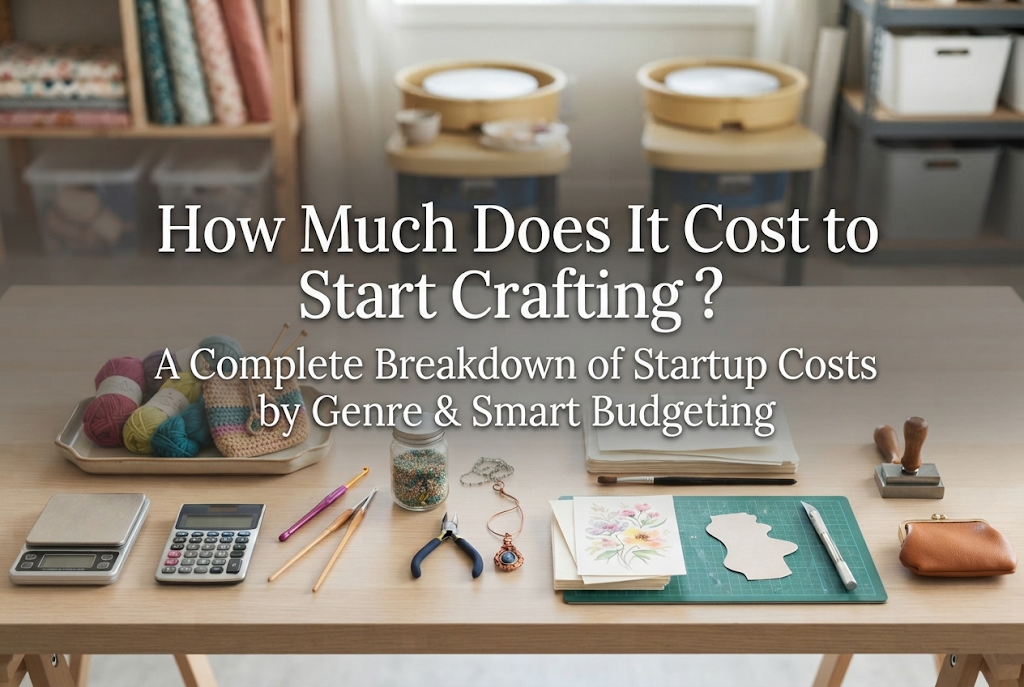
Let's talk numbers regarding the financial threshold for taking up knitting. I'll break down the initial setup cost and material expenses per project.
The basic tools needed to start knitting are:
In total, you can assemble a complete basic kit for around 2,000 JPY. Starting with a beginner starter kit or buying specific needles and yarn for your first project is most efficient. Because tools can be used for decades once purchased, initial investment in knitting is remarkably low compared to other crafts.
Material costs vary depending on item size and yarn quality. Here is a general guideline:
Using 100% acrylic yarn from 100-yen shops allows you to make scarves or hats for just a few hundred yen. However, when making wearables or scarves that touch your skin directly, I strongly recommend choosing quality wool or cashmere blends from craft stores (priced around 500 to 1,000 JPY per skein). The softness, warmth, and gliding feel while knitting are vastly superior, yielding far higher satisfaction upon completion.
I am often asked, "Is 100-yen shop yarn okay to use?" My answer is: choose based on your project's purpose.
100% acrylic yarn from 100-yen stores offers vibrant colors and great durability. It is perfect for practice swatches, acrylic scrubbies, or structured bags and pouches that you don't want to lose shape. On the other hand, for neck scarves or clothing, pick branded yarns from dedicated craft suppliers. They resist itchiness, remain lightweight, and produce wonderful pieces that last for years.
Here is my recommended step-by-step roadmap for new knitters to build skill smoothly without getting frustrated.
Do not pick a long scarf for your very first project! It takes too long, leading to boredom and unfinished projects. The ideal first project is a short snood using bulky or super-bulky yarn and thick needles (Japanese size 8–12 / approx. 4.5mm–5.7mm or thicker). You can stitch quickly and finish it in just a few hours.
Focus on mastering the three fundamental steps: cast-on (tsukurime), garter stitch (repeating knit stitches), and bind-off (fuse-dome). Experiencing the joy of finishing an item quickly is the best secret to loving handmade crafts long-term.
Once confident with straight knitting, try circular knitting (wa-ami). Instead of two single-pointed needles, you use circular needles to knit continuously in a tube. A knit hat teaches you how to decrease stitches to shape the crown. Adding ribbing (alternating knit and purl stitches) creates a stretchy, store-quality hat. Discovering circular knitting opens up a whole new world!
For your third project, challenge yourself with 3D cable knits (Aran patterns) using a cable needle. Fingerless hand warmers require little yarn and complete quickly, making them perfect for practicing textured cable motifs. The sense of achievement when twisted stitches pop out from your fabric is addictive! By this stage, you are no longer a complete beginner and have enough skill to tackle sweaters or cardigans.
Avoid these three common beginner pitfalls at all costs:
Knitting is the ultimate handmade craft, transforming a single strand of yarn into a warm, beautiful, three-dimensional piece. Considering the low barrier for tools, minimal workspace requirements, and lifetime skills gained, it is a craft immensely worth starting.
Even intricate-looking patterns are just built from the repetition of two basic movements: knit and purl. You don't need to be perfect from day one. Moving your needles stitch by stitch at your own pace offers wonderful healing time away from a busy routine.
You can gather basic tools for around 2,000 JPY. Grab a skein of your favorite colored yarn and a pair of bamboo knitting needles this weekend, and take your first step into cozy knitcraft!
Your very first completed piece will be more cherished than any luxury brand item and will warmly brighten your daily life.
If you enjoyed this guide, sharing it with your crafting friends on social media or messaging apps would mean the world to me! Until next time—this was Yassy from Crafters!

For example, if you are looking for articles about mizuhiki, try searching for "mizuhiki"; if you are interested in tools, try keywords like "nippers" or "pliers."
