The Ultimate Guide to Glue Guns: Types, Uses, and Pro Tips for Crafting Success
yassy
Crafters!

Hello crafters! This is Yassy from Crafters! (・∀・)
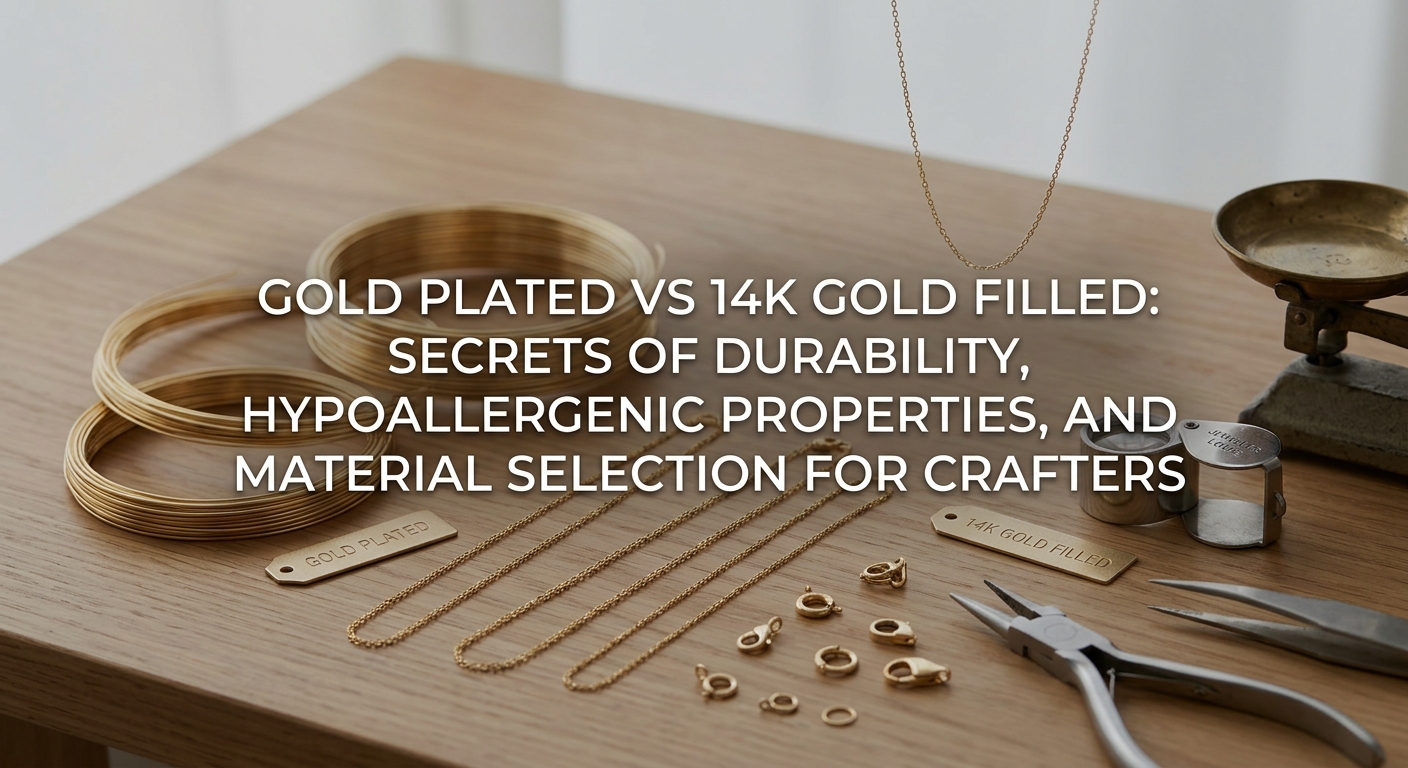
When making handmade jewelry and browsing craft supply shops or online material stores, you have almost certainly encountered findings labeled "Gold Plated (GP)" and "14K Gold Filled (14KGF)" and wondered which one to choose.
I personally love making various handmade items, collecting wonderful artisan pieces, and exploring craft supply shops to examine materials closely. Because of that, I know all too well how a single choice of material can completely transform the finished quality, durability, and buyer trust of your pieces.
"14KGF is so much more expensive, but is it really that different from regular gold plating?""They both look like beautiful gold on the surface, so why such a huge price gap?""Which one can people with metal allergies actually wear safely?"
Choosing components while leaving these doubts unresolved can lead to finished pieces that tarnish quickly or result in unfortunate issues with your valued customers.
In this guide, I will draw upon my experience and technical knowledge to break down everything clearly: the critical differences between gold plate and 14K gold filled, their manufacturing secrets, durability, impact on metal allergies, and how to select the right material for each project.
By reading through to the end, you will never feel lost when picking out jewelry findings again. Let's acquire the professional know-how needed to dramatically enhance your creations and sell them with total confidence!
When you set out to create gold-toned handmade jewelry, the two most accessible and widely used materials are Gold Plating and 14K Gold Filled.
Whether in retail stores or online supply catalogs, you will find these two options for almost every finding: earring hooks, headpins, eye pins, and chains alike.
However, beginner crafters often fall into the trap of thinking, "If both have a golden surface, isn't affordable gold plating good enough?"
While their surface shine looks quite similar at first glance, their internal structure, manufacturing process, and overall longevity are fundamentally different. If you pick materials solely based on their golden exterior, you may end up with a piece whose plating rubs off after just a few wears, exposing the base metal underneath.
To enjoy your pieces for a long time—whether for personal wear or when offering them to customers as an artisan—understanding the differences between these two materials is an absolute must.
Let's first examine Gold Plating (GP), the most common and accessible option. Understanding its true composition makes its strengths and limitations immediately clear.
Commonly abbreviated as GP, gold plating is created by using electroplating techniques to deposit an ultra-thin layer of gold onto a base metal such as brass, nickel, or various alloys.
The key factor to remember is just how microscopically thin this layer really is. A standard gold-plated layer measures only about 0.005 to 0.1 microns. That is mere fractions of a millimeter—comparable to an unimaginably delicate, ultra-thin film.
The greatest advantage of gold-plated findings is their low cost and vast variety. Because you can prepare large quantities of components at a minimal expense, gold plating is ideal for practice pieces when you are just starting out, or for fast-fashion accessories that follow fleeting seasonal trends.
However, there is an unavoidable caveat: friction and perspiration wear down this surface gold very quickly, causing it to flake or rub off.
Everyday friction, sweat, skin oils, and ambient humidity can easily wear away the thin gold coat. Once worn through, the underlying base metal (such as brass or alloy) is exposed, leading to darkening and discoloration.
Furthermore, if the underlying base metal contains nickel or other reactive alloys, the risk of triggering contact dermatitis or metal allergies increases significantly once the gold layer wears away.
Next, let's explore 14K Gold Filled (14KGF), a staple standard in high-end handmade jewelry. The reason this material enjoys overwhelming support among quality-focused makers and discerning buyers lies in strict industry standards and specialized manufacturing.
In Japanese craft circles, 14KGF is often referred to as "14-kin gold filled (kin-bari)" or gold-clad metal. To carry the official 14KGF designation, it must meet strict standards: 14-karat gold must make up at least 1/20th (5%) of the total weight of the item.
The manufacturing process is entirely different from simple plating. A thick sheet of 14-karat gold is mechanically bonded to a core base metal (typically brass) using intense heat and high pressure.
This thermal bonding process creates a robust layer of gold that is more than 100 times thicker than conventional gold plating.
Because this outer gold layer is so substantial, it rarely wears off from everyday friction or exposes the inner core, even across extended periods of wear.
The primary reason for 14KGF's popularity is its cost performance: it offers the refined, genuine luster of solid 14K or 18K gold at a fraction of the price.
It possesses an elegant, deep golden luster close to fine gold without feeling flimsy or cheap.
With proper care, 14KGF pieces can maintain their beauty for years, or even decades. For jewelry makers who want their creations cherished for a long time, 14KGF is an indispensable material.
Now that we have covered the basics, let's compare both materials across five key parameters. With these in mind, you will be able to evaluate the quality and value of any finding immediately.
The primary difference lies in the coating thickness and method of application:
The gold layer on 14KGF is over 100 times thicker than that on standard gold plating. This difference directly impacts the overall lifespan and quality of your jewelry.
The second major difference is durability over time.
Standard gold plating can begin peeling or wearing away within a few wears to a few months due to sweat and friction, exposing the base metal and causing tarnish.
In contrast, 14KGF features a thick, thermally bonded gold layer that virtually never peels during normal daily wear. While surface oils or perspiration may cause slight dulling over time, gently wiping the piece with a soft cloth quickly restores its warm golden shine. When it comes to long-term durability, 14KGF is the clear winner.
The third distinction is skin safety regarding metal allergies.
Because the gold layer in GP is exceptionally thin, metal ions from the base core can migrate through the layer. Once the plating wears off, the underlying brass or nickel touches the skin directly, significantly elevating the risk of allergic reactions.
With 14KGF, the surface in contact with the skin is genuine 14-karat gold. Because 14K gold is generally very gentle on the skin, it can often be worn comfortably by individuals with mild metal sensitivities.
*Please note: 14K gold is not completely hypoallergenic for everyone, especially those with specific gold allergies or sensitivities to alloyed metals.
The fourth factor is wholesale cost versus retail value.
Gold-plated findings are very inexpensive, often sold in packs of 10 or 100 pieces for a modest price. They are practical when you want to keep the final retail price low.
14KGF findings, containing a genuine percentage of gold, cost several to ten times more than basic plated components. However, explicitly stating "Crafted with 14KGF" elevates your brand image, allowing you to position your jewelry in a premium price bracket. While initial material costs are higher, 14KGF delivers superior value by boosting perceived quality and customer satisfaction.
The fifth difference relates to ease of handling during fabrication.
When bending gold-plated wire or eye pins with pliers, applying excessive force can easily crack, chip, or flake the thin surface plating.
Because 14KGF has a substantial gold layer, the gold does not crack or peel away when bent with tools. However, gripping too hard can cause noticeable dents or scratches in the gold layer that are difficult to buff out. Using protective tape on your plier tips or handling findings with care is essential.
Here, let's clarify three frequent misunderstandings that beginners and buyers often encounter. Operating on ambiguous knowledge can lead to customer misunderstandings.
Some makers market their items by claiming, "14KGF is completely allergy-free!" This is inaccurate.
While 14KGF is far less likely to cause irritation than base metals, 14K gold consists of 58.5% pure gold alloyed with 41.5% other metals (such as silver and copper). A small portion of wearers may react to these alloying elements.
Therefore, while it is accurate to describe 14KGF as a material that is "less prone to causing metal allergies," it is not guaranteed to be allergy-safe for every individual. As a professional practice, always note that allergic reactions vary by individual.
Some people confuse 14KGF with solid 14K gold, but they are entirely distinct:
Never treat solid gold and gold-filled components as interchangeable. Their intrinsic value and price points are completely different, so ensure your product listings reflect this accurately.
Does the superiority of 14KGF mean gold-plated findings have no place in jewelry making? Not at all.
Gold plating has distinct advantages: it is affordable, perfect for testing fast-moving fashion trends, and offers diverse color variations (such as vivid pink gold and bright yellow tones).
For temporary event accessories, children's jewelry, or seasonal pieces meant for short-term wear, choosing gold plating to keep the price accessible is a completely valid choice. Rather than viewing one as inherently good or bad, choose based on your purpose and target audience.
So, which material should you pick for your next piece? Here are the criteria I use in my own studio.
Opt for gold-plated components if your project matches these scenarios:
Using costly 14KGF while still practicing can be discouraging if you make mistakes. Honing your techniques on gold-plated wire and pins first is a smart and practical strategy.
Choose 14KGF without hesitation under these conditions:
Pairing cheap plated findings with valuable natural gemstones diminishes the perceived worth of the entire piece. Complementing fine stones with 14KGF findings ensures the quality, durability, and retail pricing align harmoniously.
If you incorporate 14KGF into your shop's lineup, following strict fabrication and presentation standards is vital to preserve the material's integrity and maintain customer trust.
Although 14KGF has a thick gold layer, squeezing it forcefully with metal pliers can leave visible indents or gouges. Deep scratches can allow moisture and sweat to reach the underlying core, leading to localized tarnishing.
Keep these three fabrication rules in mind:
Adjusting your tool handling slightly will help you achieve pristine, scratch-free results.
While 14KGF resists tarnishing remarkably well, it is not completely maintenance-free. Leaving sweat and skin oils on the surface after wearing can cause the gold to lose its luster.
When packaging orders, consider including a small care card with clear instructions.
Essential Care Tips to Share with Buyers:• After wearing, gently wipe away sweat and body oils using a clean, soft dry cloth (such as a jewelry cloth or microfiber eyeglass wipe).• Never use abrasive polishing cloths or pastes, as these will gradually wear down the gold layer.• When storing, seal the piece inside an airtight zipper pouch away from direct air and humidity.
Adding this thoughtful advice will greatly enhance buyer satisfaction and confidence in your brand.
When selling on handmade platforms like minne, Creema, or your own online storefront, clear and transparent labeling is essential to avoid misunderstandings.
Recommended Labeling:
Phrasing to Avoid:
Transparent descriptions prevent post-purchase confusion and ensure your buyers know exactly what quality they are receiving.
We have covered everything from the technical structures of gold plating and 14KGF to durability, hypoallergenic traits, and practical material selection for your shop.
Here is a quick recap of the essentials:
When you understand material characteristics and choose the right findings for your pieces, the quality and perceived value of your handmade jewelry will naturally rise to the next level.
Put care and passion into every single finding, and keep creating wonderful, confident work!
If you found this guide helpful, sharing it on social media would mean the world to me. See you in the next article! This was Yassy from Crafters!

For example, if you are looking for articles about mizuhiki, try searching for "mizuhiki"; if you are interested in tools, try keywords like "nippers" or "pliers."
