Beginner’s Complete Guide to Tie-Dye: The Zero-Mistake Roadmap with a Starter Kit
yassy
Crafters!
Hello, this is Yassy from Crafters! (・∀・)
Handmade candles that bring comfort to your room just by being displayed are a craft I truly love—whether making them, admiring them, or buying them at wonderful shops.
I have personally enjoyed crafting many different types of candles over the years. Time and again, I've been inspired by beautiful candles I spotted in stores and immediately rushed to try making them myself.
When you start making candles, there is a major hurdle that everyone encounters first: choosing your wax. When you open a craft supply shop, you'll see a vast array of waxes lined up, leaving you wondering which one to choose.
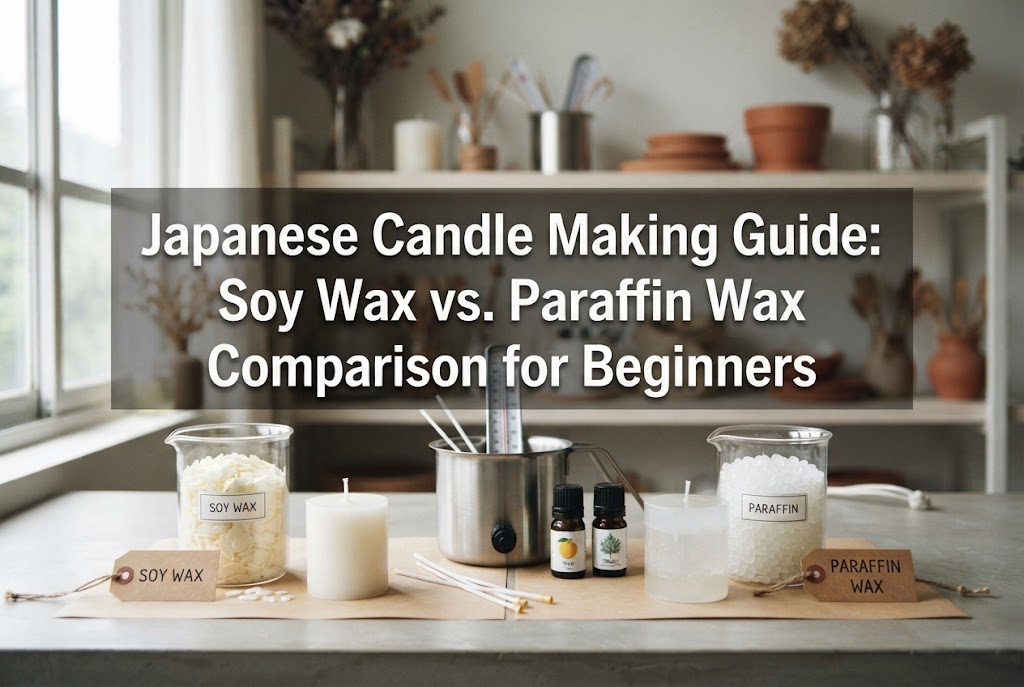
In handmade candle making, the two most commonly used waxes are "Soy Wax" and "Paraffin Wax." Accurately understanding the characteristics and differences between these two is an essential prerequisite for successful candle making.
Many people might think, "Both look like similar white solids, so how different can they be?" However, these two have completely different properties, ranging from their raw materials to how they burn and solidify.
If you choose the wrong material, it can lead to decisive failures—such as the solidified candle refusing to come out of the mold, the surface cracking and becoming bumpy, or soot and smoke filling your room with an unpleasant smell when lit.
In this article, aimed at beginner female crafters, I will thoroughly explain the differences between soy wax and paraffin wax in the clearest way possible, incorporating specialized knowledge.
I will generously share common failure points as well as the golden rules of selection that I actually practice when creating my own works. By reading this article to the end, you will definitely be able to choose the perfect wax for the project you want to create.
The single biggest difference between soy wax and paraffin wax is the origin of their raw materials. Because their base ingredients are fundamentally different, significant variations arise in their melting temperatures, their texture when solidified, and their impact on the surrounding air when burned.
First, let's clearly cover the basic structure and source of each wax.
By keeping the difference in raw materials in mind, you will naturally understand the mechanism behind why the final results differ so much.
Soy wax is a natural, vegetable-based wax made by refining soybean oil extracted from soybeans. Because it is made from 100% plant-derived materials, it has gained immense popularity worldwide as a natural material that is gentle on both the body and the environment.
The soy wax sold as craft material is made by adding hydrogen to the unsaturated fatty acids found in soybean oil to solidify it (a process called hydrogenation).
A key characteristic of soy wax is that it burns slowly at low temperatures. Because the flame temperature does not rise sharply, it offers a long burn time. Furthermore, it has absolutely no petroleum smell, retaining a subtle, warm bean-like scent inherent to the raw material.
In addition, it has the excellent advantage of releasing fewer harmful substances and producing very little soot when burned. It is the ideal wax for anyone who wants to enjoy aromatherapeutic scents without dirtying the room's air.
Paraffin wax is a petroleum-derived wax (a hydrocarbon compound) extracted during the crude oil refining process. The vast majority of candles we see in daily life—such as commercially sold altar candles or birthday candles—are made from this paraffin wax.
Hearing "petroleum-derived" might make some people worry, "Is it bad for my health?" However, paraffin wax sold as craft materials is highly refined, with impurities completely removed. There is no need to worry about safety.
The greatest strengths of paraffin wax are its stable properties, high transparency, and excellent color acceptance. Because it melts into a nearly colorless and transparent liquid, you can achieve vibrant, true-to-target colors when mixing pigments or dyes.
Furthermore, because it shrinks tightly as it cools and hardens, it is overwhelmingly easy to work with when making mold-released candles using silicone or plastic molds.
Now that we understand the difference in raw materials, let's compare the specific property differences that appear during the candle-making process and when the candle is lit.
The 5 points of comparison are: Melting Point (temperature at which it melts), Appearance & Texture, Scent Throw, Soot Resistance, and Ease of Mold Release.
Grasping these 5 differences is the ultimate key that determines the success or failure of your craft projects.
The temperature at which a wax begins to melt is called its melting point. This difference in melting point dramatically changes how the candle melts and how long it burns.
Soy wax has a very low melting point, around 45°C to 55°C (113°F to 131°F). Because it melts at a temperature just slightly higher than body temperature, it liquifies quickly in a double boiler. When lit, the wax gradually melts outwards at a low temperature, resulting in a significantly longer burning time.
On the other hand, paraffin wax has a melting point of approximately 50°C to 70°C (122°F to 158°F). It features a wide range of melting points, allowing its hardness to be adjusted depending on the blend. Because it melts rapidly at higher temperatures, the flame burns brightly and strongly, but the wax consumes faster compared to soy wax.
For projects where you want a long burn time to enjoy a relaxing, soothing atmosphere, low-melting-point soy wax is overwhelmingly suitable.
There are clear differences in the visuals and tactile feel of the finished pieces between the two waxes.
When soy wax solidifies, it turns a rich, milk-like cream color. The texture is non-glossy and matte, resulting in a smooth, soft feel when touched. Its appeal lies in creating a warm, stylish aesthetic that blends seamlessly into natural or Korean-style interiors.
When paraffin wax solidifies, it turns a crisp white with a translucent feel. The surface is smooth with a moderate sheen. When dyes are mixed in, colors from soft pastels to vivid primary shades can be expressed perfectly and clearly.
If you want muted shades or a natural, calm mood, choose soy wax; if you want to make colorful, vibrant, or gradient candles, paraffin wax is the right choice.
When making scented candles, the compatibility between the wax and fragrance oils is crucial.
Because soy wax has a low melting point, a wide melt pool (liquid wax surface) forms when lit. From this warm liquid surface, the fragrance gently diffuses throughout the room. The soft warmth inherent to vegetable wax wraps around the fragrance, letting it float elegantly.
Because paraffin wax itself is odorless, it releases fragrance oil aromas directly and straightforwardly. It excels when you want to clearly highlight the true progression of fragrance notes, from top to base.
When you want a gentle, long-lasting aroma, soy wax is best; when you want a strong, immediate burst of fragrance, paraffin wax is ideal.
When burning candles indoors, black soot and odors are top concerns.
Because soy wax is made from vegetable oils with extremely few impurities, it produces almost no black soot during combustion. Even if the wick is too long and generates a bit of soot, it consists of plant-derived carbon, posing a low risk of staining room walls black. Furthermore, the distinct burnt smell after blowing it out is minimized.
Since paraffin wax is a petroleum hydrocarbon, black soot can easily form if you neglect to trim the wick. Burning it in windy spots or leaving a long wick can cause black stains on walls and ceilings.
For candles burned daily indoors or for homes with small children or pets, I highly recommend soy wax for its exceptional soot resistance.
The ease of removing a candle from a mold during production is where beginners fail most often.
Soy wax has a very low shrinkage rate as it cools and solidifies. In other words, because it doesn't shrink inside a mold, it sticks tightly to silicone or metal molds and won't detach. Pouring it into molds without a proper plan will make it impossible to extract, leading to broken pieces.
In contrast, paraffin wax shrinks significantly as it hardens. A gap forms naturally between the mold and the wax, allowing the candle to slide out smoothly just by turning the mold upside down.
For three-dimensional motif candles made with molds, using high-shrinkage paraffin wax provides an absolute advantage in terms of work efficiency.
To draw out 100% of soy wax's charm and create beautiful pieces, you need to understand its unique quirks.
Here, I will explain the classifications of soy wax you must know and specific temperature management techniques to prevent mistakes.
When buying soy wax, the absolute first thing to check is whether it is "Soft" or "Hard." Soy wax broadly falls into these two categories.
Soft Type (Container Soy Wax) has a low melting point of around 45°C to 50°C and is extremely soft. It is used exclusively for candles poured into containers like glass jars or ceramics. On its own, it is too soft and can never be used for mold-released candles.
Hard Type (Pillar Soy Wax) is blended with plant-based hardening agents (like stearic acid), raising its melting point to around 60°C. Because it solidifies hard, it allows for mold-released candles and scented wax sachets.
If you're making container candles, choose "Soft"; if making freestanding candles or sachets, be sure to select "Hard." Making a mistake here means your creation won't hold its shape, so take extra care.
The biggest enemies of soy wax are surface cracking, uneven bumps, and white spots (frosting/crystallization) that appear after solidifying.
Being a natural wax, soy wax is extremely sensitive to temperature changes. Pouring melted wax at excessively high temperatures or cooling it too quickly causes the surface to become rough and bumpy, ruining its beauty.
The golden rule for achieving a mirror-smooth surface is to strictly control both the pouring temperature and the room temperature.
The ideal pouring temperature for soy wax is between 50°C and 55°C (122°F–131°F). Gently pour it in just as the wax begins to thicken slightly.
Furthermore, while it sets, never leave it in drafty areas exposed to air conditioners or in a freezing cold winter room. Allowing it to cool slowly at room temperature in an environment kept around 20°C (68°F) is the perfect recipe for a flawless surface.
Paraffin wax is the foundational material of handmade candle making. Handled with proper knowledge, it allows you to freely create professional-grade, stunning pieces.
Let's dive into techniques and key points to maximize paraffin wax's capabilities.
The greatest charm of paraffin wax lies in its excellent transparency, which leads to superior color development.
When mixing pigment powders or liquid candle dyes, colors show up crisp and clear. If you want to make bold, vivid colors or layered gradient candles, paraffin wax has no equal.
The golden procedure for coloring is to add your dye when the wax reaches a higher temperature of around 80°C (176°F), stirring gently without creating bubbles until fully dissolved.
Dissolving thoroughly at high temperatures eliminates dye clumps and color unevenness, giving you candles with mesmerizingly beautiful tones.
A phenomenon that always occurs when working with paraffin wax is the formation of a center sinkhole (crater).
Because paraffin wax shrinks significantly as it cools, the central area around the wick dips down, creating a hollow. This is not a failure—it's a physical trait of the material.
If left uncorrected, the wick will get drowned in wax when lit, extinguishing the flame. Therefore, a repair step called a "second pour" (re-pour) is absolute necessity.
Once the first pour has completely hardened, use a bamboo skewer to poke a few small holes in the sunken center membrane. Then, gently pour the same colored wax—heated about 5°C higher than the first pour—to fill the cavity.
Performing this second pour leaves you with a perfectly flat, beautifully finished, professional-grade straight candle.
Based on the traits of soy and paraffin wax, here are my definitive selection rules practiced across popular candle projects. Use this guide to match your project concept with the optimal material.
If you're making classic scented candles poured into glass jars or ceramic cups, choose "Soy Wax (Soft Type)" without hesitation.
The reason is that soy wax's low-temperature burn diffuses aromatic scents softly throughout the space. Additionally, its soft, matte texture looks luxurious through glass, turning it into a high-end interior decor item.
Making container candles with paraffin wax often leads to gaps (wet spots) between the glass and wax, ruining the look. Soy wax adheres cleanly to glass walls for a beautiful finish.
When making freestanding candles using silicone molds—like canelé shapes, teddy bears, or simple pillars—select either "Paraffin Wax" or "Soy Wax (Hard Type)".
If you want a sleek, glossy surface with vibrant colors, paraffin wax is your best option. The wax flows into fine mold details and releases effortlessly.
If you prefer a natural, matte Korean-style interior aesthetic, you must use "Soy Wax (Hard Type)." Mistaking it for the soft type here will make it impossible to demold, or cause the candle to collapse even if extracted.
When placing dried flowers or dried fruit near the edges to create gorgeous botanical candles where blossoms show through, paraffin wax is by far the best choice.
Transparency is the lifeblood of botanical candles, allowing encased flowers to be seen clearly from the outside.
Soy wax cures into an opaque milky shade, hiding the flowers completely. For projects showing off vivid floral colors and shapes, high-transparency paraffin wax is an absolute rule.
When making scented wax sachets to hang on walls or in closets, my recommendation is a 50/50 blend of Soy Wax (Hard) and Paraffin Wax.
Using 100% hard soy wax can cause the wax to set too fast while arranging flowers, or leave it brittle and prone to cracking if dropped.
Blending Soy Wax (Hard) 50% with Paraffin Wax 50% at this golden ratio captures the soft, natural texture of soy and flower-retention power, while gaining paraffin's strength and clean mold release.
Here are typical troubles beginners face in candle making, along with their causes and concrete fixes to prevent them.
Cause: When using soy wax, this is caused by drastic temperature fluctuations or pouring at temperatures that are too high.Solution: Strictly observe a pouring temperature of 50°C–55°C and let it cool slowly in a warm room free of direct sunlight or air conditioning drafts. If it turns out bumpy, gently sweep a heat gun (or low-setting hairdryer) over the top to melt just the surface layer for a smooth refresh.
Cause: Using soy wax with a low shrinkage rate (especially soft type) inside a mold.Solution: Always use paraffin wax or hard soy wax for freestanding items. If hard soy wax gets stuck, place the mold with the candle inside the freezer for 15 to 20 minutes. The wax will shrink slightly, allowing it to pop right out easily.
Cause: Mismatch between the wax melting point and wick thickness, or insufficient sinkhole repair on paraffin candles.Solution: Soy wax melts easily, so using a wick that is too thick will melt wax too quickly and drown the wick. Conversely, using a thin wick in hard paraffin wax leaves surrounding wax unmelted, tunneling down the center until it extinguishes. Choose a wick size appropriate for your container diameter and wax melting point.
We've explored the differences and proper uses of soy wax and paraffin wax in depth.
Soy wax is plant-derived, eco-friendly, soot-resistant, and offers a warm, natural texture.
Paraffin wax is petroleum-based, amazingly easy to work with, and delivers vibrant colors, clarity, and superior mold release.
It's not a question of which wax is superior, but rather finding the right answer based on "what design and purpose you want for your candle."
If you want a natural, comforting scented container candle, choose soy wax.
If you want bright gradient colors or a botanical candle showing off flowers, choose paraffin wax.
With these golden rules in mind, you'll never hesitate over wax selection again. Understanding material properties eliminates mistakes, helping you craft the exact candles you envisioned.
Grab your favorite wax today and start a delightful candle-making life filled with lovely scents and warm light!
If you enjoyed this article, sharing it with friends on social media or messaging apps would mean the world to me! See you in the next article! This was Yassy from Crafters!











For example, if you are looking for articles about mizuhiki, try searching for "mizuhiki"; if you are interested in tools, try keywords like "nippers" or "pliers."