What Is Candle Making? A Complete Beginner’s Guide to Project Types, Safety, Costs, and Techniques
yassy
Crafters!

Hello everyone, I'm Yassy from Crafters! (・∀・)
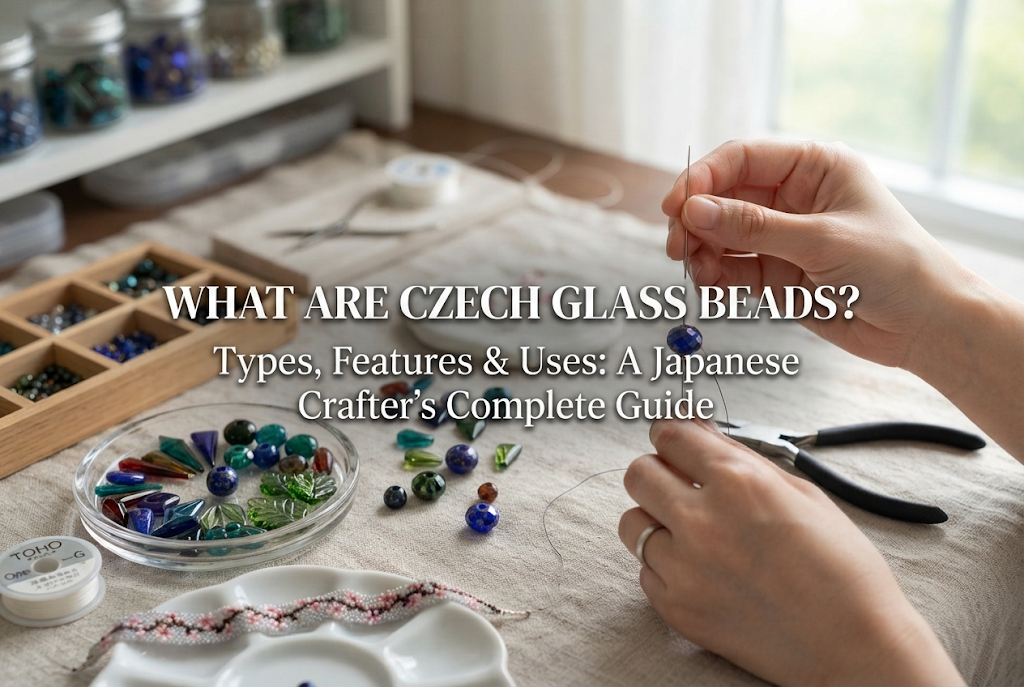
When making handmade jewelry, beads are an essential material that almost every crafter reaches for at least once. Among the endless variety available, Czech glass beads stand out for their unique warmth and expressive textures, captivating craft enthusiasts all around the globe.
I personally love creating handmade accessories, admiring beautiful artisan works, and browsing through bead shops. In fact, I can easily lose track of time just gazing at the shelves of Czech beads in craft stores because their charm runs so deep!
However, I often hear beginners ask questions like: "How are Czech beads different from standard glass or acrylic beads?", "There are so many types—how do I choose?", or "I bought some, but I don't know how to use them effectively in my jewelry."
In this guide, I will draw on my experience as a Japanese craft writer to share a comprehensive overview of Czech glass beads. We will cover their fundamental history, unique characteristics, popular shapes, surface finishes, essential tips for avoiding common beginner mistakes, and practical styling techniques. By the end of this article, you will have a thorough understanding of Czech beads and feel confident incorporating them into your own handmade projects!
Czech beads are a general term for glass beads traditionally produced in the Czech Republic, located in Central Europe—specifically in the northern Bohemia region.
The Bohemia region boasts a glassmaking history spanning several centuries. Its delicate artisanal techniques and rich color sensibilities have been passed down through generations of beadmakers. Let's look at why these beads are so deeply loved by handmade creators worldwide.
The greatest charm of Czech glass beads lies in their ability to feel warm and handmade, even though they are crafted as uniform products.
Mass-produced acrylic or plastic beads often have flat, inorganic surfaces. In contrast, Czech beads possess a pleasant weight unique to glass and a soft, melting reflection of light.
Skilled artisans blend glass raw materials using years of intuition and expertise, producing deep coloration and transparency that cannot be replicated elsewhere. Even with beads of the same color name, the subtle shift in expression depending on the light and angle gives Czech beads their signature exquisite flavor.
Beginners often wonder how Czech glass beads differ from cheap beads found in bargain craft shops. To put it simply, the texture of the material, its durability, and the way it diffuses light are completely different.
While acrylic beads are lightweight and easy to handle, they scratch easily, and friction can cause their surface to turn cloudy over time. Additionally, inexpensive glass beads often have harsh, sharp cuts that give a cold impression, or flat colors that look cheap.
Czech beads, on the other hand, feature high glass hardness, making them resistant to surface scratches from daily wear. Furthermore, special heat-smoothing techniques (such as fire-polishing) and press-molding methods give them unique facets and soft contours that gently wrap around light. Incorporating them immediately elevates the overall sophistication of any handmade accessory.
While the vast variety of shapes is Czech beads' greatest asset, it can also confuse beginners. Czech beads are categorized by their production method and shape. Here are the primary varieties every crafter should know.
Fire-polished (FP) beads are true classics of Czech glasscraft.
Fire-polishing is a manufacturing process in which machine-cut glass beads are passed through high-temperature flames. The heat slightly melts the sharp edges of the cuts, leaving a smooth, soft finish.
Unlike the sharp brilliance of machine-cut crystals or Swarovski, fire-polished beads emit a soft, dewdrop-like glow. They are available in versatile sizes such as 3mm, 4mm, 6mm, and 8mm, making them an all-around staple for earrings, necklaces, and bracelets.
Melon beads feature radial grooves carved into their surface, resembling a watermelon or cantaloupe.
Although spherical, the carved ridges capture light and shadow, giving them a three-dimensional, classical feel. Many variations feature gold, silver, or brown paints washed into the grooves, giving even a single bead an eye-catching presence.
They serve as the perfect accent when plain round beads feel too simple, but faceted cut beads feel too flashy. Melon beads are extremely popular as focal elements in drop earrings or as top beads paired with tassels.
Drop and teardrop shapes are indispensable essentials in jewelry making. Czech drop beads come in two main drill styles: top-drilled (side-to-side hole near the top) and center-drilled (vertical hole running through the length).
The combination of rich Czech glass color and smooth, rounded contours creates an elegant, feminine line that sways beautifully when used in earrings.
In particular, clear translucent or opal-toned drop beads catch and transmit light brilliantly, illuminating the wearer's face and neckline. If you want to create a dangling design, starting with Czech drop beads is always a winning choice.
The technology for press-molded glass—where molten glass is pressed into detailed molds—is exceptionally advanced in the Czech Republic. Motif beads shaped like flowers, leaves, and daggers are prime examples of this craft.
Dagger beads resemble flat, small swords with a hole near the top end. Layering multiple dagger beads creates dimensional flower-petal arrangements or modern, sharp fringe effects.
Flower and leaf beads feature intricate mold details that evoke a charming retro and antique vibe. For crafters creating botanical-themed accessories, these motif beads are powerful design tools.
For more unique shapes, look to Farfalle and multi-hole beads.
Farfalle means "butterfly" in Italian; these beads have a pinched center resembling a cocoon or peanut. When strung on thread or wire, they naturally interlock in an alternating pattern, creating intricate, lace-like 3D textures with minimal effort.
Multi-hole beads, such as two-hole SuperDuos or Chisels, excel in bead stitching and bead weaving. Using multiple holes allows crafters to build precise geometric patterns, earning them high acclaim among international bead artists.
Table-cut beads are made by grinding the flat top and bottom surfaces of molded glass beads, leaving the detailed mold patterns or specialized coatings intact along the outer edges.
The center where the glass was ground away exposes clear transparency, while the surrounding edges retain intricate metallic or Picasso coatings, creating a heavy, vintage aesthetic reminiscent of antique oil paintings or heirloom jewelry.
While individual table-cut beads cost more than standard beads, stringing just one on a simple chain produces a high-end, designer-quality necklace. They are the ideal choice when you want to elevate your artwork or create sophisticated pieces for adults.
The depth of Czech beads extends far beyond their shapes. Special surface coatings allow beads of the same shape to express completely different moods. Understanding these popular finishes will broaden your creative palette.
The two most popular finishes for enhancing light reflection are AB coating and Luster coating.
AB stands for "Aurora Borealis." It involves vacuum-depositing a thin metallic layer on one side or the entire surface of the bead, giving off a vivid, rainbow-like shimmer similar to soap bubbles. It works wonderfully when you want to add eye-catching brilliance to a base color.
Luster coating, on the other hand, coats the entire bead with a translucent, glossy film. Rather than showing intense rainbow colors like AB, Luster adds a gentle, pearl-like or ceramic sheen. Use Luster finishes when aiming for understated elegance or natural designs.
You cannot discuss Czech beads without mentioning the famous Picasso finish, which offers a unique, painterly appearance.
Picasso coating applies an earthy, marble-like, or speckled finish into the crevices and surface of the bead. This creates a deep, muted antique look resembling excavated ancient artifacts or well-worn vintage treasures.
Veronica finish applies antique-style metallic luster over a matte-etched base. Finishes like these are incredibly effective for creating sophisticated adult jewelry, unisex designs, or men's accessories without becoming overly sweet.
The clarity of the base glass itself dramatically alters the finished impression.
Crystal (fully transparent) glass is ideal for creating refreshing, summery feels. Opal (semi-translucent) glass has a soft milky quality that glows gently from within.
Satin glass features fine internal striations that generate a luxurious sheen resembling silk fabric. Selecting the right glass clarity to match your seasonal theme or design concept is essential.
While Czech beads are marvelous, their semi-artisanal manufacturing process means they have distinct characteristics compared to natural stones or machine-made acrylics. Here are key precautions to keep in mind when purchasing and crafting.
The most important rule with Czech beads is understanding dye lot variations. A "lot" refers to a batch of beads produced together in the factory at one time.
Because Czech beads are influenced by daily temperature, humidity, subtle variations in raw glass batches, and kiln temperatures, beads with the exact same color name or item code can vary in intensity across different production lots.
If you buy one strand, love the color, and later order a second strand to make matching left-and-right earrings, you may find subtle color differences that prevent them from looking like a true pair.
When planning jewelry sets or large necklaces, always buy slightly more beads from the same lot than you think you need.
Due to the nature of press-molding and surface coatings, Czech beads naturally have occasional minor imperfections or individual variations.
Common occurrences include:
There is no need to panic—these are normal occurrences given the traditional manufacturing methods. Simply inspect your beads before starting a project.
For clogged holes, insert an awl or a diamond bead reamer into the hole and twist gently to clear out excess paint. Make it a habit to check the holes before attempting to pass headpins or wire through them.
When shopping for Czech beads online, crafters often find that the physical beads look different from product photos.
Because Czech beads are glass with complex glossy finishes, studio lighting and background colors dramatically alter their appearance. Photos taken on dark backgrounds tend to overemphasize surface finishes (like AB or Picasso), making colors look darker than they appear in hand.
To avoid disappointment, read the text descriptions carefully alongside inspecting product photos. Check both the base glass color and the applied coating type—for example, knowing whether a bead is "clear glass with gold coating" versus "opal pink glass with AB finish" helps you accurately visualize the actual bead.
Now that you know the characteristics of Czech beads, let's explore practical combination techniques to give your handmade jewelry a professional finish!
When designing with Czech beads, using only a single color can flatten their rich character. I recommend using a tone-on-tone gradient paired with a single tightening accent color.
For example, if soft pink Czech drops are your main feature, pair them with secondary light purple fire-polished beads and clear colorless beads. Then, add just one antique gold melon bead or deep bronze bead as an accent.
Mixing in vintage-toned Czech colors (such as bronze, antique gold, or Picasso-finished shades) for 10% to 20% of your total bead arrangement grounds the design, creating a refined look suitable for boutique displays.
Czech beads shine even brighter when paired with contrasting materials rather than used entirely on their own.
They pair exceptionally well with antique gold or matte gold metal findings. The warm glow of fire-polished or Picasso-finished beads blends far better with subdued metal textures than with bright, glossy gold plating.
Combining Czech glass with natural gemstones is another fantastic match. For instance, placing a clear, shimmering Czech drop next to a matte natural gemstone (like matte agate or turquoise) creates a texture contrast that highlights the beauty of both materials.
If you are unsure which bead sizes to choose, follow these practical proportions:
Where is the best place to source quality Czech glass beads? Here are my recommendations for smart purchasing.
For beginners, visiting local craft stores or specialty bead shops in person is ideal.
Seeing beads in person allows you to evaluate light transparency, physical weight, and surface gloss with your own eyes. Hands-on exploration builds an intuitive sense of colors and textures.
If you prefer buying in bulk or do not have a well-stocked craft shop nearby, reputable online craft supply stores or platforms like Amazon and Etsy are very efficient. When ordering online, always choose trusted sellers who explicitly label their products as genuine "Czech Glass" or "Made in Czech Republic."Mastering Czech Bead Mix & Assortment PacksFor those buying Czech beads for the first time, I highly recommend picking up Czech bead assortment packs (mix packs).
Because there are so many shapes and colors, purchasing individual single-color bags can quickly become expensive, leaving you with leftover unused beads.
Assortment packs are curated by store experts around cohesive themes—such as "Autumn Mix," "Alice in Wonderland Colorway," or "Vintage Blue Palette." They provide a balanced variety, allowing you to start making stylish pieces right after opening the package.
When you receive a mix pack, sort the beads into storage trays by color and shape. From there, treat designing like a puzzle, pairing complementary shapes and sizes together. It is an effortless way for anyone to build tasteful jewelry designs!
Czech glass beads are true glass artworks, born from centuries of Bohemian glass traditions and delicate artisan craftsmanship.
From the gentle glow of flame-smoothed fire-polished beads to press-molded drops, flower motifs, and rich Picasso finishes, Czech beads offer a unique warmth unmatched by synthetic materials.
As long as you keep dye lot variations and basic hole inspections in mind, working with Czech beads is smooth and rewarding. Adding even a single Czech bead infuses your handmade creation with story, warmth, and elevated quality.
Try picking up an assortment pack that catches your eye, and enjoy the soft light and weight of real Bohemian glass. Have fun crafting your own unique handmade treasures!
If you enjoyed this guide, sharing it with your craft friends on social media would mean the world to me! Thank you, and see you in the next article! This was Yassy from Crafters!



For example, if you are looking for articles about mizuhiki, try searching for "mizuhiki"; if you are interested in tools, try keywords like "nippers" or "pliers."
