A Japanese Crafter’s Complete Guide to Choosing Paint for Handmade Projects: Material-Based Selection and Fail-Proof Techniques
yassy
Crafters!

Hello everyone! This is Yassy from Crafters! (・∀・)
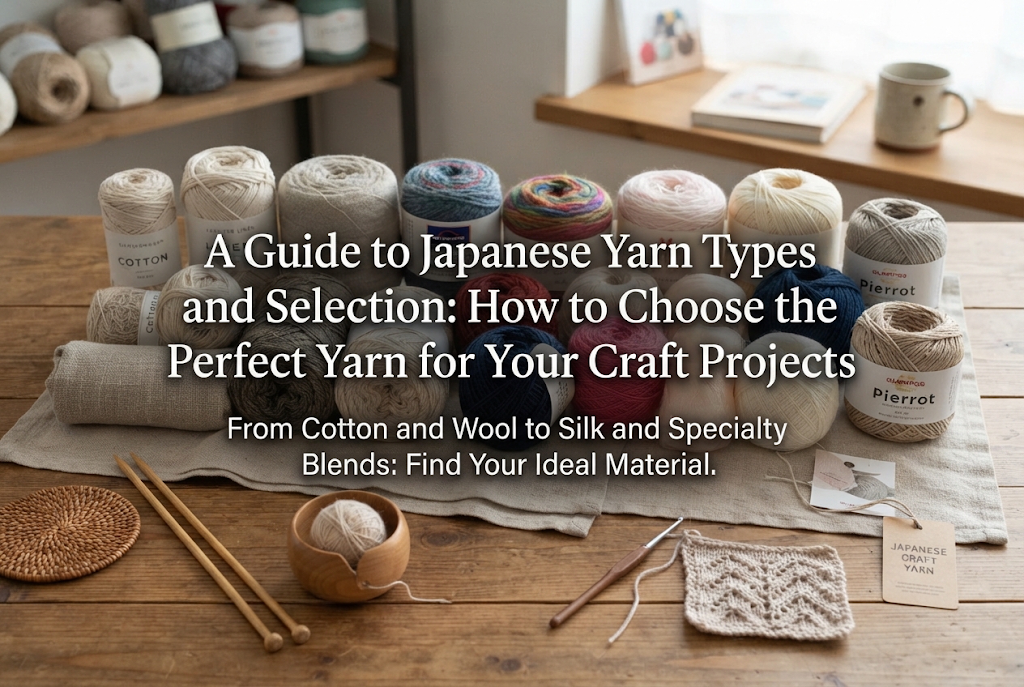
Whenever you visit a craft store or browse online craft shops, looking at the vibrant rows of colorful yarn balls is so exciting, isn't it? From fluffy wools and sleek cottons to dazzling gradient skeins, just gazing at them is enough to spark endless creative ideas.
However, when you actually sit down and think, "I want to knit or crochet something!", have you ever felt overwhelmed by the sheer variety of yarns available? Picking a yarn simply because "it looks cute" can lead to common frustrating issues later—such as yarn splitting while working, or finding out the finished piece is too scratchy to wear against your skin.
Every type of yarn has specific fiber characteristics and standardized yarn weight categories, which naturally pair best with particular tools and projects. In this article, I will walk you through everything from basic yarn knowledge and fiber characteristics to Japanese yarn weight standards, reading yarn labels, and how to select the right yarn for your specific project without mistakes!
The paper band wrapped around a ball of yarn (the label) contains all the essential information you need to handle that yarn correctly. Make it a habit to check these four key details before starting any project.
This shows the percentage of each fiber used, such as "100% Wool" or "60% Acrylic / 40% Wool." This is the single most important factor directly affecting heat retention, lightness, softness, and ease of washing in your finished work.
Labels list weight and length, such as "40g (approx. 80m)." The critical point here is that you should calculate the amount of yarn needed for a project by total length (meters/yards), not by the number of yarn balls or weight.
For example, even with the same 40-gram weight, light and airy wool will yield a much longer strand than dense, heavy cotton. If you want to substitute a yarn other than the one specified in a pattern, calculate the total length required (number of skeins required × length per skein) and buy enough balls of the new yarn to match that total length.
Yarn labels list recommended needle sizes, such as Japanese knitting needle sizes "No. 6–8" or crochet hook sizes "5/0–6/0." For beginners, it is safest to stick to needle sizes within this recommended range.
You will also find the "standard gauge" (number of stitches and rows per 10 cm square). To check how your personal tension (tight or loose) pairs with the yarn, always knit or crochet a swatch (test piece) and measure it before diving into the main project.
While the color number identifies the shade, the "lot number" is equally vital. Yarn is dyed in batches, so even if the exact same dye recipe is used, subtle variations in shade occur between different production vats (lots).
If you switch to a different dye lot halfway through a project, a noticeable line or shade difference may appear across your fabric under light. When making garments or large blankets, always buy the required number of skeins—plus an extra spare—with the exact same dye lot number all at once.
Yarn raw materials fall broadly into three categories: animal fibers, plant fibers, and synthetic fibers. Understanding the pros and cons of each will help you quickly identify the best match for your project goal.
Natural fibers harvested from animal coats are essential for cozy autumn and winter items.
Plant fibers are the stars of spring and summer yarns. They offer a crisp, cool texture and excellent absorbency.
Man-made fibers that offer great durability, easy care, and cost-effectiveness.
Blended yarns combine natural and synthetic fibers to complement each other's weaknesses. For instance, a wool-acrylic blend maintains warmth while improving lightness, washability, and affordability. A cotton-acrylic blend reduces the heavy weight of pure cotton for a lighter, softer finish. For everyday items, choosing blended yarns is a smart option.
In Japan, yarn thickness follows standardized naming conventions. The yarn weight dictates suitable needle sizes, fabric density, and project completion speed.
If you are a complete beginner picking out your very first yarn, I strongly recommend going with Namibuto (Worsted / Medium weight). Namibuto offers clear stitch definition and feels comfortable on needle tips, making it easy to catch mistakes in stitch count quickly.
Fibers that are too thin take a long time to show progress, which can cause beginners to lose steam. On the other hand, super bulky yarns require heavy needles that tire your hands, making consistent stitch tension surprisingly tricky.
The structure of the yarn strand dramatically alters the character of your finished fabric.
Depending on how a finished piece will be used, the yarn qualities you should prioritize change completely. Here are ideal yarn pairings for common popular projects:
The skin on your neck is thin and sensitive. When choosing scarf yarn, gently press the yarn skein against the inner wrist or side of your neck in the store to verify it feels soft.
Recommended options include 100% Merino wool, cashmere blends, or soft acrylic-wool blends. Even if labeled 100% wool, avoid stiff tweed-style yarns for neckwear.
The most common failure in garment making is heavy finished weight. Heavy yarns cause shoulder strain and drag down the length of the garment over time.
Opt for Sport to Worsted weight yarns (Aita to Namibuto), choosing airy wool or lightweight hollow acrylic-wool blends. If knitting large garments with heavier plant fibers like cotton, consider openwork or lace stitch patterns to keep the weight down.
Socks endure full body weight and constant friction inside shoes. Standard 100% wool yarn will develop holes at the heel and toe after just a few wears.
Always choose dedicated "Sock Yarn." Typical sock yarns consist of approximately 75% superwash wool and 25% nylon, providing incredible durability thanks to nylon reinforcement. The superwash treatment also allows easy machine washing!
For plush stuffed toys (amigurumi) stuffed tightly with fiberfill, or tote bags holding daily goods, firm non-stretch cotton or acrylic yarns are best.
If you use overly elastic wool, stuffing amigurumi will push the stitches apart, exposing the stuffing inside, or heavy items will cause bag bottoms to sag. Choose a worsted-weight, tightly twisted straight yarn to maintain clean shapes and crisp silhouettes.
I have made countless yarn selection mistakes myself over the years! Here are three common traps beginners frequently fall into:
Many beginners fall in love at first sight with fuzzy faux-fur or loopy bouclé yarns. However, long-pile fibers completely hide your stitches. You won't see where to insert your hook, counting stitches becomes impossible, and frogging mistakes is nearly impossible—making this the number one reason beginners get frustrated. Start with smooth, worsted-weight straight yarn first to master stitch structure before stepping up to novelty yarns.
Buying strictly 3 skeins just because a pattern says "3 skeins" can be risky. If your crafting tension is slightly loose, you will consume more yarn than the pattern estimate. Running out of yarn halfway through and heading back to the shop only to find your dye lot sold out is a common headache. Different dye lots create visible color lines. Always buy 1 extra skein for small accessories, or 2 extra skeins for larger garments, ensuring all share the same dye lot from the start.
Taking a pattern designed for medium/worsted weight yarn and working it with chunky yarn or thin cotton yarn using the exact same stitch counts will lead to surprises. Chunky yarn turns a beanie into a massive helmet, while thin cotton creates a tiny piece that wouldn't fit a baby. When substituting yarn, always match the weight category or adjust stitch counts based on a swatch gauge calculation.
Here is my personal decision process whenever I start a new project:
First, I consider how the finished piece will be washed. For frequently washed kitchen items, socks, or kids' accessories, I immediately choose superwash wool, cotton, or acrylic. For luxury shawls or sweaters washed gently by hand a few times a year, I indulge in luxurious Merino wool or mohair.
Second, I perform a quick stretch test by pulling the yarn strand between my hands. Yarns with good springy elasticity maintain stable tension while crafting, creating neat stitches even if hand pressure varies slightly. Conversely, stiff non-stretchy threads or loosely twisted yarns that snag require a bit more practice.
Finally, I always make a swatch before starting! Crafting a 10 cm square swatch reveals how smoothly the yarn glides, how it pairs with the needles, and how it feels against the skin. Taking this extra step is the surest secret to a finished piece you will truly love.
We've covered yarn types, fiber qualities, thickness standards, and selection tips tailored to specific projects.
Selecting yarn is one of the most enjoyable parts of handcrafting, directly setting the stage for your finished work. By reading labels accurately and understanding each fiber's personality—warmth, lightness, durability, and texture—your crafting experience and finished project quality will improve dramatically!
Next time you visit a yarn shop or browse online, keep these points in mind and take a close look at the labels. You are sure to find the perfect yarn match for your next cherished project!
If you enjoyed this guide, please share it with your craft friends on social media! Happy crafting, and see you in the next article! This was Yassy from Crafters!

For example, if you are looking for articles about mizuhiki, try searching for "mizuhiki"; if you are interested in tools, try keywords like "nippers" or "pliers."
