Batch Crafting Without Compromise: How to Build an Efficient Production Workflow for Handmade Goods
yassy
Crafters!
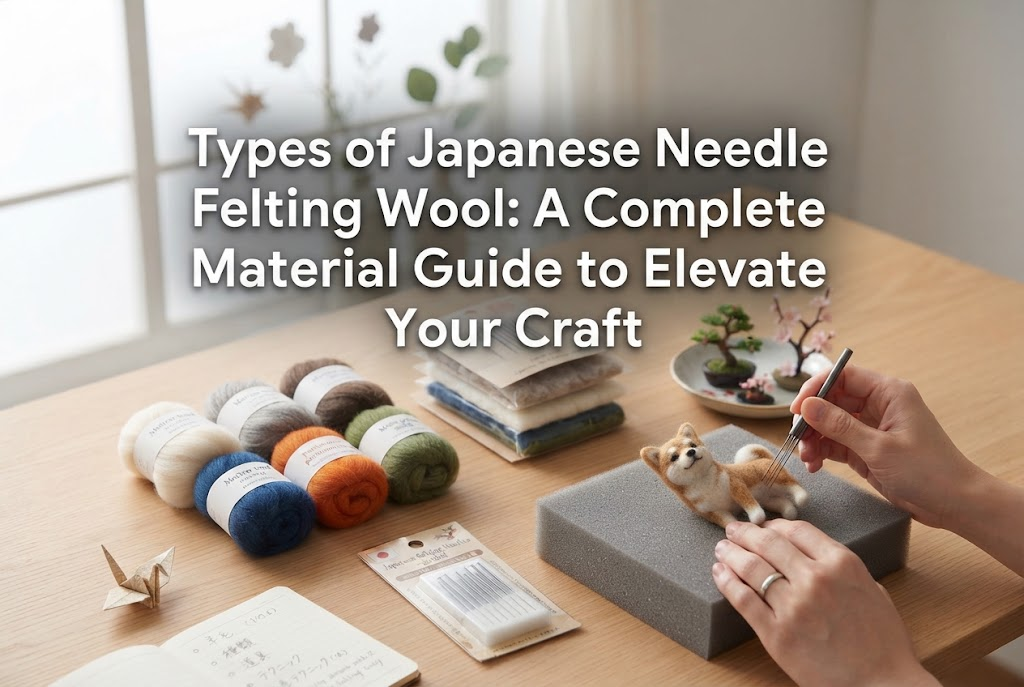

Hello, this is Yassy from Crafters! (・∀・)
As someone who absolutely loves making, looking at, and buying all kinds of handmade crafts, today I want to share a comprehensive guide on the types and characteristics of needle felting wool!
Needle felting is immensely popular in the craft world. By simply poking fluffy wool fibers with a felting needle, you can create adorable mascots, amazingly detailed realistic animals, and stylish accessories. It's a craft enjoyed by makers everywhere.
However, when you browse craft stores or shop online, you encounter a bewildering variety of wool options. With names and forms like Merino, Corriedale, Aclaine, and felt core wadding, it is completely normal for beginners to feel lost about what to buy.
Here is an insider secret: over 80% of common frustration—like wool that refuses to firm up, fuzzy prickly surfaces, or lumpy distorted shapes—is not due to a lack of skill. It happens simply because the type of wool selected does not match the project!
Once you understand material characteristics, your craft quality will improve dramatically. You will shape figures quickly and achieve a beautiful, professional finish every time.
In this guide, I will share my complete experience covering wool forms, wool breeds, synthetic acrylic fibers, project-specific pairings, and solutions to beginner mistakes!
When selecting needle felting materials, the very first thing to check is the form or state of the fibers inside the package. Craft store wool generally falls into three main forms based on how the fibers are aligned. Understanding these differences saves valuable time and keeps frustration at bay.
Top wool features long wool fibers combed neatly in a single direction. It is the most common long-selling type seen on craft store shelves.
Because the long fibers run parallel, you can gently pull them apart into thin, flat ribbons. This makes top wool ideal for smooth surface wrapping, adding realistic fur texture (rooting), or creating delicate line patterns on your pieces.
However, because the fibers are aligned, rolling top wool directly to build a 3D core takes a huge number of needle pokes to tangle. Rule of thumb: when using top wool for structural bases, always tease and fluff the fibers apart by hand before rolling.
Batting consists of wool or synthetic fibers randomly crisscrossed in all directions like a spiderweb.
The barb of your felting needle catches these scrambled fibers effortlessly, causing the material to shrink and firm up in just a few pokes. Building round heads or body cores with batting is more than three times faster than using top wool.
For beginners making 3D mascots, making the inner core out of base batting and wrapping colored wool over the surface is the absolute best approach. It saves immense time and preserves your needles.
Sheet wool consists of fibers pressed flat into thin, uniform non-woven sheets.
You can cut sheet felt with scissors to make flat project parts—such as animal ears, garment collars, or flower petals—or attach them to bases for flat designs. While not meant for 3D needle sculpting, flat sheet felt is indispensable for parts requiring consistent thickness.
Depending on the sheep breed, wool fibers vary greatly in thickness, staple length, natural crimp, and feel. Knowing the main breeds helps you choose the exact right wool for your creative vision.
Harvested from Merino sheep, Merino wool features extremely fine fibers, a silky luster, and incredible softness.
Because it creates an elegant surface finish, Merino is perfect for final surface layers, realistic soft fur textures, and subtle color gradients. It also offers the widest range of dyed colors.
However, because Merino fibers are so fine and supple, needles do not catch them easily, making it slow to firm up into hard shapes. Avoid using Merino for inner core bases—it wastes time and expensive wool!
Corriedale wool offers an ideal balance of fiber thickness and crimp, making it the most user-friendly wool for needle felting.
With moderate spring and body, Corriedale fibers tangle rapidly when stabbed. You can comfortably use it for everything from building cores to finishing surfaces.
Combining quick felting with a clean finish, Corriedale is my top recommendation for beginners. If you want to make sturdy, well-defined mascots, Corriedale is a fail-proof choice.
Romney wool has thicker, longer fibers that provide exceptional durability.
When needle-felted, Romney fibers interlock firmly to create robust, rigid structures that hold their shape. It works wonderfully for building inner skeletons of large sculptures or making practical everyday items like coasters, pouches, and bags.
While too coarse for delicate facial details, Romney excels in projects requiring crisp edges and high hardness.
In addition to 100% natural wool, 100% acrylic synthetic fiber (such as Hamanaka Aclaine, popular in Japanese crafts) holds a major place in needle felting.
Do not shy away from acrylic fibers just because they aren't wool! Synthetic felting materials offer unique advantages that natural wool cannot match.
Acrylic fiber surfaces are specially processed so that fibers tangle ultra-fast when poked. If natural wool takes 1,000 pokes to achieve a certain firmness, acrylic fiber gets equally firm in around 500 pokes. This significantly reduces wrist fatigue and speeds up completion time.
Synthetic fibers take dyes vibrantly, producing bright neon and crisp pastel shades. Acrylic fibers also stay neat and compact, helping beginners produce plump, shiny surfaces with minimal stray fuzz.
While extremely easy to handle, acrylic fiber does not offer the warm, organic texture or soft fluidity of natural animal fur. Use acrylic fiber for bright, anime-style characters or smooth pop-style mascots, and reserve natural wool for realistic animals or rustic craft styles.
The single biggest mistake in needle felting is using expensive colored wool from start to finish. Advanced crafters and professionals separate the core material inside from the colored surface wool outside. Doing this halves your material costs and doubles your precision!
Base wool is un-dyed, natural white or gray wool batting. Because it undergoes minimal dyeing, it is inexpensive and processed specifically for quick felting. Using base wool for the inside core delivers huge benefits:
Standard Procedure: Build a core base slightly smaller than your desired final shape using base core wool. Then, pull a thin veil of colored wool, wrap it around the core, and felt it into place.
Once your base core is complete, apply colored surface wool. The key here is never to wrap colored wool too thickly. Wrapping too much wool at once causes bumpy surfaces and ruins the shape of your core.
Pull your colored wool thin enough that you can see light through it. Wrap it gently around the core, and secure it using shallow needle pokes at a gentle angle.
Wondering which wool to buy for your specific project? Use this handy quick-reference matrix:
Cause: Attempting to build the entire figure using only fine 100% Merino top wool. Merino fibers are too delicate to form a quick inner skeleton.Solution: Switch to base core wool (batting) or Corriedale for the core. It will firm up rapidly to your ideal hardness.
Cause: Using coarse wool on the outer layer, or stabbing the needle at inconsistent angles that pull fibers back out.Solution: Layer fine Merino wool or acrylic fiber thinly on top. Use a fine felting needle (ultra-fine) and poke lightly at a shallow, uniform angle for a salon-smooth finish.
Cause: The colored wool layer is too thin, allowing the core color beneath to show through.Solution: Use vibrant acrylic fiber, or use your needle to slightly indent the area before adding dense color wool. For razor-sharp outlines, twist top wool into a thin line and felt it down along the border.
Craft lovers know the feeling of accumulating bags of wool scraps! Wool is sensitive to moisture and dust, and loose storage causes fibers to tangle. Here is my storage system:
As soon as you open a pack of wool, store it in a clear ziplock bag. Write the breed and color on the bag with a permanent marker (e.g., "Merino – Red", "Corriedale – Brown", "Base Core Wadding"). Keeping breed labels intact prevents accidentally using soft finishing wool for core bases!
Natural 100% sheep wool is a favorite snack for clothes moths and carpet beetles. Protect your valuable stash by placing odorless moth Repellent and silica gel packets inside your storage bins or drawers. This keeps your wool fluffy, clean, and ready to use!
Let's review the main takeaways for selecting needle felting wool:
When you choose the right materials, needle felting becomes an effortlessly enjoyable craft. If you have struggled with soft shapes or stray fuzz in the past, changing your wool type will instantly elevate your finished work!
Grab the perfect wool for your next design and enjoy creating wonderful handmade pieces! If you found this guide helpful, please feel free to share it with your craft friends on social media. See you in the next article—this was Yassy from Crafters!




For example, if you are looking for articles about mizuhiki, try searching for "mizuhiki"; if you are interested in tools, try keywords like "nippers" or "pliers."
