Choosing Craft Brushes for Handmade Projects: A Guide to Japanese Hira-bake, Menso-fude, and Essential Brush Care
yassy
Crafters!

Hello, everyone! It’s Yassy from Crafters! (・∀・)
I absolutely love handmade crafts. Besides making my own projects every day, I spend plenty of time browsing social media for inspiring creations and shopping for cute pieces at craft fairs and independent shops. My days are truly surrounded by handmade art!
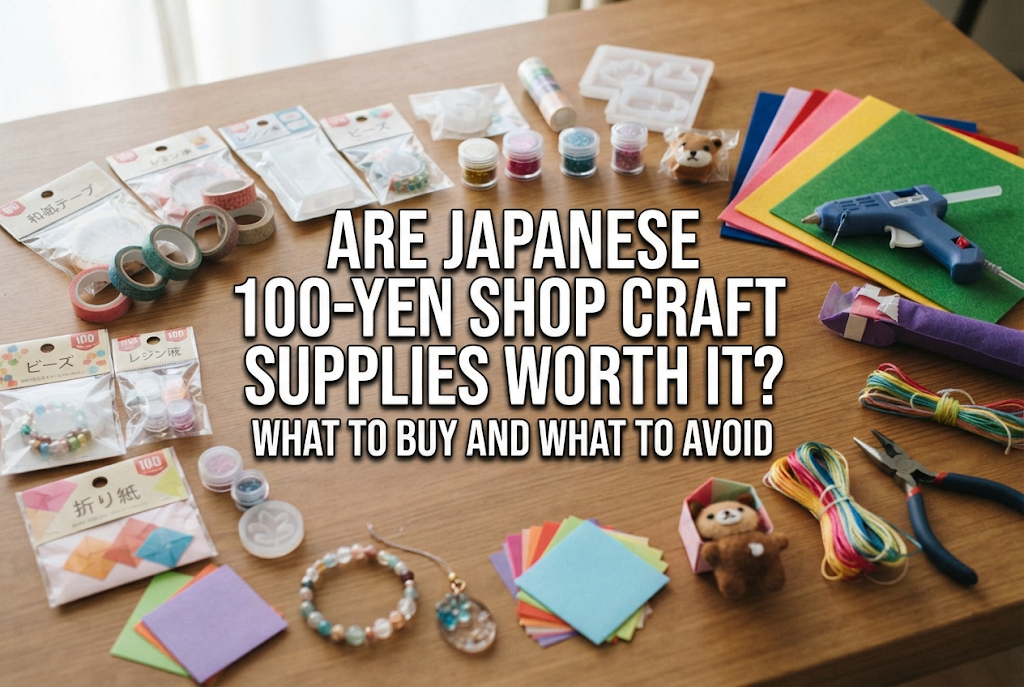
In my daily crafting life, one place has become an indispensable treasure trove: the craft aisle at Japanese 100-yen shops. The sheer variety and quality available at major chains like Daiso, Seria, and Can Do have been turning heads in recent years.
However, beginner crafters often ask me: "Are craft supplies from 100-yen shops actually usable?" or "Am I just throwing money away on cheap junk?"
Here is my honest take right upfront: 100-yen shop craft supplies divide sharply into incredible, must-buy gems and items you should never, ever buy! Knowing how to tell them apart is the real secret to enjoying DIY crafts on a budget without running into frustrating failures.
In this guide, I will break down the true capabilities and limits of Japanese 100-yen shop craft supplies based on my own hands-on experience and craft expertise. By the time you finish reading, you will know exactly what to grab for 100 yen and what to purchase from specialty craft retailers. Let’s dive in so you can start crafting smartly and affordably!
Years ago, Japanese 100-yen stores had a reputation for selling items that were just "okay for trying something out" or distinctly rough around the edges. That is no longer true today. Fueled by Japan's massive handmade boom, 100-yen retailers now develop products that rival those of dedicated craft manufacturers.
The craft sections at Seria and Daiso in particular are goldmines for current trends. You will find beads and silicone molds in muted nuance tones, delicate dried flowers, and even remarkably functional UV-LED resins lining the shelves.
Yet, there is an essential reality you cannot overlook: to sell an item for just 100 yen, manufacturers must cut costs somewhere. Those cost reductions usually hide in places you cannot see right away—such as metal durability, plating thickness, and blade sharpness.
Therefore, the goal is not to buy every single tool and material at a 100-yen shop. The winning formula is a hybrid approach: know what 100-yen shops excel at, know where specialized craft stores shine, and combine the best of both worlds.
Here are the items that I, Yassy, wholeheartedly recommend purchasing at Japanese 100-yen shops. These are standout supplies that rival expensive specialty store versions—or make even more sense to buy cheap.
Silicone molds for UV resin and polymer/resin clay are at the very top of my 100-yen shopping list. The molds sold at Daiso and Seria offer impressive clarity and release cured pieces cleanly without hassle.
Silicone molds are consumable items by nature. No matter how expensive a mold is, repeatedly curing resin inside it causes a chemical reaction that gradually degrades the silicone, leaving the surface cloudy. Because of this, it makes far more practical sense to buy 100-yen molds and swap them out frequently whenever they wear down. That way, your resin pieces always cure with a glossy, crystal-clear surface. Plus, these shops release trendy new shapes almost every month!
If you enjoy working with fabric, textiles, or fibers, picking up pre-cut fabric squares for tsumami zaiku (traditional Japanese fabric folding to create flowers), embroidery floss, and needle felting kits at 100-yen shops is a brilliant move.
Seria’s pre-cut tsumami zaiku fabric is especially convenient. The squares are cleanly cut with precision right out of the package, saving you tedious cutting time. The fabric also has just the right amount of stiffness, making it easy for beginners to fold neat, sharp petals.
Similarly, multi-color embroidery floss bundles cost only 100 yen, making them ideal when you need just a small amount of various colors for practice or small accents. The color payoff is lovely, making them great for both practice stitches and finished pieces.
When it comes to wrapping finished projects, taking display photos, or organizing storage, 100-yen shops reign supreme. There is virtually no reason to pay high prices at specialty packaging shops for these items.
You will find a wide array of pillow boxes, crystal-clear OPP bags, self-adhesive header bags, satin ribbons, and sheer organza pouches of surprising quality. You can also pick up photo backdrop sheets and small wooden display trays to make your finished work look polished and professional for photos.
Whenever I buy handmade accessories, receiving them in lovely packaging always brings a smile to my face. Since you can achieve that high-end presentation for 100 yen, this is an area you should definitely leverage.
Beyond materials that go directly into your pieces, 100-yen shops excel at supplies that keep your workstation clean, tidy, and efficient.
For instance, you can use silicone baking mats or pet placemats found in the kitchen or pet sections as protective table covers for resin or glue work. If resin or adhesive drips onto the mat, you simply let it cure and peel it right off, keeping your desk spotless.
Clear compartment cases for sorting tiny beads and findings, as well as felt-lined beading trays that stop tools and beads from rolling away, are also fantastic. A smooth workspace directly translates to better, cleaner work.
Now, let's look at the items beginners regret buying at 100-yen shops. Skimping on these will only lead to frustration, sore hands, and poor craftsmanship.
Never buy the wire cutters or pliers (round-nose or flat-nose) sold in 100-yen shops for jewelry making. This is the one place where you should invest around 1,000 to 2,000 yen (approx. $10 to $20 USD) per tool at a dedicated craft or tool retailer.
The plier tips on 100-yen versions are frequently misaligned, making it nearly impossible to grip small jump rings or headpins securely. Their ergonomics are also poor, causing hand fatigue very quickly. Furthermore, budget wire cutters have blunt, uneven edges that crush pins and wires rather than slicing cleanly through them, leaving jagged ends. Low-grade tools ruin your work and strain your wrists and fingers.
Metal hardware that forms the structural backbone of jewelry should also be sourced from specialized craft suppliers.
Jump rings and pins from 100-yen shops often suffer from inconsistent hardness: they are either too stiff to bend smoothly or so soft that they warp and pull open under minimal tension. Their electroplating is also extremely thin, meaning they can oxidize and turn dark or rusty within just a few weeks of exposure to air.
Spending hours making a gorgeous piece of jewelry only to have the metal tarnish or snap is heartbreaking. Furthermore, budget earring hooks rarely provide reliable hypoallergenic coatings. For hardware that touches the skin or supports structural weight, stick to reputable jewelry supply shops.
Glue is the lifeline of many handmade crafts. General-purpose adhesives and superglues from 100-yen shops fall far short of specialized craft glues in drying speed, clarity, and long-term durability.
Budget adhesives frequently cause blooming (a cloudy, white residue that forms around the glue joint as it dries), which instantly ruins clear resin, cabochons, or rhinestones. Over time, cheap glue often yellows or becomes brittle, causing bonded parts to pop off at the slightest bump.
Using dedicated handmade adhesives designed for specific pairings—such as Cemedine Haisui or Bond Craft Komachi (popular Japanese craft glues for delicate textile, metal, and rhinestone work)—is essential for lasting durability.
I strongly advise against buying fabric scissors at a 100-yen shop.
A good pair of fabric shears depends entirely on sharp, precisely aligned blades. Cutting cloth with 100-yen scissors often causes the fabric to slip or get caught between the blades, resulting in frayed edges, pulled threads, and wavy cut lines.
Unevenly cut fabric will skew when sewn, throwing off the entire symmetry of your piece. Investing in a proper pair of dressmaking shears from a sewing brand makes an astonishing difference in cutting precision and speed.
Because everything is so cheap, it is easy to make simple mistakes. Keeping these three common pitfalls in mind will save you both money and headaches.
At 110 yen (including Japanese consumption tax) per item, it is tempting to throw everything into your basket with the mindset of "it's only 100 yen!" Before you know it, your total reaches several thousand yen.
Keep in mind that 100-yen craft materials usually come in tiny package sizes. If you plan to make multiple items, buying bulk economy packs from specialized craft wholesalers or online retailers often works out to a significantly lower price per unit. Always consider the unit cost rather than just the retail sticker price.
Many beads, charms, and findings sold at 100-yen shops are mass-produced imports with noticeable size variations. It is common to find bead holes that are too small for standard wire, or jump rings that are too thick to fit through the loop of a charm. For precise, delicate projects, buying standardized components from specialty stores ensures smooth assembly.
Recently, 100-yen shops have started selling compact, handheld UV/LED lamps for around 500 yen. While portable and cheap, they come with a major catch.
These budget lamps have low wattage and narrow light distribution. If your resin piece is slightly thick, the UV light cannot penetrate to the center. This causes incomplete curing—where the surface feels set, but the interior remains a sticky liquid. Incompletely cured resin leaves reactive chemicals unbonded, which can trigger skin irritation and resin allergies. For safe curing, purchase a dedicated craft lamp rated between 6W and 48W from a reputable craft supplier.
To keep things simple, here are the buying criteria I live by in my own studio. When you are standing in an aisle debating a purchase, refer to these three golden rules:
Following this framework eliminates craft-related stress and elevates the quality of your finished work so it looks professional!
Once you get the hang of crafting, you might want to sell your creations online or at craft markets. A common question among makers is: "Is it acceptable to sell crafts made using 100-yen shop supplies?"
Here is the reality, broken down by commercial copyright rules and quality standards.
Generally speaking, many basic materials sold in Japanese 100-yen stores are permitted for commercial use. However, there are crucial exceptions.
Using licensed character fabrics or motifs (such as Disney or Sanrio) to create items for sale is a direct violation of copyright laws. Additionally, certain original molds or charms sold at Seria or Daiso feature packaging specifically marked with notices like "Not for Commercial Use" or "For Personal Use Only." If you intend to sell your work, always inspect the fine print on the back of the packaging first.
Even if an item is legally approved for commercial use, I strongly advise against using 100-yen metal hardware on the primary, load-bearing parts of items you sell.
If a customer purchases your jewelry and the earring post snaps after one wear, or the chain tarnishes green within a few days, your brand’s reputation will be damaged immediately. When people pay for handmade goods, they expect longevity and safety. As a professional standard, source your core materials and functional findings from established jewelry suppliers, while using 100-yen items for packaging accents or secondary embellishments.
Having tested countless craft supplies, here are five low-key "god-tier" tools from 100-yen shops that I reach for daily in my own workshop:
The major 100-yen chains in Japan each have distinct design philosophies and specialty craft lineups. Knowing their strengths helps you shop like a seasoned pro:
Let’s recap the main guidelines for getting the most out of Japanese 100-yen shop craft supplies:
When used with discernment, 100-yen shop supplies lower the barrier to entry, sparking fresh inspiration and making DIY creativity accessible to everyone. Don't be afraid to pick up a few charming items, experiment freely, and enjoy the magical feeling of bringing something handmade to life!
Happy crafting, and see you in the next article! This was Yassy from Crafters!

For example, if you are looking for articles about mizuhiki, try searching for "mizuhiki"; if you are interested in tools, try keywords like "nippers" or "pliers."
