Why Needle Felt Objects Warp and Sag: Japanese Crafter’s Guide to Firm Felting and Structural Integrity
yassy
Crafters!
Hello, everyone! This is Yassy from Crafters! (・∀・)
Have you ever tried to attach a tiny finding or bead to your handmade piece, only to have glue suddenly gush out of the tube and ruin your work? Squeezing directly from a factory adhesive tube often leads to messy overflow right where you wanted a neat joint, spoiling your favorite materials. It is truly frustrating when that happens.
As someone who regularly makes, purchases, and appreciates all kinds of handcrafted works, I am convinced that the single biggest boundary between amateur and professional quality is the cleanliness of your glued surfaces. No matter how lovely the design is, visible glue squeeze-out or glossy adhesive residue instantly gives a project an unfinished look.
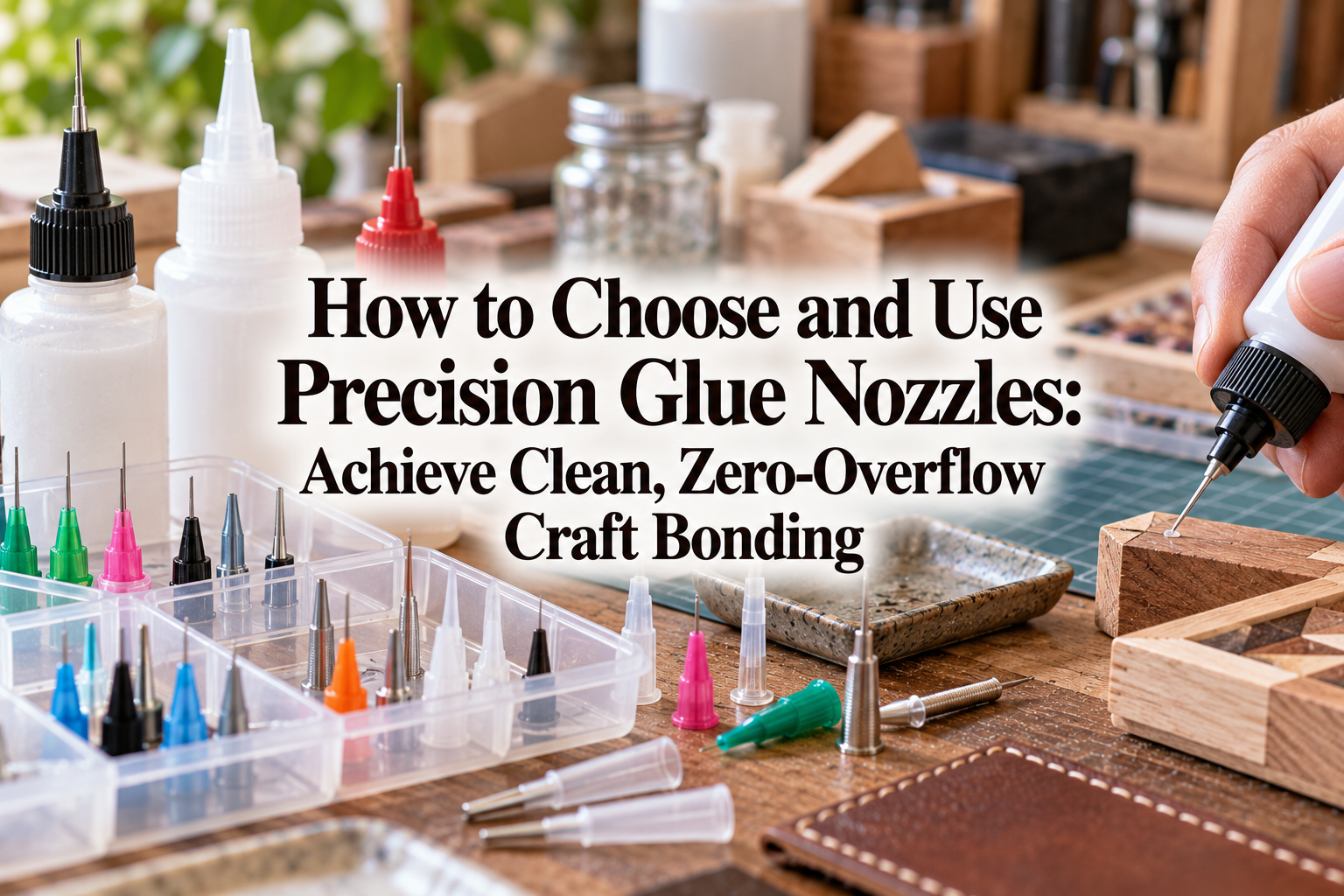
The game-changing tool that solves this issue in an instant is a precision glue nozzle attachment. By simply mounting one onto the tip of a commercial glue bottle or tube, you gain total control, allowing you to dispense glue in microscopic dots as fine as a needlepoint or hair-thin lines. In this guide, I will share my hands-on experience and technical tips on the different types of precision nozzles, how to select the right one, and how to use them without failure.
A precision glue nozzle is a fine attachment tip designed to fit over the spout of commercial craft glues, instant adhesives (cyanoacrylate), or cement tubes to control the dispensed liquid down to an ultra-fine caliber. In crafting circles, they are also known as micro-tips, needle applicators, or fine dispenser tips.
When applying adhesive straight from the manufacturer's tube, it is nearly impossible—no matter how steady your hand is—to produce a drop smaller than 1 to 2 millimeters in diameter. With a precision nozzle attached, however, you can cleanly dispense micro-droplets ranging from 0.2 mm to 0.5 mm.
Equipping your workstation with micro-nozzles offers three dramatic benefits for handmade projects:
Precision nozzles come in several distinct types based on material and tip shape. Choosing the right one for your specific medium and adhesive viscosity is the key to clean craftsmanship.
These nozzles feature a rigid, needle-like tube made of stainless steel or similar metals. Both their inner and outer diameters are remarkably fine, and the metal will not flex under pressure.
Their greatest appeal is absolute precision. Ultra-fine models with an internal diameter around 0.2 mm excel when placing pinpoint adhesive dots on rhinestones or delicate metal findings. In addition, their high durability allows them to be cleaned and reused repeatedly.
Made from flexible plastics like polyethylene or polypropylene, these nozzles feature a tapered tip that narrows toward the end. You can cut the tip with craft scissors to achieve your exact desired flow diameter.
Plastic nozzles are very affordable and typically sold in multipacks, making them cost-effective. They are especially practical when using instant adhesives (super glue), which tend to cure inside the nozzle; when clogged, you can simply dispose of them and move on without stress.
These tips are made of soft silicone rubber. Even if you press the tip directly against curved, fragile, or uneven surfaces during application, there is no risk of scratching the base material.
Moreover, most adhesives have poor adhesion to silicone, meaning dried glue at the tip can easily be peeled off with your fingertips, making cleanup exceptionally hassle-free.
Nozzles are generally offered in straight orientations or angled designs bent at 45 or 90 degrees.
Straight tips are well suited for standard pinpoint application on flat surfaces. However, when you need to reach deep inside three-dimensional pieces or apply glue into recessed, shadowed areas, angled tips are far superior. They allow you to apply glue precisely without your fingers or the glue tube blocking your line of sight.
Many beginners attempt to improvise fine glue application with common household tools. However, dedicated precision nozzles differ fundamentally from these makeshift alternatives.
The most common beginner workaround is dispensing a puddle of glue onto scrap paper and transferring it with the tip of a toothpick. While convenient at first glance, this method is inefficient and compromises quality.
Using a toothpick requires three distinct actions: squeezing glue onto a palette, dabbing the toothpick into the glue, and transferring it onto the workpiece. During this transfer, the glue begins to cure and thicken in open air, reducing bond strength. Additionally, the amount of adhesive carried on the tip fluctuates each time, resulting in an uneven bond.
A precision nozzle dispenses adhesive directly from the tube to the workpiece in uniform amounts. This keeps the adhesive fresh and delivers a noticeably faster, cleaner application.
Syringes with blunt needles are another tool used for measured dispensing, but they serve a different primary purpose.
Syringes are ideal for injecting a consistent volume of liquid repeatedly across large batches. However, you must draw glue into the syringe body first, and cleaning out the barrel afterward can be tedious. For day-to-day crafting, an attachment nozzle that fits directly onto your standard glue tube requires a fraction of the preparation and cleanup time.
Industrial dispensing needles used in manufacturing often feature rigid threaded metal collars (Luer lock mechanisms) designed to lock onto pneumatic dispensing equipment.
These threads rarely match the spouts of standard craft glue squeeze tubes. Attempting to fit them directly often leads to loose seals and spills. Always opt for push-on capillary tips or universal craft-compatible nozzles designed specifically for manual squeeze tubes.
Adding a fine nozzle to your adhesive toolkit eliminates bonding frustration across numerous handmade disciplines:
With various nozzles available in craft shops and online, keep these three essential criteria in mind before buying:
Even the finest tip is useless if it does not mount securely to your adhesive container. Connection types primarily fall into two categories:
If you are using standard multi-purpose craft cement or super glue in aluminum tubes, flexible push-on micro-tips are typically the safest and most reliable choice.
The internal diameter of a nozzle is often labeled in millimeters (mm) or gauge (G). Matching the diameter to your adhesive's thickness is vital:
For thicker adhesives, skip rigid needle tubes and instead use tapered plastic nozzles, which allow smoother flow toward the tip.
Choose your nozzle type based on your working style and adhesive choice.
When using cyanoacrylate instant adhesives that cure quickly upon contact with moisture in the air, disposable plastic nozzles are the most practical choice. Keep an inexpensive multi-pack on hand and replace the tip as soon as it stiffens.
For PVA wood glue, craft paste, or adhesives that dissolve in warm water or solvent, reusable stainless steel needle tips are economical and provide lasting precision.
To get the best performance out of your precision tip, follow these practical steps:
Remove the bottle cap and press the attachment nozzle all the way down onto the neck. If it is seated loosely, squeezing the tube can build internal pressure that shoots the tip off, spraying adhesive everywhere.
If the fit feels slightly loose, wrap a single layer of masking tape around the glue tube's spout to increase its diameter before pushing the nozzle on. This creates a secure, leak-free friction fit.
When applying, hold the nozzle tip hovering roughly 0.5 mm above the bonding surface. Pressing the tip flush against the material blocks the aperture and stops flow.
Apply steady, light pressure to the tube with your thumb and forefinger. Sudden, heavy squeezes build up excess pressure inside the tube, causing glue to keep oozing even after you release your grip.
To finish a glue dot or line cleanly, release your squeeze pressure completely, then lift the tip straight up with a swift motion or flick it in a tiny circle. Pulling sideways drags a long glue thread across your piece. Practicing a crisp, upward release keeps your work neat.
Precision nozzles are delicate tools. Without proper care, they can clog permanently or cause cosmetic issues like adhesive blooming.
While you are adjusting parts or shifting tasks during a project, glue at the exposed tip will begin to skin over within minutes.
Whenever you set the glue down for a pause, insert a fine craft pin or the wire clearing pin included with your nozzle set directly into the tip. This blocks air exposure and prevents the aperture from sealing shut.
If working with water-based glue, resting the nozzle tip face-down on a damp, folded paper towel also prevents it from drying out mid-session.
When instant glue is applied in excessive amounts, vaporized cyanoacrylate can settle on surrounding surfaces, leaving a powdery white residue known as blooming or frosting.
Using a precision nozzle naturally limits the dispensed volume, reducing blooming risks. To ensure a clear finish, gently blow air over the glued joint with a small hand fan or paper fan right after placement to disperse airborne vapors.
To clean and reuse metal needle tips:
In the world of handmade crafts, gluing is not merely a step to hold pieces together—it directly dictates your finished work's structural integrity, neatness, and aesthetic appeal.
If you have struggled with toothpicks or messy glue spouts, try using a dedicated precision nozzle. For just a modest addition to your craft kit, your bonding frustrations will vanish.
Once you experience placing adhesive micro-dots precisely where you want them without fear of leaks or overflow, you will never want to craft without one again. Equip your workspace with the right tips, master the basic touch, and enjoy creating clean, beautiful pieces with total confidence!
If you found this guide helpful, feel free to share it with your fellow makers. Until next time, happy crafting from Yassy!


For example, if you are looking for articles about mizuhiki, try searching for "mizuhiki"; if you are interested in tools, try keywords like "nippers" or "pliers."