Essential Measuring & Marking Tools for Crafting: How to Pick the Right Tool by Craft Type
yassy
Crafters!

Hello, everyone! This is Yassy from Crafters! (・∀・)
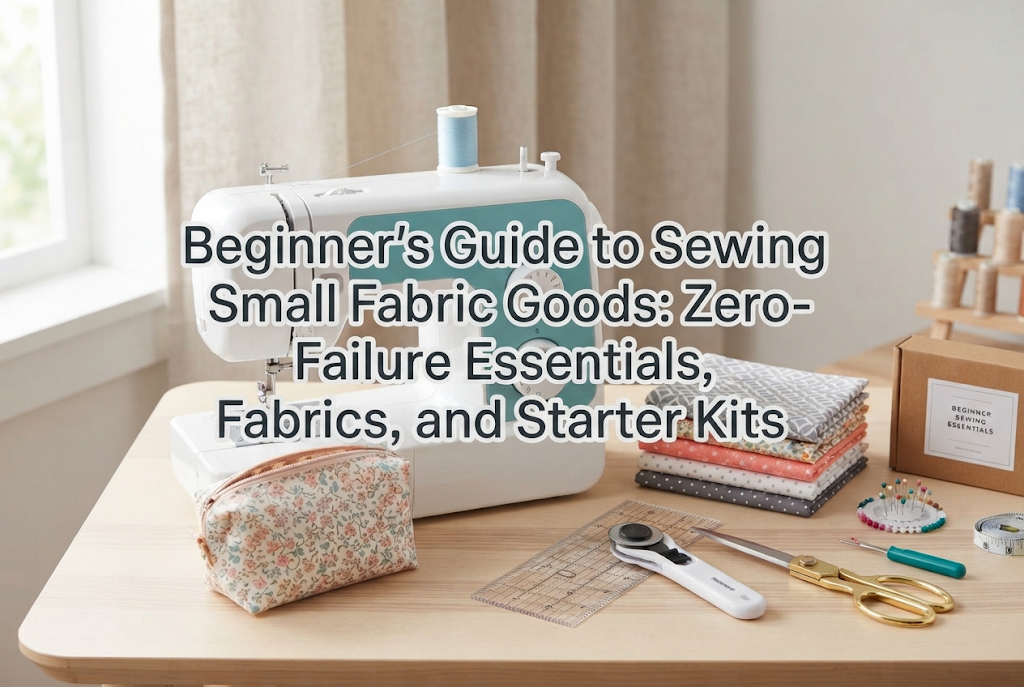
Isn't it wonderful to pick out your favorite fabric and quickly sew cute pouches, bags, and everyday lifestyle accessories? Among the many handmade craft genres, sewing small fabric items—what we in Japan affectionately call nuno komono—stands out with unbeatable practicality and pure creative joy.
Whenever I visit fabric stores or browse online textile shops, I get so excited by all the gorgeous patterns that I often end up on a fabric-buying spree. Browsing, choosing, sewing, using what you made, or gifting it to someone special—every step in the world of fabric goods is an absolute blast.
"But I haven't touched a sewing machine since school home economics…""I have no idea what tools or fabrics to buy…"
If you find yourself hesitating, don't worry! This comprehensive guide walks complete sewing beginners through a foolproof, zero-frustration process to start making fabric items right away.
I will skip the guesswork and clearly explain where beginners get confused, common causes of mistakes, and the most efficient path forward. After reading this, your days of wondering are over. Grab your starter kit and materials on Amazon, and let's kick off your sewing life today!
There is a clear reason why I recommend small fabric sewing above all else for anyone wanting to get into handmade crafts: you can finish a project in a short time, and the everyday usability brings an unmatched sense of accomplishment.
While jewelry making and clay crafts are lovely, fabric goods allow you to create practical tools directly tied to daily living. Putting your favorite cosmetics into a pouch you sewed yourself, or heading out for groceries with your own handmade tote bag—once you experience that thrill, it becomes wonderfully addictive.
Furthermore, small fabric goods rely almost entirely on straight stitching. You don't need to build intricate 3D structures right away; simply cutting rectangles and sewing straight lines produces a polished, functional item. Because you build skills quickly and see tangible results immediately, the dropout rate in this craft is remarkably low.
The idea that "only naturally crafty people can sew" is completely false. With the right tools and the proper steps, anyone can finish a delightful fabric project from day one.
The main reason beginners hesitate to try sewing is machine anxiety: "It looks difficult to operate," "Adjusting thread tension seems confusing," or "I probably need an expensive machine."
Please cast those misconceptions aside completely.
Modern sewing machines have evolved to be extremely user-friendly and functional, designed specifically with beginners in mind. Needle threading takes just the push of a lever, and sewing speed can be adjusted effortlessly. You absolutely do not need an industrial-grade machine costing hundreds or thousands of dollars.
Another common pitfall is striving for a flawless straight line right from the start. Even if your seam wobbles slightly, matching your thread color to your fabric makes it virtually invisible from the outside. Rather than aiming for 100% perfection on your first attempt, focus on the joy of bringing a piece to completion.
A sewing machine is not something to fear—it is a helpful partner that multiplies your crafting speed by ten. Approach it with the right mindset and experience the thrill of finishing your very first project!
When starting fabric crafts, choosing a sewing machine is an unavoidable step. With countless options available, the criteria beginners should look for are already well established. Buying a toy-like, ultra-budget machine will only lead to regret.
In short, beginners should target a compact or computerized sewing machine in the ¥20,000 to ¥30,000 range (approximately $150 to $250 USD). Ultra-cheap machines under ¥10,000 lack the motor power to sew through multiple fabric layers, and their finicky thread tension often causes beginners to give up. Avoid falling into the trap of buying cheap only to waste money.
Complicated, costly options like built-in embroidery modules are entirely unnecessary. A simple, sturdy machine with reliable straight stitching and zigzag stitching (for seam finishing) is all you need.
Browsing fabric stores or online shops can be overwhelming due to the sheer volume of choices. However, the fabrics a beginner should start with are very clear. Choosing purely based on cute patterns often leads to fabrics that are difficult to sew, leading to frustration.
For your first few projects, stick strictly to 100% cotton oxford cloth or cotton sheeting.
Oxford cloth has just the right thickness and body. It doesn't fray easily, and the sewing machine's feed dogs grip it securely. It is an all-around champion for pouches, tote bags, and drawstring sacks. Cotton sheeting is slightly lighter than oxford but remains soft and easy to handle, making it ideal for linings or lightweight pouches.
On the other hand, there are fabrics beginners should avoid initially: slippery fabrics like satin and chiffon, stretchy fabrics like knits, and heavy fabrics like thick denim or stiff canvas. These require specialized needles, threads, and advanced handling skills, so save them until you've gained confidence.
Sewing threads and needles come in various sizes, but beginners only need one standard setup.
For thread, choose a #60 polyester spun thread designed for medium-weight fabrics, such as Fujix's standard Schappe Spun #60. Stick with versatile neutral shades like ecru (unbleached off-white) or white, or pick a color that matches your main fabric. Inexpensive, no-brand threads break easily and cause machine jams, so always choose a trusted manufacturer.
For needles, pick standard #11 domestic sewing machine needles (medium weight). Needles are consumables: bent or dull needles cause skipped stitches, so make it a rule to switch to a fresh needle every few projects.
Eighty percent of sewing success is determined during the prep stage before touching the pedal. Having the right tools on hand can triple your speed and noticeably enhance your finished product. Here are essential tools I personally rely on and highly recommend to newcomers:
Cutting fabric with fabric shears often causes the cloth to lift and shift off measurement. A rotary cutter solves this effortlessly. By guiding the rolling blade along an acrylic ruler, you can slice straight lines with pinpoint precision. Pairing this with a large cutting mat dramatically boosts your prep efficiency.
Traditional straight pins can distort your fabric layers or prick your fingers. Today, using sewing clips is the modern standard. They clamp fabric layers securely together and release in an instant. With zero risk of injury, they are a must-have upgrade.
You might wonder why an iron is needed for machine sewing, but pressing is the single biggest secret to professional-looking fabric items. Pressing seam allowances open, creating crisp folds, and fusing interfacing between sewing steps gives your work a clean, retail-quality finish. Keep your ironing board set up right next to your sewing desk!
Liquid fabric glue and iron-on fusible tape work wonders for securing fold-overs or holding delicate parts in place before stitching. Tacking pieces down beforehand completely eliminates shifted fabric layers while sewing.
Every sewing beginner runs into similar hurdles. Knowing the root causes and solutions in advance keeps you calm and in control. Here are field-tested fixes straight from my crafting experience:
When you start stitching and the underside of the fabric bunches into a messy "bird's nest," beginners often assume the bobbin (lower thread) is the culprit. In 90% of cases, the real issue is an incorrectly threaded upper thread.
If you thread the machine with the presser foot lowered, the thread cannot seat properly inside the tension discs. If threads tangle, remove both upper and bobbin threads completely, raise the presser foot lever, and rethread the upper thread carefully. This resolves the issue almost every time.
You pour care into sewing a pouch or bag, only to have it warp and shrink after washing. This happens when you skip mizutooshi (fabric prewashing and grain straightening).
Natural fibers like cotton and linen naturally shrink when exposed to water. Before cutting your pieces, submerge the yardage in water, squeeze out excess moisture, let it air dry until damp, and press it smooth with an iron to square the grain. Taking this extra step ensures your finished pieces maintain their size and shape through repeated washes.
When you try to start stitching right at the very edge of the fabric, the needle can pull the raw edge down into the needle hole, bunching up the cloth.
The fix is simple: drop your needle about 5 mm to 1 cm (1/4 to 3/8 inch) inside from the raw edge rather than right on the edge. Holding the loose tails of both upper and bobbin threads gently toward the back with your fingers as you start sewing also prevents the fabric from getting pulled down.
If you intend to sew straight but your seam wanders, the problem usually lies in staring at the moving needle.
Focusing on the needle throws off your perspective. Instead, look at the edge of the fabric and align it with the seam guide markings etched onto your needle plate. By gently guiding the front of the cloth along the guide line, you will achieve clean, straight lines with ease.
Jumping straight into an intricate multi-pocket backpack almost guarantees frustration. In fabric crafting, following a progressive sequence builds your skills step by step. Work through this roadmap to steadily gain confidence and technique:
Start with a simple square coaster. Cut two squares of fabric, stitch around the perimeter, and turn the piece right-side out through an opening before closing the gap. This project teaches the core foundations: straight seams, backstitching, corner trimming, and neatly closing turning gaps.
Once you have coasters down, try a flat drawstring pouch (kinchaku). Without boxed corners, it is easy to sew with straight lines. You will practice finishing raw edges with zigzag stitching and creating folded casings for the drawstring cord. Pulling the cords to cinch your very own handmade pouch closed is a wonderful feeling.
Next up is a simple tote bag. Here you will learn how to create boxed corners for depth (gussets) and how to secure sturdy handle straps between the exterior and interior lining. Constructing a fully lined tote gives you a durable, beautiful finish and marks your transition out of the beginner stage.
Your milestone project is a classic zippered pouch. While zippers might seem intimidating, using your machine's zipper presser foot makes the process straightforward. It is simply sewing straight seams along fabric and zipper tape. Once you understand the sequence, you can finish one in under an hour.
If you are excited to start, spending hours aimlessly browsing craft supplies online is wasted momentum. Ordering the essential materials in one go via online retailers like Amazon is the fastest, smartest way to begin.
Instead of wandering through multiple craft brick-and-mortar stores, online shopping lets you quickly grab coordinated beginner starter kits containing everything you need.
Pre-cut fabric bundles feature color palettes and patterns curated by designers, ensuring your finished pieces look stylish even if you are not confident in matching fabrics yourself. Considering the time and travel saved, ordering a complete kit online offers great convenience and value.
The anticipation of opening your delivery box makes the best prologue to your new hobby. Don't hesitate—gather your essentials and take that first exciting step into crafting!
In this guide, we explored fundamental sewing basics, smart equipment choices, and a step-by-step roadmap to launch your fabric craft journey without missteps.
Sewing fabric goods does not require rare natural talent. Choosing a manageable machine, picking beginner-friendly fabrics like cotton oxford, and leaning on practical tools will allow anyone to create charming, store-quality items.
Begin with a humble square coaster. The thrill of transforming flat cloth into a 3D creation and holding your one-of-a-kind handmade project will add so much richness and fun to your daily routine.
When inspiration strikes, that is the best moment to begin. Hop online, pick out your starter tools and favorite fabrics, and start sewing! I'm cheering you on as you begin your personal sewing adventure!
If you enjoyed this guide, please share it with your craft-loving friends! See you in the next article—this was Yassy from Crafters!

For example, if you are looking for articles about mizuhiki, try searching for "mizuhiki"; if you are interested in tools, try keywords like "nippers" or "pliers."
