Zero Ripples: Why Resin Surfaces Distortion Happens & How to Achieve a Glass-Like Finish
yassy
Crafters!

Hello, this is Yassy from Crafters! (・∀・)
I personally love making all kinds of handmade items, admiring wonderful creations by fellow makers, and buying unique pieces at handmade markets and shops! Whenever a new crafting material or trendy technique pops up, I just can't resist trying it out right away.
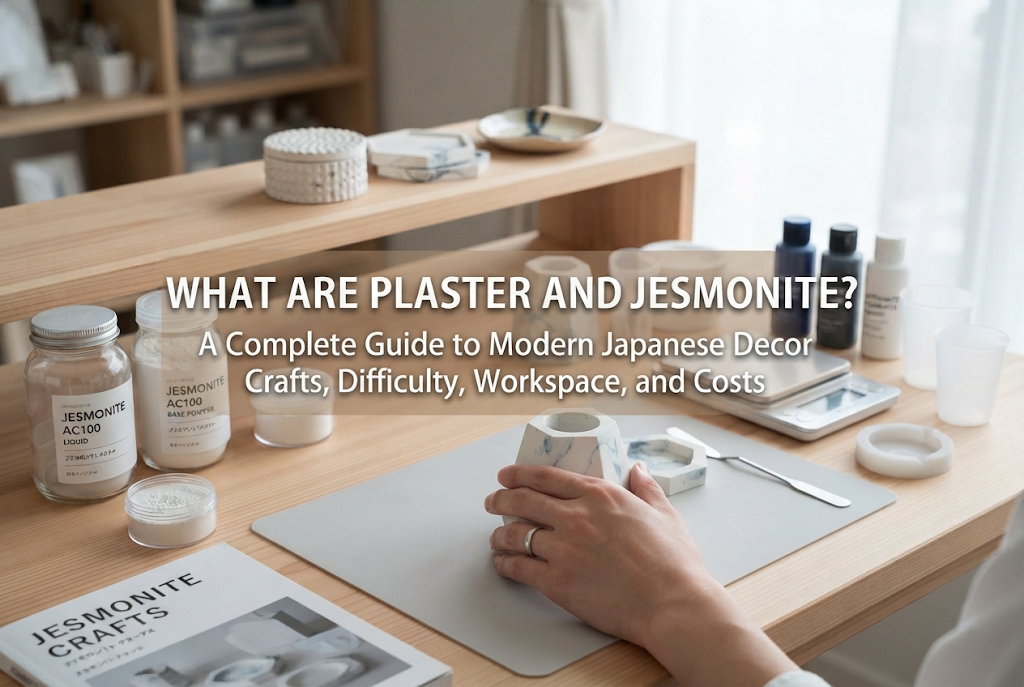
Right now, the craft materials I am paying the most attention to—and which have gained massive support from crafters around the world and here in Japan—are "plaster" and "Jesmonite."
When browsing social media or online craft marketplaces, you often see chic, matte coasters and aroma stones that look like luxury hotel interior decor. Many of these gorgeous items are made using plaster or Jesmonite.
I frequently hear questions like, "How are they different from resin?", "Will they make a mess or leave strong chemical smells in my room?", or "Can a beginner really make shop-quality items?"
In this guide, drawing from my own crafting knowledge and hands-on experience, I will thoroughly explain the basics of plaster and Jesmonite, what you can make, the level of difficulty, required workspace, and concrete cost estimates! By the end of this article, you will know exactly which material fits your goals and how to start without failing.
First, let's clear up the confusion between plaster and Jesmonite. While both produce a smooth, porcelain-like or mineral-like finish when completed, their material properties and characteristics are vastly different.
Plaster (Gypsum plaster) is made by heating and dehydrating gypsum, a natural mineral, into a fine powder. It has a long history, traditionally used in sculpture, architecture, and medical casts.
Using it is extremely simple: just mix the plaster powder with an appropriate amount of water and pour it into a silicone mold. It hardens at room temperature without requiring heat, flames, or special curing equipment.
The greatest appeals of plaster are its incredible cost-effectiveness, high absorbency, and ability to hold scents. Because hardened plaster contains microscopic air pores (a porous structure), dropping essential oil onto it allows the oil to soak in slowly and release a gentle fragrance. This is the primary reason why plaster is wildly popular in Japan for making "aroma stones."
On the flip side, traditional plaster is sensitive to impacts and breaks easily. It is also not waterproof, meaning it cannot be washed with water or used outdoors. Dropping it by accident can break it instantly.
Jesmonite is a water-based composite material originally developed in the UK. It is made by mixing two components: a liquid acrylic resin and a mineral base powder.
While it offers a smooth, tactile porcelain-like finish similar to plaster, its strength is in a completely different league. Thanks to the resin component, it is remarkably durable, hard to break even when cast thin, and boasts excellent fire resistance and durability.
Another major highlight is that it contains zero volatile organic compounds (VOCs). Unlike conventional epoxy resin or UV resin, it has no harsh chemical smell and is safe for both human health and the environment. Being VOC-free means you can comfortably craft with it in rooms without intense ventilation, making it safe for households with young children or pets.
Because of its high structural strength, Jesmonite can be used to craft larger interior goods, functional daily items, and even furniture components.
Here is a quick breakdown to help you compare the two at a glance:
If you want to create fragrant aroma diffusers or small decorative ornaments, plaster is your best choice. If you want to make functional coasters or luxury interior trays, Jesmonite is the ideal option.
Here are specific examples of what you can craft with plaster and Jesmonite. Since both materials faithfully capture the finest details of silicone molds, your creative possibilities are virtually endless!
Oval, octagonal, and circular interior trays are among the most popular projects. They make stunning display bases for keys, jewelry, or candles.
Jesmonite is particularly famous for creating terrazzo (aggregate stone) and marble effects. By mixing crushed chips of pre-hardened, colorful Jesmonite into a fresh batch and sanding the cured surface, you can achieve an authentic, high-end terrazzo marble pattern reminiscent of luxury hotels.
This is the signature project for plaster. By pouring plaster into detailed molds—such as flowers, 3D animals, bears, angels, or cameos—you can easily create charming aroma stones that look ready for store shelves.
Adding a few drops of your favorite essential oil spreads a delightful scent. Because they require no fire or electricity, plaster aroma stones are in high demand in Japan as safe fresheners for bedrooms, entryways, bathrooms, and closets.
Both plaster and Jesmonite are non-combustible. This makes them ideal for crafting taper candle stands or tealight holders, which are very popular in Korean-style interior decor trends.
Furthermore, casting a container cup out of Jesmonite and pouring soy wax inside to make a homemade soy candle has become a huge trend among Japanese craft artisans.
By leveraging Jesmonite's durability, you can create 3D hollow items like cylindrical vases, pen holders, or succulent planters.
Applying a dedicated sealant (sealer) to the surface improves water resistance, allowing you to use Jesmonite vessels for fresh flowers with water, not just dried flowers.
You can even cast lightweight earrings, pendants, or ring elements using plaster or Jesmonite. They offer a solid, substantial appearance while remaining light to wear, making them great for bold, modern jewelry designs.
Additionally, many handmade creators make custom display stands and background plates out of these materials to photograph their jewelry collections.
Many crafters think, "I've tried clay or resin before, but plaster and Jesmonite sound complicated…" To give you the answer upfront: the difficulty level is extremely low. Even complete beginners can create beautiful results on their very first try!
The workflow is delightfully straightforward:
That's all! You don't need hand-sculpting skills like clay, nor do you need to spend time curing layers under UV lamps like resin.
Many beginner resin crafters get discouraged by surface stickiness, incomplete curing, trapped bubbles, strong chemical odors, or skin allergies.
Plaster and Jesmonite eliminate these worries entirely:
Even though the process is easy, cutting corners will lead to mistakes. Here are three common traps beginners fall into:
Plaster and Jesmonite harden through precise chemical reactions. If you add too much water or liquid, the material will fail to set properly, leaving you with a chalky, brittle piece. If you add too little liquid, it won't mix thoroughly and will form clumps. Always use a digital scale accurate to 1g (or 0.1g) and strictly follow the weight ratios recommended by the manufacturer.
Air easily gets trapped in sharp corners or intricate mold details. After pouring, poke deep corners with a wooden skewer or gently tap the mold against your table to shake out trapped air bubbles.
As plaster and Jesmonite harden, they undergo a mild exothermic reaction (feeling warm to the touch). Warmth indicates that internal curing is still active. Forcing the piece out of the mold at this stage can bend or snap it. Always wait until the piece has cooled down completely before demolding.
You don't need a huge dedicated craft room or high-tech equipment to start.
All you need is a small corner of a desk or dining table covered with a sheet of newspaper or a silicone mat—roughly an A3 to A2 paper size workspace is plenty.
Unlike dry clay, powder won't fly everywhere if handled carefully, and as long as you prevent liquid spills, you can easily craft right in your living room.
No complex power tools are required. You can gather these items easily online or at local craft suppliers:
There is one absolute rule you must follow when working with plaster or Jesmonite: NEVER pour leftover liquid or unmixed powder down your sink or drain pipe!
Both materials harden even underwater. Pouring leftover mixture down the drain will cause it to cure inside your plumbing, completely blocking your pipes. Fixing a solid blockage requires professional plumbing services and can be extremely expensive.
Instead, let leftover material in your mixing cups harden completely. Once cured, flexible silicone or plastic cups can be squeezed gently, causing the hard leftover shell to peel off clean. Dispose of cured solids in your regular household trash according to local waste regulations.
Washing cups with water should only be done as a final touch after all solid residue has been wiped clean with a paper towel.
Initial costs vary significantly depending on whether you choose plaster or Jesmonite.
Plaster is remarkably budget-friendly, making it the perfect entry point if you want a quick craft trial.
With a budget around ¥3,000 JPY, you can start making aroma stones and small decorative trays right away. A 1kg bag of plaster is enough to make dozens of small aroma stones, making the material cost per piece just a few dozen yen!
As an advanced composite system, Jesmonite carries a higher initial material investment.
Expect an initial setup cost of around ¥10,000 JPY. While higher than plaster, the finished strength, tactile quality, and market value of Jesmonite pieces provide exceptional returns on investment.
On Japanese handmade marketplaces like minne and Creema, handcrafted Jesmonite coasters and trays sell for around ¥2,000 to ¥4,000 JPY. Creating high-quality pieces can quickly cover your initial material costs.
If I were starting completely from scratch today, here is the exact step-by-step strategy I would follow!
Rather than buying expensive Jesmonite immediately, pick up a 1kg bag of high-strength plaster (often sold as "High-Stone" in craft markets). Avoid standard school-grade craft plaster, as it breaks too easily.
Grab a basic digital scale, paper cups, and a small silicone mold to cast a few aroma stones. Use this stage to learn how precise measuring feels, how to pop air bubbles, how the heat reaction works during curing, and how satisfying demolding is. Since each attempt costs mere pocket change, you can practice worry-free!
Once you are comfortable with the casting flow, introduce a Jesmonite Starter Kit! Practice with solid single-color trays first, then try marble swirls, and finally move on to terrazzo patterns.
To make terrazzo, mix pre-made colorful Jesmonite chips into your new mixture. After demolding, sand the surface wet under running water with wet/dry sandpaper. As you sand away the top layer, bright hidden chips suddenly emerge on the smooth surface! It is an incredibly rewarding process that you'll quickly fall in love with.
After sanding your Jesmonite piece, coat the surface with a dedicated sealer (waterproof sealant) or acrylic wax.
This coating adds a silky finish while protecting the surface from stains and water marks, elevating your craft to professional, store-ready quality.
Plaster and Jesmonite combine ease of use with stunning aesthetic results, making them incredible additions to modern DIY crafting.
Let's review the key points:
Without requiring open flames or specialized electrical tools, these materials let you create sophisticated home decor in very little time. I highly recommend giving them a try!
Pick out a mold you love, get a batch of material, and give it a shot. The moment your piece pops clean out of the mold, you'll be hooked on the wonderful world of plaster and Jesmonite!
If you enjoyed this guide, please share it with your craft-loving friends! See you in the next article—this was Yassy from Crafters!


For example, if you are looking for articles about mizuhiki, try searching for "mizuhiki"; if you are interested in tools, try keywords like "nippers" or "pliers."
