How to Plan Seasonal Handmade Collections: Stay Ahead of Trends and Never Miss Peak Sales
yassy
Crafters!

Hello, this is Yassy from Crafters! (・∀・)
I love making various handmade items myself, but I also love looking at wonderful creations by other makers and buying pieces when I think, "I really want this!" The excitement of holding an item filled with the creator's passion and attention to detail is truly unique to handmade crafts.
Because I love handmade goods so much, beginners who want to start selling their creations often come to me with one common question: "Where should I open my online shop?"
In Japan, there are many platforms to choose from, such as minne, Creema, BASE, and STORES. If you choose a site simply because it is well-known or because everyone else uses it, you may quickly hit serious roadblocks: your items do not sell at all, the platform fees are too high to leave any profit, or the customer base does not match your style.
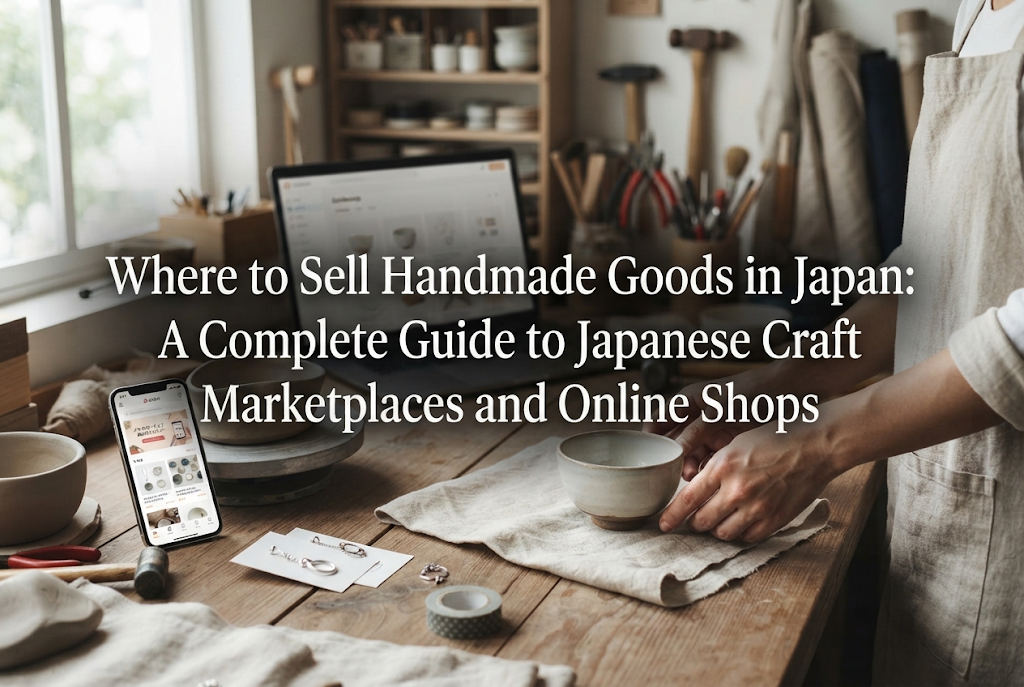
There is a clear answer when choosing an online shop. The first step toward succeeding as a handmade creator is picking the ideal platform for your style, target audience, and current ability to attract customers. In this guide, I will break down the features of Japan's major e-commerce platforms and handmade marketplaces, helping you find the right place to sell.
Before selecting a platform, you must understand a critical distinction: the difference between a handmade marketplace platform and an independent e-commerce (shopping cart) platform. Confusing these two models is the single biggest mistake made by beginners.
A handmade marketplace platform (such as minne or Creema) works like setting up a booth inside a massive shopping mall. In contrast, an independent e-commerce platform (such as BASE or STORES) is like building your own standalone boutique on a street corner.
The decisive difference comes down to whether potential customers are already walking by.
Handmade marketplaces already see large numbers of shoppers visiting every single day specifically looking to buy crafts. This means that even if you have zero followers on social media, shoppers can discover your creations through keyword or category searches. In exchange, you face heavy competition within the same directory, making price comparisons easy, and platform sales commissions are generally higher.
On the other hand, independent e-commerce stores give you great design freedom and lower transaction fees. However, a newly launched standalone shop is like a store built deep in the mountains where nobody passes by. Unless you bring customers in yourself through social media or marketing, your store traffic will be zero. No matter how incredible your work is, no one will ever see it.
For beginners who have not yet built an audience, launching exclusively on an independent e-commerce site is a mistake. You need to objectively evaluate your current reach before choosing where to open.
If you plan to sell handmade goods in Japan, you should first understand the distinct traits of its two major marketplaces. While both are dedicated to handmade products, their user demographics and top-selling styles are quite different.
minne boasts one of the largest registered user bases among craft marketplaces in Japan. The core buyers are women in their 20s to 40s. Everyday accessories and fabric items with casual, charming aesthetics offered at accessible prices tend to sell very well here.
I use minne frequently as a buyer myself, and its app layout is very clean, making it intuitive to search for items. For beginner creators, the biggest advantages are the sheer volume of users and how easy it is to list items. The seller dashboard is thoughtfully designed, allowing even people who are not confident with computers to set up a shop without confusion.
The sales commission is 10.56% (tax included) of the product price plus shipping. Fees are charged only when an item sells, and there are no monthly maintenance fees. Because you can start with zero financial risk, minne is the platform I recommend most for complete beginners with no prior sales record.
However, because the catalog of listings is massive, low-quality product photos will quickly get buried. In addition, because many items on the site are relatively inexpensive, it can be harder to sell higher-priced goods.
Creema emphasizes a professional atmosphere and serious craftsmanship. Its primary shoppers are mature women in their 30s to 50s and older, alongside a notable segment of male users. Gift demand is also very high.
Compared to minne, the average price point on Creema is distinctly higher. Authentic jewelry made with natural gemstones, genuine leather goods, sophisticated home decor, and apparel made with premium fabrics are favored here. Shoppers on Creema are generally looking for rich textures and distinctive designs rather than bargains.
The sales commission ranges from 10% to 12.1% (tax included), adjusting dynamically based on your total sales over the previous three months. If your creations use premium materials, have high production costs that you cannot discount, or sell for 5,000 yen or more per item, Creema is the right choice.
Many users on Creema carefully read descriptions of materials and the creator's philosophy, so writing thoughtful, detailed product descriptions is an effective way to gain dedicated fans.
Once your social media follower count grows or you establish a dedicated base of fans, it is time to look at independent e-commerce builders. These platforms allow you to break free from a shared marketplace layout and express your brand's unique identity completely.
BASE is one of the most widely recognized shop-creation services in Japan. Its greatest strength lies in its extensive integrations with social media platforms like Instagram and TikTok. Setting up Instagram Shopping tags—which let users tap a photo to visit a product page directly—is straightforward.
BASE offers two pricing plans: the Standard Plan, which has zero initial or monthly fees, and the Growth Plan at 19,800 yen per month (tax included). On the Standard Plan, you pay a payment processing fee of 3% + 40 yen plus a 3% service fee per order, totaling an effective fee of roughly 6.6% + 40 yen per transaction.
BASE also operates a shopping app called "Pay ID," where shoppers can discover and purchase items from BASE-powered stores. This gives your standalone store a small boost from marketplace-style traffic. With a rich library of design templates, you can easily build a stylish shop just by adding your logo and setting your brand's color palette.
STORES is a powerful contender for creators who want to keep profit margins as high as possible. Its main appeal is its low fee structure.
The free plan carries no monthly fee and has a payment processing fee of 5%. Compared to BASE's Standard Plan (effectively around 6.6% + 40 yen), the per-transaction cost is noticeably cheaper. Furthermore, if you upgrade to the Basic Plan at 3,278 yen per month (tax included), the processing fee drops to 3.5%, among the lowest in the Japanese industry.
Once your monthly sales exceed 200,000 yen, moving to the STORES paid plan will leave you with the highest net profit.
Designing your storefront is intuitive; you can assemble clean, polished pages by placing modular design blocks. Built-in tools for issuing customer-exclusive discount coupons and sending email newsletters also make it simple to retain buyers and encourage repeat purchases.
Shopify, originally from Canada, is the world's leading e-commerce platform. It provides remarkable scalability and stability, but to be clear: complete beginners in handmade craft do not need it yet.
There are two reasons. First, even the cheapest plan requires a fixed monthly fee of around 3,000 yen or more. Second, setup and custom modifications require a certain degree of technical literacy, creating a high barrier for beginners.
However, if you want to sell internationally (cross-border e-commerce) or if your brand grows to generate tens of millions of yen annually and you incorporate as a business, Shopify becomes the premier choice. For now, it is enough simply to know of it as an option for the future.
Beyond the main platforms, certain specialized channels can be effective depending on the nature of your work.
iichi focuses on skilled artisanal works, traditional Japanese crafts, and creations by professional makers. Items like handcrafted furniture, woodwork, ceramics, and fine metalwork are valued highly here.
The sales commission is 20% (tax included), which is higher than other platforms. In exchange, iichi attracts a discerning audience that understands true craft value and willingly pays tens of thousands of yen for top-quality goods. If you make unique, labor-intensive pieces rather than mass-produced crafts, iichi is an ideal showcase.
While Mercari is primarily a flea market app for secondhand goods, many creators use it to sell handmade items. The transaction fee is a flat 10%. Mercari's biggest asset is sheer immediacy: the moment you list an item, hundreds or even thousands of people may view it immediately.
However, because it is fundamentally a flea market app, many shoppers are looking for bargains and discounts. It is not suitable for preserving high brand prestige or selling premium jewelry.
The best way to use Mercari is as a secondary outlet to clear out prototypes, discontinued models, or discount bundles made from leftover materials. It should be kept distinct from your primary brand shop.
Now that we have reviewed each platform, let us look at where you personally should set up shop based on your current situation.
Recommendation: Start with minne!
If you have only a few hundred followers or are just setting up your social accounts, choose minne. Building an independent store now will bring no visitors. Your top priority is to use minne's built-in marketplace traffic to experience making your first sales. Use this stage to master product photography, packaging, shipping logistics, and customer service.
Recommendation: Start with Creema!
If you create work with high material costs—such as natural gemstone jewelry, leather crafts, or upscale interior goods—Creema is the right place. Shoppers on Creema understand the value of quality materials and are willing to pay prices that users on minne might pass over as expensive. You can build a loyal audience while maintaining your brand image.
Recommendation: Build your store on STORES or BASE!
If you share your work on social media and consistently receive engagement and purchase inquiries, it is time to open an independent store. If you want zero fixed costs and prioritize profit margins, pick the free plan on STORES. If you want seamless Instagram shopping features and access to a marketplace-style discovery app, choose BASE.
Recommendation: Run a marketplace alongside your independent store!
Do not make the mistake of closing your minne or Creema shop just because you launched your own independent store. The smartest path is running both. Acquire new customers on high-traffic marketplaces like minne or Creema, then include a branded shop card or social media invitation inside every outgoing package to direct repeat buyers to your BASE or STORES shop where fees are lower. This strategy maximizes your profit margins.
When running a shop, never leave your numbers vague. Gross revenue and net profit are entirely different things. Let us look at a realistic example to see how fees affect your bottom line.
Assume you sell a pair of earrings for 3,000 yen (excluding shipping) and sell 10 pairs in a month. Your total sales are 30,000 yen. Here is what you take home from each platform after payout, assuming a flat bank transfer payout fee of 200 yen:
Even at 30,000 yen in monthly sales, the net payout difference between minne and STORES is roughly 1,600 yen. Over a full year, that adds up to nearly 20,000 yen.
You might wonder: "Why not just run everything on STORES?" Remember that STORES requires you to bring all your own traffic. When you consider the time, advertising budget, and social media labor needed to attract visitors, paying 1,600 yen more in marketplace fees on minne to let their platform handle customer acquisition is far more efficient for beginners.
Think of that commission as an outsourced marketing fee, and plan to shift sales toward lower-fee platforms as your volume grows.
Listing your creations on both minne and Creema simultaneously is a great way to boost sales. However, this carries a real risk that beginners often encounter: double-booking inventory.
If you list a one-of-a-kind handmade piece on both minne and Creema and two buyers purchase it at nearly the same moment, you will have to cancel on one of them, saying, "I am very sorry, but this item has sold elsewhere."
Canceling orders damages customer trust and harms your shop's reviews. In worst-case scenarios, your seller account can be suspended.
To prevent inventory double-booking when selling across multiple channels, use these three methods:
When launching an online shop in Japan, legal guidelines and basic settings must be addressed. Many beginners feel intimidated here, but with clear information, there is nothing to worry about.
Under Japanese law (the Act on Specified Commercial Transactions, or Tokusho-ho), commercial operators are generally required to display their legal name, address, and phone number on their storefront. Many individual makers, particularly women, feel uncomfortable displaying their personal home address online.
Fortunately, major platforms now provide protections for independent makers. Services like minne, Creema, BASE, and STORES offer address masking settings that display the platform operator's corporate contact details in place of your private address, allowing you to run your shop safely without exposing your private residence.
If you use a service that does not offer this masking option, or if you prefer not to use your home address on return shipping labels, you can subscribe to a virtual office service for a modest monthly fee and display that business address and phone number instead.
Setting shipping rates incorrectly can quickly erode your profits. Only offer free shipping if your product pricing is high enough to absorb the postage costs. If you offer free shipping on items priced between 1,000 and 2,000 yen, shipping fees and platform commissions will consume all your earnings.
Here are reliable shipping options widely used for handmade deliveries in Japan:
Shoppers do not just look at item photos; they almost always check your profile page to see who is behind the work. If your profile is blank or contains timid phrasing like "I am just a beginner, but I will try my best," visitors will hesitate to purchase.
Put yourself in the customer's shoes: would you want to buy from a store that says, "I am new to this, so I might make mistakes"? You certainly would not.
Include these four elements in your profile to establish buyer confidence:
Approaching your shop with professional pride and writing in a clear, polite tone are essential foundations for creating a store that sells.
We have covered the distinct traits of Japan's major handmade marketplaces and e-commerce platforms, how fee models work, and how to choose the right channel for your needs.
To summarize the core decisions:
The biggest pitfall when choosing a shop is spending weeks hesitating without completing your registration. While you are stuck overthinking, potential customers who would love your work cannot find you.
All of these platforms are completely free to register and launch. If you try one and feel it does not suit your style, you can always move your items to another platform later.
I personally experience the joy of making, browsing, and buying crafts every single day. But having a piece that you poured your heart into reach an unfamiliar customer through an online shop, followed by a message saying "Thank you so much for this wonderful piece!"—that feeling is truly special.
Stop hesitating and take that first step today. I am genuinely cheering on your journey to share your handmade creations with the world!
See you in the next post! This was Yassy from Crafters!



For example, if you are looking for articles about mizuhiki, try searching for "mizuhiki"; if you are interested in tools, try keywords like "nippers" or "pliers."
