A Guide to Crafting Rulers: How to Choose and Use Grid, Metal, and Japanese Bamboo Rulers
yassy
Crafters!
Hello everyone! This is Yassy from Crafters! (・∀・)
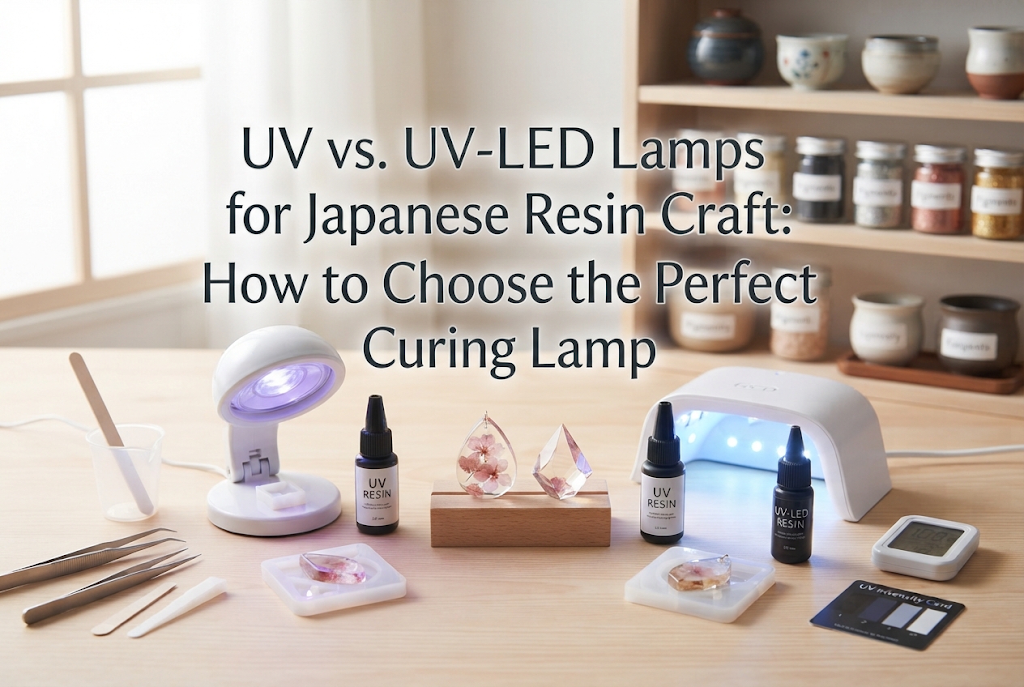
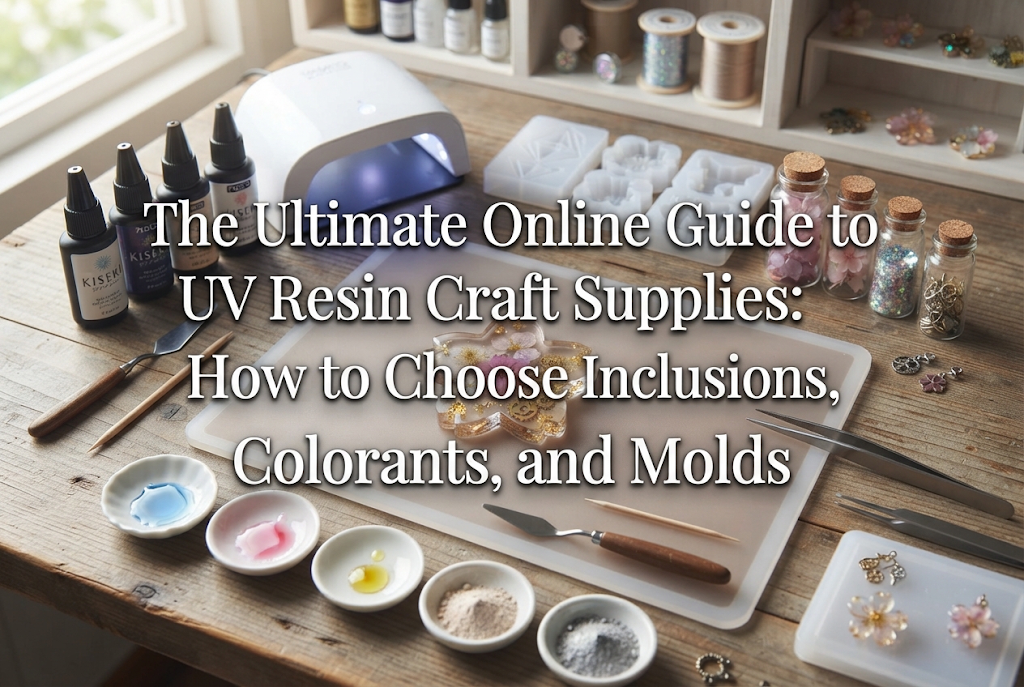
When you first decide to dive into the world of resin crafting, you inevitably run into one major hurdle right away: choosing the right curing lamp.
Whether you browse craft stores or online shops, you will see tools with deceptively similar names, like "UV Light" and "UV-LED Light." If you assume, "They sound almost identical, so whichever I pick should work the same," you are bound to regret it later.
I personally love making resin pieces, admiring wonderful creations by fellow crafters, and hunting for cute charm findings. Over the years, I have crafted countless resin items and thoroughly tested a wide variety of curing lamps.
From that hands-on experience, I can give you one clear conclusion: even if UV lights and UV-LED lights look similar on the outside, their internal technology and performance are completely different. If you buy one without understanding this, you risk facing fatal mistakes—like resin that stays sticky forever, surfaces that refuse to cure, or simply wasting your hard-earned money.
In this guide, I will break down the differences between UV and UV-LED lamps, explain how light wavelengths interact with resin formulas, and share the absolute rules for choosing a lamp you won't regret!
The single most common mistake among resin beginners is combining the wrong type of resin liquid with the wrong lamp.
Have you ever encountered a situation where your resin liquid remains gooey on the surface, no matter how many hours you blast it under the lamp? Over 90% of these troubles stem from a wavelength mismatch between the lamp and the resin.
Resin liquid hardens through a chemical reaction triggered by receiving specific wavelengths of ultraviolet (UV) light. If the wavelength emitted by your lamp does not match the wavelength required by the ingredients in your resin, the resin will never cure—no matter how long you leave it under the light.
In the craft market today, you will find "UV Resin Liquid" (traditional) and "UV-LED Resin Liquid" (hybrid). Similarly, lamps come in "UV Lights" and "UV-LED Lights." If you pair them randomly without understanding how they interact, both your precious materials and your time will go to waste.
Please toss out the assumption that "any lamp works as long as it glows." Acquiring the right knowledge is your shortest path to stress-free, mistake-free crafting!
Let's first grasp the fundamental differences between UV lights and UV-LED lights. There are clear distinctions across structure, light source, wavelength, curing speed, and lifespan.
Here is a helpful comparison table to give you a complete overview:
As you can see from this comparison, UV-LED lamps have become the absolute standard in the modern handmade resin community.
Traditional UV lights are typically rectangular box-like units fitted with long fluorescent tubes inside. On the other hand, UV-LED lamps use numerous small LED chips set inside a slim, sleek frame.
This structural difference creates a massive divide in work efficiency and maintenance costs.
Now let's dive into light wavelengths—a slightly technical topic, but the single most crucial factor in resin crafting!
Light wavelength is measured in nanometers (nm). Resin liquids contain chemical compounds called photoinitiators. When these initiators absorb light at specific nanometer readings, they trigger a polymerization reaction that hardens the liquid into solid plastic.
Here is how the light emitted differs between UV lights and UV-LED lights:
Traditional UV lights emit light centered around the 365 nm wavelength. Conventional UV resins were specifically formulated to react to this 365 nm light.
Therefore, if you are using older formulas marked exclusively as "UV Resin," a lamp capable of emitting 365 nm UV light is essential.
However, because fluorescent UV tubes emit a gentler light intensity, the chemical reaction progresses slowly. This is why cure times take anywhere from 3 to 5 minutes.
Modern UV-LED lamps are equipped with hybrid (dual wavelength) LED chips capable of emitting both 365 nm and 405 nm wavelengths simultaneously.
The 405 nm wavelength sits close to visible light and carries higher energy. Contemporary UV-LED resins use advanced photoinitiators that react rapidly to this 405 nm range.
As a result, the resin cures rock-hard in a astonishingly fast 30 to 60 seconds.
Here is a quick compatibility cheat sheet to keep in mind:
Because modern UV-LED lamps output both 365 nm and 405 nm, they are compatible with almost all resin liquids on the market today. Therefore, if you are purchasing new gear, choosing a hybrid UV-LED lamp is by far the best option.
Now that you understand how curing light works, here are five essential checkpoints to consider before making a purchase. Never choose a lamp based solely on aesthetic design, or you may struggle with practical usage later.
Always inspect the product specification label or product description. Look for indications like "365+405nm" or "Wavelength: 365nm/405nm."
If you buy a single-wavelength lamp, the types of resin liquid you can use will be severely limited. A hybrid model emitting both wavelengths simultaneously is your all-in-one solution for almost any resin craft.
Lamps generally come in two styles: Stand/Dome types and Foldable/Handheld types.
If your primary focus is making jewelry, keychains, and charms, a Dome/Stand lamp is highly recommended. The enclosed dome prevents light leakage and features internal reflective surfaces that distribute light evenly across the top, sides, and bottom of your piece.
While foldable handheld lights are travel-friendly, their light diffuses easily, which can cause uneven curing on thicker molds or larger items. For your primary desktop setup, a dome-shaped stand lamp with good clearance height and depth is the ideal choice.
Pay close attention to how the unit receives power. Many compact UV-LED lamps feature USB power cords that plug into computers or portable power banks.
While convenient, if the power source or adapter provides insufficient amperage (A), the lamp cannot operate at full strength, leading to incomplete cures. For consistent performance, select an AC adapter model that plugs directly into a wall outlet, or ensure you plug USB models into a high-output adapter rated for 2A or higher.
Built-in timers dramatically streamline your workflow.
Select a model with dedicated preset buttons, such as 30s / 60s / 99s. Pressing a button to start an automatic countdown that shuts off automatically is an absolute must-have feature.
Avoid lamps that require you to hold a switch manually or lack a timer altogether, as they will tie up your hands during delicate crafting steps.
In particular, lamps with a "Low Heat Mode" (which gradually increases light intensity) are fantastic for beginners. They prevent the sudden thermal spikes that cause resin shrinkage, warping, or accidental burns.
This subtle feature is easy to overlook, but make sure the base plate can be easily detached via magnets or slide-out grooves.
A removable base offers two huge benefits:
Fixed bases limit your height clearance and make cleanup difficult, so consider a detachable base a top priority.
To help you select the exact lamp for your personal setup, here are my recommendations tailored to specific crafting goals:
Best Choice: Compact Dome UV-LED Lamp (24W to 36W)
For delicate items, ultra-high wattage isn't necessary. A 24W to 36W dome lamp is comfortable to operate, distributes light evenly, and easily accommodates several small findings at once without taking up valuable desk space.
Best Choice: High-Output Dome UV-LED Lamp (48W or higher with removable base)
When working with deep silicone molds or heavily pigmented resin, deep light penetration is vital. A 48W+ high-power UV-LED lamp ensures light reaches all the way to the core, eliminating the risk of uncured centers. Using Low Heat Mode on these thicker pieces also prevents surface wrinkles and heat distortion.
Best Choice: Foldable Hybrid UV-LED Lamp (USB-Powered, Slim Design)
When crafting away from your main desk, a slim lamp with folding legs is a lifesaver. Paired with a portable power bank, you can cure resin anywhere, making it a fantastic backup tool for quick event repairs or on-site workshops.
After reading this far, you might wonder: "Are older fluorescent UV lights completely useless now?"
While there is little reason to purchase a traditional fluorescent UV lamp today, they do hold a niche advantage: their output is very gentle, meaning chemical reactions occur slowly and steadily. For extremely thin surface coatings prone to wrinkling, a slow, gentle cure under a traditional tube lamp can yield a glassy finish.
However, the downsides far outweigh this perk. Fluorescent bulbs degrade over time—even if they still glow blue, their UV intensity drops, requiring bulb replacements every 6 to 12 months. Furthermore, they are bulky, heavy, and consume more power.
For anyone building a modern resin toolkit today, choosing a dual-wavelength UV-LED lamp is undoubtedly the smartest move.
Once you get your hands on a great curing lamp, follow these maintenance tips to keep it performing like new for years to come:
If uncured resin splashes onto the inner housing or LED chips during crafting, clean it right away. If left uncleaned, the next cycle will harden the resin right over the LED lens, blocking light output.
Always unplug the unit first, then wipe away wet resin using a cotton swab or soft cloth dampened with isopropyl alcohol or specialized resin cleaner. If resin has already cured onto the surface, gently soften it with alcohol before wiping—never scrape it aggressively with metal tools.
Even though UV-LED lamps run cooler than traditional bulbs, running them continuously for prolonged periods can trap heat within the internal circuit board. Allow the unit to rest for a few seconds between long curing cycles to let internal heat dissipate. This simple habit will significantly extend your lamp's lifespan.
Store your lamp away from sunny windows, as direct sunlight can yellow or degrade the plastic housing over time.
Also, avoid storing uncured resin bottles or active work-in-progress pieces right next to your lamp setup. Stray UV rays or sunlight bouncing off nearby surfaces can accidentally cure liquid resin right inside the bottle or mold!
Answer: Yes, absolutely! Nail curing lamps and resin curing lamps utilize the same underlying technology and emit the same dual wavelengths (365 nm + 405 nm). As long as the specifications (wavelength, size, wattage) suit your project needs, a nail lamp will cure craft resin perfectly. In fact, many professional Japanese resin crafters regularly use high-spec nail lamps in their studios.
Answer: Sunlight will cure resin, but a lamp is essential for consistent quality. While natural sunlight contains powerful UV rays, weather conditions, time of day, and cloud cover cause light intensity to fluctuate wildly. Curing outdoors can take anywhere from tens of minutes to hours, leaving your sticky project exposed to floating dust, hair, and debris. A dedicated curing lamp gives you complete control over cure times and dust-free results.
Answer: Not necessarily. A wattage between 36W and 48W is the sweet spot for general crafting. Excessively high wattage (such as 80W or 100W+) can cause resin to heat up too quickly, leading to rapid shrinkage, mold separation, or surface ripples. A 36W to 48W unit equipped with Low Heat Mode provides the best balance of speed, power, and smooth finishes.
In this guide, we explored the differences between UV and UV-LED lights, the science of light wavelengths, and key guidelines for selecting your ideal lamp.
Here is a quick summary of key takeaways:
Once you clear up any confusion surrounding curing lamps, all that's left is to bring your creative ideas to life! Equip yourself with the right tools and enjoy creating beautiful, crystal-clear resin pieces.
If you found this guide helpful, please feel free to share it with your fellow crafter friends on social media! See you in the next article—this was Yassy from Crafters!

For example, if you are looking for articles about mizuhiki, try searching for "mizuhiki"; if you are interested in tools, try keywords like "nippers" or "pliers."