A Complete Guide to Hole Punches and Drive Punches: Choosing by Material and Secrets to Clean Holes
yassy
Crafters!

Hello, crafters! It’s Yassy from Crafters! (・∀・)
I truly love making various handmade items, admiring the wonderful creations of fellow artisans, and buying unique pieces at craft markets to use every day. From jewelry and clay work to paper crafts, my days are filled with all kinds of hands-on creativity.
When it comes to crafting, one of the biggest factors that dictates the quality of your finished work is tool selection. In particular, tools used for bending wire or shaping clay and paste are crucial for taking your projects to a professional level.
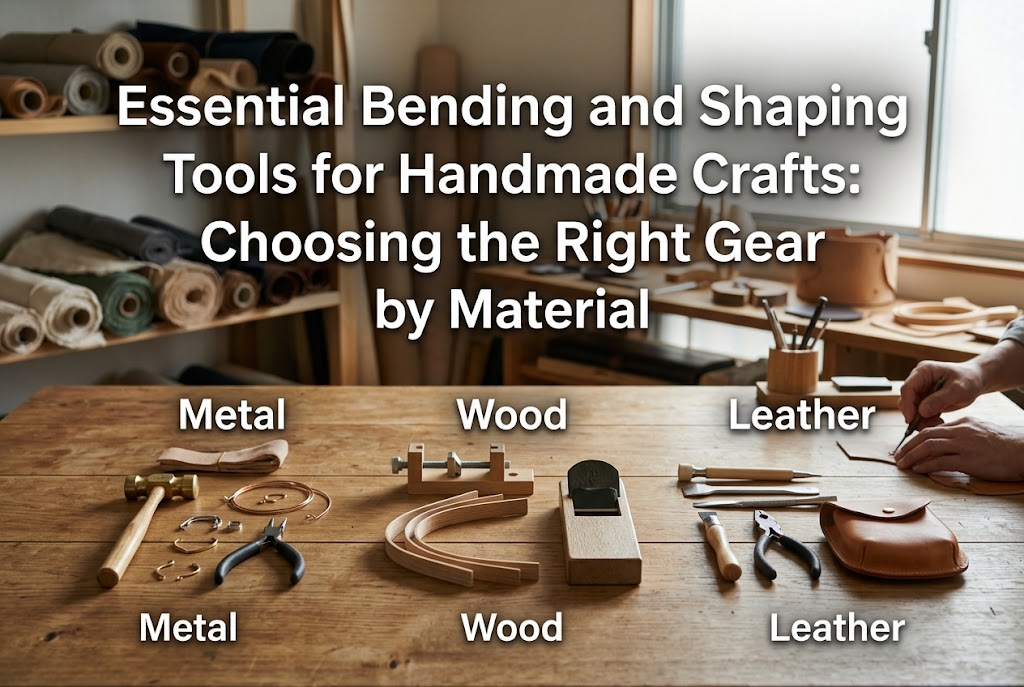
In this guide, I will introduce 13 essential bending and shaping tools frequently used in handmade crafting. I have organized them by material and purpose so you can easily understand what each tool does and decide exactly what you need for your next project!
Whether you are making beaded jewelry, doing intricate wirework, or attaching hardware for leathercraft, bending tools are indispensable. Dedicated hand tools are required to achieve precise curves and sharp bends that fingers alone cannot manage.
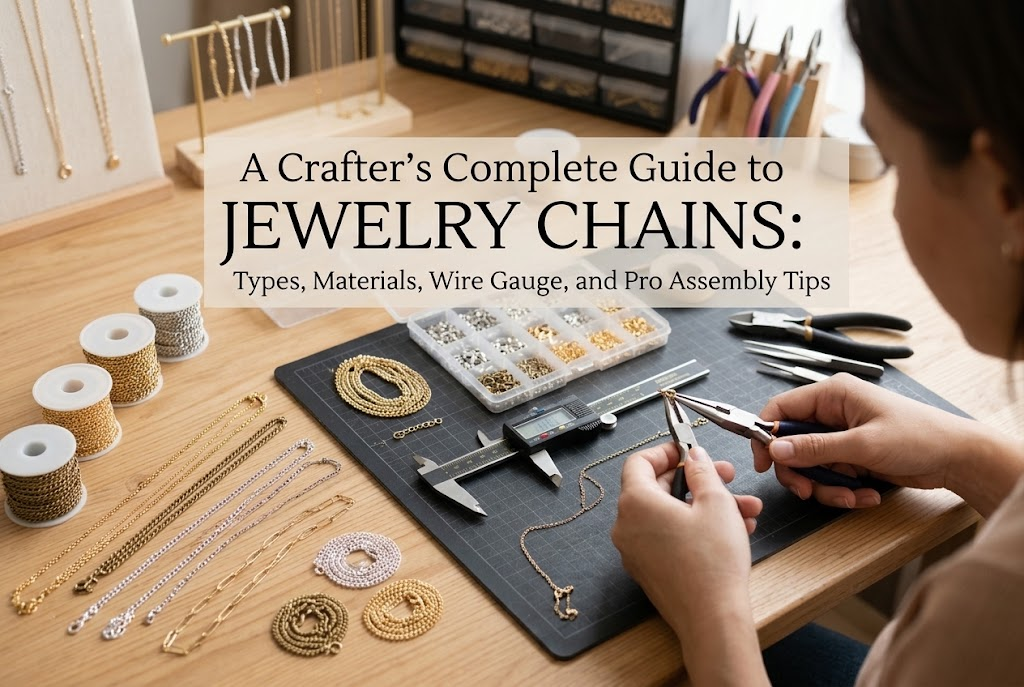
Round-nose pliers (known as maru-yattoko in Japan) feature smooth, conical jaws that taper to a round point. When it comes to shaping eye pins, headpins, or wire ends into neat, uniform loops, nothing beats this tool.
Because the jaws taper, the size of the loop changes depending on where you grip the wire. Gripping near the tip makes tiny loops, while gripping closer to the base creates larger loops.
To create beautiful accessories, mastering the technique of wrapping wire smoothly around these curved jaws is essential. If you plan to work with metal findings, this is the very first tool you should get.
Flat-nose pliers (called hira-yattoko) have completely flat gripping surfaces inside the jaws. Unlike round-nose pliers, they grip components firmly across a flat surface, making them ideal for opening and closing jump rings or bending wire at sharp right angles.
When opening and closing jump rings, the standard method is to use two pairs of flat-nose pliers, or combine one pair with a jump ring opening ring. Because the flat surface distributes pressure evenly, you can adjust findings without warping them.
Unlike standard hardware pliers, you must choose craft-specific flat-nose pliers with smooth, non-serrated jaws. Serrated teeth will gouge and scratch delicate metal parts, so always use smooth jewelry pliers.
Standard craft pliers provide extra leverage when bending thicker wire, handling stiff craft metals, or cutting through materials. In handmade projects, crafters often rely on needle-nose pliers or multi-function pliers with built-in side cutters.
Their sturdy build makes them effective when you need serious force—such as bending heavy wire frames or shaping structural hooks—rather than handling delicate decorative findings.
However, if standard pliers have serrated jaws, gripping metal parts directly will leave deep gouges. Be sure to wrap the jaws in a soft cloth or switch to non-serrated jewelry pliers for delicate tasks.
A wire jig (often called a wire bender) is a shaping base with holes where you insert small metal pegs. By wrapping wire around the pegs, you can shape consistent designs with ease.
Its true value shines when you need to reproduce multiple pieces in the exact same shape and size—something that is very difficult to do purely by hand. Geometric patterns, heart shapes, and consistent wave motifs can be produced with uniform quality.
It is especially handy for making symmetrical pairs of ear cuffs or earrings, as well as repetitive links for necklaces. This tool dramatically expands your wire jewelry possibilities.
When working with three-dimensional mediums like polymer clay, air-dry resin clay, lightweight clay, Jesmonite, plaster, or craft putty, specialized sculpting tools are essential to reach tiny areas and create smooth surfaces.
Modeling spatulas (traditionally called hera in Japan) are the most basic shaping tools for slicing clay, smoothing surfaces, and blending seams. They come in wood, plastic, and metal.
They feature varied tip designs, from spoon-like curves to thin blade-like edges. Gently sloped spatula edges are ideal for blending seams together so joints disappear completely.
For beginners, a simple set of plastic spatulas is easy to handle and clean. Choosing the right tool for the stiffness of your clay will instantly improve your sculpting results.
Metal sculpting spatulas (usually stainless steel) offer extreme precision. Many designs originate from medical and dental instruments, making them ideal for carving intricate textures.
With tiny spoon ends or micro-carving tips, they are indispensable for sculpting miniature floral petals, figurines, and realistic details. Because the metal will not flex under pressure, you can apply force exactly where you want.
In addition to clay work, these spatulas are versatile for mixing pigments into UV resin or carving fine textures before resin fully cures. They are the ideal upgrade tool for crafters looking to refine their work.
Clay modeling tool sets include specialized tips designed for slicing, grooving, detailing, and piercing clay. These range from basic sets for beginners to advanced artisan tools.
They allow you to carve uniform grooves or realistic leaf veins that you could never achieve with toothpicks or bare fingers. Thin-edged tools also let you slice uncured clay cleanly without flattening the profile.
Because they work across resin clay, oven-bake polymer clay, and stone-powder clay, a proper modeling set is a must-have for anyone starting clay crafts.
A palette knife is a flexible metal blade originally designed for mixing paints, but in crafting, it excels at applying and smoothing paste-like mediums.
From spreading whipped clay paste for faux sweets decoration to texturing clay and smoothing Jesmonite or plaster, the flexible blade helps create crisp, flat planes.
It also applies paints and pastes across wide, flat areas without uneven patches. Because blade flexibility and shape alter how paste spreads, select a knife size that matches the scale of your project.
When creating clay slabs or sheet materials, uneven thickness can lead to warping and cracking during drying or curing. Using the right rolling tools to apply balanced pressure is essential.
Craft rollers feature a rotating cylinder attached to a handle, allowing you to apply even pressure across a surface. They are used for pressing clay, eliminating air bubbles, and bonding sheet materials together.
By rolling with steady pressure, you can smooth broad areas without hand wobble. They are also ideal for pressing decorative sheets or paper onto fabric without wrinkles.
Available in rubber and hard plastic, you can choose the roller density based on material firmness. The handle design distributes pressure evenly, reducing hand fatigue.
A traditional wooden rolling pin is a simple cylinder made of wood. It is the most accessible and effective tool for quickly flattening large portions of clay.
By rolling with balanced pressure from both hands, you can spread clay outward to a uniform thickness. Wood naturally absorbs a bit of surface moisture, which helps prevent certain clays from sticking.
However, over prolonged use, wood grain textures may transfer onto your clay surface. If you need a perfectly glossy, glassy finish, material choice becomes critical.
Acrylic rollers are completely smooth cylinders made of transparent acrylic resin. In modern clay crafting, they are the most recommended flattening tool.
Because the surface is exceptionally slick, clay rarely sticks or tears away on the roller. Furthermore, the transparency allows you to see the material underneath and inspect thickness as you work.
They are easy to wash with water, and pigments or clays will not soak into the surface. For sanitary, high-precision flat sheets, an acrylic roller is far superior to a wooden rolling pin.
To move beyond simple flats and curves into rich three-dimensional forms, specialty tools are essential. Incorporating these into your workflow instantly adds refinement to your craft.
A ball stylus (also called a dotting tool or embossing tool) features metal spheres on both ends of a handle, ranging from pinpoint sizes to large globes.
Pressing the ball into clay instantly creates neat spherical depressions or cup shapes. This is great for setting miniature doll eyes or curling flower petal edges for realistic dimension.
When dipped in paint, they also stamp flawless, crisp polka dots. They are an essential tool for bringing clay and paper sculptures to life.
Shaping mandrels are stepped metal or plastic rods with varying diameters, or tapered cylindrical dowels. They serve as a guide around which you can wrap wire, paper strips, or mizuhiki (traditional Japanese decorative cord) to form smooth, consistent curves.
Bending wire using only your fingers almost always results in jagged, uneven lines. Wrapping wire flush against a cylindrical mandrel yields clean, uniform rings that look professionally machined.
Having a stepped mandrel with multiple diameters allows you to reproduce loops and curves of any desired size on demand.
With so many shaping and bending tools available, beginners often feel overwhelmed or end up with the wrong supplies. Based on my own experience, here is how to avoid common pitfalls.
The most common mistake is grabbing standard DIY pliers from the household toolbox for jewelry making. As mentioned earlier, hardware pliers have textured teeth inside the jaws.
If you use them on jewelry wire or findings, they will leave harsh gouges on the metal, ruining pieces you might want to sell or gift. Always invest in smooth-jaw flat-nose pliers designed specifically for jewelry making.
Similarly, using cardboard paper towel tubes to roll out clay causes uneven pressure because cardboard flexes in the middle, leaving the clay thick in the center. An acrylic craft roller is the shortest path to a flawless finish.
You do not need to buy all 13 tools at once. The most efficient approach is to assemble your toolkit based on the specific craft genre you want to explore first.
If you are working with wire and jewelry findings, start with a core kit: round-nose pliers, two pairs of smooth flat-nose pliers, and a wire flush cutter. If you are starting clay crafts, an acrylic roller, a plastic spatula set, and a ball stylus tool will cover nearly all beginner techniques.
Once you are comfortable with the basics and want to expand your designs, you can gradually add specialized gear like metal sculpting spatulas or wire jigs without wasting money on tools you might not use.
Bending and shaping tools act as an extension of your hands, translating your creative vision into clean, tangible forms.
Round-nose pliers, flat-nose pliers, and wire jigs give you full control over metal curves. Spatulas, clay carving sets, and palette knives allow expressive sculpting. Rollers, wooden pins, and acrylic rods ensure flat, even foundations. Finally, ball styluses and shaping mandrels add refined, dimensional details.
Each tool serves a clear function. When you feel stuck or your project isn’t turning out quite right, simply switching to the proper tool often solves the problem immediately.
Choose the right tools for your preferred craft, enjoy how they feel in your hands, and watch your crafting experience become smoother, more precise, and even more enjoyable!
If you found this guide helpful, please share it with your fellow makers on social media! See you in the next post—this was Yassy from Crafters!

For example, if you are looking for articles about mizuhiki, try searching for "mizuhiki"; if you are interested in tools, try keywords like "nippers" or "pliers."
