Batch Crafting Without Compromise: How to Build an Efficient Production Workflow for Handmade Goods
yassy
Crafters!

Hello everyone, it's Yassy from Crafters! (・∀・)
I absolutely love making handmade crafts, admiring the creations of other talented makers, and gathering cute, practical materials from craft shops. Whenever I step into a craft store or parts boutique here in Japan, surrounded by glittering findings and vibrant fabrics, I can easily lose track of time for hours.
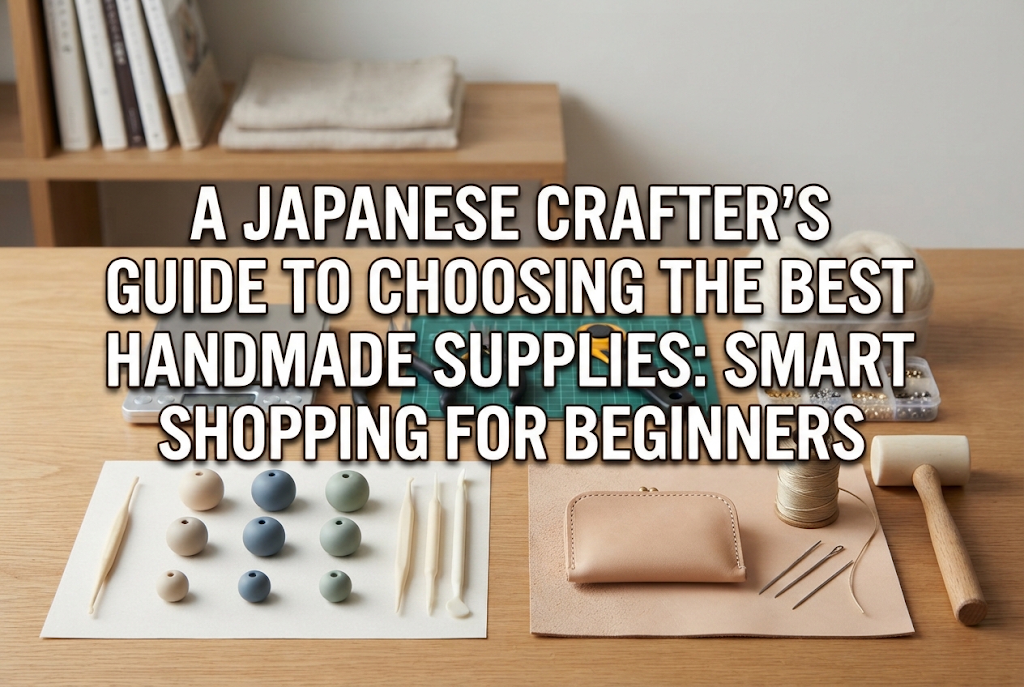
However, for beginners just starting their crafting journey, the very first obstacle is usually choosing supplies. With countless items available in brick-and-mortar stores and online, so many people find themselves overwhelmed, not knowing what to choose.
I have certainly made my share of mistakes in the past—buying something just because it was cheap, or getting carried away with bulk assortment sets I never used. But once you have the right knowledge, you will never feel lost or waste money on materials again!
Drawing from my love of making, viewing, and shopping for craft goods, I am here to share my foolproof guide and essential tips on selecting handmade materials for beginners. Read this, and the way you choose your supplies will change dramatically!
When starting out, many crafters fall into the same traps. Before you begin shopping, let's address these three common misconceptions so you don't fall into them yourself.
Buying materials with these misconceptions will not only waste your money, but it can also drain your motivation to create. Keep these firmly in mind.
Japanese 100-yen shops like Daiso and Seria are truly impressive today, stocking a wide variety of craft supplies. I love browsing them myself and use them in my daily craft life. However, thinking you can make professional-grade items using exclusively 100-yen shop materials is a big mistake.
Parts and fabrics from 100-yen shops are fantastic for practice and making prototypes. But when it comes to the durability of metal plating, the sturdiness of fabric, and the precision of jewelry findings, they simply cannot match the quality of specialized craft retailers.
If you want to create pieces that will be cherished for a long time, or if you plan to sell your work in the future, always choose high-quality components from specialized suppliers for your core materials. Knowing how to smartly balance 100-yen shop supplies with specialty materials is your fastest route to success.
Assortment packs often found online—such as "100-piece bead sets" or "craft charm grab bags"—seem like an incredible deal at first glance. Beginners are especially prone to grabbing them because of the sheer quantity for the price.
However, more often than not, more than half of an assortment pack goes unused and ends up being discarded.
No matter how many supplies you have on hand, if they don't match your design skills or personal color preferences, you are simply falling into the trap of being penny-wise and pound-foolish. Even if the unit price seems higher, buying only the exact items you need in individual quantities for your specific project is the smartest approach that saves money in the end.
When you spot adorable materials, it is easy to think, "This is so cute! I'm sure I can use it for something!" I completely understand that impulse—the thrill of exploring a craft store is one of the best parts of handmade crafting!
However, if you are a beginner, buying supplies before deciding what to make is something you should avoid.
Materials bought without a finished design or recipe in mind end up buried in the back of a drawer 99% of the time. First, determine what you are making, what dimensions it will have, and what colors you will combine. Then, go shopping. This is the golden rule of zero-waste crafting.
Here are the reliable, beginner-friendly materials across four essential categories that minimize mistakes. If you are ever unsure, starting with these will never steer you wrong!
If you are getting into jewelry making, you should pay close attention to the quality of your basic findings, such as earring hooks, clip-ons, and jump rings. I strongly recommend choosing surgical stainless steel (316L) or nickel-free plated hardware.
Inexpensive brass findings with standard plating tarnish surprisingly quickly from perspiration and air exposure. They can also trigger metal allergies.
Surgical stainless steel is extremely resistant to discoloration and hypoallergenic, drastically boosting the durability and safety of your work. It gives you peace of mind when wearing your own creations, and serves as a major selling point if you gift or sell your pieces. Never cut corners on findings; always choose high quality.
For crafters starting out with fabric items like pouches and bags, I highly recommend Oxford cloth and cotton linen blends.
Fabrics that are too thin, such as double gauze or lightweight lawn, warp easily during cutting and wrinkle during stitching, making them frustrating for beginners. On the other hand, heavy fabrics like thick denim or canvas can break domestic sewing machine needles and are difficult to handle.
Oxford cloth provides the ideal thickness and body; it stays in place when cut and is exceptionally easy to sew. Cotton linen blends offer a natural texture that charmingly forgives slightly uneven stitches, turning them into a rustic design feature. If you are picking fabric for the first time, Oxford or cotton linen is the way to go.
If you want to try bead accessories, reach for Czech glass beads.
Acrylic (plastic) beads are lightweight and budget-friendly, but they can easily look cheap. On the other hand, premium crystals and genuine gemstones can be quite costly, setting the barrier to entry a bit high for practice.
Czech glass beads offer the solid weight and beautiful clarity unique to glass while remaining very affordable. With a wide variety of shapes and colors, stringing even a single bead into your work gives it an elegant, professional finish. For beginners building a bead stash, Czech glass beads are without doubt the right answer.
For crafters wanting to dive into resin art, the one material you must prioritize above all else is the resin liquid itself.
Cheap resin liquids can leave a sticky surface after curing, turn yellow over time, or emit harsh fumes while curing. When that happens, no matter how beautifully you arranged your inclusions, the piece is ruined.
Always choose high-quality UV-LED compatible resin from reputable manufacturers (such as Padico or Kiyohara in Japan). The crystal clarity, quick curing speed, resistance to yellowing, and smooth, glossy finish are on a completely different level. Resin liquid is the single element where spending a little extra is fully justified.
Where you purchase your materials is another common dilemma for beginners. Generally, craft supplies can be sourced from three main venues: 100-yen shops, brick-and-mortar craft specialty stores, and specialized online shops.
Each has clear strengths and weaknesses. Understanding them is the key to becoming a savvy crafter. Here is my personal rulebook for shopping across these venues.
Japanese 100-yen shops are wonderful for testing ideas and prototyping. However, there is a clear divide between what you should and should not buy there.
Great items to buy at 100-yen shops:
Items you should never buy at 100-yen shops:
Think of 100-yen shops as your source for disposable consumables and experimental trial runs. Avoid using them for the core structure or durability-critical parts of your pieces.
The greatest advantage of physical stores is being able to inspect and touch the actual materials yourself.
The tactile hand-feel and weight of fabrics, the scale and heft of beads, and the precise undertones of metal finishes (whether a gold finding leans pale champagne or warm yellow) cannot be accurately conveyed through a screen. For beginners especially, seeing items in person reveals practical realities, like realizing two components are disproportionate to each other.
Even if it feels like extra effort, visit a physical store when starting out. Being able to ask staff members, "I want to make this type of project; which material would work best?" is an invaluable benefit unique to real-world shops.
Online shops excel in offering vast selections and bulk-purchase cost savings.
Once you have handled a specific part in a brick-and-mortar store and confirmed its specifications, online shops become your strongest asset for replenishing supplies or ordering in larger quantities. They are also indispensable for makers who do not have specialty craft stores nearby.
When buying online, always check the exact millimeter measurements against a physical ruler before adding an item to your cart. Relying solely on product photos often leads to surprises, such as receiving parts that are far larger than expected.
Even when materials appear similar, subtle differences in quality dramatically affect your finished work. Here are key checkpoints to inspect when purchasing or preparing to use your supplies.
Mastering these checks will elevate your projects from looking amateurish to appearing polished and professional.
When you purchase metal findings like headpins, eye pins, or jump rings, hold them up to the light before using them.
Low-grade findings often have manufacturing burrs—sharp, uneven ridges—as well as thin plating where base metals show through, or dark patches. Leaving burrs on a piece can snag clothing or scratch the wearer's skin, making it hazardous.
Jump rings made with overly thin wire will warp easily when opened and closed, failing to spring back cleanly. Choose hardware with adequate wire gauge and firmness (a diameter around 0.7mm to 0.8mm is sturdy and easy to work with).
When sewing with fabric, never cut and sew directly off the bolt!
Natural fibers like cotton and linen naturally shrink when exposed to water. If a finished bag or pouch shrinks unevenly or warps the first time it is laundered, it is because it skipped the traditional preparatory step known in Japan as mizutooshi (water shrinking/pre-soaking).
Before cutting, soak your fabric in water, gently squeeze out excess moisture, dry it in the shade, and then use an iron to perform jinaoshi (straightening the grain of the weave). Taking the time to do this significantly improves both durability and aesthetic finish. Synthetic fabrics like 100% polyester do not shrink significantly, so choosing synthetic blends is also a practical shortcut if you prefer lower maintenance.
Whenever you purchase beads, always inspect the drill holes.
Inexpensive glass or gemstone beads frequently feature chipped hole rims or leftover drilling debris clogging the pathway, preventing beading thread or pins from passing through smoothly. Sharp chips around the hole can fray and snap your stringing cord while the piece is being worn.
Choosing beads with smooth, cleanly drilled holes prevents broken cords and keeps your crafting process stress-free.
If you are thinking, "I understand the concepts, but how should I actually plan my shopping trip tomorrow?" here is my recommended step-by-step sequence.
If I were to start an entirely new crafting discipline today, this is exactly how I would gather my supplies. Feel free to follow it directly!
First, pick just one project from a craft book, website, or video tutorial. Do not try to take on multiple ideas at once. Narrowing your focus to a single project is the first rule of success.
Once you have chosen the pattern, write down the exact list of required materials on a notepad, including part types, dimensions, quantities, and colors.
Organize your shopping list into three clear categories:
Once classified, distribute your purchases across appropriate stores:
By following this procedure, you will avoid unnecessary purchases while ensuring that every essential material you bring home is of reliable quality. You will never have to wander through a store without a clear plan again!
Selecting materials in handmade crafting is not just preparation. It is the crucial first step where your ideas and creative vision begin taking tangible form.
Let's recap the key principles of choosing materials:
Handling quality supplies naturally sparks creative inspiration. The excitement of finding materials you truly adore is one of the most rewarding aspects of handmade creation.
There is no need to worry about failing. Keeping these fundamentals in mind will set you up for smooth, rewarding projects. Gather the right supplies and have fun making your own unique pieces!
Here at Handmade Crafters, I will continue sharing practical, inspiring guides to enrich your creative life.
See you in the next article! This was Yassy from Crafters!

For example, if you are looking for articles about mizuhiki, try searching for "mizuhiki"; if you are interested in tools, try keywords like "nippers" or "pliers."
