Level Up Beyond Beginner: The Definitive Order to Upgrade Your Japanese Amigurumi Tools
yassy
Crafters!
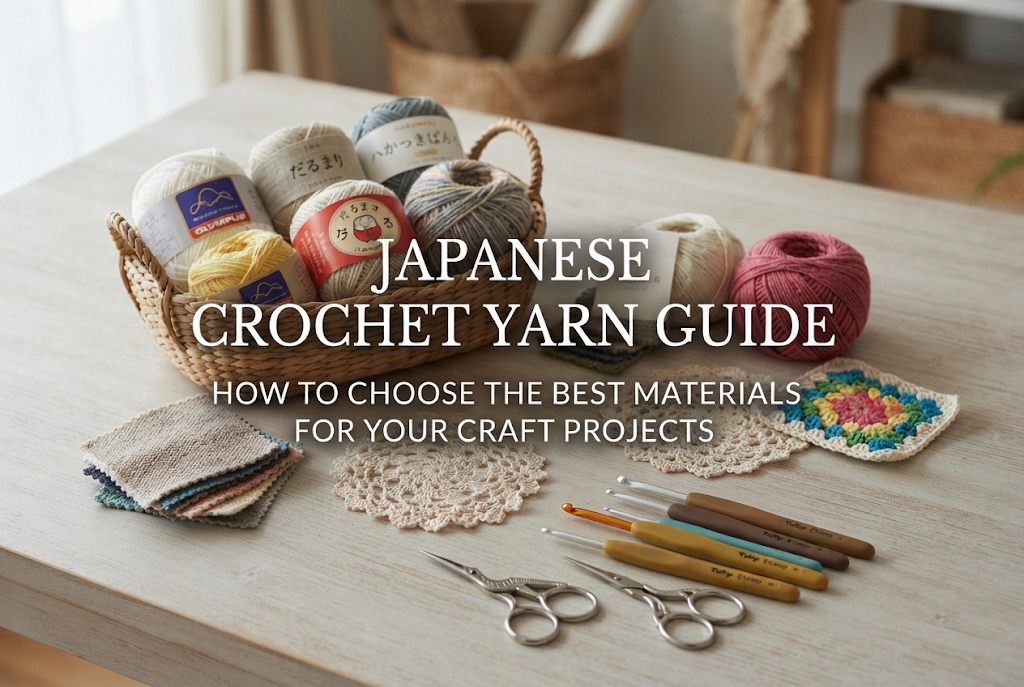

Hello, everyone! This is Yassy from Crafters! (・∀・)
Whenever you visit a craft store or browse the yarn aisle, seeing all those colorful, adorable skeins lined up is so exciting! But when you actually decide to pick up a hook and start crocheting, it can be overwhelming to know which yarn to choose.
Yarn comes in a wide variety of materials, including wool, cotton, acrylic, and linen. In crochet, there are yarns that are wonderfully easy to work with and others that require a bit of extra technique. Choosing the wrong yarn can lead to frustration—such as the hook catching and splitting the strands, or stitches becoming hard to see, causing you to drop stitches. This is often why beginners give up early on.
In this article, I will explain the main types of yarn used in crochet, the unique characteristics of each material, and criteria for choosing the right yarn for your specific project. I will also share common pitfalls for beginners and my personal checklist for selecting yarn, so please use this as a reference to find your perfect skein!
Knitting and crocheting are the two main forms of fiber craft, and most yarns on the market can technically be used for both. However, because the tool movement and fabric structure are completely different, it is important to understand what makes a yarn suitable specifically for crochet.
Knitting holds multiple loops across two needles, creating a soft, airy, and elastic fabric. In contrast, crochet uses a single hook to pull loops through one another, effectively tying stitches together. Because of this structural difference, crocheted fabric tends to be firm, thick, and far less stretchy.
During crochet, you repeatedly catch the yarn with the hook to pull it through loops. If you use a yarn with a loose twist or long, fluffy fibers that tangle easily, the tip of your hook will split the yarn fibers—a frustrating issue known as "yarn splitting."
To enjoy a smooth, stress-free crochet experience, the most important factor is selecting a yarn with a tight, even twist that is easy for the hook tip to grab cleanly.
Let’s look at the primary yarn types used in crochet and the characteristics of each material. Understanding these properties will help you select the ideal yarn for whatever item you want to create.
Cotton yarn is a classic material loved by crochet beginners and advanced crafters alike. Made from natural plant fibers, it offers a crisp, smooth touch and excellent durability.
Because there is no fuzz, cotton makes stitch structure exceptionally clear, making it ideal for practice. It works wonderfully for coasters, doilies, pouches, eco-scrubbies, and amigurumi all year round. Since it lacks stretch, crocheting too tightly is a common mistake; keeping a relaxed hand is the secret to a beautiful finish.
Wool (sheep's wool) is the star of autumn and winter crafting. Animal fibers feature a natural crimp that provides outstanding warmth and elasticity.
Thanks to wool’s natural bounce, stitch irregularities tend to smooth out on their own. It is perfect for cold-weather items where warmth is key, such as scarves, cowls, beanies, and mittens.
Acrylic is a synthetic fiber made from petroleum, widely available in craft supply shops and Japanese 100-yen shops. It is designed to artificially replicate the soft feel of wool.
Acrylic yarn is fantastic for items where you want to maintain structure—such as acrylic cleaning scrubbies (eco-scrubbies), amigurumi, blankets, and cushion covers. Its resistance to water and easy washability make it highly practical.
Linen (flax), ramie, and jute are staple materials for spring/summer items and woven-style market bags.
Because it produces a firm, self-supporting fabric, it is ideal for market totes, baskets, and small storage containers. However, because the yarn is stiff and less slippery, it can cause hand fatigue if you aren't used to crochet. Starting with a medium-weight linen blend is recommended for beginners.
Lace yarn is typically made from fine cotton (such as Egyptian cotton) that is tightly twisted and processed (such as mercerization) to create a smooth, lustrous surface. While traditional lace knitting/crochet uses fine lace steel hooks, thicker weights (such as Size 20) can be crocheted with standard small hooks (Japanese hook sizes 2/0–3/0, approx. 2.0mm–2.3mm).
Lace yarn sizes are indicated by number—the higher the number, the thinner the thread. If you are trying lace crochet for the first time, choosing a Size 20 lace yarn is the easiest way to ensure success.
Trendy choices for crochet home goods include T-shirt yarn (made from recycled jersey fabric strips, like Hoooked Zpagetti) and paper yarn (made from processed craft paper or traditional Japanese washi paper).
Because the stitches are so large, the fabric structure is very clear, offering a satisfying sense of fast progress. It’s perfect when you want to whip up a bag over a weekend!
When browsing yarn in a store, it can be hard to tell which ones are easy to crochet just from the label. Here are four practical checks to help beginners find hassle-free yarn:
The single most crucial factor in crochet is yarn twist. Pinch the end of the yarn and look closely. If several thin strands are twisted tightly together into a single round cord, your hook won't split it easily, making it very comfortable to crochet.
On the other hand, loosely spun yarns like roving yarn or loosely bundled threads will cause your hook tip to spear through the middle of the strand, splitting it constantly. Stick with smooth, well-twisted straight yarn at first.
Yarn thickness ranges from lace weight to super bulky. For beginners, medium-thick yarn—equivalent to Japanese "Namibuto" (Worsted) or "Gokubuto" (Chunky)—is the easiest to work with. These typically correspond to hook sizes around Japanese 5/0 to 7/0 (approx. 3.0mm to 4.0mm).
Yarns that are too thin make it hard to see where to insert your hook. Yarns that are overly bulky require extra muscle to pull loops through, tiring your hands. A medium weight gives you clear visibility of the top of each stitch (the V-shape loop), so you can spot mistakes right away.
Yarns with long, fluffy fibers like mohair, textured loops like bouclé, or decorative ribbon yarns look enchanting. However, these are challenging for crochet!
Fluffy fibers hide your stitches completely. Furthermore, if you make a mistake and need to frog (unravel) your work, the fibers cling to each other like felt, making it nearly impossible to unravel. Start with a clean, smooth, plain yarn.
Color choice plays a surprisingly big role in ease of crocheting. Dark colors—like black, dark navy, or deep brown—are best avoided initially. Shadows don't show up well on dark yarn, making stitch gaps and top loops blend together into an unreadable mass.
Pure bright white can also reflect light and strain the eyes. The best colors for seeing stitches clearly are light to medium tones: beige, light gray, soft pink, mint green, or mustard yellow.
The yarn you select dramatically changes the feel and practicality of your finished piece. Here is a handy guide matching projects with their ideal materials:
For items used around the dining table, 100% cotton or a cotton-linen blend is best. Cotton absorbs condensation from cold drinks and can be easily hand-washed when soiled. Use worsted cotton for sturdy coasters, or Size 20 lace yarn / fine cotton yarn for delicate doilies with crisp lace patterns.
For functional bags and containers, choose jute (hemp), paper yarn, or tightly twisted thick cotton. Stretchy yarns like wool will cause the bottom of a bag to sag terribly as soon as you put items inside. Choosing a stiff, low-stretch yarn worked in dense single crochet produces a sturdy bag that holds its shape even without a fabric lining.
For wearable winter accessories that touch your skin, opt for soft wool (especially Merino wool) or wool-acrylic blends. Sensitive skin on the neck and forehead requires non-scratchy, high-quality fibers. Yarn labeled as Merino wool features very fine fibers for a silky, gentle touch. Since crochet produces thick fabric, using a slightly larger hook with an openwork pattern keeps winter wear light and warm.
For amigurumi, medium-weight acrylic yarn or smooth cotton yarn (sport to worsted) is strongly recommended. Because amigurumi are stuffed tightly with fiberfill, you need to work tight single crochets so the stuffing doesn't show through gaps. Acrylic yarn offers rich color variations to match character designs and maintains shape well. Cotton yarn creates a sharp, clean finish with zero fuzz.
To avoid regret after buying yarn, keep these three key warnings in mind:
The paper band (label) wrapped around a skein contains vital information:
Always check the recommended hook size and total length (meters/yards). When calculating yarn needed for a pattern, compare total length rather than the number of skeins, or you might run out mid-project!
Even if two skeins have the exact same color code from the same manufacturer, subtle shade differences occur if the dye lot number (LOT) on the label is different. The dye lot indicates the specific batch dyed together at the factory.
Temperature and humidity during dyeing create slight variation. Joining yarn from different dye lots in one project can leave a visible color line across your work. When starting a large project, always buy all the skeins you need—plus one extra—with matching lot numbers.
Variegated gradient yarns, sparkly metallic threads, and fuzzy faux-fur yarns look captivating on store shelves. However, using specialty yarn before mastering basic techniques makes counting stitches impossible. Master chain stitches, single crochet, and double crochet with plain, solid-colored yarn first!
If someone asked me, "I want to start crochet from total scratch—what yarn should I buy first?" I would instantly recommend a medium-weight (worsted) cotton yarn in light beige or soft yellow, paired with a Japanese 5/0 or 6/0 hook (3.0mm–3.5mm).
Unlike wool, cotton isn't seasonal, so you can craft comfortably year-round. It lacks the squeak of acrylic and has zero fuzz, making the basic action of catching the top V-shape loop perfectly clear. Try making a single square coaster first. You’ll feel the joy of seeing your stitches align and the satisfaction of using a handmade item you created yourself!
The yarn you use for crochet alters the crafting experience and finished look based on fiber properties, twist tightness, and weight. Starting with a smooth, tightly twisted, medium-weight yarn in a light color is the fastest path to improving your skills while enjoying the process. Once you are comfortable, feel free to experiment with cool linen in summer or fluffy Merino wool in winter!
Discovering a yarn with your favorite color and texture is one of the most special moments in handmade crafts. I hope this guide helps you find the ideal yarn for your next project!
If you enjoyed this article, please consider sharing it with your crafting friends on social media. It truly warms my heart and encourages me to write more!
Until next time, happy crafting! This was Yassy from Crafters!

For example, if you are looking for articles about mizuhiki, try searching for "mizuhiki"; if you are interested in tools, try keywords like "nippers" or "pliers."
