A Guide to 5 Essential Craft Needles: Differences and How to Choose for Sewing, Embroidery, Leather, and Knitting
yassy
Crafters!

Hello, crafters! This is Yassy from Crafters! (・∀・)
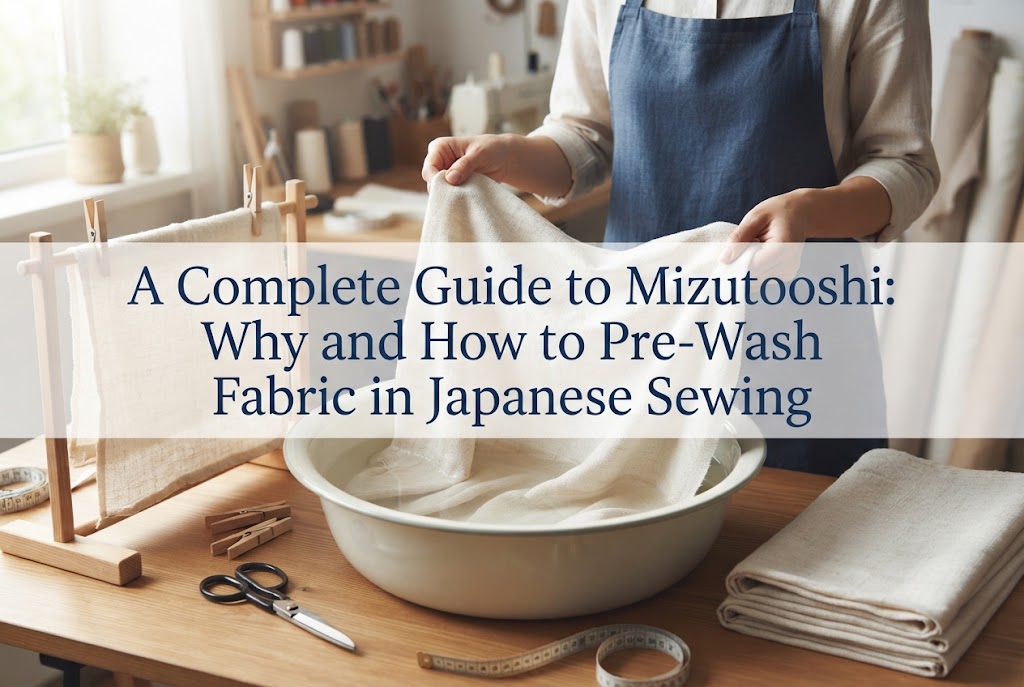
Whenever you dive into Japanese sewing books or crafting tutorials, you will almost certainly encounter the term mizutooshi (水通し — fabric pre-washing or pre-soaking). Have you ever wondered, "Is this really necessary? Can't I just cut and sew the brand-new fabric straight from the store?"
In reality, mizutooshi is an essential preparatory step that directly influences the quality and durability of your handmade projects. Skipping this step can lead to disappointing surprises—such as your finished garment shrinking several sizes or warping out of shape after its very first wash.
In this guide, I will explain the fundamental reasons behind mizutooshi, how to determine which fabrics need it, a foolproof step-by-step guide, and the final chinaoshi (grain straightening) ironing method to elevate your sewing finish. Let's master this essential technique to make your handmade pieces look and fit beautifully!
In Japanese sewing terminology, mizutooshi refers to soaking new fabric in water and letting it dry to stabilize its fibers before sewing.
You might wonder, "Why wet a brand-new, clean fabric?" When fabric is manufactured and wound onto bolts, it is under constant mechanical tension, and it is often treated with sizing (industrial starch). If you cut and sew the fabric in this state, it will naturally shrink, warp, or skew the moment it meets water. Mizutooshi is done specifically to trigger that natural shrinkage beforehand, ensuring your finished projects maintain their intended shape.
Pre-treating fabric is not just about cleaning it. In sewing, mizutooshi serves three critical purposes:
Natural fibers such as cotton and linen absorb water and shrink noticeably as they dry. Linen and double gauze in particular can easily shrink by 5% to nearly 10% on their first wash. If you skip this step when making clothing or bags, the finished piece might become unwearable after washing, or seams and zippers may pucker unevenly. Pre-shrinking the fabric before cutting completely prevents this issue.
Fabric mills apply sizing agents to make weaving easier and to keep the fabric crisp on store shelves. Dust can also settle during transportation and storage. Soaking the fabric removes excess starch and residue, revealing the textile's genuine softness and hand feel. This step is particularly vital when sewing baby items, face masks, or undergarments, where hygiene and optimal absorbency are essential.
Woven fabrics consist of intersecting warp (vertical) and weft (horizontal) threads. Due to tension during production and rolling, these threads often become slightly misaligned rather than crossing at a perfect 90-degree angle. In Japanese sewing, this grain distortion is called shakou (斜行). If you sew without fixing this, the fabric will attempt to return to its natural alignment when washed, causing the entire garment or bag to twist. Mizutooshi resets the fibers, allowing you to realign the grain straight and square (a process called chinaoshi / 地直し).
Does every single fabric need to be soaked? Not at all! The requirements depend entirely on the fiber characteristics.
Plant-based natural fibers (cotton, linen, hemp) and regenerated cellulose fibers (rayon, modal, cupro) are highly absorbent and prone to shrinking. Linen and double gauze have substantial shrinkage rates, so never skip mizutooshi for these materials.
Mizutooshi is not simply throwing fabric into a washing cycle. Here are common pitfalls to avoid:
Follow these steps carefully for the best results:
Raw cut edges fray easily when submerged in water. If you are concerned about threads tangling, you can quickly serge or zigzag stitch the raw ends, or trim loose threads. Gently fold the fabric like an accordion (bellows fold) rather than crumpling it into a ball. Folding ensures that water penetrates evenly and minimizes friction wrinkles.
Fill a basin, clean sink, or bathtub with plenty of water. Room-temperature tap water works well, but for fabrics prone to heavy shrinkage like linen, lukewarm water (around 30°C / 86°F) helps thoroughly pre-shrink the fibers. Submerge the folded fabric and gently press it down by hand so water penetrates all the way to the core.
Let the fabric rest submerged for about 1 to 2 hours. If the soak is too short, the core fibers won't absorb enough moisture to shrink fully. On the other hand, soaking for more than half a day can lead to color bleeding or bacterial growth, so take it out within 2 hours.
Lift the fabric out. Never wring or twist it tightly like a rag, as this damages the fibers and creates stubborn creases. Gently press the water out with your hands. If using a washing machine spin cycle, place the folded fabric in a laundry net and spin for only 30 seconds to 1 minute. The ideal state is when it is no longer dripping wet, but still quite moist.
Gently pat the fabric with your hands to smooth out large wrinkles. Hang it flat and unfolded over a drying rack or clothesline in a well-ventilated, shaded area. The crucial secret here: Do not let it dry completely bone-dry. Take the fabric down when it is about 80% dry (semi-damp to the touch).
The process is not complete after drying. Performing chinaoshi (correcting the grain alignment) while the fabric is still slightly damp is what truly elevates the precision of your sewing.
Avoid pushing the iron diagonally, as this will stretch and distort the grain again. Always glide the iron parallel to the straight grain lines (lengthwise or crosswise). Once the moisture has completely evaporated and the fabric lies perfectly flat and crisp, chinaoshi is complete! This step eliminates cutting errors and makes sewing seams straight and effortless.
If soaking, drying, and ironing large cuts of fabric every time feels daunting, here are two practical approaches I use in my own sewing routine:
If you start pre-washing only when you are ready to cut a specific pattern, having to wait for fabric to dry can interrupt your creative flow. I prefer to pre-wash and iron all my newly purchased fabrics in batches as soon as they arrive. Storing them pre-treated means I can jump straight into cutting whenever inspiration strikes!
If you are making small items like pouches, coasters, or small organizers using regular cotton, you can use a powerful steam iron as a quick substitute. Hover the iron slightly above the fabric while delivering generous bursts of steam to let moisture and heat penetrate, then press and straighten the grain. Please note: this is a shortcut suitable only for small accessories made with low-shrinkage cotton. For garments, bags, linen, and double gauze, always do the full water soak.
Taking the time to do mizutooshi and chinaoshi guarantees that your carefully crafted pieces will never shrink or warp unexpectedly after washing. Mastering these basic fabric prep steps will ensure your handmade creations stay beautiful and comfortable for years to come!
If you found this guide helpful, please share it with your fellow sewing friends on social media! See you in the next post—this was Yassy from Crafters!

For example, if you are looking for articles about mizuhiki, try searching for "mizuhiki"; if you are interested in tools, try keywords like "nippers" or "pliers."