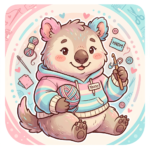
Essential Japanese Sewing Tools Guide: Must-Have Items for Fabric, Leather, and Embroidery
yassy
Crafters!
Hello, everyone! It’s Yassy from Crafters! (・∀・)
When you get a sewing machine and get ready to sew your first project, one of the first questions you inevitably run into is: "Which needle and thread should I use?" Walking into a craft store or browsing online can be overwhelming, with rows upon rows of sewing machine needles and spools of thread marked with different numbers.
In fact, more than 80% of common machine-sewing issues—such as tangled threads, skipped stitches, puckered fabric, and broken needles—are caused by using the wrong needle and thread combination for the fabric at hand.
In this comprehensive guide, I will break down how sewing machine needle sizes and thread weights work, along with the golden rules for matching them to your fabric's thickness and texture. Master these basics, and you can enjoy stress-free, smooth sewing!
A sewing machine creates clean stitches by interlocking the upper and lower (bobbin) threads right in the middle of your fabric layers. For this mechanism to work flawlessly, the fabric thickness, needle size, and thread thickness must be in perfect balance.
If you use a needle that is too thin on heavy fabric, the needle will bend or snap under the fabric’s resistance. Conversely, if you use a thick needle on delicate, lightweight fabric, it will punch visible holes and cause the seam to pucker.
The relationship between the thread thickness and the eye of the needle is equally critical. Forcing a thick thread through a tiny needle eye causes excess friction as you sew, leading to frayed and repeatedly snapped threads.
In sewing, always treat fabric, needle, and thread as an inseparable set. Keeping this fundamental rule in mind will prevent the vast majority of sewing machine mishaps before they even start.
Let’s start with needle standards and size classifications. Learning how to read needle packaging is your first step.
When shopping for needles for a domestic sewing machine, you will often spot the designation "HA×1" on the package. This indicates the standard needle type designed specifically for domestic (home) sewing machines.
Domestic machine needles feature a flat-sided shank. This flat side ensures you insert the needle in the correct direction every time. Whenever you buy needles for a standard home machine, always look for "HA×1" (or standard domestic needle designations). Industrial needles (such as DB×1) and semi-industrial/tailoring needles (such as HL×5) have different shank shapes and cannot be used in standard home sewing machines.
In the Japanese needle sizing system, needle thickness is indicated by size numbers. The rule is simple: the smaller the number, the finer the needle; the larger the number, the thicker the needle.
The needle you will reach for most often in everyday sewing is Size 11. If you are making everyday items like drawstring bags, pouches, or regular clothing, Size 11 is almost always the right starting point.
Beyond fabric thickness, you also need to account for elasticity and material texture.
A very common habit among beginners is leaving the same needle in the machine indefinitely. Remember: needles are consumables.
Even if it is not visible to the naked eye, a needle tip wears down gradually as you sew, causing skipped stitches and snags. As a general rule of thumb, replace your needle after completing one major project (such as a garment or a structured bag), or after approximately 8 to 10 hours of active sewing.
Furthermore, if you accidentally sew over a pin or hear an unpleasant clicking or popping noise, the needle tip has likely bent or burred. Continuing to sew with a damaged needle will ruin your fabric, so switch to a fresh one immediately.
Next up is choosing the right sewing thread. Just like needles, thread comes with specific weight indicators and material variations.
Thread thickness is designated by its weight or count number (#). This is where beginners often get tripped up: with sewing thread, the smaller the number, the thicker the thread; the larger the number, the finer the thread. Notice that this is the exact opposite of needle sizing!
The undisputed all-rounder of sewing threads is #60 thread. If you are a beginner building your starter stash, standard #60 polyester thread is the best place to begin.
While threads come in several fibers, 100% polyester thread is the modern standard. It resists fraying, has high tensile strength, and is very easy to handle.
As a golden rule of machine sewing, always use the exact same type and thickness of thread for both the needle thread and the bobbin thread. If you use #60 thread on top, wind your bobbin with #60 thread as well.
Mismatched top and bottom threads make balancing tension extremely difficult, leading to puckering or tangled bird's nests on the underside of your fabric.
To make project planning straightforward, here are the ideal pairings for the fabrics most commonly used in handmade sewing projects.
The most popular category for handmade crafts, including tote bags, zip pouches, drawstring bags, and casual garments.
Whenever you are unsure, set your machine to this combination. It offers the most stable tension and yields beautiful, reliable stitches.
Delicate textiles used for spring/summer blouses, lightweight scarves, and handkerchiefs.
Pairing a fine Size 9 needle with #90 thread prevents seam puckering and preserves the airy drape of delicate weaves.
Sturdy textiles used for durable tote bags, outerwear, and jeans.
Heavy fabrics require strong piercing power. Use a sturdy Size 14 or 16 needle paired with durable #30 or #50 thread. When using thick thread, you may also need to make slight adjustments to your upper tension setting.
Stretchy textiles used for children's wear, casual t-shirts, loungewear, and pet clothing.
Stretchy fabrics strictly require both a ballpoint needle and elastic sewing thread. Skipping this combination is the leading cause of skipped stitches and broken seams during wear.
Here are three frequent mistakes that beginner sewists often make without realizing it, along with easy fixes.
It is tempting to grab whatever spool is lying around the house, but using hand-sewing thread on a machine is a major pitfall.
Hand-sewing thread and machine thread are twisted in opposite directions. Hand-sewing thread typically has an "S-twist" (right-twist), whereas sewing machine thread has a "Z-twist" (left-twist). If you run hand-sewing thread through a high-speed sewing machine, the twist quickly unravels, causing the thread to fray, knot, jam in the bobbin case, or repeatedly snap. Never use hand-sewing thread in your sewing machine!
Another common misstep is thinking: "I want a strong seam, so I'll use thick #30 thread, but I'll leave the Size 11 needle that came with my machine installed."
When a thick thread is threaded through a small needle eye, it cannot pass through smoothly to form a clean loop around the bobbin hook. The thread gets caught, snaps repeatedly, and places unnecessary strain on your machine’s internal timing. Whenever you switch to thick thread, always switch to a needle with an appropriately large eye, such as a Size 14 or Size 16.
Using vintage wooden spools found in a family sewing basket or bargain-bin unbranded threads is best avoided.
Thread deteriorates over time; decades-old fibers lose their strength and will snap under the slightest tension. Cheap, low-grade threads also shed an excessive amount of lint, which accumulates inside your machine's tension discs and bobbin race, eventually causing mechanical jams. For reliable sewing, stick to fresh spools from reputable manufacturers (such as Fujix Schappe Spun).
Whenever someone who is new to sewing asks me what they should buy first, I always suggest this exact starter set:
While matching your thread color precisely to your fabric is ideal, buying a new spool for every project can be daunting at first. Having a spool of "Kinari" (unbleached/ivory) is incredibly versatile, as it naturally blends in with almost all light- and pastel-colored fabrics.
Keep a supply of Size 11 needles on hand for the vast majority of your sewing, plus a pack of Size 14 needles for sewing thicker sections like bag handles and canvas. With just this basic toolkit, you can handle more than 90% of beginner sewing projects with ease!
Here is a quick recap of the core rules for machine needles and threads:
If your stitches look uneven or your thread keeps jamming, pause for a moment and check your "fabric, needle, and thread" balance. When properly matched, your sewing machine will glide effortlessly through your fabric, producing gorgeous, professional-looking seams.
Set yourself up for success with the right tools, and enjoy every moment of your sewing journey!
If you found this guide helpful, please feel free to share it with your sewing friends on social media! See you in the next article—this was Yassy from Crafters!
For example, if you are looking for articles about mizuhiki, try searching for "mizuhiki"; if you are interested in tools, try keywords like "nippers" or "pliers."