Upgrading Your Bead and Gemstone Jewelry Tools: The Step-by-Step Priority Guide to Elevate Your Craft
yassy
Crafters!

Hello, this is Yassy from Crafters! (・∀・)
Whether cutting fabric, trimming loose threads, or slicing tiny paper parts, not a single day goes by in crafting without reaching for a pair of scissors. I love making all kinds of handmade crafts, admiring beautiful creations, and collecting pieces crafted with care by fellow artisans. Across all my creative work, one of the tools I am most particular about is my collection of scissors.
There is a common mistake that beginners often make: trying to do everything with a single pair of standard household office scissors. If you keep using scissors that are not suited to your material or the precision of the task, cut edges will turn out jagged and uneven, your hands will tire quickly, and you risk ruining precious crafting supplies.
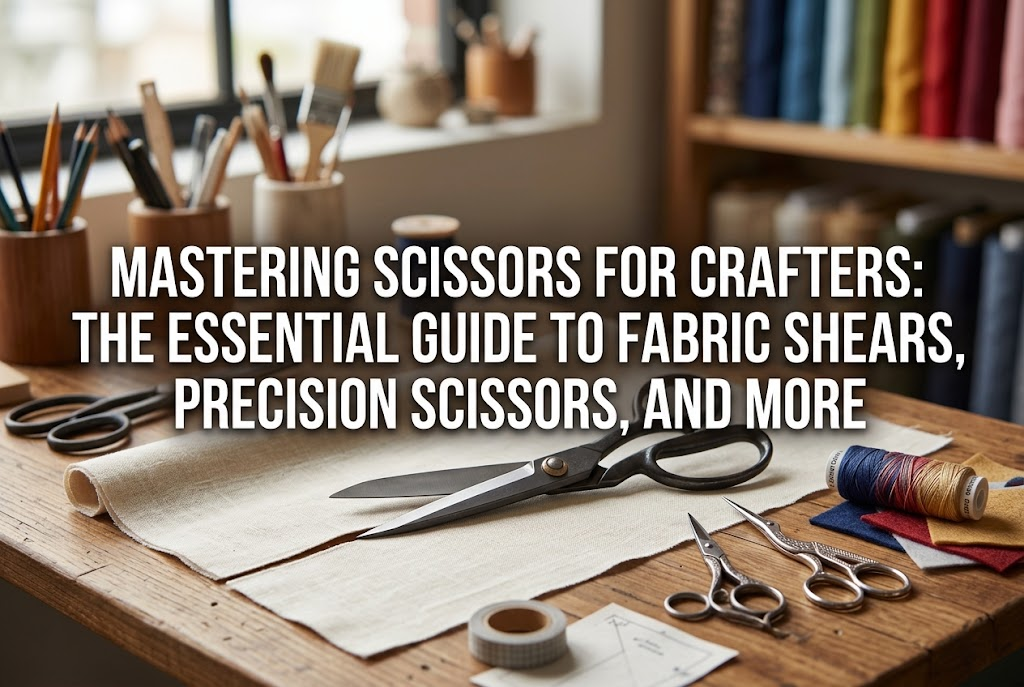
In the craft world, scissors are not just basic cutting tools; they are essential partners that determine the quality of your finished project and eliminate creative frustration. In this guide, I will share everything you need to know about the six types of scissors most commonly used in crafting—from their specific purposes and characteristics to how to choose and care for them.
The handmade world has developed specialized scissors engineered for specific tasks. Here is a breakdown of the six core types and their roles so you can identify exactly which ones you need for your chosen craft.
These are the general scissors found in homes and offices. Designed primarily for cutting paper, they feature standard blade thickness and bevel angles.
In crafting, their true value lies in prep work and utility tasks: cutting out paper patterns, trimming packaging, and cutting double-sided tape or masking tape. Choosing a pair coated with fluorine or titanium helps prevent sticky adhesive residue from clinging to the blades, keeping your workflow smooth.
However, they are completely unsuitable for cutting fabric or tiny, intricate parts. Treat standard utility scissors strictly as tools for paper, tape, and general studio tasks.
Craft shears are powerful tools built to handle rigid, tough materials such as heavy cardboard, craft wire, leather, plastic sheets, and thin aluminum foil. Their blades are thicker than standard scissors, and many models feature serrated edges near the base of the blade.
They are indispensable when cutting floral wire, rough-cutting thick leather in leathercraft, or slicing tough paper craft bands. Designed with balanced leverage between the pivot and the grips, they deliver strong cutting force with minimal hand effort.
While not meant for delicate cuts, craft shears should be your first choice whenever you work with tough materials or mixed-media crafts.
Precision scissors feature exceptionally thin, narrow, and sharp tips designed for millimeter-level detail work. They are used for paper craft, kirie (paper cutting art), trimming tiny stickers, and shaving fine burrs off baked shrink plastic.
Their ultra-slender tips glide smoothly into tight curves and the inner corners of tiny cutouts where standard scissors cannot reach. Because the blades meet with exacting precision, you can cut exactly where you aim without forcing the handles.
If you create paper art, dollhouses, or miniatures, having precision scissors will dramatically elevate your speed and accuracy.
Fabric shears (traditionally known in Japan as rasha-basami) are sewing shears dedicated solely to cutting textiles cleanly and smoothly. They feature long blades, a satisfying weight, and an offset handle angled above the line of the blades.
This offset handle allows the lower blade to rest flat against your cutting table, letting you glide through fabric without lifting it off the surface. Keeping the cloth flat prevents the layers from shifting and keeps cut edges perfectly straight.
Fabric shears are the heart and soul of dressmaking, bag making, and fabric crafts. Sharp shears leave clean, fray-free edges, ensuring that seams align beautifully when sewn.
Thread snips—known traditionally in Japan as nigiri-basami—are compact, spring-loaded clippers with a distinct U-shaped body. You simply squeeze them in the palm of your hand to make a quick snip. They have been cherished tools in both Japanese and Western sewing for generations.
Because there are no finger loops to slip into, you can grab them with one hand and trim excess thread in a single, fluid motion without readjusting your grip. They streamline repetitive cutting while sewing by hand or machine.
While they lack the leverage to cut full lengths of fabric, their speed and convenience for snipping sewing thread and embroidery floss are unmatched.
Embroidery scissors are compact snips with very fine, sharp points, often featuring straight blades or curved tips. They come in diverse designs, ranging from antique-style decorative motifs to modern, ergonomic shapes.
They are specialized for snipping threads flush against the surface of fabric and carefully unpicking stray stitches without nicking the background material. Models with upward-curved tips are specifically shaped to protect the underlying base fabric from accidental punctures.
Beyond embroidery, they are exceptionally useful for detailed work like trimming petals in tsumami zaiku (traditional fabric petal craft) or finishing delicate lace knitting.
Many scissors look alike, but using the wrong pair for the wrong material can ruin the blades instantly or damage your work. Here are three critical distinctions to keep in mind.
The single biggest mistake in crafting is using fabric shears to cut paper. Fabric shear blades are ground to an extremely fine, acute edge specifically to slice soft, fibrous textiles.
Paper contains wood pulp and mineral fillers that act like abrasives on a microscopic level. Cutting paper with fabric shears even once can create micro-chips and dull the fine edge, permanently damaging their slicing capability. Always keep your fabric shears separate from paper tools; in my own studio, I tie a bright red ribbon around the handle of my fabric shears to make it obvious they are strictly for cloth.
Both cut thread, but their mechanical action and ideal uses differ significantly. Thread snips spring open automatically, making them ideal for rapid, repetitive trims at the sewing machine. However, they lack the stability for precise tip-control, such as trimming a thread exactly one millimeter above the fabric surface.
Embroidery scissors use finger loops that let you steady the tool with fine finger movements, controlling the tips with millimeter precision. Use thread snips for bulk clipping by the machine, and embroidery scissors for delicate, finished surface trims.
While both have small, sharp points, they are engineered for materials of completely different hardness. Precision scissors feature slightly thicker, rigid blades designed to cut firm, solid materials like paper, thin plastic, and craft film.
Embroidery scissors have tightly calibrated blade tension meant specifically for soft fibers. If you try cutting embroidery floss with precision scissors, the threads often slip between the blades and snag instead of cutting cleanly. Keep precision scissors for paper and craft components, and embroidery scissors for threads and soft textiles.
You do not need to buy all six pairs right away. Prioritize the scissors that match your craft style to build your toolkit effectively.
Price and visual design alone should not guide your purchase. Keep these three technical criteria in mind when choosing scissors that will last for years.
The sharpness and longevity of scissors depend heavily on blade metallurgy. Stainless steel is rust-resistant and easy to maintain, making it ideal for most crafters. High-carbon steel blades offer far superior, razor-sharp cutting edges, but they are vulnerable to moisture and rust, requiring regular oiling.
Look also at blade coatings. Fluorine or silicone coatings prevent adhesives from tape and liquid craft resin from sticking to the metal. If you cut tapes regularly, coated blades will save you endless cleaning time.
To avoid hand fatigue during long crafting sessions, pay close attention to handle design. Look for grips made from elastomer resin or soft-touch materials over hard, unpadded plastic. Cushioned handles absorb pressure and prevent slipping.
Ensure the finger loops match your hand size. Rings that are too small pinch fingers, while oversized loops cause sloppy control at the tips. When holding the scissors, your fingers should sit comfortably without wobbling, opening and closing smoothly.
High-end scissors maintain consistent contact from the base of the blades all the way to the tips. When you open and close the pair, you should feel smooth, steady resistance with no catching or play.
Check the central pivot. Budget scissors often use loose rivets that loosen over time, letting blades gap apart and bend materials instead of cutting. Scissors with adjustable screw pivots allow you to fine-tune blade tension, maintaining ideal cutting action for years.
Even the finest pair of scissors will dull quickly if misused. Here are the core rules for keeping your blades in top cutting condition.
To reiterate: never cut materials that your scissors were not designed for. Quick shortcuts—like cutting a scrap of paper with fabric shears or snipping craft wire with precision scissors—will ruin the fine edge.
Once damaged, high-end blades cannot easily be repaired without professional sharpening. Label handles with color-coded stickers or store scissors in separate pouches to avoid grabbing the wrong pair by mistake.
Adhesive tape, glue, and resin can stick to blades over time. Leaving residue on blades increases friction and disrupts the cutting alignment.
Never scrape the blades together to dislodge glue. Instead, dampen a tissue with anhydrous rubbing alcohol or an adhesive remover, and gently wipe the back of each blade clean. For stubborn buildup, applying a light mist of silicone spray before wiping cleans the surface without scratching the steel.
Moisture and impacts are the greatest threats to scissors. After crafting, wipe the blades with a dry, soft cloth to remove hand oils and perspiration. For carbon steel shears and embroidery snips, wipe a thin layer of sewing machine oil or mineral blade oil onto the metal every few months.
Additionally, dropping scissors onto a hard floor can warp the tip or ruin pivot alignment in an instant. Get into the habit of setting your tools toward the back of your desk, placing them in a scissor stand, or returning them to their sheath. Always keep protective blade caps on when storing precision tools.
In handmade crafting, cutting is the foundational first step of every piece. A clean, beautiful cut line makes assembly smoother, sewing seams more accurate, and elevates the final look to professional quality.
Standard scissors, craft shears, precision scissors, fabric shears, thread snips, and embroidery scissors—each exists for a distinct reason. Pick the right tools suited to your favorite medium, treat them with care, and enjoy the effortless precision they bring to your craft table.
If you found this guide helpful, please share it with your fellow makers on social media! See you in the next craft article—this was Yassy from Crafters!


For example, if you are looking for articles about mizuhiki, try searching for "mizuhiki"; if you are interested in tools, try keywords like "nippers" or "pliers."
