How to Choose the Right Digital Scale for Japanese Handcrafts & Accurate Measuring Techniques
yassy
Crafters!

Hello everyone, it’s Yassy from Crafters! (・∀・)
Kneading clay and shaping it into beautiful vessels on a spinning turntable is one of the most rewarding parts of pottery. Spending time feeling the texture of the clay under your fingers as your piece takes shape is a truly luxurious and enjoyable experience. I personally love making, looking at, and buying all kinds of crafts, but I am always captivated by the warmth and unique presence of ceramic works.
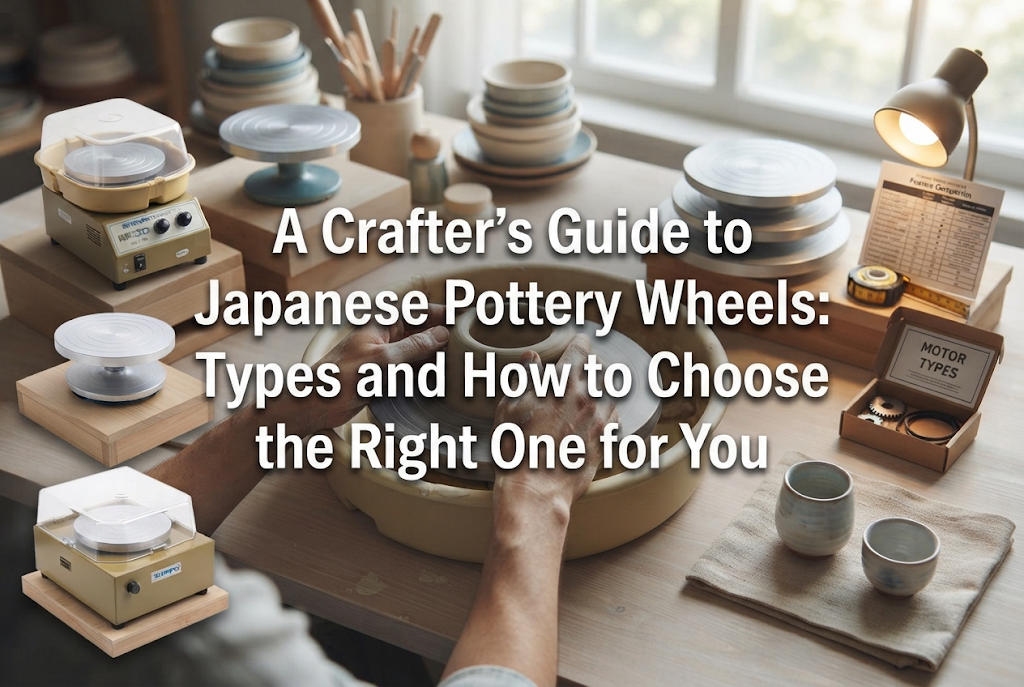
When you decide to start pottery or want to enjoy creating authentic pieces at home, the very first tool you will want to get your hands on is a pottery wheel. However, once you start searching, you will find a wide variety—from simple hand-turned wheels to full-scale electric wheels—leaving many people wondering which one they should choose.
The price range is also vast, spanning from affordable options available for a few thousand yen to professional machinery costing well over 100,000 yen. It is completely natural to wonder: "Should I just buy a cheap one to start?" or "If I buy an electric pottery wheel right away, will I actually be able to master it?"
In this article, I will explain the different types of pottery wheels used in craft making, their features, and a clear guide on how to choose the right one without regrets! I’ll dive deep into common misconceptions among beginners and key points to consider when installing a wheel in your home studio, drawing from my own perspective as a crafter.
By the end of this guide, you will clearly know which wheel you should buy right now. Let's find your ideal creative partner and take that first sure-footed step into ceramic making!
A pottery wheel is a tool designed to efficiently shape and process clay placed at the center of a rotating circular platform (turntable). By utilizing centrifugal force, it allows you to quickly form clean, perfectly round vessels, tea cups, and bowls with uniform wall thickness that are difficult to achieve through hand-building alone.
You might wonder, "Can’t I just make ceramic pieces using hand-building techniques without a wheel?" Of course, hand-building (tehineri) allows you to create wonderful, character-filled pieces. However, having a pottery wheel makes a night-and-day difference in precision, production speed, and the ease of the finishing process known as trimming.
The benefits of introducing a pottery wheel can be summarized into three main points:
A pottery wheel is not merely a device for pulling up clay; it is a vital tool that supports every stage of the pottery process from initial shaping to finishing and decorating. The tool you choose will ultimately shape the quality of your pottery experience and your finished craft.
Pottery wheels can be broadly categorized into three types based on how they are powered. Their structures, usability, and suitable tasks vary completely, so understanding these differences is your first step in choosing the right tool.
This is the simplest and most historically rooted type of pottery wheel, rotated by your own hand. Built around a heavy metal base, once you give it a firm spin, momentum keeps the wheel turning for a short while.
Pros:
Cons:
A hand-turned wheel is less suited for primary throwing from scratch and excels more as an aid for hand-building, trimming partially dried pieces, painting, and glazing.
Electric wheels spin the turntable automatically using a motor. Using a foot pedal or control lever, you can freely adjust the rotation speed continuously.
Pros:
Cons:
If you want to enjoy true, classic wheel-throwing, you will almost certainly want an electric pottery wheel eventually.
A kick wheel is a traditional setup where you kick a large wooden or metal flywheel at the base with your foot to generate rotation.
Pros:
Cons:
In modern handmade creation and small personal home studios, there is almost no reason to choose a kick wheel. For beginners, the realistic choice narrows down to either a manual hand-turned wheel or an electric wheel.
"Should I start with a hand-turned wheel or go straight to an electric wheel?" This is the single biggest question that puzzles beginner crafters.
To put it clearly: the right choice depends entirely on what kind of pieces you want to make and where you plan to work.
Choosing without a clear goal can lead to common regrets, such as buying a wheel that lacks the torque to shape what you want, or getting a machine that is too heavy to move and gets in the way. Check the criteria below to see which category fits your situation.
A hand-turned wheel is the safest, most practical investment for handmade craft beginners. Even if you upgrade to an electric wheel later, your hand-turned wheel will remain a lifelong tool for trimming and decorating, so it is an investment you won't regret.
An electric wheel dramatically increases your crafting efficiency and expressive capabilities. If your goal is serious wheel-thrown pottery, practicing pulling up clay on a manual wheel has its limits, making an electric wheel the definitive choice.
Although hand-turned wheels look simple, not all models perform the same. If you choose based solely on a low price, you may end up with a wheel that stops spinning almost immediately or wobbles on its axis.
When selecting a hand-turned wheel, always evaluate these three criteria:
The spinning performance of a manual wheel is determined by its weight. The heavier the head, the better the momentum, allowing it to spin smoothly for a longer time after a single turn.
If you choose a hand-turned wheel, aim for a cast iron model weighing at least 5 kg.
The diameter of the wheel head directly limits the size of the work you can create.
For beginners buying their first wheel, select a model with a diameter of 25 cm to 30 cm. Choosing a larger size gives you ample working area even when making small items, making it easier to rest your hands and tools.
Pay attention to the wheel’s height as well. A wheel that sits too low forces you to hunch your neck and back, causing fatigue. Choose a height that matches your work table for a comfortable posture.
The precision of the internal bearings determines how smoothly and quietly the wheel spins. A wheel with high-quality bearings turns quietly without harsh metallic friction sounds, offering smooth rotation.
Selecting a model from a reputable pottery equipment manufacturer or an established craft brand is your safest bet. Be cautious with unbranded, ultra-cheap items found online, as some come with misaligned axes right out of the box.
Because an electric pottery wheel is a significant investment, misinterpreting specifications can be costly. Here are four vital points every buyer should check:
The motor is the heart of an electric wheel. If the power output is insufficient, the wheel will slow down or stall completely when you press firmly against the clay.
There are two main drive systems: Direct Drive (DD Motor) and Belt Drive.
Regarding power output (Wattage), tabletop home units typically range from 100W to 200W, while larger studio machines range from 200W to 400W. If you intend to throw larger pieces using 2 kg to 3 kg or more of clay, a model with an output of 200W or higher is essential.
Speed control options vary depending on the interface:
Most electric wheels sold in Japan include a toggle switch to change the rotation direction between clockwise and counter-clockwise.
Generally, right-handed potters find it easier to throw clockwise, while left-handed potters often prefer counter-clockwise rotation. Always verify that a model includes a forward/reverse switch feature.
For a wheel head diameter, 30 cm offers peace of mind for serious work. Compact tabletop models often measure 20 cm to 25 cm, which is still perfectly functional if you primarily focus on smaller vessels.
When setting up at home, noise and vibration are the most common challenges. Beyond motor sounds, vibrations from a spinning wheel head can transfer through the floor to neighboring rooms.
Look for models specified with a noise level around 30 dB to 40 dB. A 30 dB level is comparable to a quiet library, allowing you to work comfortably at night or in an apartment setting.
Additionally, while lightweight units (around 10 kg) are easy to move, they may wobble when spinning heavier clay loads. For stability, consider a unit weighing over 20 kg or one designed to be securely mounted to a sturdy work table.
It is easy to get excited about feeling like a studio potter at home, but skipping workspace prep can lead to frustration. Ask yourself if you can fulfill these three setup requirements before purchasing:
In addition to the weight of the electric wheel itself, your body weight, clay, and water will all concentrate in one spot. Avoid placing the equipment directly on soft tatami mats or delicate flooring.
Always lay down thick plywood, vibration-absorbing rubber mats, or sturdy boards, and position the wheel completely level. If the unit is unlevel, the turntable will wobble, making it difficult to throw symmetrical shapes.
Throwing clay with water generates slurry splatters in all directions due to centrifugal force. A fitted plastic splash pan (mud guard) around the wheel head is absolute necessity.
Ensure that the splash pan is designed to easily detach into two pieces for cleaning. If it cannot be detached and carried to a sink to wash off wet clay, cleanup becomes tedious, and dried clay splatters will quickly spread around your room.
Setting up protective barriers using plastic corrugated sheets or vinyl sheeting around your workspace is a great way to shield nearby walls and furniture.
Standard Japanese electric wheels operate on regular household outlets (single-phase 100V), so no specialized electrical work is typically required.
However, because pottery involves water and wet clay, check that your power cords are safely routed away from wet zones and that a grounded outlet is accessible nearby to prevent electrical hazards.
If you are still asking yourself, "Which option fits me best right now?" here is a simple roadmap based on budget and goals!
Goal: Master hand-building and trimming with a manual wheel
If you are new to pottery and unsure how deep your hobby will go, or if you want to start by making small accessories, brooches, or hand-built mugs, there is no need to buy an expensive electric wheel right away. Invest in a solid cast iron hand-turned pottery wheel (22 cm to 25 cm diameter, weighing 5 kg or more). It will streamline your hand-building, foot trimming, painting, and glazing. Building a feel for clay and drying times on a manual wheel will be a valuable foundation when you move to an electric wheel in the future.
Goal: Start wheel throwing with a space-saving tabletop electric model
If you fell in love with wheel throwing in a class and want to practice at home without a large studio, a compact tabletop electric pottery wheel is your best option. Weighing around 10 kg to 12 kg, these portable models can be stored on a shelf when not in use. They handle up to 1.5 kg of clay with ease—perfect for crafting tea cups, rice bowls, and small dishes. Selecting a quiet direct-drive model lets you enjoy throwing at home without worrying about noise.
Goal: Build a lifelong studio setup with a quiet, full-sized electric wheel
If you have dedicated space in a workshop, garage, or craft room and want to produce large vases, wide platters, or high volumes of work with professional precision, go for a full-sized quiet electric pottery wheel. Weighing 30 kg to over 40 kg, these floor-standing machines offer impressive motor power that won't stall under large clay loads. Their whisper-quiet operation and smooth rotation provide a seamless crafting experience, serving as a reliable studio partner for decades to come.
Pottery wheels are sturdy, but letting wet clay slurry sit on them can lead to rust and mechanical failure. Simple care habits will keep your tool performing beautifully for years:
After each session, do not leave clay mud on the wheel head or body. Wipe everything clean using a well-wrung sponge or rag.
For cast iron manual wheels, leaving moisture on the surface causes rust to form quickly. After wiping off clay, dry the metal thoroughly with a dry towel and store it in a well-ventilated spot. If rust appears on an iron table, rub it lightly with fine sandpaper and apply a thin layer of anti-rust oil to preserve its finish.
On electric models, keep water and wet slurry away from the motor housing and electrical controls. When washing the splash pan, take care not to let water seep into mechanical gaps.
If the rotation starts to feel heavy or makes squeaking sounds, the bearings may need fresh grease or cleaning. Refer to your user manual to apply appropriate grease or contact the manufacturer's customer support rather than forcing the wheel to spin.
A pottery wheel is more than just a piece of studio equipment; it is a creative partner that helps translate the ideas in your mind into physical form.
To summarize our key guide points:
Focusing your mind on shaping clay in harmony with the rotation of the wheel offers a relaxing, creative escape from the busyness of daily life. Find the wheel that fits your lifestyle, and enjoy bringing your unique handmade ceramic creations to life!
If you found this article helpful, sharing it with your fellow craft lovers on social media would mean the world to me! Thanks for reading, and see you in the next article! This was Yassy from Crafters! (・∀・)







For example, if you are looking for articles about mizuhiki, try searching for "mizuhiki"; if you are interested in tools, try keywords like "nippers" or "pliers."
