A Complete Guide to Handmade Punching, Die-Cutting & Molding Tools: How to Choose by Material and Project
yassy
Crafters!

Hello, everyone! This is Yassy from Crafters! (・∀・)
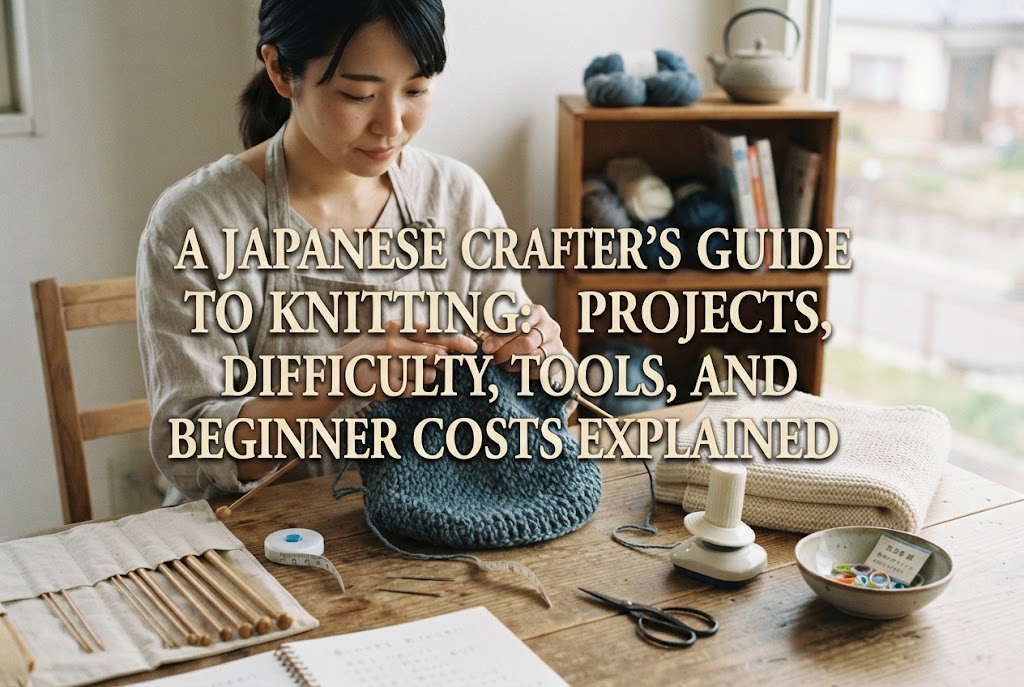
As someone who absolutely loves making, looking at, and buying all kinds of handmade crafts, today I want to share an essential guide on a tool that is indispensable for knitters: how to choose the right knitting needles!
When you decided to take up knitting, have you ever stood frozen in front of the massive display of knitting needles at a craft shop or online store, thinking, "I have no idea which ones to pick!"?
If you think, "As long as it matches the yarn weight, any needle will do," and pick a random pair, you might end up with uneven stitches, severe hand fatigue, or worst-case scenario, split yarn that causes you to quit out of frustration.
Knitting needles are far more than just "sticks to catch yarn." They are essential tools whose material, shape, length, and size can completely transform your knitting comfort and the finished quality of your work.
In this complete guide, I will fully explain how beginner knitters can confidently choose the right knitting needles for a stress-free, beautiful stitching experience! I have condensed my personal experience and craft knowledge here, so please read through to the end and find your perfect needle companion.
Selecting your knitting needles is the single most important first step in the craft of knitting.
Many beginners assume that uneven stitches are caused by a lack of personal skill, but about 80% of the time, the real culprit is simply using needles that do not suit your hands.
When you use an ill-suited material or needles that are overly slick, you unconsciously exert extra tension in your hands. This not only leads to aching hands and wrists, but also causes wobbly, uneven gauge and frequent yarn splitting.
Conversely, when you find needles that perfectly match your hand tension and yarn material, it feels as if the needles are gliding effortlessly on their own. Your stitches become neatly aligned, and you can knit for long sessions without hand strain.
You will find countless options at craft stores and budget 100-yen shops, but do not just buy them at random. Correctly understanding needle specifications and picking the "right pair" for your intended project is the golden rule for enjoying knitting for years to come.
Knitting needles generally come in four main shapes. Each shape has a clear role, and matching it to your project's structure—whether you are knitting flat or in the round—is essential.
Single-pointed needles have a knob or stopper at one end. This knob prevents stitches from slipping off the back of the needle while you work back and forth in flat knitting.
If you are a beginner tackling your first scarf, shawl, lap blanket, or flat garment panels that will be seamed together later, single-pointed needles are the traditional starting point.
However, because of the stoppers, they cannot be used for seamless tubular projects like hats or socks. Choose this shape when you want to focus on flat, rectangular pieces.
Double-pointed needles (DPNs) feature points at both ends and no stopper knobs. They are usually sold in sets of four or five needles.
By distributing your stitches across three or four needles to form a triangle or square, you can knit continuously in a spiral to create seamless, tubular items.
DPNs have long been the classic, trusted tool for three-dimensional projects such as hats, gloves, socks, sleeve cuffs, and amigurumi plushies.
Since stitches can slide off the open ends easily, beginners should choose a needle material that offers a bit of grip to keep stitches secure.
Circular needles consist of two short needle tips connected by a flexible nylon cord. Although originally designed to make seamless circular knitting easier for hats and sweater bodies, they have become overwhelmingly popular as the "ultimate versatile tool" in modern crafting.
The biggest advantage of circular needles is that they handle both tubular knitting and flat back-and-forth knitting seamlessly. In other words, one circular needle can take on the role of single-pointed needles as well as DPNs.
Furthermore, the weight of your knitted fabric rests on the central cord in your lap rather than on the ends of rigid needles, dramatically reducing wrist and shoulder fatigue during long crafting sessions. They are also incredibly portable for mobile knitting at cafes. Personally, I use circular needles for over 90% of my knitting projects! If you are unsure what to get, a circular needle is the safest, most versatile choice.
Mini circular needles feature extremely short needle tips (around 5 to 10 cm) connected by a short overall cord length of about 20 to 30 cm.
These are specialized tools designed for small-circumference tubular knitting, such as sock toes, glove fingers, or baby apparel sleeves.
While very compact and nimble, the small gripping surface can cause hand cramps until you get used to holding them. You do not need to purchase these right away, but adding them to your toolkit once you fall in love with sock knitting will dramatically boost your efficiency.
The material of your knitting needles directly determines how slick or grippy the surface is against yarn fibers. Surface friction affects not only your knitting speed, but also stitch consistency and overall comfort.
Bamboo is a classic Japanese needle material and my top recommendation for beginners. The greatest strength of Japanese bamboo needles is their ideal balance of surface friction. Yarn is far less likely to accidentally slip off the tips, allowing you to build confidence with every single stitch.
As a natural material, bamboo offers a pleasant tactile warmth, and with continued use, it absorbs natural oils from your hands to develop a smooth, beautiful luster. Bamboo also possesses a gentle flexibility that yields slightly under hand pressure without snapping easily, easing strain on your wrists. Bamboo is the undisputed best choice when working with standard wool or acrylic yarns.
Crafted from dense woods such as ebony, rosewood, or birch, wooden needles offer a silky-smooth surface and beautiful grain patterns. Like bamboo, wood provides a subtle grip that makes it very manageable for beginners.
Wooden needles warm up nicely in the hand and naturally resist static electricity. However, in very fine sizes (such as Japanese Sizes 1 to 3 / US 0 to 2), slender wooden needles can be prone to snapping under heavy tension. They are best suited for heavier yarn weights, blankets, and garments.
Metal needles made of aluminum, stainless steel, or brass are famous for their slick surfaces and incredible durability. Because yarn glides effortlessly across metal, they are ideal for experienced knitters looking to increase their stitching speed.
Metal tips can also be shaped into very fine, sharp points, making them outstanding for intricate lace knitting and sock projects using fine yarn.
However, for complete beginners, slick metal needles can lead to frustrating dropped stitches. Some crafters also dislike the cold initial feel or the clicking sound of metal. The ideal path is to start with bamboo and transition to metal once you wish to speed up or work with fine-gauge yarns.
Plastic or acrylic needles are colorful, lightweight, and fun to use. Their main strength lies in their featherlight weight and affordable production in jumbo sizes (10 mm and larger).
When working with super bulky yarns for chunky cowls or oversized knits, metal or wooden needles in large diameters become heavy and tiring. Plastic keeps large-gauge tools extremely lightweight, protecting your wrists from strain.
However, plastic can feel overly bendable or slightly sticky with standard medium-weight yarns, so it is best reserved specifically for jumbo knitting projects.
The most reliable guide for selecting needle thickness is the recommended range listed on your yarn band (label). Japanese yarn labels clearly print recommended needle sizes, such as "棒針 6〜8号" (Knitting Needles No. 6–8).
As a rule of thumb, beginners should choose the middle number in the recommended range (e.g., Size 7 if the label suggests 6 to 8).
The Japanese needle sizing system works as follows:
If you are following US or European patterns, note that Japanese size numbers differ from US sizes. Always check the exact millimeter (mm) diameter specified in the pattern to ensure accurate compatibility.
As you knit more, you will notice your personal tension habits. "Tight knitters" tend to pull the yarn firmly with every stitch, while "loose knitters" maintain a relaxed, airy hold.
When you knit a test swatch (gauge swatch) with the recommended size and find your swatch turns out smaller than specified, go up 1 to 2 needle sizes. Conversely, if your swatch turns out loose and oversized, go down 1 to 2 needle sizes. Adjusting needle thickness to match your personal tension is the key to achieving professional results.
When buying single-pointed or double-pointed needles, length matters. Common options include 25 cm, 30 cm, and 33 cm:
For circular needles, length refers to the total length from needle tip to needle tip including the cord:
While 100-yen stores and dollar shops sell cheap knitting needles, investing in quality needles from established craft brands makes a world of difference for your learning experience:
Interchangeable circular needle sets let you mix and match needle tips and cord lengths freely. While tempting, these sets represent a significant investment (often $100–$200 / ¥10,000–¥20,000).
Before purchasing a full set, test individual fixed circular needles in both bamboo and metal. Once you confirm whether you prefer bamboo or metal surfaces, investing in a set will be a rewarding long-term choice.
Pro Tip: Using a 60 cm bamboo circular needle to knit back-and-forth flat is incredibly comfortable because the fabric weight rests on your lap, and stitches will not slide off inside your bag!
A 40 cm length is essential so stitches fit comfortably around the loop without stretching.
Since thin bamboo DPNs can snap easily under strain, upgrading to a slick 80 cm metal circular needle for the Magic Loop method yields sleek, rapid stitching.
To recap our guide to choosing knitting needles:
Knitting is a magical craft where a single strand of yarn and two needles can build endless three-dimensional creations. Finding needles that feel like an extension of your hands makes every stitch a pleasure!
I hope this guide helps you find your ideal needle companion. Feel free to share this article with your crafting friends on social media! Until next time, happy knitting from Yassy!

For example, if you are looking for articles about mizuhiki, try searching for "mizuhiki"; if you are interested in tools, try keywords like "nippers" or "pliers."
