The Ultimate Guide to Washing Hand-Knit Items: Expert Rules to Prevent Felting and Losing Shape
yassy
Crafters!

Hello, this is Yassy from Crafters! (・∀・)
Think of the scarves and sweaters you spent hours carefully knitting, or the adorable amigurumi you finished with love. That moment of completion brings the greatest joy that only handmade crafts can offer.
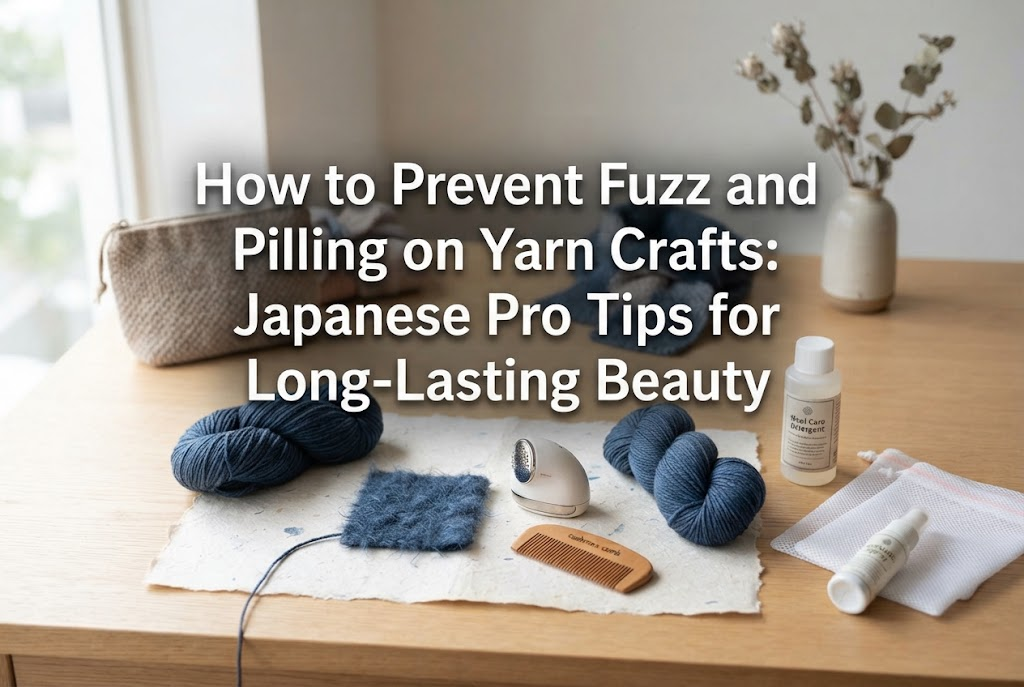
However, after using or displaying them a few times, have you ever noticed the surface becoming fuzzy, cloudy, and worn out? Fuzzing on the surface of your yarn projects is truly the greatest enemy of knit and crochet creations.
Because I love making, admiring, and buying yarn projects, I simply cannot stand by and watch pieces made or acquired with such care get ruined by fuzz. With proper knowledge and the right techniques, fuzzing can be dramatically suppressed!
In this guide, I will share complete pro secrets, covering the fundamental root causes of fuzzing, preventive measures you can take while knitting or crocheting, finishing tricks, and everyday maintenance. By applying these tips, the beauty of your yarn creations will last far longer.
Before jumping into solutions, it is essential to thoroughly understand why fuzz occurs in the first place. You cannot effectively treat an issue without knowing its cause.
Fuzzing on knit and crochet items does not happen simply because they are "old." There is a clear physical mechanism at play, driven primarily by three main factors:
The single greatest cause of fuzzing is friction. When a finished item rubs against clothing, skin, bags, or other surfaces, the tiny, fine fibers that make up the yarn are pulled outward from the yarn's core.
This exposed layer is what we see as fuzz. When these loose fibers tangle with one another, they eventually evolve into pills (pilling). In other words, fuzz is the initial stage of pilling. Minimizing friction is your very first line of defense.
Static electricity, which occurs frequently during dry seasons, is another major factor that exacerbates fuzzing. When static builds up, fibers repel one another and attract airborne dust, causing the surface fibers to stand upright.
Synthetic blends are particularly prone to static charges. Unless you manage static, even the most meticulously knitted fabric cannot completely avoid fuzzing.
The structural design of the yarn itself directly impacts how easily it fuzzes. Yarn is made by twisting multiple short fibers together.
Yarns with a soft, airy texture are often low-twist yarns (known as amayori in Japan). While their softness against the skin is wonderful, their loosely held fibers escape easily, making them structurally very prone to fuzzing. Understanding the nature of your materials and their construction is vital.
Preventing fuzz is not something you start only after a project is finished. The battle begins during the crafting process—in your needle movements, stitch structure, and initial finishing.
Here are four core rules I practice to prevent fuzzing while crafting:
When stitches are too loose, gaps form between strands, allowing fibers to be pulled free easily when rubbed. Conversely, knitting or crocheting too tightly creates unnecessary friction against the yarn as you work, causing surface wear before the project is even finished.
The right approach is to choose the correct needle size for the yarn and maintain an even, consistent tension throughout. Creating a neat, dense fabric locks the fibers together, building a structure highly resistant to friction.
When inserting your needle into a stitch, splitting the yarn bundle disrupts the natural twist of the plies, creating immediate fuzzing points.
Whether crocheting or knitting, practice smooth needle motions that do not go against the direction of the yarn's twist. Choosing needles that are not overly sharp at the tips is also an effective way to avoid splitting plies and prevent surface wear.
A common trap that crafters fall into is the constant rubbing of the work against their lap or clothes. When working on large blankets or long scarves, does the completed portion repeatedly slide back and forth across your knees?
This friction is often why a piece looks fuzzy before it is even completed. To protect your work, place a large cloth or lap cover beneath the finished sections as you continue. This simple habit completely prevents wear during the making process.
Once you finish crafting, always set the piece with steam. This crucial step makes a dramatic difference in quality and fuzz prevention.
Hold a steam iron slightly above the fabric without touching it, letting a generous amount of steam penetrate the stitches, then gently shape the fabric by hand. The combination of heat and moisture aligns the yarn fibers and tames stray surface fuzz. Pressing the iron soleplate directly onto the knitted fabric will crush the loft, so the golden rule is to keep the iron 2 to 3 cm away and apply only the steam.
Yarn comes in diverse fibers, including wool, acrylic, and cotton. Using a one-size-fits-all approach reduces the effectiveness of your care. Tailor your techniques to each fiber's unique characteristics.
Natural animal fibers such as wool and cashmere have a scaly surface structure called scales. When these scales rub together, they interlock, causing fuzzing and felting.
The key to taming fuzz on animal fibers is maintaining proper moisture and natural oils. When natural oils and moisture deplete, static increases, rapidly accelerating fuzzing. Regular care using a dedicated wool detergent to keep fibers supple is the most effective approach.
For yarns with naturally long hair like mohair, eliminating fuzz completely is impossible. Instead, shift your care toward gently brushing and aligning the fiber direction along the grain.
Synthetic fibers like acrylic are strong and difficult to snap, meaning pulled fibers do not easily shed; instead, they roll into stubborn pills.
The greatest enemies of synthetic fibers are dryness and static electricity. Washing with fabric softener is exceptionally effective here. The anti-static properties of fabric softeners drastically reduce friction and static between fibers, effectively locking out fuzzy halos.
Compared to wool, cotton and linen are less prone to severe fuzzing, but repeated friction can cause short fibers to emerge as a pale, fuzzy haze.
For plant-based fibers, wet blocking after finishing (washing to remove sizing and align stitches) works wonders. Water helps tighten the fibers and smooth the surface, producing a durable fabric that resists fuzzing.
No matter how cleanly you knit or crochet, improper washing and daily handling can ruin a piece with fuzz in a single wash.
Here are reliable washing and daily care rules to keep your yarn pieces looking pristine for years:
Tossing yarn crafts into a washing machine with regular laundry invites fuzzing; the interior of a washer is a storm of friction.
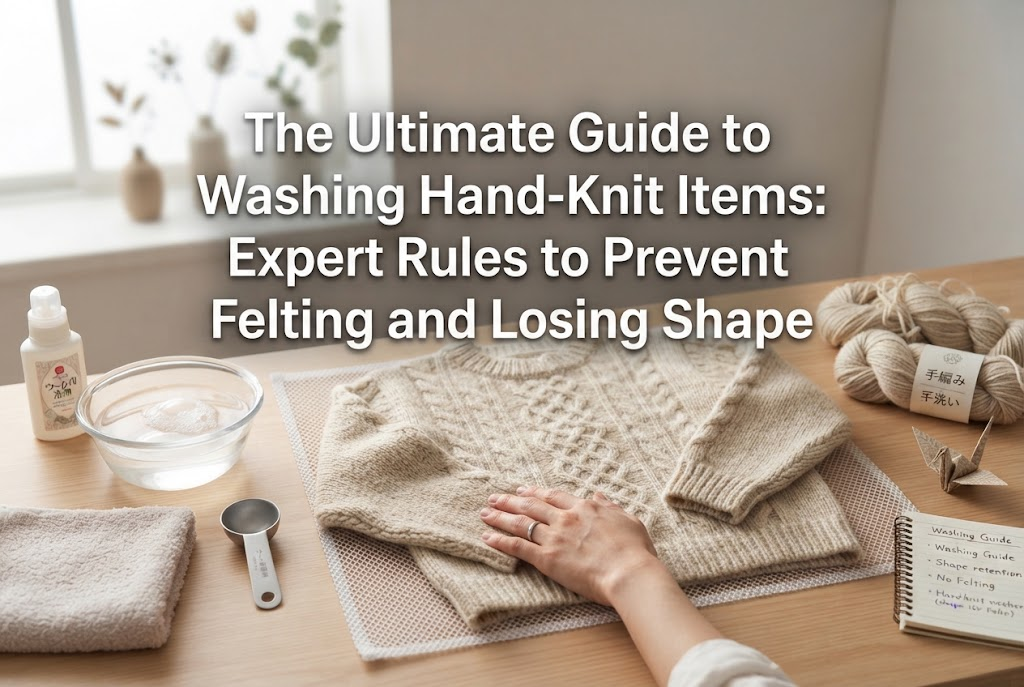
Always fill a washbasin with lukewarm water (under 30°C / 86°F), thoroughly dissolve a neutral, delicate-wear detergent, and wash by gently pressing down on the item. Rubbing or scrubbing the fabric together is strictly off-limits. The moment you rub the fabric, surface fibers tear, causing immediate fuzzing.
Always add fabric softener during the final rinse. Fabric softener coats the outer surface of the fibers, creating a smooth finish.
This micro-coating greatly lowers the friction coefficient during wear and use while blocking static buildup. This single extra step creates a world of difference in the fabric's surface condition months down the line.
How you remove water after washing is just as critical. Never wring out a knit item by hand like a rag.
Instead, wrap the folded piece in a clean bath towel and gently press from above to absorb excess moisture (towel drying). If you use a washing machine spin cycle, place the piece in a mesh laundry bag and spin for only 10 to 30 seconds.
When drying, hanging on a clothes hanger is strictly prohibited. The weight of the water stretches the garment, and swinging in the breeze causes friction against other items, inducing fuzz. Always dry items flat in a well-ventilated, shaded spot.
Even with careful handling, frequently used items will eventually develop slight fuzz. The key is to reset the surface correctly at the earliest sign.
Here are common mistakes to avoid and safe techniques to remove fuzz without harming your handmade work:
Never pull or tear off surface fuzz and pills with your bare fingers.
Plucking pills by hand drags out adjacent healthy fibers along with them, triggering even larger fuzz patches. Tearing them off is the worst habit and accelerates fabric degradation.
The golden rule for exposed fuzz and pills is to cut them cleanly with a blade.
Use nimble needlework scissors or dedicated craft shears. Hover carefully without snagging the main fabric, and snip only the protruding fuzz.
For large surface areas, an electric lint shaver is convenient, but requires proper technique. Lay the item completely flat on a firm surface, smoothing out wrinkles, and glide the shaver lightly across the surface without pressing down. Pushing too hard risks cutting into the structural stitches, creating holes.
Make it a habit to brush your worn items with a natural-bristle clothes brush (such as horsehair or boar bristle).
Gently brushing in the direction of the knit unknots tiny tangles before they develop into dense pills. Following up with a light hover of steam restores a fresh, lustrous finish reminiscent of a newly completed project.
Knit and crochet creations span many formats, including scarves, bags, amigurumi, and home decor. Tailoring your prevention methods to the specific item is where your skill as a maker shines.
Here are practical strategies I personally implement in my crafting:
Yarn bags and pouches rub against contents as items are inserted and removed, causing heavy wear from the inside out. This internal fuzzing frequently migrates through stitches to the exterior.
Whenever I make bags or pouches, I always sew in a fabric lining. Adding a simple layer of cotton cloth eliminates friction against interior contents, preventing both sagging and fuzzing. It dramatically elevates the durability and quality of your piece, making it an essential upgrade.
Decorative items and amigurumi cannot be washed frequently, making them prone to fuzzing from dust and handling.
To protect amigurumi, lightly mist the finished piece from a distance with a dedicated fabric spray or a very diluted anti-static solution to help fibers settle.
Furthermore, avoid displaying items in direct sunlight or directly in the airflow of an air conditioner. Preventing dryness is an overlooked secret to keeping decorative yarn pieces fuzz-free indefinitely.
For makers selling knitted and crocheted creations on handmade platforms (such as minne or Creema in Japan, or global marketplaces), there is an important reality: even if you ship an item in immaculate condition, how the customer cares for it determines whether it stays that way.
That is why I always include a small "Yarn Care Guide Card" with every order.
Briefly outlining care tips—such as "Gently press-wash with delicate detergent" and "Snip pills with scissors rather than pulling them"—empowers customers to maintain their items properly. This keeps your work beautiful over time, directly boosting brand trust and encouraging repeat orders.
Here is a quick summary of essential tools to keep on hand for tackling fuzz. Having these available makes maintenance easy and precise:
Fuzzing on knit and crochet creations is not an unavoidable fate. Once you understand the mechanics and apply the right techniques during making, finishing, washing, and routine maintenance, fuzz can be thoroughly managed.
Here is a quick recap of the most important takeaways:
Your carefully crafted pieces deserve thoughtful care so they can retain their brand-new beauty for years to come. With proper techniques in hand, yarn crafting becomes even more rewarding and inspiring!
If you found this guide helpful, please share it with your fellow makers on social media! See you in the next article—this was Yassy from Crafters!






For example, if you are looking for articles about mizuhiki, try searching for "mizuhiki"; if you are interested in tools, try keywords like "nippers" or "pliers."
