Floral & Botanical Crafts: The Definitive Tool Upgrade Order to Instantly Level Up Your Work
yassy
Crafters!
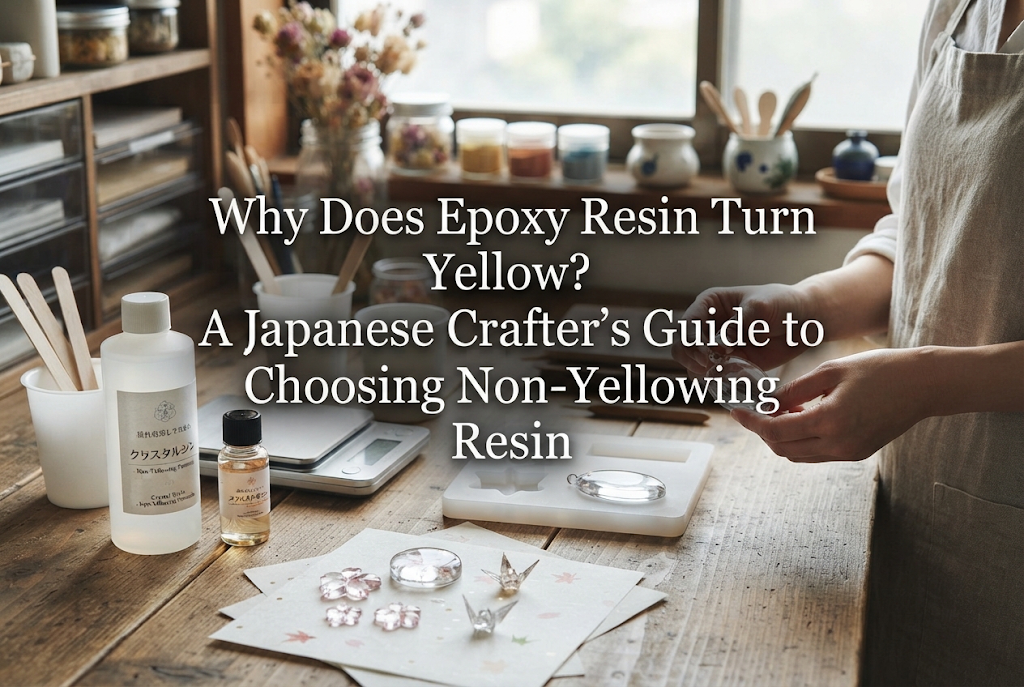

Hi everyone, it's Yassy from Crafters! (・∀・)
As someone who loves making handmade items as well as admiring and collecting lovely craft pieces in shops, I have a special soft spot for epoxy resin (two-part resin). From crystal-clear coasters and ocean wave resin panels to stunning wood-and-resin home decor, the glass-like transparency and substantial feel of epoxy resin are its absolute greatest charms.
However, there is one major frustration that every epoxy resin enthusiast inevitably faces: yellowing. Watching a crystal-clear project you poured your heart and time into turn a sepia or yellowish tone months or years later is deeply disheartening for both makers and buyers alike.
"I kept my resin piece out of direct sunlight just like I do with UV resin, so why did it still turn yellow?""I want to choose a resin liquid that resists yellowing, but I don't know what to look for on the label."
If you've had questions or worries like these, you are definitely not alone!
In this article, I'm going to share my knowledge and hands-on experience to thoroughly explain the root causes of epoxy resin yellowing, the discoloration mechanisms that differ completely from UV resin, and essential rules for spotting truly non-yellowing resin formulations. Read on, and you'll have a clear roadmap to keeping your handmade creations sparkling clean for a long time to come!
Yellowing in epoxy resin (two-part resin) doesn't happen simply because it was exposed to light. Because epoxy resin cures through a chemical reaction between two liquids—a resin base and a hardener—it undergoes discoloration mechanisms distinct from UV resin. Here are the three main causes that lead to yellowing:
The hardener used in epoxy resin relies on compounds called "amines" as its primary active ingredient. These amine compounds are actually the single biggest culprit behind resin yellowing.
Amines readily react with oxygen, moisture, heat, and light in the air, gradually oxidizing and turning yellow over time. This means oxidation happens not only after your artwork has hardened, but also inside the hardener bottle itself whenever it comes into contact with air. If the hardener turns yellow in its container, mixing it with clear resin base will still yield a yellow-tinted piece right from the start.
When you mix the base and hardener, a chemical process called a "cross-linking reaction" takes place, generating heat. If you mix a large volume at once or pour a deep, thick layer, intense heat gets trapped inside the curing mass. Temperatures can sometimes spike above 100°C (212°F), causing the resin to scorch internally and turn yellow immediately upon curing.
This isn't caused by sunlight or aging; it's a crafting phenomenon known as "thermal yellowing." It is a mistake unique to two-part epoxy resin, and it will happen if you mismanage temperature control or pour more depth than the resin formula is designed to handle.
Harsh ultraviolet rays from sunlight, as well as minor UV light emitted by indoor lighting, gradually break apart the molecular bonds in cured epoxy resin. When polymer chains are severed by UV energy, the molecular structure changes and begins absorbing light in the blue spectrum. Because the human eye perceives the complementary color of absorbed blue light, the resin appears distinctly yellow to us.
Even inside a room away from direct window rays, diffused daylight and fluorescent lights accumulate UV damage over time, steadily advancing the yellowing process.
Many beginners work with epoxy resin based on common misunderstandings about yellowing prevention. Continuing to craft with these misconceptions can waste both valuable materials and effort. Let's clear up three common myths:
Thinking a piece won't yellow as long as it's kept indoors is incorrect. As mentioned earlier, the amine component in epoxy hardener oxidizes due to oxygen and ambient room temperature, not just light exposure. Even if stored in a completely dark box, slow oxidative yellowing occurs as long as oxygen is present. UV protection alone cannot stop epoxy resin yellowing 100%.
Believing that high-end or professional-grade epoxy resin stays transparent forever is another misconception. No matter how premium a resin is, or if it claims "maximum yellowing resistance," it remains an organic compound that will naturally show subtle color shifts over a span of 10 or 20 years. High-quality resins are designed to drastically slow down the yellowing speed to maintain clarity for years, but absolute permanent immunity does not exist.
If an open bottle of hardener sits on a shelf and turns slightly yellow, some crafters assume that mixing it into clear resin base will dilute the yellow tint back to clear. This is something you should never do. Once amine compounds oxidize and turn yellow, they cannot revert back chemically. Mixing it with a clear resin base spreads that yellow hue throughout the entire batch, resulting in a murky, yellowish finished piece.
Choosing epoxy resin based solely on cute packaging or low pricing often leads to disappointment. Here are five practical criteria to check when purchasing resin supplies to ensure high transparency and long-term yellowing resistance:
The underlying resistance to yellowing is determined by the specific type of amine used in the hardener. Generally, hardeners use aromatic amines, aliphatic amines, or alicyclic amines. Inexpensive industrial epoxies or older resin lines often use aromatic amines, which cure quickly and toughly but yellow significantly within weeks or months. Modern craft-grade resins formulated with alicyclic or aliphatic amines have molecular structures far more resilient against light and oxygen, slowing down yellowing drastically. Look for terms like "alicyclic amine," "non-aromatic," or "yellowing-resistant formula" in product descriptions.
Epoxy resins are categorized into thin-pour types (for jewelry, coasters, and shallow coats) and deep-pour types (for river tables, deep molds, and thick blocks). Thin-pour resins react faster to cure within 24 hours, but pouring them thick generates extreme heat, causing thermal yellowing, bubbles, or cracks. Deep-pour resins cure slower (48 to 72 hours) to suppress heat build-up. Always match the resin type to your intended casting depth.
High-quality craft resins often include additives such as UV absorbers or Hindered Amine Light Stabilizers (HALS). These additives capture incoming ultraviolet energy and safely dissipate it as harmless heat before it can destroy the resin's molecular bonds. Look for specs mentioning "UV absorbers included," "HALS formulated," or "weather-resistant grade."
Resins labeled as "optical grade," "ultra-clear," or "high-purity non-yellowing" undergo refined manufacturing processes that strip out impurities. Because the raw ingredients are purer, the initial clarity is exceptional, and there are fewer trace contaminants to trigger early oxidation.
Buying bulk resin sets saves money per gram, but if you craft occasionally, buying massive jugs can backfire. Once a bottle of hardener is opened, exposure to air begins the slow process of oxidative degradation. Pick a volume (such as 300g to 500g sets) that you can comfortably use up within 1 to 2 months so you are always working with fresh materials.
Beyond choosing the right supplies, here are hands-on techniques I use in my own daily studio work to keep resin pieces as clear as possible:
Storage conditions directly affect your resin's lifespan. Cap hardener bottles tightly right after pouring to block air. Store bottles upright in a cool, dry, dark place completely shielded from sunlight. In warmer seasons, seal bottles inside light-blocking aluminum pouches with a desiccant pack for extra protection.
When making thick dimensional pieces, casting all the resin at once increases thermal yellowing risks. Even with deep-pour resin, pouring in layers (multi-layer casting) keeps peak temperatures minimal, protecting the resin's water-clear appearance.
Once your piece is fully cured, apply a topcoat of UV-resistant acrylic clear spray or a UV-blocking glaze. Even if the resin itself contains stabilizer additives, creating a protective barrier on the outer surface shields the interior from direct UV and oxygen contact.
Since minute color shifts can happen over many years, professional makers plan ahead in their design choices. Adding a tiny micro-drop of transparent blue or purple pigment can help neutralize subtle yellow tones that might appear down the road, as blue/purple acts as a complementary color to yellow. Alternatively, designing pieces with dried botanicals, antique charms, or gold leaf allows slight sepia aging to complement the piece as a rich, vintage aesthetic.
Q1: Is there any way to restore a piece that has already turned yellow?A: Unfortunately, no. Once epoxy resin undergoes chemical oxidation or thermal scorching, it cannot be reversed to clear. If only the outer surface is discolored, sanding away the top layer and re-coating may improve the appearance, but internal yellowing is permanent. Yellowed pieces can be remade by pouring an opaque colored resin coat over them or kept as personal testing samples.
Q2: Does adding colorants prevent resin from yellowing?A: Colorants do not chemically stop resin oxidation, but they are incredibly effective at masking it. Projects mixed with solid pigments (opaque blues, blacks, whites, etc.) block light transmission, making internal yellowing visually imperceptible compared to completely clear pours.
Q3: Does unopened epoxy resin have an expiration date?A: Yes. Unopened craft epoxy resin generally has a shelf life of about 6 months to 1 year. Trace amounts of moisture and air can slowly permeate plastic containers over extended periods, so it is best to use your resin promptly after purchase rather than letting it sit for years.
Understanding the science behind epoxy resin yellowing helps you make smart choices for your handmade creations. To recap:
By pairing scientific understanding with good technique, you can craft breathtakingly clear resin art that stays beautiful for years to come!
Until next time, happy crafting! This was Yassy from Crafters!



For example, if you are looking for articles about mizuhiki, try searching for "mizuhiki"; if you are interested in tools, try keywords like "nippers" or "pliers."