Overcoming Maker Burnout: A Japanese Crafter’s Complete Guide to Motivation and Mindset
yassy
Crafters!

Hello, fellow crafters! It’s Yassy from Crafters! (・∀・)
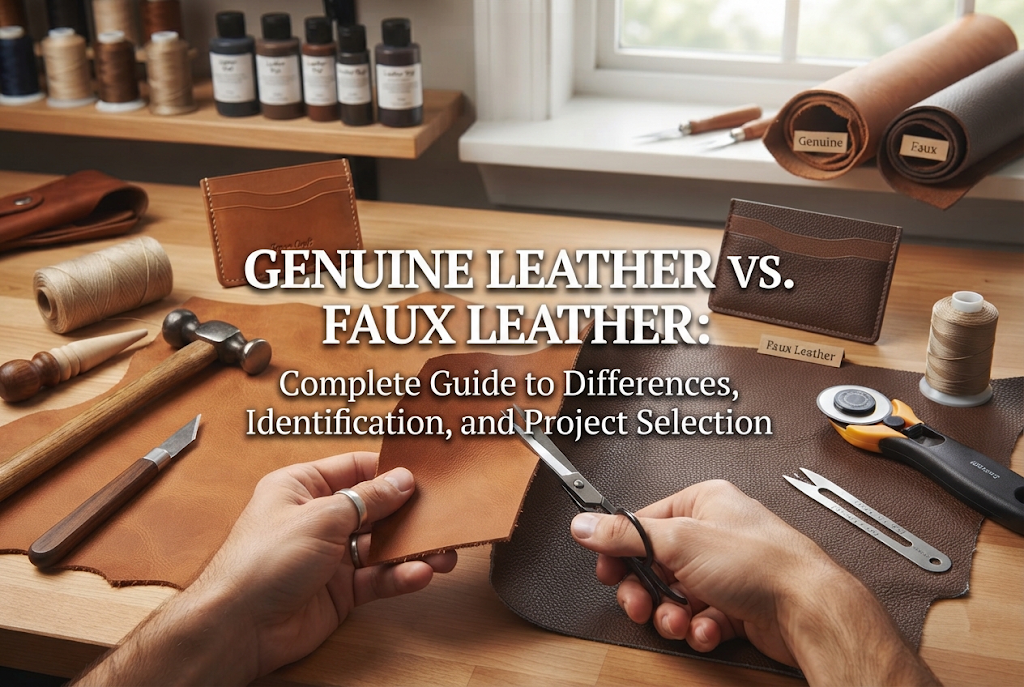
When you first decide to make handmade leather accessories, pouches, or everyday small goods, there is a common hurdle that almost everyone runs into right away: deciding whether to use genuine leather (hon-gawa) or faux/synthetic leather (gōhi).
Whether browsing online craft stores or walking into a local craft supply shop, you will see countless leather materials that look remarkably alike. Yet, their prices and characteristics are worlds apart. For beginners, choosing the right material for a specific handmade project can quickly become overwhelming.
Here is the bottom line: even if they look identical at first glance, genuine leather and faux leather are entirely different materials. Their structural characteristics, working methods, and ideal applications are practically opposites.
If you pick the wrong material without understanding these differences, you risk running into frustrating pitfalls—such as sewing needles refusing to pierce through tough layers, or finding that the material's surface peels and flakes away after just a few months of use. Drawing from my hands-on experience handling countless materials in crafting, I will break down the essential differences between genuine leather and faux leather in detail!
To start, it is essential to understand the fundamental difference in physical structure between genuine and synthetic leather. Grasping this basic principle will drastically cut down on crafting mistakes.
While synthetic alternatives are engineered to mimic genuine leather's surface texture, beneath that surface, their inner structures are as different as night and day.
Genuine leather is a natural material made from animal hide—typically cow, pig, or sheep—that undergoes tanning to prevent it from decaying. For handmade leathercraft, cowhide is by far the most commonly used material.
The defining structural feature of genuine leather is that it consists of tightly interwoven collagen fibers. In Japanese leathercraft terminology, the smooth top-grain surface is called ginmen (銀面), while the suede-like, fibrous flesh side on the back is called tokomen (床面).
Because these natural fibers are three-dimensionally and densely intertwined, genuine leather has exceptional tensile strength. Unlike woven fabric, raw-cut edges will never fray. Its greatest appeal is its ability to develop a rich patina over time (aging), growing softer, molding to your hands, and deepening in color as you use it.
Faux leather is an industrial product created by applying synthetic resin—such as polyurethane (PU) or polyvinyl chloride (PVC)—onto a fabric base, followed by embossing to imitate natural grain patterns. In the crafting market, these materials are broadly classified into synthetic leather and artificial leather.
Because it is built by laminating a thin plastic film onto a base cloth, faux leather lacks the complex fibrous structure of real animal hide. As an engineered industrial product, its thickness is completely uniform, and the surface is devoid of natural scars or uneven coloration.
While faux leather resists water and stains well and requires little maintenance, it does not age gracefully. Over time, the synthetic resins break down through hydrolysis (chemical decomposition from atmospheric moisture), inevitably causing the surface layer to crack, peel, or become sticky.
Here are practical ways to distinguish genuine leather from faux leather, whether you are shopping for materials in a brick-and-mortar store or evaluating a finished piece. From an artisan's perspective, you can often identify the difference the moment you touch the material.
The three most reliable indicators are the cut edge, tactile feedback and wrinkling, and scent.
The most foolproof method is checking the cross-section of the edge, known in leathercraft as the koba (コバ). One look at the raw edge reveals the truth.
The edge of genuine leather reveals tightly packed, solid fibrous tissue. It has a slight fuzziness and a cohesive, dense thickness from top to bottom.
In contrast, looking closely at the edge of faux leather exposes the threads or knit structure of the underlying textile base. When viewed from the side, you can clearly see two distinct layers: the slick resin coating on top and the fabric backing underneath.
Pressing firmly down on the surface with your thumb is another effective test.
When you press genuine leather, fine, natural wrinkles spread out radially around your fingertip. This occurs because of the natural elasticity and varying fiber density of real hide. Real leather also absorbs and conducts body warmth quickly, giving it a subtle, comforting warmth when held.
When you press faux leather, the taught synthetic film tends to form rigid, broad folds, or the entire surface simply depresses without forming fine creases. To the touch, it feels cooler at first and carries a slightly plastic, rubbery grip.
You can often tell simply by leaning in and smelling the piece.
Genuine leather carries a distinctive, rich, earthy aroma created by the combination of natural hide and tanning agents (such as vegetable tannins or chromium). It is that unmistakable fragrance you encounter the moment you step into a specialty leathercraft store.
Faux leather, on the other hand, emits a chemical scent reminiscent of vinyl, plastic, or industrial adhesives. While some brand-new synthetic leathers are nearly odorless, they will never possess that signature leather aroma.
When creating handmade items, neither material is universally superior. The right choice depends entirely on the intended purpose, budget, and target user of your finished project.
Here is an in-depth comparison of their strengths and weaknesses from a crafter's standpoint.
Your choice depends heavily on how long you intend the item to last.
Genuine leather offers unmatched longevity. With proper care, a piece made from quality leather can easily last 10, 20, or more years. Over time, it gains luster, softens, and conforms to its owner's hands, increasing in character and value.
Faux leather typically has an effective lifespan of roughly 2 to 5 years from its manufacturing date. Even if left unused, the resin coating slowly degrades by reacting with moisture in the air. Eventually, peeling or stickiness will occur. It is best treated as a consumable material meant for a defined period of use.
For convenience in wet or messy environments, faux leather has a significant advantage.
Genuine leather is vulnerable to water and high humidity. Raindrops can cause stubborn water spots, and damp storage can foster mold growth. Regular conditioning with dedicated leather creams or oils is necessary to replenish essential moisture and oils.
Faux leather, sealed beneath a synthetic resin barrier, boasts excellent water repellency. Liquids can simply be wiped away with a dry cloth. If it gets dirty, a lightly dampened cloth easily cleans the surface, making day-to-day upkeep almost effortless.
When it comes to material costs and consistency, faux leather takes the lead.
Genuine leather is a natural product, meaning every individual hide possesses unique variations, including scratches, neck wrinkles (tora), and visible blood vessel traces (chisuji). Crafters must work around unusable patches, which increases material costs and reduces cutting efficiency.
Faux leather is produced industrially in uniform continuous rolls, making it very economical. Because its quality is consistent from edge to edge, material yield is virtually 100%. Furthermore, it comes in an immense variety of bright colors, graphic prints, and uniform embossed textures that are difficult to achieve on real hide.
For crafters and DIY beginners, workability—how the material behaves during construction—is the deciding factor. Tool selection and finishing techniques vary significantly between genuine and faux leather.
Here are key workability differences based on real workshop experience.
You will feel the contrast the moment you make the first cut with shears or a blade.
Because genuine leather is densely fibrous, clean cutting requires a sharp Japanese leather knife (kawa-boucho) or a heavy-duty utility knife such as an OLFA craft blade. For hand-stitching, stitching holes must be pre-punched using pricking irons (hishime-uchi) struck with a mallet. The internal fibers securely grip the thread, allowing you to pull stitches taut for a clean, professional seamline.
Faux leather is soft and can easily be cut with standard household fabric shears or rotary cutters. Thin faux leather feeds easily through a standard home sewing machine using regular sewing needles. However, placing needle punctures too close together can cause the material to perforate and tear along the seamline like postage stamps, so setting a wider stitch length is essential.
Edge burnishing—one of the hallmarks of traditional leathercraft—works completely differently between the two.
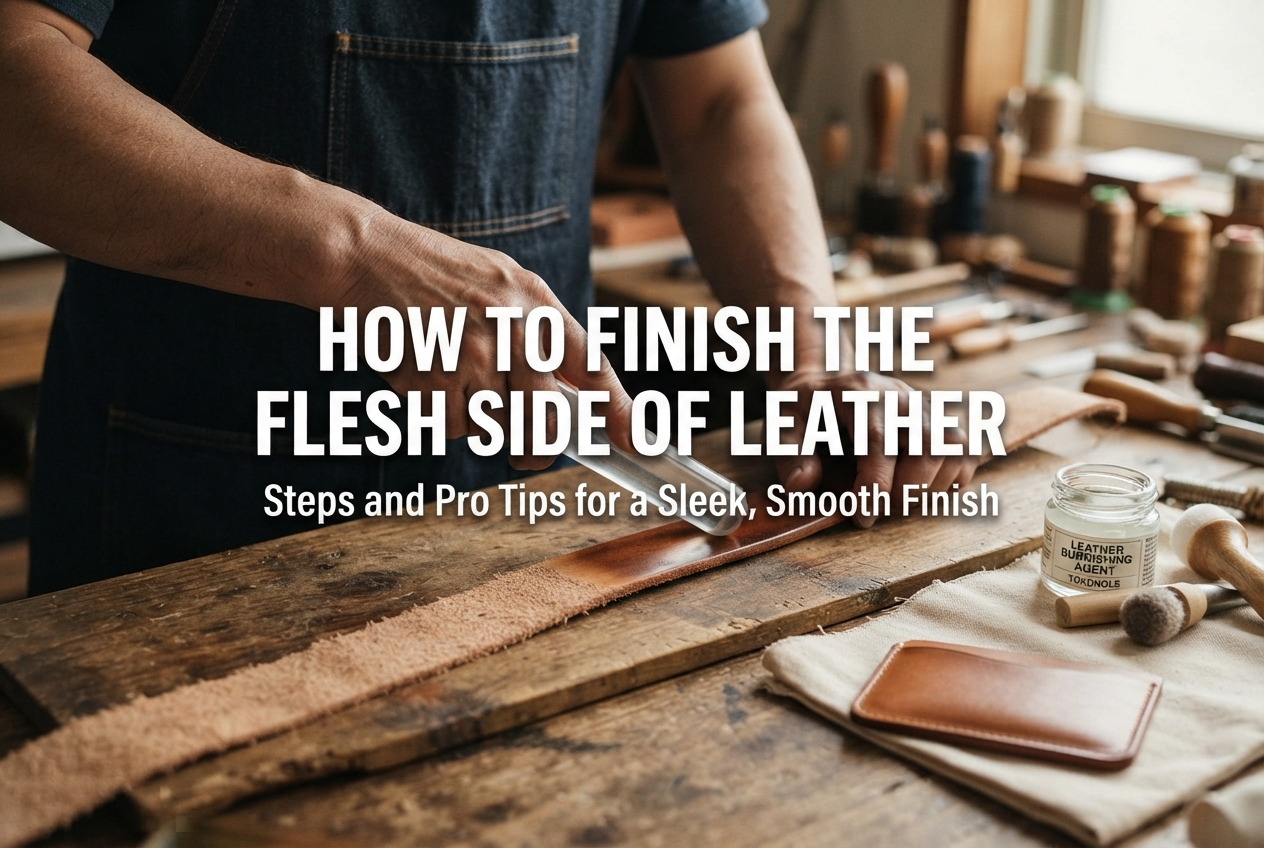
With genuine leather (especially vegetable-tanned leather), applying an edge-burnishing agent like Tokonole to the raw edge (koba) or the backside (tokomen) and rubbing it with a wooden slicker creates a glossy, smooth, sealed finish. This burnishing process instantly elevates the piece's craftsmanship.
With faux leather, burnishing the edge will never produce a shine. Rubbing it merely exposes the textile backing and synthetic coating, making raw-cut edges impractical. To finish faux leather edges cleanly, you must either turn and fold the edges under (hem them) or coat them with a dedicated edge-sealing paint.
Attaching parts and adding personalized markings also require different approaches.
Genuine leather readily absorbs solvent-based contact adhesives or water-based craft glues like Cybinol, forming an exceptionally strong bond. Additionally, wetting vegetable-tanned leather allows metal stamping tools to be hammered into the surface, creating crisp, permanent debossed lettering. Hot-foil stamping and branding irons also work beautifully.
Faux leather surfaces tend to repel adhesives, so you must carefully choose glue formulated specifically for synthetic resins. Hammered metal stamps will also bounce back over time as the synthetic material regains its shape, causing debossed impressions to fade. For faux leather, heat-transfer foils or silkscreen printing are the standard methods for labeling and customization.
If you are wondering which material best fits your upcoming project, consider the intended use, durability requirements, and overall style using these guidelines.
Recommendation: Genuine Leather.
Items carried daily in pockets and bags—such as key holders, bifold wallets, and card cases—experience constant friction. If made from faux leather, corners will wear down within months, revealing the white textile backing underneath and giving the item a worn, cheap look.
Genuine leather, by contrast, becomes glossier with regular friction, softening and rounding out at the corners to develop authentic vintage appeal. For items meant to be treasured for years, genuine leather is the definitive choice.
Recommendation: Faux Leather.
Making large tote bags or cosmetic pouches entirely from genuine leather can make them surprisingly heavy. Furthermore, the interior of a makeup bag is prone to cosmetic powder spills or liquid leaks.
For these pieces, lightweight, wipe-clean faux leather is ideal. Using thin faux leather for interior bag linings creates a sturdy, structured, and water-resistant interior that resists sagging.
Recommendation: Faux Leather or Chrome-Tanned Genuine Leather.
Items like drink coasters, table placemats, camping gear accessories, or rainy-day bags face frequent water exposure. Using vegetable-tanned genuine leather here will result in immediate water stains and warping.
When you want low-maintenance items that can take heavy, worry-free daily use, faux leather is often the smartest, most practical solution.
Here is my go-to decision-making process when planning pieces for production. Whether making items for sale or crafting for personal enjoyment, this framework removes the guesswork.
My golden approach relies on two core principles: hybrid material pairing and reverse-engineering from the user's needs.
For instance, when designing a tote bag, you don't necessarily have to choose exclusively between 100% genuine leather or 100% faux leather.
For high-wear areas—such as hand-gripped handles and high-abrasion bottom corner patches—I use durable, long-lasting genuine leather. Then, to keep the overall bag lightweight and cost-effective, I use colorful, supple faux leather for the broad body panels and interior lining.
This hybrid construction delivers the best of both worlds: genuine leather's structural durability and refined look, paired with synthetic leather's lightweight convenience and accessible price point.
Similarly, if you sell your work at handmade craft markets or online platforms, calculate backward from customer expectations:
Clarifying who will use the piece, where it will be used, and at what price point is the ultimate secret to selecting the perfect material.
Here is a quick reference table summarizing how both materials stack up side by side:
From internal structural differences to identification tips, workability, and project-specific use cases, understanding the real nature of genuine and faux leather makes all the difference in handmade crafting.
Genuine leather offers irreplaceable luxury, unmatched strength, and the joy of watching a piece mature over years of use. Faux leather provides outstanding water repellency, lightweight versatility, accessible pricing, and a vast palette of colors and patterns.
One is not universally superior to the other. What matters most is understanding which material matches the purpose of the piece you want to create.
When you craft with a complete understanding of your materials, both the visual refinement and everyday functionality of your finished items will improve dramatically. Use these insights the next time you browse your favorite craft supplier or online shop, and select your leather materials with total confidence.
If you found this guide helpful, sharing it with your fellow makers on social media is always deeply appreciated! I'll catch you in the next guide—happy crafting from Yassy!





For example, if you are looking for articles about mizuhiki, try searching for "mizuhiki"; if you are interested in tools, try keywords like "nippers" or "pliers."