Essential Measuring & Marking Tools for Crafting: How to Pick the Right Tool by Craft Type
yassy
Crafters!

Hello, everyone! It’s Yassy from Crafters! (・∀・)
The world of handmade crafts is deeply rewarding and endlessly fascinating. Every day, I immerse myself in the crafting life—creating new pieces, admiring the work of talented artisans, and picking up unique treasures at craft events.
When it comes to the tools you use for crafting, how do you usually choose them? Many people start by using whatever happens to be lying around the house or picking up the cheapest option available. But let me be clear: the quality of your tools directly determines both the finish of your work and how comfortable you feel while making it.
Creating exceptional handmade items requires more than just artistic sense and technique—it fundamentally requires understanding the different types of tools and knowing how to select the right ones. Continuing to work with compromised tools leads to unnecessary hand strain, fatigue, and uneven results in your finished pieces.
As someone who loves making, viewing, and collecting handmade goods, I want to share a comprehensive breakdown of craft tool categories and the essential criteria for choosing tools you will love using for years. This guide will help clarify which tools you should invest in right now and how to find lifelong companion tools for your craft.
Handmade tools come in countless varieties, but when categorized by function, they fit into five primary roles. Understanding this basic structure is the first step toward smart tool selection.
No matter what craft genre you practice, your workflow is essentially built on combinations of these five functions. Let's look closely at each role and its essential tools.
These tools are used to cut raw materials and shave away excess parts. This is one of the most frequently used and precision-critical categories in any crafting process.
Representative tools include dressmaking shears, craft scissors, precision hobby knives, rotary cutters, nippers/wire cutters, and files. The clean precision of your cut edges directly impacts the overall neatness and perceived quality of your finished piece, making sharpness and blade accuracy vital.
Using dull or low-quality cutting tools causes fabric edges to fray and leaves rough burrs on wire or shrink plastic. Never hesitate to invest in quality cutting implements.
These tools hold materials firmly, bend delicate components, and keep pieces steady while you work. They are especially crucial in jewelry making, wirework, and 3D crafting.
Key items in this group include flat-nose pliers, round-nose pliers, tweezers, craft clamps, and mini vices. Tools in this category essentially act as extensions of your own fingertips.
If a gripping tool cannot apply force accurately, small parts will slip and fly off, or metal components will get scratched. For delicate, high-precision craftwork, the build quality of your gripping tools cannot be compromised.
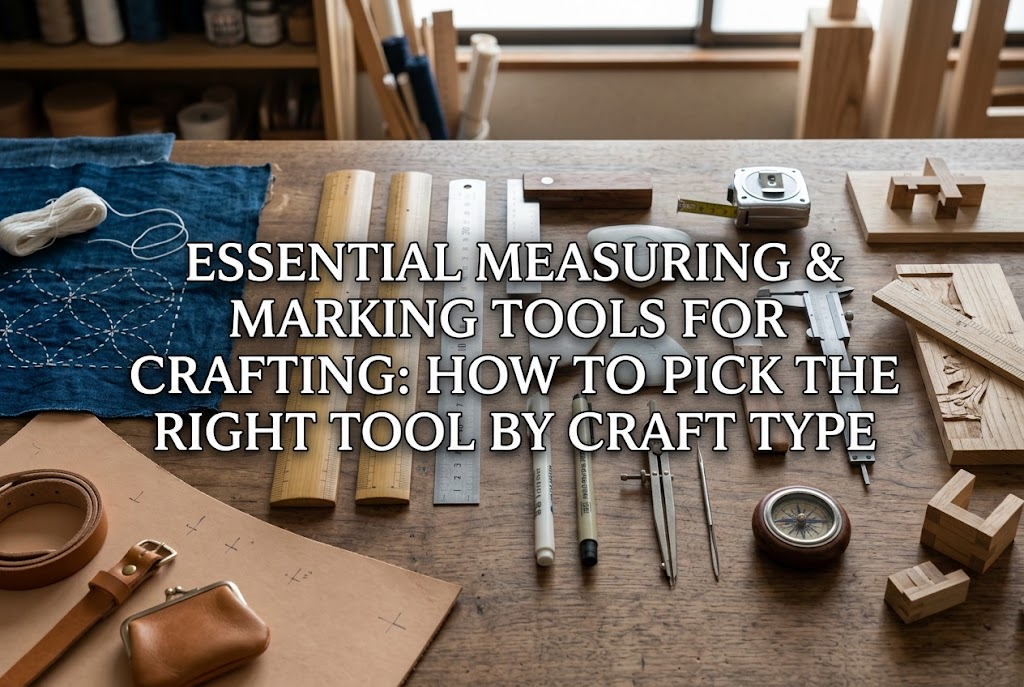
Accurate measurement and marking tools ensure proper dimensions and alignment, preventing distortion, uneven gaps, and sizing mistakes.
This group includes stainless steel and acrylic rulers, tape measures, calipers, fabric marking pencils (chaco pens), awls, and tracing styluses. Many handmade projects demand precision down to the millimeter or even half-millimeter.
Relying on guesswork or rough visual estimates often leads to critical errors during final assembly where pieces fail to fit together. Reliable measuring tools are an absolute prerequisite for polished results.
These tools join separate materials together permanently or cure liquid mediums into solid forms, determining the structural strength and durability of your work.
Examples include craft adhesives, hot glue guns, UV/LED curing lamps, soldering irons, sewing needles, and sewing machines. It is vital to understand the compatibility between your joining tool or adhesive and the materials you are working with.
If bonding strength is insufficient, your finished product risks breaking after reaching a customer. For creating safe, sturdy, and long-lasting items, joining tools must be selected with the utmost care.
Finishing tools polish surfaces, smooth edges, and refine subtle details to elevate the overall quality of a piece to a professional standard.
This category includes polishing cloths, fine brushes, sculpting spatulas, heat tools, and topcoat applicators. These tools give your projects their final, high-end luster and refined texture.
To ensure your hard work shines through in the final steps, always take finishing tools and techniques seriously.
Beginners often fall into common pitfalls when building their toolkits. I experienced these exact same frustrations early in my crafting journey, and I want to help you avoid those unnecessary detours.
Buying every single tool from budget discount stores simply to keep initial costs low is a common mistake. While discount store supplies have their place, relying on them for tasks that demand high precision inevitably hurts your workflow and results.
For instance, budget nippers or pliers often suffer from slight misalignments at the tips or cutting edges. Working with misaligned tools can result in jagged wire cuts or uneven loops on eye pins, leading beginners to mistakenly believe they simply lack skill when the tool is actually at fault.
Solution: Invest in reliable, craft-grade tools for your primary, high-precision tasks right from the start. For cutting and metalwork tools like scissors and pliers, choosing dedicated craft or hobby brand tools makes a world of difference.
Crafting involves both versatile tools that work across many mediums and specialized tools designed strictly for specific tasks. Trying to use general household tools for specialized craft work frequently leads to ruined materials and damaged tools.
For example, using standard paper scissors on fabric causes the textile to slip, making straight cuts nearly impossible. Conversely, using high-end fabric shears to cut paper or hardened clay will dull and ruin the blades immediately.
Solution: Match your cutting edge directly to the hardness and texture of the material. Establish strict boundaries for scissors, blades, and adhesives based on their intended material.
Buying tools solely based on online reviews without considering your own hand size and physical ergonomics often results in oversized or overly heavy equipment.
If a crafter with smaller hands uses pliers with thick, wide grips, opening and closing the tool puts unnecessary strain on the hand, causing fatigue within just ten minutes. Similarly, heavy shears or unwieldy tools make long crafting sessions exhausting.
Solution: Always check the physical dimensions and weight of a tool. Selecting compact, lightweight tools designed to fit comfortably in your hand drastically reduces crafting fatigue.
Based on years of crafting and experimenting with countless tools, here are the five essential criteria I use to evaluate any tool before adding it to my workshop.
When selecting blades or pliers, inspect the tips first. Check whether the opposing jaws or blades meet seamlessly without gaps or misalignment.
For wire cutters and pliers, hold them up to a light source to confirm no light leaks through closed tips. Properly aligned tips grip delicate components securely with minimal effort and produce crisp, clean cuts.
For long crafting sessions, grip quality directly affects comfort. Look for non-slip elastomer resin or cushioned soft grips rather than bare, hard plastic handles.
Spring-loaded tools are also a game changer. Pliers and nippers equipped with internal return springs reopen automatically after each squeeze, cutting hand fatigue significantly.
Examine the metal or composite materials used in the tool. Inexpensive tools often use softer metals that bend, dent, or dull quickly when exposed to tough wires or dense materials.
Opt for tools made from stainless steel, high-carbon steel, or titanium-coated alloys. While the upfront cost may be slightly higher, their ability to maintain precise alignment and sharp edges for years makes them far more cost-effective over time.
Look for tools that offer balanced weight distribution rather than just being lightweight. Tools with their center of gravity close to your hand allow for easier control and reduce strain during detailed work.
For fingertip tools like precision tweezers and hobby knives, choosing a comfortable barrel thickness and weight balance helps prevent hand tremors during delicate operations.
Tools naturally accumulate residue and experience wear over time. Choose tools designed with maintenance in mind.
Utility knives that can be disassembled for cleaning, rotary cutters with easily available replacement blades, and shears with adjustable pivot screws are hallmarks of well-designed, long-lasting tools.
Tool priorities vary depending on the craft you practice. Here is a roadmap for four popular genres to help you prioritize your investments wisely.
When working with metal findings, natural stones, and beads, tool precision directly impacts the professional quality of your pieces.
Pro Tip: Ensure the inner jaws of your flat-nose pliers are completely smooth without serrated teeth. Serrated jaws leave visible scratches on metal findings, diminishing the quality of your finished jewelry.
Working with liquids and malleable materials requires reliable curing equipment and clean preparation tools.
Pro Tip: Low-output curing lamps often leave resin surfaces tacky and under-cured. Ensure your lamp supports dual wavelengths (365nm + 405nm) with sufficient output power.
Working with flexible, soft textiles requires sharp cutting tools and secure temporary holding methods.
Pro Tip: Using sewing clips instead of traditional straight pins protects delicate fabrics from pinholes and speeds up preparation considerably.
Crafts involving rigid, dense materials demand sturdy cutting and punching implements.
Pro Tip: Never use plastic rulers with utility knives. Blades can easily shave into plastic, ruining straight lines and posing safety risks. Always use metal rulers with slip-resistant backing.
Even the finest tools will lose their edge if neglected. With regular care, your favorite tools can maintain peak performance for decades.
Moisture and hand perspiration are the biggest enemies of metal tools like pliers, cutters, and scissors. Perspiration contains salts that accelerate rusting if left unaddressed.
After finishing your work, wipe metal surfaces with a soft, dry microfiber cloth. Once a month, apply a single drop of anti-rust mineral oil or machine oil to the pivot joint, open and close the tool a few times, and wipe away any excess oil.
Sticky residue from tape or stray drops of resin and glue can easily foul cutting blades and tweezer tips. Leaving residue behind can ruin future projects.
Remove adhesive buildup on scissors by wiping blades with a cotton swab dipped in rubbing alcohol or adhesive remover. For tools with UV resin, always clean off uncured resin immediately using alcohol or dedicated resin cleaner before it cures.
Precision blade edges are delicate. Avoid storing cutting tools loose in drawers where blades can knock against each other.
Always store shears and specialty blades with protective sheaths or standing upright in a tool caddy. Replace disposable hobby knife and rotary blades as soon as you notice resistance—working with dull blades compromises both safety and craft quality.
Craft tools are far more than mere utility items. They are the essential partners that translate your creative ideas and vision into tangible reality.
Settling for inadequate tools often leads to compromised results and takes the joy out of the creative process. In contrast, working with well-crafted, responsive tools makes every step smoother, enhances the beauty of your work, and makes making things truly exciting!
You don't need to replace everything at once. Start by upgrading the core tool you use most frequently in your current projects. You will immediately feel the difference in control and comfort right at your fingertips.
Find your trusted companion tools, and enjoy every moment of your creative journey! I'll be right here in the studio working on new creations alongside my favorite tools too! (・∀・)
If you found this guide helpful, please share it with your fellow crafters!
Until next time—this was Yassy from Crafters!





For example, if you are looking for articles about mizuhiki, try searching for "mizuhiki"; if you are interested in tools, try keywords like "nippers" or "pliers."
