Japanese Textile Dyeing for Beginners: The Ultimate Guide to Dye Selection & Starter Kits
yassy
Crafters!

Hello! I'm Yassy from Crafters! (・∀・)
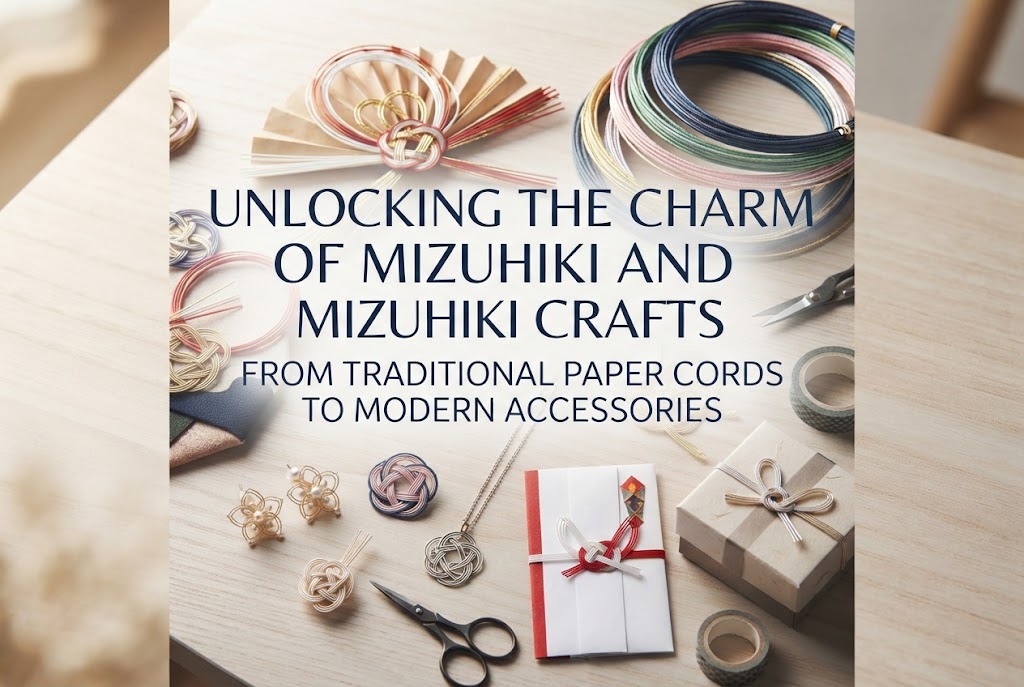
While the world of handmade arts offers countless materials, one stands out for combining traditional Japanese beauty with modern sophistication: Mizuhiki.
I love making crafts myself, admiring pieces made by talented artists, and collecting lovely handmade goods at craft events and online shops. Among all materials, Mizuhiki holds a very special place in my heart.
When most people hear the word "Mizuhiki," they picture the red decorative paper cords tied around traditional Japanese gift envelopes (goshugi-bukuro). In today's craft community, however, Mizuhiki has undergone a dramatic transformation into versatile modern "Mizuhiki crafts" (or mizuhiki zakka).
From everyday earrings and hair accessories to home decor, small coin envelopes (pochi-bukuro), and decorative gift wrapping accents, Mizuhiki crafts are shining bright across many lifestyle scenes.
In this guide, I will share an in-depth breakdown of Mizuhiki for beginners and anyone curious about Japanese paper cord crafts. We will cover the essence of the material, its structure, varieties, and the full picture of its modern appeal. Beyond basic traditional knowledge, we'll dive into the material's physical properties, tips for handling it, and points to look for when choosing pieces. By the end of this article, you will have a clear and complete understanding of Mizuhiki and modern Mizuhiki crafts!
To start, let's clarify what Mizuhiki is and what "Mizuhiki crafts" refer to. Understanding this distinction changes your entire perspective, whether you are creating items or purchasing them.
Mizuhiki is a traditional Japanese decorative cord made by cutting thin strips of high-quality Japanese paper (washi), tightly twisting them into a paper rope, setting them with glue to harden, and then coloring the surface or tightly wrapping it with decorative thread or glossy film.
Originating as far back as the Asuka period and imperial court rituals, Mizuhiki cords were historically tied around gifts and formal envelopes to express respect to the recipient and symbolize tying good bonds and fortune.
On the other hand, Mizuhiki crafts (Mizuhiki zakka) refer to modern handmade items—such as accessories, daily lifestyle items, and interior decor—that utilize traditional knotting techniques (musubi) and the material itself, redesigned for contemporary living.
Breaking out of formal traditional Japanese etiquette, Mizuhiki has transformed into fashionable, casual craft art that colors our everyday lives.
When I held a piece of modern Mizuhiki craft for the first time, I was amazed by its feather-like lightness and brilliant color depth. Despite being made of paper, it possesses surprising strength and flexibility, creating an unmistakable presence that merges traditional heritage with modern elegance.
To handle Mizuhiki as a handmade craft material or to care for finished pieces so they last a long time, it is essential to understand how Mizuhiki is made.
The basic structure of Mizuhiki consists of two primary components: the Core Material (Shinzai) and the Outer Coating/Wrapping (Hifuku).
At the center of Mizuhiki is high-grade Washi paper made of long fibers. This paper is cut into thin strips and tightly twisted by machine into a slender paper rope called koyori.
This paper rope is thoroughly soaked with water-based glue or starch paste and pulled straight under tension as it dries, forming a rigid, straight paper core.
In short, the essence of Mizuhiki is "firmly hardened paper." It contains no wire or metal inner core.
To complete the colorful Mizuhiki cords we see every day, fine colored thread or metallic foil film is wrapped tightly around the hardened paper core.
Wrapping materials include rayon, polyester, artificial silk, and gold or silver foil. Depending on the type and density of the thread wrapped around the core, even two cords of the exact same red shade can have completely different sheens and textures.
Because the core is made of Washi paper hardened with glue, Mizuhiki has a distinct physical trait: it is extremely strong when dry, but very vulnerable to water.
When exposed to water, the adhesive in the core dissolves and the Washi fibers swell, drastically reducing its strength. Once soaked and deformed, Mizuhiki will not regain its original hardness or precise shape even after drying.
However, as long as it is kept dry, it suffers very little aging over time and retains its structural beauty for years or even decades.
There are many varieties of Mizuhiki. Here is an overview of the main types used in handmade crafting and their unique characteristics. Choosing the right type according to the mood of your project is key.
This is the most popular type of Mizuhiki and is widely used in handmade crafts. It is made by wrapping fine artificial silk (rayon) thread tightly around the paper cord without any gaps.
It features a matte, refined texture without artificial glare, accompanied by a soft, smooth feel. It comes in an incredible color palette, ranging from gentle pastels to muted modern tones.
Because it is flexible, easy to bend, and the thread creates enough friction so knots don't slip easily, it is a versatile choice ideal for craft beginners.
Hana Mizuhiki is similar to Kinumaki Mizuhiki, but uses glossy synthetic threads or colored paper threads for its wrapping, resulting in vibrant, bright colors.
It has a firmer springiness and stiffness, making it ideal for larger motifs or designs where you want loops to hold their shape firmly.
Inspired by smooth Habutae silk weave used in Kimono, the wrapping threads on Habutae Mizuhiki are lined up with exquisite precision and no gaps, giving it a luxurious feel.
It boasts a delicate luster even finer than Kinumaki Mizuhiki, making it an indispensable material for formal accessories and bridal items.
These specialized luster types include "Kingin Mizuhiki" (decorated with gold and silver foil) and "Aurora" or "Pearl" varieties wrapped with ultra-thin polyester film.
Their sparkling sheen adds glamour and luxury to crafting projects. They work beautifully not only for Japanese-style items but also for chic accessories paired with modern dresses and Western apparel.
However, film-coated Mizuhiki cords have a slipperier surface than thread-wrapped types, and the film can peel if stroked or shaped too harshly, so careful handling is required.
When starting with Mizuhiki, beginners often wonder: "Do I have to strictly follow traditional gift-wrapping rules when making handmade crafts?"
Here is a clear distinction between traditional ceremonial Mizuhiki rules and modern handmade Mizuhiki crafts.
In traditional ceremonial settings (such as weddings, births, or funerals), Mizuhiki etiquette is strictly defined:
When creating fashion accessories or lifestyle items, you do not need to feel overly restricted by traditional rules.
For everyday earrings, necklaces, or keychains, using 4 cords or incorporating bow-like shapes is completely fine! Modern Mizuhiki crafting is about enjoying aesthetic forms and fashion freedom.
Here is how I personally divide the approach:
Respecting tradition while expanding designs with free imagination is the greatest charm of modern Mizuhiki crafts.
Handmade crafting encompasses resin, clay, beadwork, embroidery, knitting, and much more. Here are 5 standout advantages that make Mizuhiki uniquely powerful:
The single biggest strength of Mizuhiki creations is their unbelievable lightness. Made purely of paper and thread, even large, intricate 3D motifs weigh only a few grams.
You can wear statement earrings all day without feeling ear pain or heaviness. This feather-light quality is a unique advantage that metal, glass, or heavy resin materials simply cannot match.
If you think Mizuhiki only pairs with Kimono or Yukata, that is a big misconception! Modern Mizuhiki crafts seamlessly match Scandinavian-style interiors, Asian aesthetics, and contemporary Western clothing.
A simple motif created with dusty muted colors or pastel cords adds a unique, sophisticated accent when paired with everyday t-shirts, sweaters, or casual dresses.
Mizuhiki materials are very budget-friendly. Bundles (around 90 cm long, containing 10 to 100 strands) are readily available online or at craft stores for just a few hundred yen.
You can store a wide range of colors in a small space, making it easy to test color combinations and start crafting at a low cost.
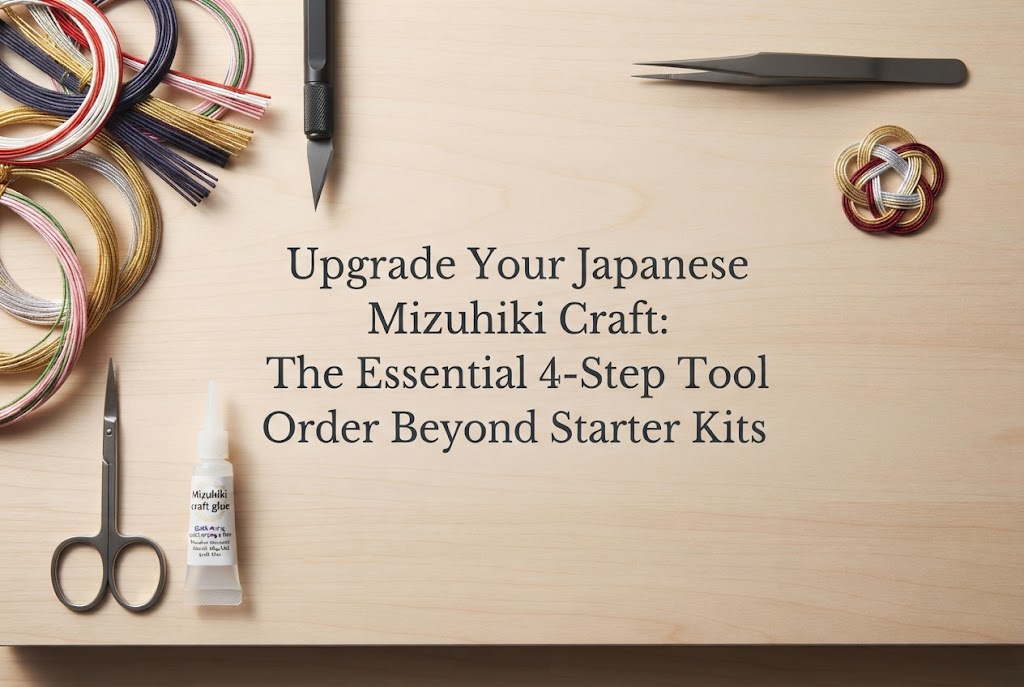
The basic tools needed for Mizuhiki crafting are simple: scissors, needle-nose pliers, adhesive, and a ruler. Unlike clay work, there is no dust, and unlike resin work, there are no strong odors or UV lamps required.
You can set up on a small living room table, start crafting instantly, and pack up in minutes. This convenience is a huge blessing for busy creators.
People often worry that paper crafts might be fragile. However, applying appropriate protective finishes after completing your piece dramatically improves its practical durability.
Applying a thin coat of varnish, specialized Mizuhiki sealer, or water-repellent spray helps maintain shape and repels light sweat or minor water droplets.
To help you avoid unnecessary mistakes when working with Mizuhiki, here are essential handling tips and practical techniques.
The most crucial rule in Mizuhiki crafting is mastering the technique of pre-curving, called shigoki. Because Mizuhiki has a twisted paper core, bending it sharply with sudden force creates an irreversible crease or dent in the paper.
Once creased, a Mizuhiki cord cannot be restored to a clean straight line or a smooth curve. To tie clean knots, you must gently press the cord between the pads of your thumb and index finger, stroking it smoothly to create a natural curve (arc) before tying.
Training your hands to "curve the cord using gentle thumb pressure and warm friction" rather than "folding it" is the very first step toward creating beautiful work.
Mizuhiki designs can be tied with a single strand or with bundles of 3, 5, 7, or more strands arranged side by side.
When tying multiple strands, if the cords overlap, twist, or switch places, the finished knot will look uneven and amateurish.
The secret to achieving professional, smooth surfaces is using your fingertips to firmly hold the parallel sequence of the cords (first, second, third from top…) in order, making sure they do not twist as you form the knot.
Care is required when storing leftover cords or completed items. Since Mizuhiki cords are about 90 cm to 100 cm long, curling them up tightly will leave strong, unwanted bends.
The ideal approach is to store them straight using long Mizuhiki cases, diploma tubes, or A3 clear file folders to keep them flat.
Keep them away from moisture and direct sunlight (UV rays). Moisture causes the paper glue to soften, while UV rays cause wrapping threads to fade. Storing them in a dry, dark place with a silica desiccant is highly recommended.
Mizuhiki offers rich enjoyment whether you are making it, admiring it, or wearing it. Here is how you can enjoy it from each perspective:
Watching a single straight cord transform through fingertip adjustments into 3D flowers, animals, or complex geometric patterns provides immense creative satisfaction.
By mastering basic knots like Awaji-musubi and Ume-musubi, endless design variations open up. Depending on color choices, you can make completely unique, one-of-a-kind accessories.
When admiring Mizuhiki artwork, pay attention to the flow of overlapping lines and subtle shadows. The structural beauty of parallel cords converging into a central knot brings a sense of calm and admiration.
Furthermore, the subtle metallic or silky sheens catch light differently indoors versus outdoors, showing different expressions throughout the day.
When purchasing Mizuhiki accessories at craft markets or handmade platforms, pay attention to these hallmarks of quality:
Skilled artisans carefully hide cut ends and glue on the back side, ensuring the piece looks beautiful from every angle. Understanding these technical points makes selecting pieces even more enjoyable!
Mizuhiki transforms simple paper cords and thread into lightweight, elegant art through skilled handwork. I hope this guide helped you discover the incredible depth of this traditional Japanese craft material.
By understanding its characteristics—protecting it from water, gently pre-curving cords without harsh creases, and keeping multi-strand bundles parallel—even beginners can create stunning, high-quality projects.
Even if you don't craft them yourself, knowing the craftsmanship behind Mizuhiki will give you a deeper appreciation whenever you spot these pieces online or in lifestyle boutiques.
Why not step into the captivating world of Mizuhiki crafts and add a light, elegant touch of Japanese craft beauty to your daily life? Whether you create, admire, or wear them, there is so much joy to explore!
If you enjoyed this article, sharing it with your friends on social media or messaging apps would mean the world to me and keep me motivated!
Thanks for reading, and see you in the next article! This was Yassy from Crafters!

For example, if you are looking for articles about mizuhiki, try searching for "mizuhiki"; if you are interested in tools, try keywords like "nippers" or "pliers."
