The Ultimate Guide to Craft Stamp Inks: How to Choose the Perfect Ink for Paper, Fabric, Leather, and Slick Surfaces
yassy
Crafters!

Hello, everyone! I’m Yassy from Crafters! (・∀・)
I absolutely love making various handmade crafts, looking at beautiful handmade items, and shopping at crafters' stores! That thrilling feeling when gathering new craft tools never gets old for me.
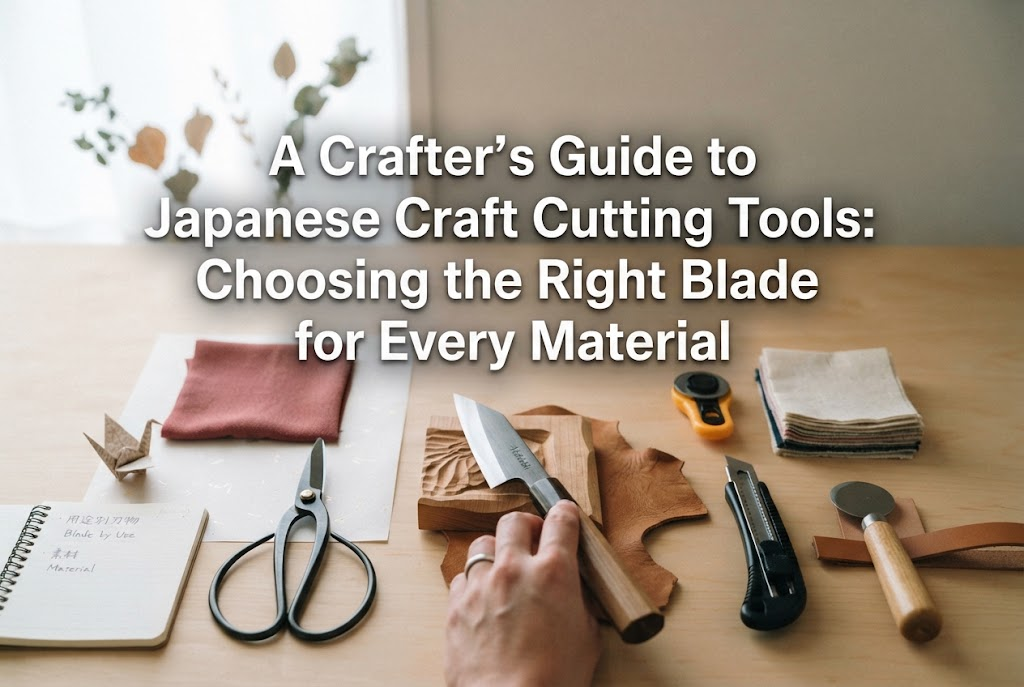
When starting any handmade craft project, cutting tools are almost always the very first items you need to prepare. However, depending on what you make—whether it's paper, fabric, wood, leather, or metal—the materials you handle are completely different.
Many beginners fall into the trap of thinking, "I'll just use the regular household scissors I have at home." But if you use a cutting tool that isn't suited to your material, you'll end up with jagged edges or damaged materials, which makes a huge difference in the final quality of your work.
In this guide, I will categorize and introduce 18 cutting tools commonly used in handmade crafting. Let's understand the specific features and roles of each tool so you can pick the perfect blade for your own creative work!
Whether you're making paper crafts, cutting templates for clay work, or trimming packaging materials for your finished creations, paper and thin sheets are cut constantly in crafting.
The four tools below are specifically designed for straight cuts, film trimming, and intricate paper-cutting work. You should choose between them based on your specific task.
The most familiar cutting tool of all, the standard utility knife excels at straight cuts and slicing through heavy cardstock. By combining it with a cutting mat and a ruler, you can achieve flawlessly straight lines by running the blade right along the ruler's edge.
The main reason beginners fail with this tool is extending the blade too far or continuing to use a dull blade. This causes the blade to flex and wobble, resulting in uneven edges. My rule of thumb is to extend the blade by only one segment. The moment the cutting edge loses its sharpness, I snap it off to work with a fresh point. Using fresh blades without skimping is the golden rule for a clean finish.
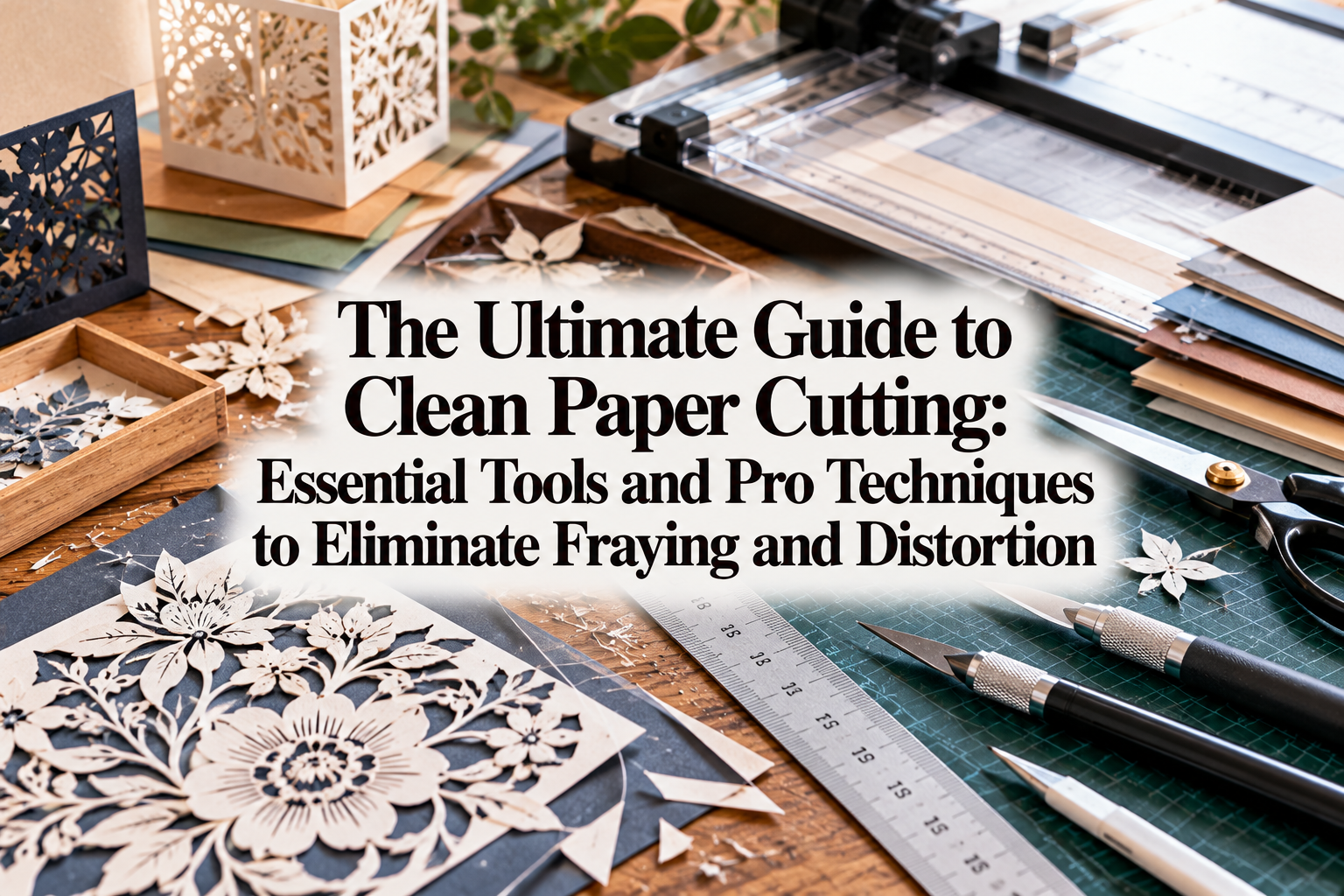
Featuring a pen-like handle, this knife holds a blade angled at a sharp point (such as 30 degrees). It is an essential tool for intricate paper cutting (kiri-e), cutting out custom stickers, or fine detail trimming in paper quilling.
Unlike standard utility knives, you hold a design knife just like a pen, allowing your fingers to guide it steadily without slipping. The trick is not to push down too hard, but rather to glide the blade while rotating the paper itself. Once you master pivoting the paper using the blade tip as a anchor, you'll be amazed at how smoothly you can cut out complex designs.
Often confused with design knives, art knives feature a slightly thicker barrel that provides a firmer, more substantial grip. They are ideal for precision cutting that requires a bit more force, such as cutting out clay pieces or carving plastic sheets.
Art knives shine in situations where a delicate design knife blade might flex or give under pressure with thicker materials. Their construction prevents the blade axis from shaking, even when force is applied. When you want to cut tough materials with precision, choose an art knife over a design knife—your hands will feel much less fatigued!
With an unsharpened or dull edge, a paper knife is used to slit open paper or cut along folded paper seams. Because the blade edge isn't sharp, the risk of injury is extremely low.
When cutting folded paper with regular scissors or a utility knife, the blade can snag on paper fibers and cause misalignments. A paper knife, however, smoothly splits the paper right along its grain. It is fantastic for cutting books or paper items neatly without damaging them. Keeping one on your desk is super convenient!
Crafts involving fabric and threads—such as sewing, embroidery, tsumami zaiku (Japanese fabric folding), and tufting—require specialized scissors or cutters. Fabric is stretchy and soft; if you try to cut it with paper scissors, the fabric gets caught between the blades, folds over, and gets ruined. Be sure to pick the right blade for the right fabric job.
General craft scissors are versatile tools used for cutting ribbons, trimming patterns, and general crafting tasks. They feature moderately pointed tips and a manageable size that allows for easy maneuvering.
One crucial rule: never cut fabric with scissors you've used on paper! Micro-abrasive components in paper dull the blades, rendering them incapable of cutting fabric cleanly. In my workshop, I stick colored tape onto scissor handles to clearly separate my "fabric-only" shears from my "paper/general craft" scissors. This simple habit dramatically extends blade life!
These large shears are built specifically for making long, straight cuts in fabric. They have long blades and a flat lower blade design that lets you glide along a tabletop while keeping the fabric laid flat.
If you lift fabric into the air while cutting with dressmaking shears, the fabric sags and skews your measurements. The correct method is to slide the bottom blade right against the table surface. For cutting large pieces of garment or bag fabric, always use heavy metal or high-quality stainless steel tailor's shears.
These compact Japanese-style spring-action clippers are designed to quickly cut threads right at hand during sewing or embroidery. Thanks to the spring action, the blades automatically open, saving you the step of inserting your fingers into handle loops.
They boost efficiency tremendously when trimming thread ends in embroidery or cutting threads repeatedly during machine sewing. Their fine, sharp tips allow you to snip threads right next to the fabric edge. Keep a pair of thread snips right in front of your workspace for a much smoother crafting tempo!
A rotary cutter features a circular blade that rotates as it cuts through material. Instead of pulling or dragging fabric, you simply press down from above over a cutting mat for a smooth, effortless slice.
Rotary cutters excel with stretchy knit fabrics, slippery silk, and splitting craft bands vertically. Placing a ruler down and drawing the blade across allows you to cut long straight lines in seconds. If you struggle with fabric shifting under traditional shears, definitely try adding a rotary cutter to your kit.
Pinking shears feature saw-toothed or wavy blade edges that leave a zigzag pattern on the cut material. They have long been used as a way to prevent raw fabric edges from fraying.
In addition to saving you the hassle of finishing edges with a sewing machine, they add a decorative, charming trim to ribbons and felt. They're great for adding a warm, country-style accent to fabric goods, making them very effective for unlined accessories or raw-edge designs.
When standard scissors are too bulky to reach tiny gaps or when you want special design effects, precision scissors and decorative craft scissors come to the rescue. They are specialized tools that broaden your creative expression and lift your detail work to professional quality.
These scissors have extremely slim, thin blades designed to reach delicate spots. They excel at making intricate cuts in shrink plastic, trimming tiny paper parts for miniature craft making, and adjusting fabric sizes in tsumami zaiku work.
Because the blade edges align perfectly all the way to the tip, you can make precise cuts using just the final millimeter of the blade. They enable delicate tasks that are simply impossible with larger scissors. Whenever you feel frustrated because you can't reach a tight spot for a tiny cut, grab a pair of precision scissors.
Featuring uniquely shaped blades—such as wave patterns, vintage scalloped borders, or zigzags—these scissors create decorative edges simply by cutting paper or thin sheets.
They are widely used in paper crafting, making greeting cards, or decorating the edges of shop cards. Their main charm is making simple designs look instantly elaborate. They are incredibly useful whenever you want to add a handmade or antique vibe to your projects.
Working with tough materials—like wood crafts, dollhouse furniture, resin pieces, or metal findings—requires a saw. Choosing a saw based on the hardness and thickness of your material is mandatory; using the wrong blade will snap the teeth or crack your material.
This is the standard tool for cutting larger pieces of wood or thick craft boards. While push saws exist, traditional Japanese saws (nokogiri) cut on the "pull stroke" as you pull the tool toward you.
They are used for making wooden boxes or creating large DIY photography backdrop boards. Because the teeth are coarse, they cut through thick timber quickly. While too large for tiny crafts, a Japanese pull saw is a foundational tool if you want to tackle authentic woodworking.
A mini saw is a scaled-down, tabletop-friendly saw. It's the ideal size for cutting miniature dollhouse posts or shaping parts for wooden aroma diffusers.
Because mini saws feature fine teeth, they leave smooth, clean cuts with minimal tear-out on wood edges. They are compact enough not to get in the way on your desk. If you work on miniatures or small wooden items, choose a mini saw over a full-sized one for vastly superior control.
This saw features a thin blade mounted across a bow-shaped frame, allowing you to cut smooth curves freely. It is perfect for cutout work in wood, curved cuts in plastic sheets, or intricate pierced work in metal plates.
By switching between woodworking blades and metalworking blades, this tool gains high versatility across different materials, allowing you to cut complex silhouettes in one go. If you want to make pieces cut into custom shapes, a fretsaw or coping saw is indispensable.
A hacksaw is designed specifically to cut metal pipes, wire, brass rods, or metal shanks embedded in resin pieces. Its blade features extremely fine, closely spaced teeth.
Attempting to cut metal with a woodworking saw will destroy the blade teeth instantly. Always use a dedicated hacksaw for metal materials. It comes in very handy when adjusting the length of brass accessory findings or metal frames.
Developed for plastic model modifications, plastic molding, and precision woodworking, this saw features an ultra-thin blade. It cuts acrylic sheets, resin parts, and shrink plastic with a minimal kerf (width of cut).
Because the blade is so thin, very little material is lost along the cut, ensuring precise assembly with minimal dimensional error. It is also designed to reduce heat friction so plastic doesn't melt while sawing. When you need exact dimensions in resin or plastic projects, a craft saw delivers top performance.
Leathercraft involves accurately cutting tough, thick leather and skiving (shaving down) edges to make them thinner. While standard utility knives can work in a pinch, using dedicated Japanese leathercraft tools is the fastest shortcut to creating beautiful leather goods.
The iconic traditional tool of Japanese leathercraft. Featuring a thick, flat steel blade, it is capable of straight cuts, curved cuts, and skiving edges thinly (such as diagonal skiving or step skiving).
Because you push downward vertically with firm pressure, you can slice through thick vegetable-tan leather with vertical, unyielding cuts without the blade flexing. With proper sharpening, a kawa-bocho can be maintained for a lifetime. It is a true heirloom tool every serious leather Crafter should try.
The Betatachi offers the same functions as a kawa-bocho, but features a convenient replaceable blade mechanism similar to a utility knife. It handles everything from straight cutting to edge skiving in the exact same manner.
While traditional kawa-bocho require sharpening on whetstones, a Betatachi allows you to restore razor-sharp performance simply by installing a fresh blade whenever it gets dull. It is the perfect choice for beginners who want the precision of a Japanese leather knife without the learning curve of blade sharpening. I personally love using a Betatachi for light leathercraft work!
We’ve looked at 18 distinct cutting tools, but no matter how fantastic your tools are, improper handling and lack of maintenance will cause the quality of your work to drop.
Here are three essential rules to keep your cutting tools performing at their absolute best:
In this guide, I've categorized 18 types of cutting tools used in handmade crafting by their specific applications.
Whether it's utility or design knives for paper, tailor's shears or rotary cutters for fabric, specialized saws for wood and metal, or kawa-bocho and Betatachi for leather—every tool has a clear, dedicated role.
Cutting is the very first step in almost every craft project, serving as the foundation for everything that follows. If your cut edges are clean and precise, your subsequent gluing, sewing, and assembly accuracy will improve drastically, raising the overall finish of your craft piece.
Start by acquiring the single essential blade needed for your chosen craft genre. I guarantee it will make your crafting process delightfully smoother and so much more fun!
In future articles, I’ll dive even deeper into specific techniques and maintenance tricks for each tool, so stay tuned!
If you enjoyed this article, I’d be super happy if you shared it with your crafty friends on social media or messaging apps! See you in the next post—this was Yassy from Crafters!

For example, if you are looking for articles about mizuhiki, try searching for "mizuhiki"; if you are interested in tools, try keywords like "nippers" or "pliers."
