What Are Czech Glass Beads? Types, Features & Uses: A Japanese Crafter’s Complete Guide
yassy
Crafters!

Hello, I'm Yassy from Crafters! (・∀・)
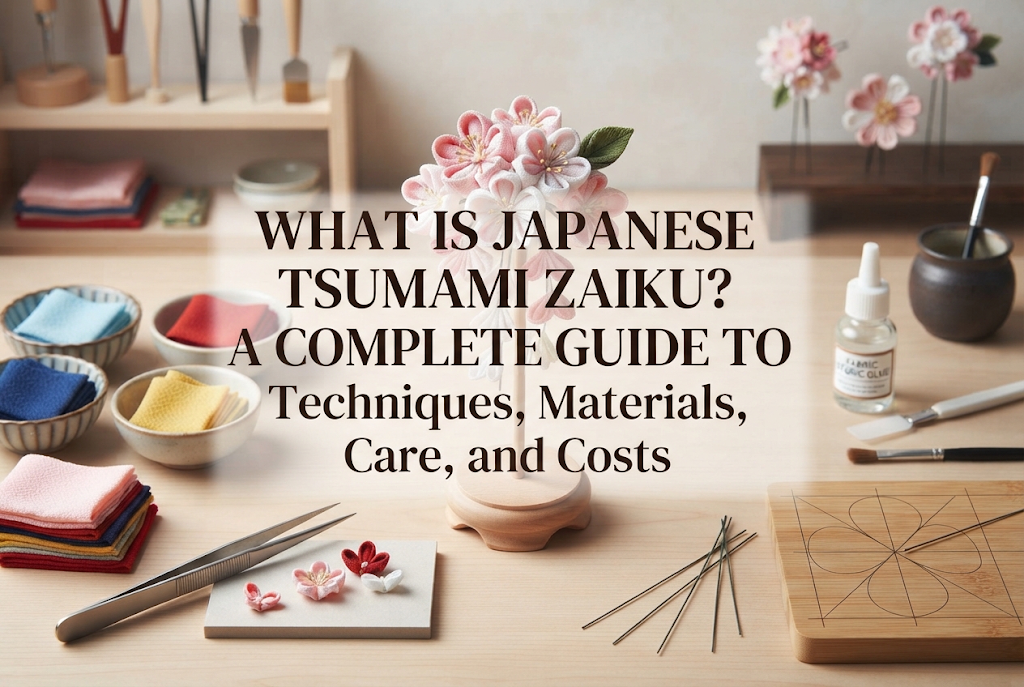
Tsumami Zaiku is a traditional Japanese craft where tiny squares of fabric are folded with tweezers, piece by piece, to create delicate flower petals. Traditionally worn as hair ornaments with kimono, it has exploded in popularity in recent years as everyday accessories like earrings and brooches, as well as interior decor items.
As someone who loves making, viewing, and buying handmade crafts, I've tried many different genres. Among them, Tsumami Zaiku holds a unique charm: it allows you to create authentic, intricate 3D shapes without using a single needle or thread.
"Can I really make it myself?" "What tools and materials do I need?" "Is it true that it deforms easily or spoils when wet?" For beginners with such questions and concerns, this guide breaks down the world of Tsumami Zaiku completely.
By reading to the end, you'll gain all the knowledge needed to get started: from how Tsumami Zaiku works, selecting the right fabric, setting up a workspace, and understanding costs, to properly caring for your finished creations!
Tsumami Zaiku is a traditional Japanese craft handed down from the Edo period. Small, square-cut pieces of fabric are folded ("pinched" or tsumami) using tweezers to form shapes such as flowers and birds.
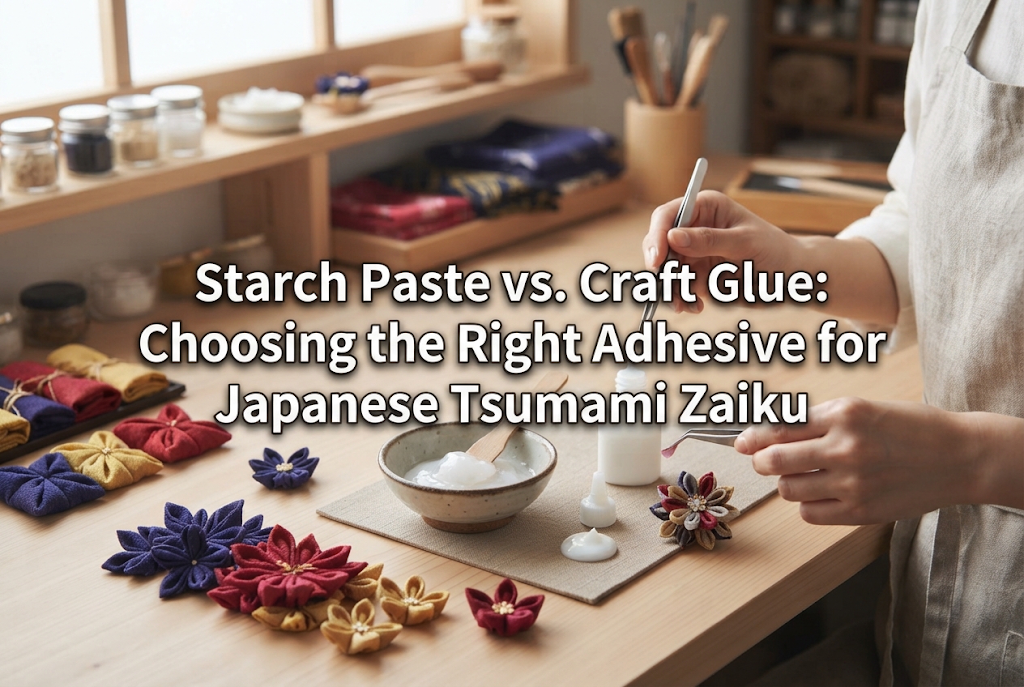
Its greatest appeal is that it uses no needles or thread. The folded bases of fabric are secured onto a foundation backing using adhesive (craft glue or starch paste / denpun-nori), allowing even those who dislike sewing to produce incredibly high-quality work.
While it was once a specialized technique for traditional attire such as kimono and kanzashi (hairpins), modern Tsumami Zaiku has evolved to suit contemporary designs and Western-style clothing accessories. The real joy lies in blooming your own beautiful flowers right on a palm-sized workspace.
Although it looks extremely intricate at first glance, the structure is surprisingly simple. Once you master the basic folding methods, you can freely express everything from modest small flowers to magnificent large chrysanthemums or peonies by combining multiple folded parts.
Thinking of Tsumami Zaiku solely as "hair accessories for traditional Japanese clothing" would be a missed opportunity. Modern Tsumami Zaiku applies to all kinds of items that brighten daily life. Here are key project variations:
Hair accessories worn with furisode for Coming-of-Age ceremonies, Shichi-Go-San visits, yukata, or wedding kimono are Tsumami Zaiku's true specialty. Gorgeous commercial pieces can cost tens of thousands of yen, but making your own allows you to tailor the color palette perfectly. Parents often make them by hand for their children's Shichi-Go-San celebrations.
By using smaller fabric squares (1.5 cm to 2 cm square), you can craft casual accessories that blend smoothly with daily clothing.
Using familiar materials like cotton or linen results in cute, natural or Scandinavian-style accessories. Whenever I spot Tsumami Zaiku earrings at handmade shops, I fall in love with their delicate craftsmanship and end up adding them to my collection.
Ball bouquets, boutonnieres, and hair ornaments for traditional Japanese weddings make unforgettable keepsakes. Additionally, decorative framed name plates, hagoita (decorative wooden paddles), and mini Hina-ningyo dolls made with Tsumami Zaiku are immensely popular for baby gifts and seasonal festivals.
Beyond wearable items, Tsumami Zaiku excels as room decor.
Fabric flowers that never wither make fantastic statements in home entrances or living rooms.
While the creative possibilities seem endless, Tsumami Zaiku relies on just two fundamental folding techniques: Maru-tsumami (round fold) and Ken-tsumami (sword/pointed fold). Understanding the difference between these two is the ultimate shortcut to mastering the craft.
Every Tsumami Zaiku petal begins with a square piece of fabric. After folding it into a triangle, the final shape is determined by how you pinch it with tweezers.
Maru-tsumami creates petals with rounded tips, producing a gentle, cute form. This technique is always used for plum blossoms, cherry blossoms, chrysanthemums with rounded petals, and soft-looking flowers.
Pinching and shaping the folded fabric tip into a round curve gives it a plump, three-dimensional look. It is an indispensable technique when you want a soft vibe or when making hair accessories for children.
Ken-tsumami creates petals with sharp, pointed tips resembling a sword, offering a clean and dignified silhouette. It is used for dahlias, pointed chrysanthemums (ken-giku), sunflowers, and lotus flowers.
Because the petals line up crisply, the resulting work looks stylish and sophisticated. While slight misalignments are more noticeable due to emphasized lines, a large flower neatly arranged with Ken-tsumami possesses overwhelming beauty.
Maru-tsumami and Ken-tsumami aren't just used in isolation. Placing Maru-tsumami on the inside and Ken-tsumami on the outside, or folding two sheets of fabric together (nijū-tsumami / double fold), lets you freely create color gradients and complex shapes. Once you master these two basics, you can create almost any Tsumami Zaiku design.
In Tsumami Zaiku, 80% of a project's outcome depends on fabric selection. Choosing fabric that is too stiff or thick makes it impossible to fold with tweezers, leading to frustration.
Here are the three representative fabric materials used in Tsumami Zaiku, along with clear guidance on what beginners must choose.
Chirimen (textured Japanese crepe fabric) is the most common material for Tsumami Zaiku. Its textured surface (shibo) highlights traditional Japanese aesthetics. However, Chirimen comes in two main types: Hitokoshi Chirimen and Oni-shibo Chirimen. Getting these confused leads to big mistakes.
Beginners must choose Hitokoshi Chirimen. It has fine surface texture, is thin, and doesn't get bulky when folded small, allowing you to easily form beautiful shapes. Oni-shibo Chirimen, on the other hand, has large surface bumps and thick fabric, making folds bulky and extremely difficult for beginners to handle.
Habutae is an ultra-thin woven silk fabric used in traditional crafts and hair ornaments for Maiko (apprentice geisha). It possesses unmatched luster, delicacy, and lightness, making it the top-tier material for Tsumami Zaiku.
However, Habutae is extremely thin and slippery, making it very difficult for beginners who aren't accustomed to handling tweezers. Please avoid starting with Habutae right away. The correct path is mastering basic movements with Hitokoshi Chirimen first.
If you want to make casual Tsumami Zaiku to match Western clothes, thin cotton fabric (such as sheeting or lawn fabric) is ideal. You can enjoy patterned fabrics and bright, pop colors.
The absolute condition when using cotton is selecting ultra-thin fabric. Thick fabrics like cotton oxford or canvas are too thick and cannot be pinched. Choosing lawn or thin sheeting is the rule.
Before starting or buying Tsumami Zaiku, many people worry about durability and handling. Here is the unvarnished truth regarding whether Tsumami Zaiku is fragile.
Tsumami Zaiku (especially items made of Chirimen) is extremely delicate against water and pressure from above. This is an absolute characteristic of its material and structure.
Chirimen fabric (particularly rayon chirimen) shrinks instantly upon contact with water and cannot be restored. Great care is needed when going out on rainy days or using it around water.
Additionally, because it consists of folded and glued fabric, stepping on it or placing heavy objects on top will crush and deform the petals. It cannot be handled roughly like metal accessories.
Tsumami Zaiku uses either starch paste (denpun-nori) or wood/craft glue (mokkou-you bond). Durability varies significantly depending on which you choose.
If you are crafting earrings or brooches for daily wear, you should definitely use wood glue (or fabric glue) to ensure sufficient durability for practical use.
To preserve the beauty of Tsumami Zaiku for a lifetime, follow these three rules:
Overall, Tsumami Zaiku ranks as "Low to Medium (Beginner-friendly)" among handmade craft genres. It doesn't require immense physical strength or complex equipment, making it a craft anyone can start today.
However, assuming "anyone can do it effortlessly" might lead to unexpected hurdles during your very first project. Here are the three main stumbling blocks and their solutions.
The foundation of all Tsumami Zaiku is the square piece of fabric. If the cut is off by even 1 millimeter—turning into a rectangle or inconsistent sizes—petals won't turn out uniform no matter how neatly you fold.
Beginners tend to underestimate the task of cutting exact squares. Using a rotary cutter and a grid ruler to cut precise squares down to the millimeter is the absolute golden rule for creating beautiful flowers. Buying pre-cut Chirimen fabric is also a smart choice.
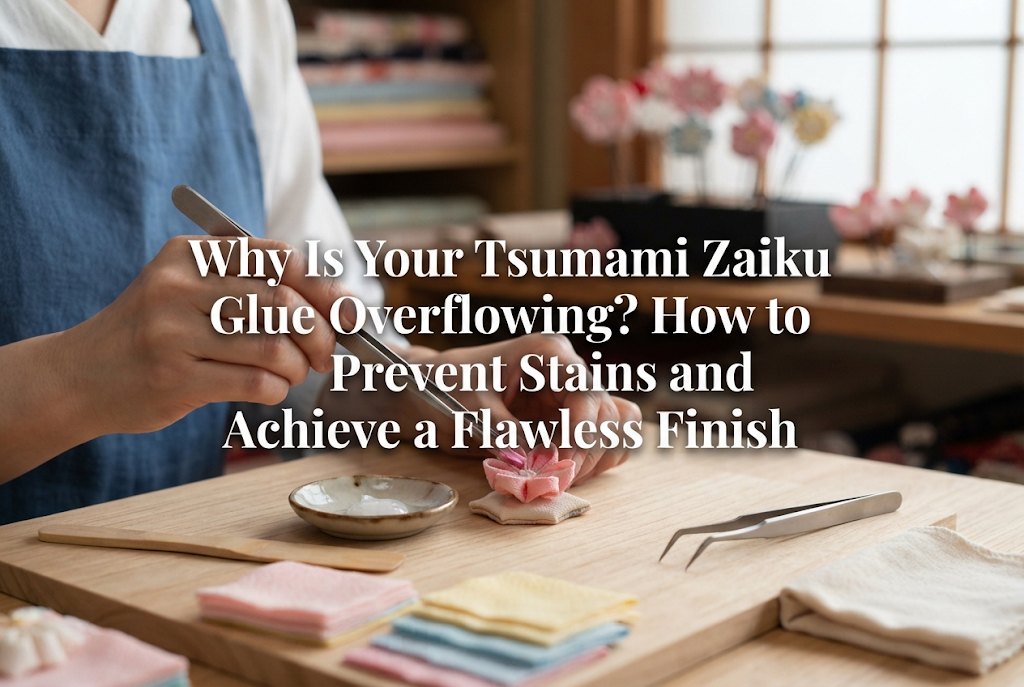
80% of mistakes in Tsumami Zaiku come from misjudging adhesive quantity. Excessive glue bleeds into the fabric, hardening it, causing discoloration, and ruining the piece. Conversely, using too little glue causes petals to unravel mid-process.
A tiny dab of glue—just a touch on the tip of a toothpick—is sufficiently strong. Practice applying a thin, even coat without squeezing out too much.
In Tsumami Zaiku, the tip of your tweezers acts as an extension of your fingers. If where you pinch the fabric and at what angle you fold remain inconsistent, each petal's shape will vary.
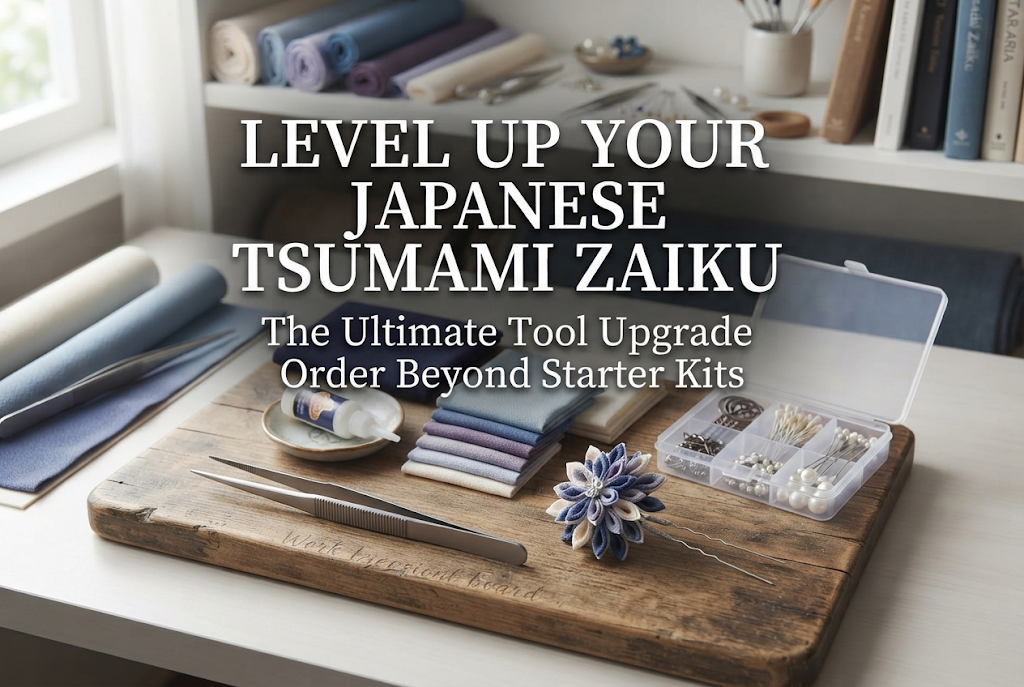
Use fine-tipped, precise tweezers specially designed for Tsumami Zaiku, and remain conscious of pinching at the exact same millimeter distance from the fabric edge every time. Investing in good tools dramatically elevates your work quality.
When taking up a new craft, many wonder, "Is my small room okay?" The answer is that an A4-sized small desk space is completely sufficient for Tsumami Zaiku.
You don't need large equipment like a sewing machine or elaborate ventilation systems like resin crafting. Being able to start right away at a dining table corner or small desk is one of Tsumami Zaiku's wonderful advantages.
To work comfortably in a compact area, here is my recommended workspace layout:
Tsumami Zaiku requires a resting pad (ochitsuki-dai—a piece of styrofoam or melamine sponge stuck with pins) to hold freshly folded parts until the glue dries. Securing this drying space at the back ensures smooth workflow without stopping.
Tsumami Zaiku stands out as an excellent craft with remarkably low startup costs. Here is an honest breakdown of expenses.
Even if a complete beginner buys all necessary tools and initial supplies from scratch, total startup costs easily stay within 3,000 to 5,000 JPY.
Unlike resin, pottery, or leather crafting which require tens of thousands of yen in upfront investment, you can start virtually risk-free.
Material costs per completed project are also very reasonable:
Splendid hair ornaments that cost over 10,000 JPY in stores can be handmade for just a few thousand yen in materials. It offers top-tier cost performance for handmade crafts.
For beginners looking to keep costs low, here is my clear advice on using dollar/100-yen store items.
Tools fine to buy at 100-yen stores:Wood glue, cutting mats, toothpicks for applying glue, melamine sponges for drying parts, and plastic component storage cases. 100-yen store versions work perfectly fine for these.
Tools NEVER to buy at 100-yen stores:Never buy tweezers or craft scissors at 100-yen stores! Tweezers from discount stores have thick tips and misaligned ends, making it impossible to fold small fabric pieces precisely. Please buy fine, precise Tsumami Zaiku tweezers made by craft manufacturers (1,000+ JPY). This single tool makes your crafting ten times easier!
Finally, here is a step-by-step roadmap for beginners to avoid frustration and quickly reach professional-looking results.
Avoid measuring and cutting fabric yourself for your very first project. The absolute best choice is buying a starter kit containing pre-cut Hitokoshi Chirimen fabric online or at craft shops.
Using pre-cut fabric allows you to focus purely on feeling how Maru-tsumami and Ken-tsumami are folded. Building quick success experiences is key to staying motivated.
Your first project should be a small flower brooch or hair tie combining 5 to 6 Maru-tsumami petals. Completing in about 1 to 2 hours gives a great sense of accomplishment.
It serves as practice for aligning petal angles and sizes while learning proper glue dosage firsthand.
Once you've built confidence completing 1 or 2 kits, buy Hitokoshi Chirimen fabric by the sheet and try cutting squares using a rotary cutter.
Progress to making double-fold (nijū-tsumami) earrings in your favorite color combinations, or elaborate corsages and hair pieces featuring multiple blooms. At this stage, your skills have moved beyond beginner level!
We've explored the full picture of Tsumami Zaiku—from its appeal and crafting techniques to care, workspace, and costs.
Without needles or thread, using minimal workspace and low startup costs, Tsumami Zaiku is a fantastic handmade craft that lets you create breathtakingly beautiful pieces.
Fingertips holding fabric might feel awkward at first, but the thrill when a single petal forms neatly is truly special. Once you experience the sweetness of Maru-tsumami and the dignified beauty of Ken-tsumami, you'll surely be drawn into Tsumami Zaiku's deep charm.
As long as you choose the right tools and keep moisture and pressure in mind, anyone can enjoy this as a lifelong hobby. Grab your favorite fabric and let wonderful flowers bloom right on the palm of your hand!
If you enjoyed this article, sharing it with friends on social media would mean the world to me and keep me motivated!See you in the next article! This was Yassy from Crafters!


For example, if you are looking for articles about mizuhiki, try searching for "mizuhiki"; if you are interested in tools, try keywords like "nippers" or "pliers."