A Guide to Dip Art Wires: Types, Gauges, and How to Choose the Right Wire
yassy
Crafters!

Hello everyone! Yassy from Crafters here! (・∀・)
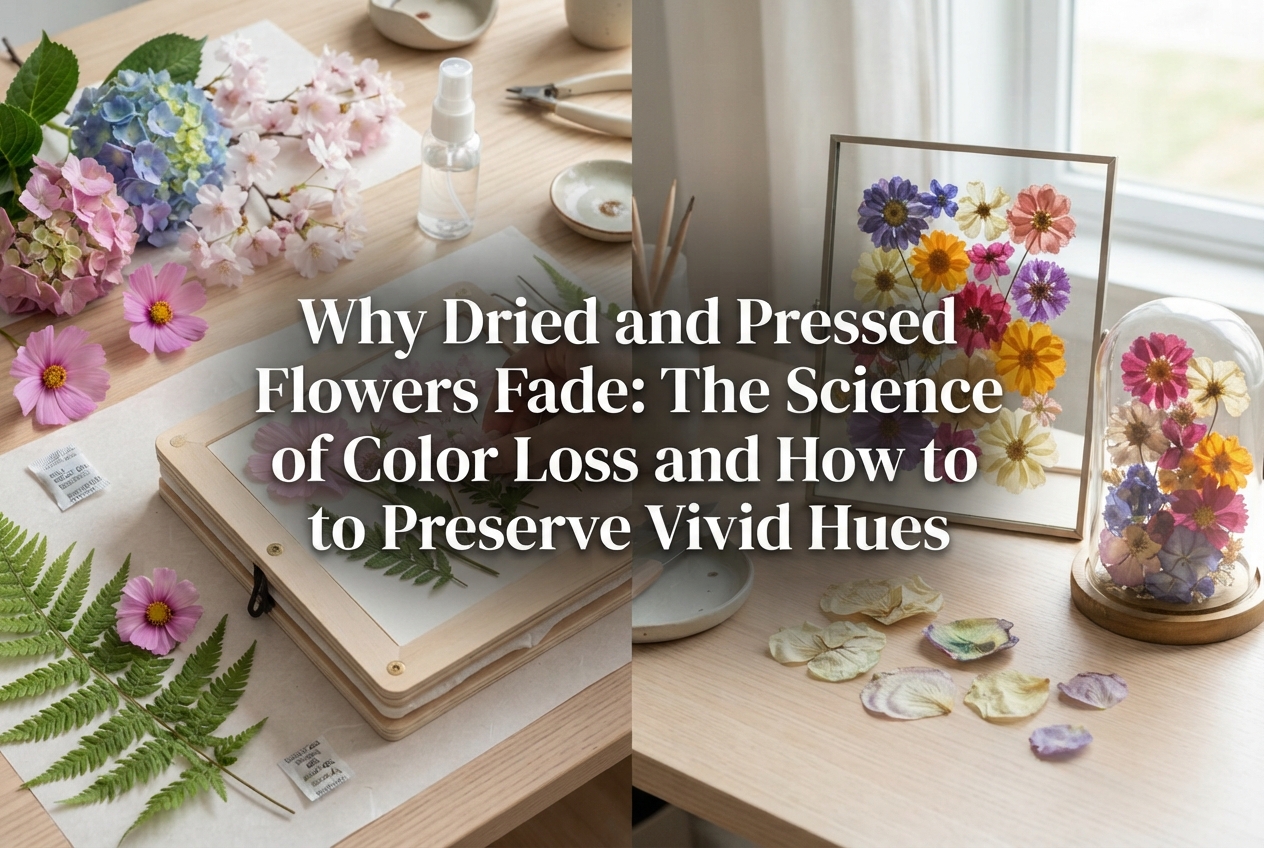
Dried and pressed flowers are immensely popular items both as handmade craft materials and as home decor, allowing us to enjoy the vibrant, beautiful look of fresh blooms for a long time. They bring endless charm to various projects, including resin accessories, herbariums, and floral arrangements.
However, almost every crafter has experienced the disappointment of watching carefully dried or purchased flowers turn dull brown or fade into a pale, washed-out color over time. Seeing once-vibrant blossoms lose their color can be truly disheartening.
There is a clear scientific reason behind why plant materials change color. Once you understand the underlying mechanisms of flower discoloration, you can minimize color loss and keep your botanical crafts amazingly bright for a surprisingly long time. In this guide, I will break down the primary causes of fading in dried and pressed flowers, the chemical processes involved, and how different pigment types react.
While a fresh flower is alive, it draws water and nutrients through its roots and stems, performing photosynthesis to maintain its cellular structure and vibrant pigments. However, the moment a flower is cut and enters the drying process, its life activities stop.
Once life processes cease, the plant's protective cell walls collapse, leaving the internal structures completely exposed to external environmental stressors. The colors in dried and pressed flowers are produced by delicate pigment compounds contained within the petals, such as chlorophyll, anthocyanins, and carotenoids.
These pigment compounds possess delicate molecular structures. When exposed to external factors like light, oxygen, moisture, and heat, chemical reactions occur that break down or transform these molecules. This is the true nature of fading and discoloration. While halting this natural process entirely is impossible, blocking the environmental triggers that cause degradation can drastically slow down the rate of color loss.
Light is the single biggest culprit behind color loss in dried and pressed flowers. Ultraviolet (UV) rays from sunlight carry particularly high energy.
Plant pigments produce their unique colors through specific chemical bonds. When petals are exposed to intense UV rays, that energy directly breaks the chemical bonds of the pigment molecules.
Once their molecular structure is destroyed, the pigments lose their ability to reflect their original light wavelengths. As a result, vivid reds, pinks, and blues fade away, eventually turning completely white or pale cream. If you display dried flowers on a sunny windowsill, you may notice significant color loss in just a few days or weeks due to accelerated light degradation.
Even if you keep your floral pieces away from direct sunlight, indoor lighting still poses a risk. Fluorescent lights and certain other fixtures emit small amounts of UV light. Furthermore, even visible light can gradually break down pigment molecules over prolonged exposure.
While LED lighting emits significantly less UV radiation than fluorescent bulbs—reducing damage to plant materials—it does not eliminate light energy entirely. Simply keeping your botanical crafts in a bright room will cause gradual, day-by-day color breakdown.
Even in total darkness, flower colors will deteriorate if exposed to air. The main culprit here is oxygen. Oxidation—the chemical reaction between oxygen molecules in the air and plant components—is the second major cause of discoloration.
You have likely seen a sliced apple turn brown after sitting out for a while. This happens because polyphenol compounds in the apple react with oxygen in the presence of enzymes, forming brown substances like melanoidins and polyphenol oxidation products.
The exact same process occurs inside dried and pressed flowers. Residual oxidative enzymes (such as polyphenol oxidase) within the plant tissue combine with oxygen in the air, continuously converting floral components into brown compounds. This enzymatic browning is what turns colorful petals into a dry, leaf-like brown.
Dried flowers displayed in open arrangements like swags or wreaths are constantly exposed to an unlimited supply of oxygen. Consequently, the oxidation reaction continues without pause compared to specimens preserved in airtight seals.
Over time, almost all exposed dried flowers eventually settle into a similar vintage, antique-brown shade. This occurs because most vivid pigments degrade, leaving behind the brown substances created by oxidation.
The cardinal rule of preserving floral colors is to remove moisture completely. Water acts as a solvent that facilitates chemical reactions; when moisture is present, color-degrading reactions accelerate dramatically.
If the drying process takes too long when creating dried or pressed flowers, discoloration begins before the craft is even finished. Slow drying allows cellular respiration and enzymatic activity to continue inside the plant tissue.
For instance, air-drying (hanging) flowers during humid periods like the rainy season causes enzymatic browning inside the petals before they can dry completely, resulting in a dull brown piece from day one. Evaporating water rapidly to halt cellular activity is essential for color retention.
Even perfectly dried flowers can reactivate dormant enzymes and chemical processes if placed in a humid environment. Dried plant cells act like dry sponges, easily absorbing ambient moisture from the air.
When dried flowers sit in a humid room, the absorbed moisture triggers polyphenol oxidation once again, causing rapid browning. Excess moisture also creates an ideal environment for mold growth, leading to unsightly green or black spots.
Temperature plays a major role in determining the speed of discoloration. According to fundamental chemical laws, higher temperatures increase molecular movement, which speeds up chemical reaction rates.
In hot environments, both oxidation and thermal breakdown of pigments accelerate rapidly. Places like closed cars under direct sunlight, unconditioned rooms during summer, or areas near heating vents represent the worst possible storage environments for dried botanicals.
Even with the same light exposure and oxygen levels, a temperature increase of just 10°C (18°F) can multiply the rate of fading several times over. Keeping your pieces in a cool environment is key to long-lasting color.
Not all flowers fade at the same rate. Depending on the dominant pigment type in the petals, resistance to light and oxidation varies significantly. Understanding your floral materials helps you anticipate how they will age.
Anthocyanin pigments, found abundantly in roses, carnations, and hydrangeas, are extremely sensitive to pH changes, oxygen, and light. Although vibrant when fresh, their molecular structure becomes unstable once dried.
As anthocyanins oxidize, they lose their bright red tones, shifting toward dark purple or deep brown. Preserving vibrant pinks in dried flowers is notoriously challenging, making this color group the most susceptible to noticeable fading.
Carotenoid pigments, found in mimosa, marigolds, and sunflowers, possess a chemically stable structure. They resist degradation from light and oxygen remarkably well.
Because of this durability, yellow and orange blossoms retain their original brightness long after being dried or pressed. They show minimal fading even after several months, making yellow floral materials the safest choice for beginners wanting foolproof results.
People often assume that white flowers won't show discoloration because they lack pigment. This is a common misconception. White petals, such as those of white roses or baby's breath, contain high amounts of colorless flavonoids and polyphenols.
As these polyphenols oxidize during drying, white petals turn distinctly brown or yellow, often developing spotty brown stains. Paradoxically, because the background is pure white, discoloration is actually much more noticeable on white blooms.
When making or handling dried and pressed flowers, crafters often unknowingly engage in habits that speed up fading. Here are three common pitfalls to avoid:
Avoid using flowers that have already started wilting after sitting in a vase. When a bloom is past its peak, its cellular structure is already breaking down and self-degrading enzymes are active.
Drying flowers in this state causes rapid browning throughout the drying phase. The key rule for crisp color retention is to process prime, ultra-fresh blooms immediately after harvesting or purchasing them.
When air-drying flowers upside down (hanging method), never place them in corners, close to walls, or near humid areas like bathrooms where air stagnates. Without airflow, evaporating moisture lingers around the petals, prolonging drying time.
The longer it takes for flowers to dry, the more polyphenol oxidation occurs, yielding a dull brown finish. Hang them in a dry spot out of direct sunlight where air conditioning or fresh airflow can dry them quickly.
When creating pressed flowers or silica-dried blooms, using silica gel that has already absorbed moisture will lead to failure. Desiccants with reduced absorption capacity cannot extract moisture efficiently from plant tissues.
Trapped moisture inside the container causes the flowers to steam in their own humidity, turning them dark brown within days. Always reactivate silica gel in a microwave or frying pan until the indicator beads turn bright blue before use.
Based on these chemical mechanisms, here are the exact steps I use in my daily crafting and material storage to delay flower fading as long as possible:
When air-drying, hang flowers in small bundles and run a circulator fan or electric fan nearby to maintain constant airflow. Circulation alone cuts drying time significantly, leaving colors strikingly vivid.
For three-dimensional flowers, I prioritize completely burying the blooms in fine floral silica gel within an airtight container. Silica gel enables ultra-rapid drying in just a few days to a week, setting the flower's natural color before enzymes have a chance to act.
For long-term storage or framed pressed flower art, use high-barrier containers like glass jars, acrylic cases, or airtight bags. Add silica gel to keep internal humidity near zero, alongside an oxygen absorber (such as Ageless).
An oxygen absorber reduces container oxygen levels to below 0.1%. By physically isolating your craft from both oxygen and moisture, you can keep floral materials looking fresh-picked for years instead of fading in a few months.
For finished swags or exposed floral arrangements, apply a thin, even coat of UV-blocking spray (such as dry flower clear coating spray or UV-cut varnish). This significantly reduces surface damage from ambient light.
Always display finished pieces away from windows, preferring north-facing rooms or hallways without direct sunlight. For raw material storage, keep unused flowers inside lightproof aluminum zip pouches or dark boxes stored in a cool place.
The four primary causes of discoloration in dried and pressed flowers are light degradation (UV and visible light), polyphenol oxidation from oxygen, enzymatic browning from residual moisture/humidity, and reaction acceleration from high temperatures.
Because botanical materials are natural, keeping them identical forever is impossible. However, by strictly following the core principles—drying rapidly and blocking light, oxygen, and humidity—you can dramatically slow down fading and enjoy brilliant colors for a long time.
Remember, the subtle transformation into warm, antique tones over the years is also a unique charm of dried flower crafting. Master these discoloration mechanisms, and elevate your handmade floral projects!
If you found this article helpful, sharing it on social media with your fellow craft lovers would mean the world to me!
Until next time, happy crafting! This was Yassy from Crafters!

For example, if you are looking for articles about mizuhiki, try searching for "mizuhiki"; if you are interested in tools, try keywords like "nippers" or "pliers."