How to Stop Herbarium Flowers from Floating: Pepperberry & Wire Techniques
yassy
Crafters!

Hello, everyone! I'm Yassy from Crafters! (・∀・)
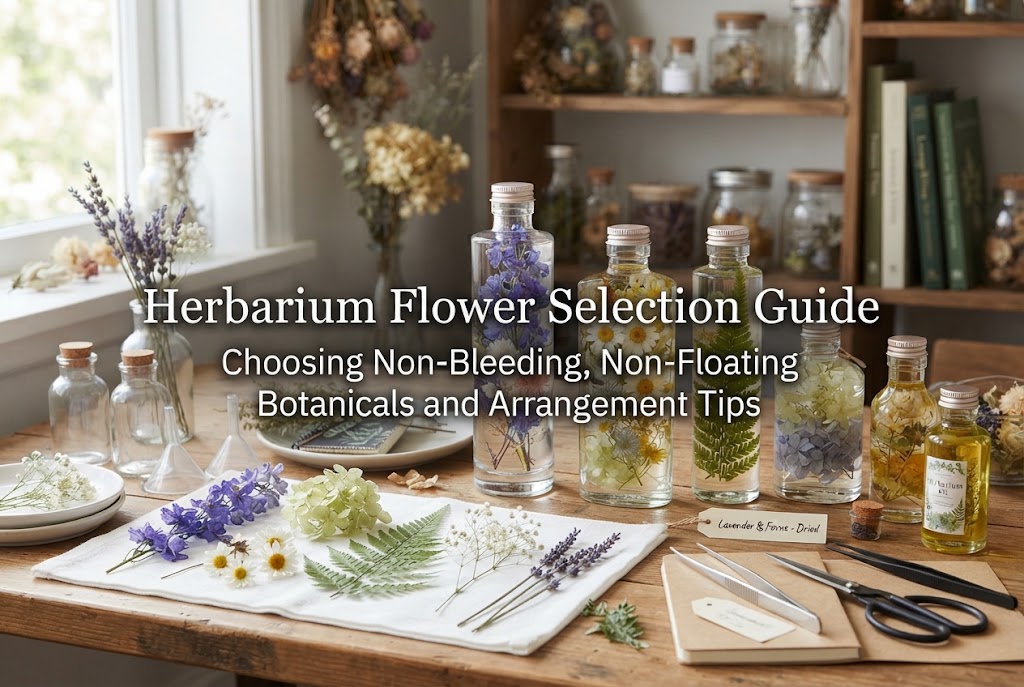
Herbariums—bottled botanical arrangements bathed in light and glowing inside crystal-clear glass—are incredibly popular in Japan both as chic room decor and as thoughtful handmade gifts. Many crafters get inspired to create one, gather glass bottles and specialized oil, but then get stuck asking: "What kind of flowers should I use?" or "Can I just toss in any dried flower I like?"
In reality, making a long-lasting herbarium isn't as simple as dropping favorite blooms into a bottle and pouring oil over them. Because the botanicals are submerged in specialized mineral or silicone oils, specific chemical and physical interactions occur. Frustrations like floral dyes bleeding into the oil or blossoms floating helplessly to the top can be completely avoided once you understand the properties of different floral materials.
In this guide, I will share essential flower types suitable for herbariums, key criteria for choosing foolproof materials, and layering techniques based on my own crafting experience. With these tips, you'll be able to craft professional, boutique-quality herbariums at home!
While the term "herbarium" historically refers to scientific collections of preserved plant specimens, in the Japanese crafting world it refers to decorative bottled flowers preserved in specialized clear oil, keeping them looking fresh without any maintenance for months or even years.
Materials used in herbariums generally fall into three categories: preserved flowers, dried flowers, and accent materials. Let's look at the characteristics of each.
Preserved flowers are fresh blooms treated with a specialized preserving and coloring solution that replaces their natural moisture. Known as "flowers that never wither," they are a core material in botanical crafts.
The greatest advantage of using preserved flowers in an herbarium is the stunning translucency and vivid color they produce once submerged. As the oil penetrates the petals, they become softly transparent, looking just like freshly picked blooms resting underwater.
Preserved flowers have supple petals that compress easily through narrow bottle necks. They act as both stunning main features and structural supporting players.
Dried flowers are natural blossoms dehydrated either by hanging or using silica gel crystals to extract every drop of moisture.
Their charm lies in their muted, natural tones and vintage, organic look. Compared to preserved flowers, dried botanicals lend an antique, understated aesthetic to your bottles.
Because dried flowers are completely free of moisture, they hold their structural integrity well in oil. However, some varieties can be crisp and brittle, so handle them gently when feeding them through narrow bottle openings.
You can also expand your designs by combining natural craft elements and high-grade artificial accents:
When starting out, it's easy to encounter unexpected results. Most herbarium mishaps stem directly from material selection errors. Here are three common pitfalls and their root causes:
You might wonder: "Can I just put a pretty, freshly picked blossom from my garden into the bottle?" Never use fresh, untreated botanicals in an herbarium.
Fresh plants are packed with water. Because oil and water repel each other, moisture will seep out into the oil, turning the entire bottle cloudy. Even worse, that trapped moisture will cause mold to grow and rot the botanicals within days or weeks. Always ensure every element is completely dried or preserved.
One common disappointment is pouring in the oil, only to watch dye leach out and tint the clear liquid pink or blue.
This happens when artificial dyes used on the flowers react with the chemical composition of the oil (paraffin or silicone). Inexpensive imported preserved flowers heavily dyed with oil-soluble pigments, as well as home-dyed dried flowers, are especially prone to bleeding.
When working with a new brand or home-dyed materials, I always perform a quick test: place a small snippet in a vial of oil for 1–2 days to check for color transfer. Choosing materials from reputable floral craft manufacturers designated for herbarium use minimizes this risk.
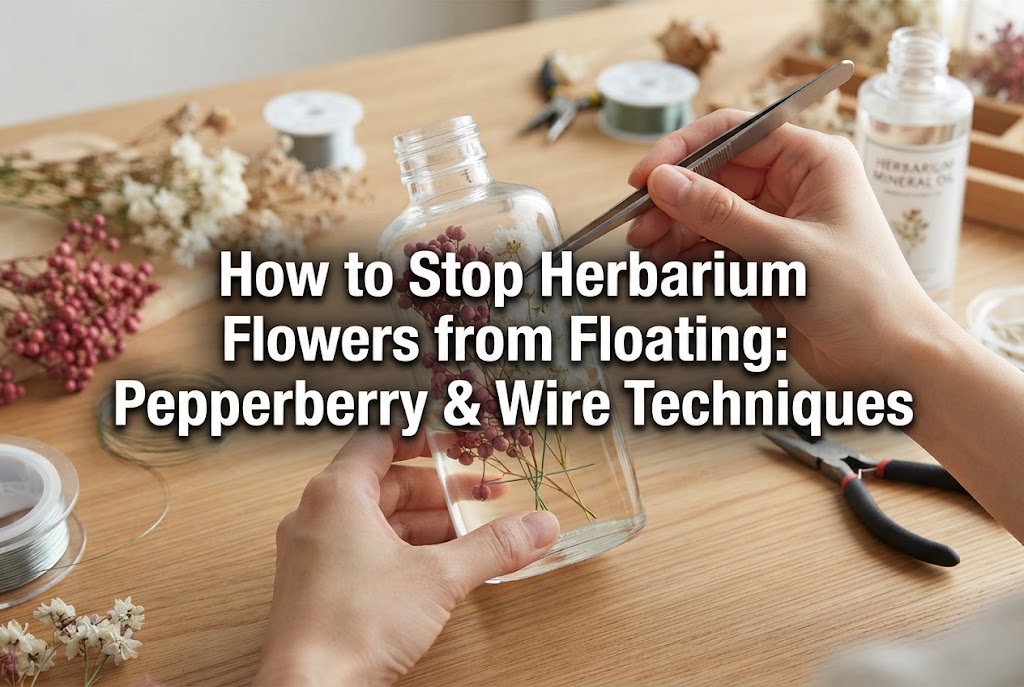
You carefully position every bloom with tweezers, pour in the oil, and suddenly everything floats to the top of the bottle, clumping awkwardly at the neck.
Because dried and preserved botanicals contain microscopic pockets of air, their density is lower than the oil, giving them strong buoyancy. Loose, lightweight materials (like single flower heads or small clippings of hydrangea) will drift upward immediately.
To stop this, you need to combine float-prone blooms with structural botanicals to create an interlocking 3D framework inside the glass.
Here are three key criteria to ensure your materials perform beautifully in oil:
Always verify that materials are explicitly labeled as dried flowers, preserved flowers, or suitable for herbarium craft. If you make your own dried flowers, ensure they are 100% dry. Using silica gel to rapidly dry fresh flowers preserves their natural form and color while removing all moisture safely.
Standard herbarium bottle necks typically measure only 1.5 cm to 2 cm (about 0.6 to 0.8 inches) in diameter. Forcing large blossoms through the mouth will crush petals and ruin their symmetry. Choose main flowers that are slightly smaller than the opening, or select modular materials like hydrangeas that can be separated and reassembled inside.
When submerged, certain materials become semi-transparent—especially light-colored preserved hydrangeas and skeleton leaves. If your design relies solely on translucent elements, the finished piece can look washed out and undefined. Conversely, dried strawflowers and berry clusters remain opaque, casting sharp silhouettes. For best results, mix translucent and opaque materials in roughly equal measure.
To make shopping easier, here is a categorized guide to dependable botanicals:
Once your botanicals are ready, it's time to arrange them. Here are my reliable layout and structural techniques:
Combining too many disparate colors can make a small bottle look cluttered. A foolproof color coordination rule is to stick to two base shades (analogous tones) plus one accent color.
The single best technique to lock flowers in place is sandwiching them between layers of preserved hydrangea:
The fine, interlocking stems of the hydrangea act like an internal jungle gym, counteracting gravity and buoyant forces alike.
Yassy's Pro Tip: Before pouring your oil, gently tilt the bottle side-to-side. If the botanicals shift or rattle loosely, use long crafting tweezers to tuck in a little more hydrangea to increase internal friction.
To ensure leftover flowers stay vibrant for future projects, protect them from their two biggest enemies: UV light and humidity.
Here is a quick recap for herbarium success:
The magic of herbariums is revealed the moment you pour in the clear oil and watch the flowers come alive with light. Once you master floral selection and simple structural techniques, crafting gorgeous, long-lasting bottle flowers is pure joy. Pick your favorite blooms and give it a try!
If you enjoyed this guide, please feel free to share it with your fellow crafters. See you in the next article—happy crafting from Yassy!

For example, if you are looking for articles about mizuhiki, try searching for "mizuhiki"; if you are interested in tools, try keywords like "nippers" or "pliers."
