Applying Traditional Japanese Raden (Mother-of-Pearl Inlay) to Modern Crafts: From Heritage Technique to Contemporary Art
yassy
Crafters!
Hello, crafters! It’s Yassy from Crafters! (・∀・)
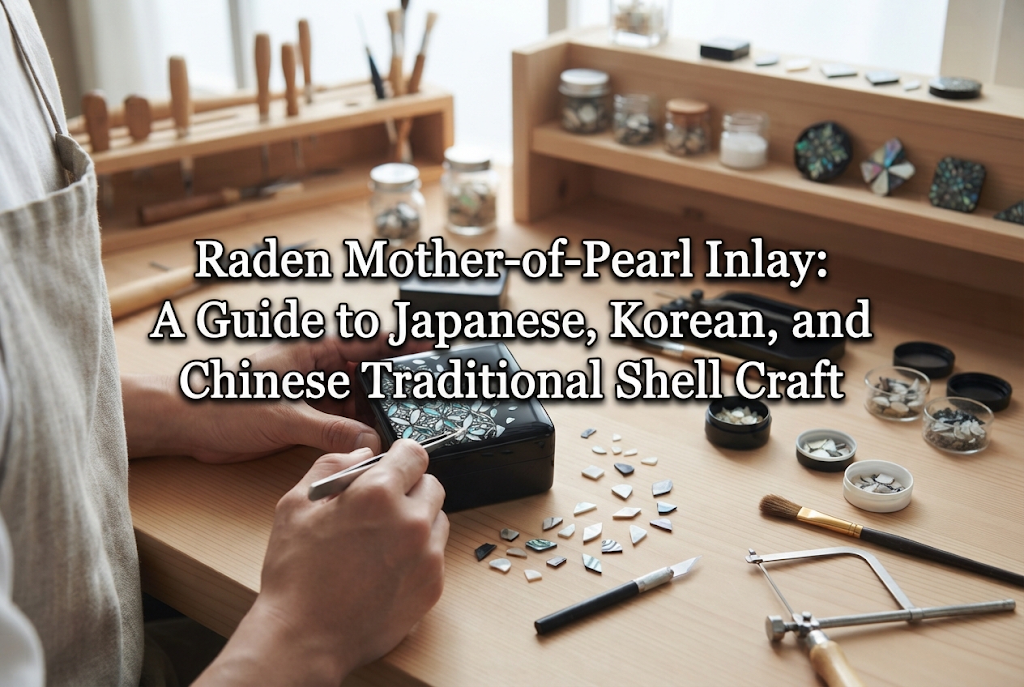
Have you ever been captivated by the mesmerizing, iridescent glow of natural seashells embedded in lacquerware or woodwork? That is the traditional East Asian inlay technique known as Raden (mother-of-pearl inlay). If you love handmade crafts and traditional artisan techniques, you have likely marveled at its ethereal luster at least once.
While Raden is widely celebrated in Japan, it is actually a shared heritage across East Asia, having been cherished for centuries in China and Korea as well. However, each culture developed its own unique approach—diverging significantly in the types of shells used, technical processing methods, and overall design philosophies.
In this guide, I will take a close look at the techniques and aesthetic differences among Japanese, Korean, and Chinese mother-of-pearl inlay. Understanding the background of these traditional crafts will not only deepen your appreciation for authentic artisan works, but also provide a treasure trove of design inspiration for your own DIY, resin, and handmade projects. Let’s dive in!
Before exploring the regional differences, let’s review the basic mechanics of the Raden craft technique.
In the Japanese term Raden (螺鈿), the character Ra (螺) refers to spiral shells, while Den (鈿) means to inlay or decorate. In short, Raden is the technique of thinly shaving the iridescent inner lining of nacreous shells—such as abalone, great green turban, or pearl oyster—and embedding or affixing them to the surface of lacquerware (urushi) or polished wood.
Common natural shells used in Raden:
The true magic of Raden lies in how its appearance shifts with every changing angle of light. This subtle, dynamic glow is something synthetic paints or glitter can never fully replicate. Across East Asia, master artisans have historically combined the profound, lustrous black of natural lacquer with the vivid radiance of shells to craft luxurious and prestigious works of art.
The roots of mother-of-pearl inlay in East Asia trace back to ancient China. Here is how the craft evolved and the specialized expressions it developed.
The history of Chinese shell inlay is ancient, dating back to the Shang (Yin) and Zhou dynasties before the Common Era. Archaeological excavations have revealed early forms of shell inlay embedded into bronze artifacts and primitive lacquer pieces from this era.
By the Tang Dynasty (7th–9th centuries), shell inlay techniques had reached an exquisite peak. Artisans mastered carving thick pieces of shell (Atsugai) with high precision and embedding them into lacquer. Masterpieces such as decorated mirrors with inlaid sandalwood backs (Raden Shitan no Kagami) were created during this golden age. These advanced Tang techniques subsequently traveled along trade routes and diplomatic exchanges to Japan and the Korean Peninsula.
A prominent characteristic of Chinese shell inlay is its extensive application not just to lacquer items, but also to high-grade hardwood furniture made from materials like rosewood (zitan) and huanghuali.
As the craft progressed through the Song, Ming, and Qing dynasties, artisans moved beyond thick shell carving to develop sophisticated micro-thin shell inlay techniques (Usugai). Particularly during the Qing Dynasty, the master technique known as Dianluo (点螺) gained prominence. In Dianluo, shells shaved down to mere microns are sliced into tiny, hair-thin fragments and arranged in a stippling or pointillist fashion to depict sweeping landscape panoramas, historical figures, birds, and flowers.
Chinese shell inlay is renowned for its sheer scale, grandeur, and dense compositions that fill entire surfaces with historic narratives, classical gardens, and auspicious motifs without leaving empty space.
Next, let’s examine the shell inlay traditions of Korea. In Korean, mother-of-pearl lacquerware is called Najeon Chilgi (나전칠기 / 螺鈿漆器), and it remains honored as one of the country’s foremost intangible cultural heritages.
Following its introduction to the Korean Peninsula, mother-of-pearl craft flourished into a distinctive, refined art form during the Goryeo Dynasty (10th–14th centuries). Goryeo-era Najeon Chilgi developed primarily alongside Buddhist art and aristocratic furnishings, displaying exceptional artistic mastery.
A hallmark of Goryeo shell inlay is the meticulous, dense arrangement of tiny cut shell pieces forming intricate arabesques (karakusa), chrysanthemums, and peony scrolls. Artisans also combined shells with Fukusaishiki (painting the underside of translucent sea turtle tortoiseshell before inlaying it) and embedded fine metal wires (such as brass or copper) to produce mesmerizing, ultra-detailed borders.
From the Joseon Dynasty through to modern times, the signature trademark of Korean Najeon Chilgi has been the fiery brilliance of abalone shell combined with the Warigai (crack-inlay) method.
Abalone harvested from the Korean coastline yields a particularly strong, prismatic swirl of red, green, and blue hues. In the Warigai technique, paper-thin abalone sheets are intentionally fractured into countless micro-cracks before being adhered to curved surfaces. Originally invented as a clever practical solution to fit flat, rigid shells onto three-dimensional vessel curves, this method causes natural lacquer to seep between the hairline cracks. The resulting surface scatters light dynamically, producing a dazzling, mosaic-like sparkle.
Dynamic, lavish depictions of the Sipjangsaeng (Ten Symbols of Longevity, including cranes, turtles, deer, and pine trees) sprawling boldly across entire surfaces define the unique, eye-catching grandeur of Korean Najeon Chilgi.
The history of Japanese Raden began with pieces brought over from China during the Nara period (8th century). Treasures preserved in the Shosoin repository in Nara, such as the famous Raden Shitan Gogen Biwa (five-stringed sandalwood lute with mother-of-pearl inlay), stand as premier examples of early masterpieces imported from Tang China or crafted domestically by early Japanese masters inspired by continental techniques.
The most defining factor that sets Japanese Raden apart from Chinese and Korean traditions is its deep, seamless integration with Maki-e, Japan’s unique lacquer decoration art.
Maki-e is the technique of drawing fine lines or motifs with wet urushi lacquer and sprinkling gold or silver metallic powder over them before they dry. Through the Heian, Kamakura, and Edo periods, Japanese lacquer artisans perfected compositions that harmonized the deep black of lacquer, the radiant warmth of gold Maki-e, and the shifting iridescence of Raden within a single unified scene.
Rather than covering the entire background in shell, Japanese artisans placed cut shell motifs as focal highlights within soft gradients of sprinkled gold dust, creating a sophisticated sense of depth, three-dimensionality, and atmospheric light.
Traditional Japanese concepts such as wabi-sabi and Yohaku no Bi (the beauty of negative space) heavily influenced Raden design in Japan.
Instead of completely filling the object with ornamentation, Japanese pieces leave open expanses of rich, deep black lacquer or natural wood grain. A solitary bird, a single autumn leaf, or the delicate ripple of water might be depicted in shell. This restrained approach allows the shell to speak softly, catching the eye only when light hits the surface at the right angle—a hallmark of subtle Japanese refinement.
Technically, Japanese masters meticulously distinguish between Atsugai Raden (using carved thick shells over 1 mm for sculptural relief) and Usugai Raden (using boiled, paper-thin shells shaved under 0.1 mm for fine flush inlays).
Here is a side-by-side comparison to help you easily visualize how these three traditions differ:
When learning about mother-of-pearl crafts, beginners often run into a few common misconceptions. Let’s clarify these fundamentals:
Today, crushed shell chips and thin shell sheets are widely available at craft supply stores. While sticking these onto items with modern glues or resin is a fun and rewarding hobby, traditional Raden involves a specific multi-step finishing discipline.
Authentic Raden utilizes natural urushi lacquer as both an adhesive and a protective coating. After the shells are applied, multiple layers of lacquer are painted over them, followed by an intensive Togidashi (grinding and polishing down) process. This grinds through the lacquer to reveal the shell surface, ensuring that the shell and surrounding lacquer sit completely flush and smooth on the exact same plane.
Raw natural seashells are extremely hard yet brittle. If you attempt to cut a raw shell directly with scissors or utility blades, it will shatter into jagged, unusable shards.
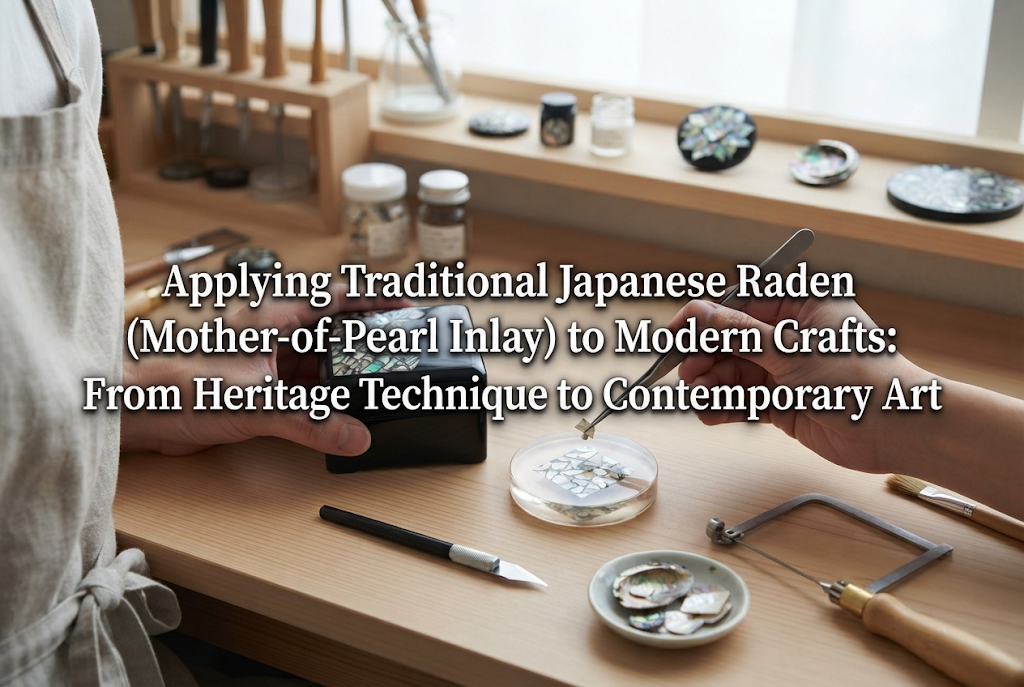
Traditional artisans boil raw shells with chemical or natural alkalines to soften their structure and grind them down on whetstones or specialized lapidary wheels to micro-thin sheets. Only when converted into ultra-thin Usugai sheets can shells be cleanly sliced or cut into intricate patterns using fine jeweler's fretsaws and specialized chisels.
Handling authentic raw urushi lacquer requires specialized dust-free curing boxes and precautions against skin irritation (urushiol rash). However, you can easily apply the aesthetic wisdom of traditional Raden to modern DIY projects using UV/epoxy resin, acrylics, and craft shell sheets!
Here are three practical techniques I recommend incorporating into your modern craft workflow:
The iridescence of natural shell stands out most dramatically against a rich, pitch-black background. When the light passing through the translucent shell layer is absorbed by dark pigment beneath, only the vibrant red and green spectral reflections shine forward.
When making resin cabochons or jewelry, create a solid base layer using black tinted resin, black Japanese washi paper, or dark paint before laying down your shells. You will notice an immediate leap in depth and luxury compared to a clear background.
You can easily recreate the dazzling mosaic glow of Korean cracked shell inlay using craft shell sheets:
This allows flat shell sheets to conform effortlessly to 3D curves while catching light across thousands of miniature facets.
Rather than covering your entire design in shell chips, combine shells with fine metallic accents. Draw delicate lines or stencils using fine brass/mica powder, gold leaf, or gold metallic paint pens, and use cut shell accents sparingly as focal points within the gold illustration.
By embracing intentional negative space rather than overcrowding your design, you can achieve the refined, serene elegance characteristic of traditional Japanese lacquerware.
In this guide, we explored how mother-of-pearl craft evolved across East Asia:
While all three traditions work with natural shells, their differing cultural aesthetics produce distinctly captivating results. Understanding these design philosophies provides wonderful inspiration for modern makers.
I encourage you to try applying these timeless East Asian shell inlay concepts to your own resin, jewelry, and woodworking projects. If you enjoyed this guide, please share it with your fellow crafting friends!
Until next time, happy crafting! This was Yassy from Crafters! (・∀・)


For example, if you are looking for articles about mizuhiki, try searching for "mizuhiki"; if you are interested in tools, try keywords like "nippers" or "pliers."