Why Does Epoxy Resin Turn Yellow? A Japanese Crafter’s Guide to Choosing Non-Yellowing Resin
yassy
Crafters!

Hello! This is Yassy from Crafters! (・∀・)
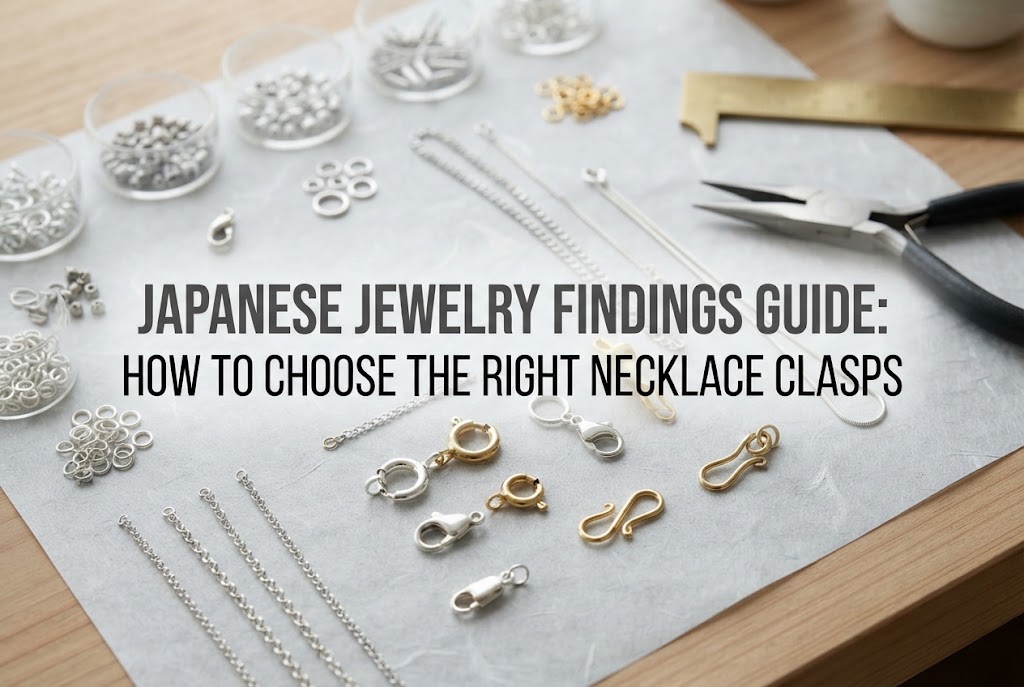
When making your own handmade necklaces, it is so easy to get completely absorbed in designing pendant tops or arranging colorful bead combinations. However, the unsung heroes that quietly support both the usability and overall quality of your jewelry piece are the necklace clasps and findings.
If you choose your findings carelessly, you might run into disappointing mistakes like: "I made a gorgeous necklace, but it's so hard to put on that I stopped wearing it," "The clasp couldn't handle the weight and came undone, dropping the pendant," or "It triggered a metal allergy and made my neck itchy."
In this guide, I will explain in detail the primary types of clasps used in handmade necklace making, their pros and cons, and essential tips for choosing the right findings for your creations. Understanding the characteristics of each component will help you complete necklaces that look professional and feel wonderful to wear!
A necklace clasp isn't just a functional part that connects a chain behind your neck. It has a significant impact on the overall impression, wearing comfort, and durability of your jewelry piece.
The importance of findings can be broken down into four key points:
No matter how breathtaking your pendant top is, if the closure is frustrating to use, the value of your piece as a wearable accessory is halved. Striking a balance between design and functionality is an essential step in handmade jewelry craft.
There are several classic types of clasps (closures) commonly used in jewelry making. Let's look closely at their structures and usability.
The spring ring clasp (known as hikiwa in Japanese jewelry making) is a circular fastener equipped with an internal spring, opened and closed by pulling back a tiny lever. It is the most common clasp found on delicate commercial necklaces.
Pros: Extremely small and discreet, so it won't disrupt delicate chains or dainty designs. It is widely available in many sizes and color finishes.
Cons: Because of its small size, operating it behind the neck without looking can be tricky. It can be challenging for crafters or wearers with long nails or limited dexterity.
Shaped like a lobster claw, this clasp (called kanikan in Japan) is a staple in handmade jewelry. Like the spring ring, it opens and closes via an internal spring mechanism.
Pros: Features a larger lever than a spring ring, making it much easier to pinch and manipulate with your fingers for smooth wearing. It has a sturdy structure and high durability, making it safe for heavier pendant tops.
Cons: The hardware itself has a stronger presence. If paired with an ultra-fine chain, the clasp might look bulky, so balancing the scale with your chain thickness is key.
A decorative closure where a bar is slipped through a ring (often referred to as mantel in Japanese craft supplies).
Pros: Very easy to fasten with one hand by passing the bar through the ring, and aesthetically pleasing. It is very popular to place the toggle at the front or right above the pendant as a main design feature rather than hiding it at the back.
Cons: If the chain is too short or the overall necklace is too light, slack in the chain can cause the bar to slide out of the ring. It is best suited for necklaces with some weight or appropriate length.
Equipped with strong magnets inside, these clasps snap together instantly when brought close to each other.
Pros: Unmatched ease of use. Simply bringing the ends together behind the neck closes the piece securely, making it a favorite for seniors, individuals who struggle with small motor tasks, or those who want to protect their manicures.
Cons: Can come apart under strong pulling forces that exceed the magnetic strength. It is not suitable for very heavy beaded necklaces and poses a drop risk if snagged on bag straps. Extra caution is required for individuals using pacemakers.
Screw-type clasps fasten by threading together, while insert box clasps snap a spring-leaf tab into a decorative housing. These are frequently used on elegant pearl strands and fine formal jewelry.
Pros: Extremely low risk of coming undone accidentally and very sturdy. They offer an elegant look suited for formal occasions.
Cons: Screw clasps require a bit of practice to twist behind the neck without looking, taking slightly more time to fasten.
A simple hook-style clasp where the curved end catches onto an opposing jump ring or connector.
Pros: Simple structure and easy to handle. Works wonderfully with natural stone jewelry, ethnic/boho designs, and wire-wrapped artwork.
Cons: If the bend of the hook is too loose, it can catch on clothing or slip off when the chain slacks. Adjusting the hook angle properly before wearing is necessary.
When making a necklace, you need not only the clasp itself, but also the receiving hardware on the opposite side and termination parts for thread or wire.
These are the receiving parts that catch the lobster claw or spring ring. The gourd-shaped flat plate (known as daruma-kan or figure-eight plate in Japan) provides a flat surface that is easy to grip with fingers and simple for a spring lever to hook into.
For a simpler finish, standard open or closed jump rings (round or oval) are used as the receiving end.
Instead of a simple connector plate, attaching a short length of wide-link chain fitted with a teardrop charm adds about 5 cm (2 inches) of adjustable length to your necklace.
Since neck sizes vary from person to person, adding an extender chain is a thoughtful and reliable choice when creating pieces for sale or as gifts.
When constructing necklaces with bead stringing wire, nylon cord, or monofilament, crimp beads and calottes (bead tips) are used for end terminations.
Flattening the crimp bead with pliers secures the wire, and encasing it inside a cup-like bead tip allows you to attach your main clasp neatly.
Here are representative mistakes beginners often make when selecting jewelry findings, along with practical solutions.
Using a weak magnetic clasp or shallow hook on a necklace with heavy natural stones or glass beads can cause it to unfasten easily from movement or accidental tugs.
Prevention: If your pendant or focal motif has significant weight, always choose a locking clasp like a lobster claw or a screw clasp.
Attaching a bulky lobster claw to a dainty, delicate pendant chain ruins the balance, making the rear closure stand out awkwardly.
Prevention: Select the millimeter size of your clasp (e.g., 6 mm, 8 mm, 10 mm) to match the wire gauge of the chain and size of the pendant top to maintain visual harmony.
A tiny 5 mm spring ring can cause immense frustration for wearers with manicured nails or limited finger agility.
Prevention: When making pieces for others or for sale, opting for a slightly larger lobster claw, a magnetic clasp, or a toggle clasp will be deeply appreciated.
The back of the neck easily collects moisture and sweat, making it one of the most sensitive areas for metal allergy reactions.
Prevention: Using raw brass or cheap nickel-plated findings directly against the skin can lead to irritation. Educate yourself on hypoallergenic metals and choose materials carefully.
Even under the umbrella term "gold," finishes can range from rosy gold to greenish yellow gold or antique brass depending on the manufacturer.
Prevention: If your chain, jump rings, clasp, and extender don't match in shade, the piece will look amateurish. Try to purchase findings from the same line or manufacturer whenever possible to unify the tone.
To create necklaces that can be enjoyed comfortably for years, understanding hypoallergenic metals is crucial.
High-grade stainless steel used in medical tools. It is exceptionally resistant to tarnish, rust, and corrosion, making it one of the safest options for metal allergies. It has become one of the most popular choices in the handmade jewelry community today.
A thick layer of 14K gold bonded to a brass core under heat and pressure. Because the gold layer is about 100 times thicker than standard gold plating, it resists wearing off and rarely triggers metal allergies, allowing crafters to offer genuine gold shine at an accessible price point.
Containing 92.5% pure silver, sterling silver offers a classic, elegant luster. It is a long-trusted hypoallergenic material, though it requires periodic cleaning to remove tarnish caused by sulfur in the air.
Findings plated without nickel—the leading cause of contact metal allergies. It provides an affordable way to offer skin-conscious jewelry while keeping production costs low.
Here is how I personally match findings to different necklace styles in my work:
To emphasize delicate charm, I use a thin surgical stainless steel chain. I select a small 5 mm to 6 mm spring ring paired with a flat connector plate (daruma-kan) rather than a simple jump ring. This keeps the aesthetic sleek while keeping it easy to catch with the spring lever.
Because the focal piece is heavy, security is my top priority. I choose a larger, sturdy lobster claw (around 12 mm) and attach an extender chain with a teardrop charm at the end. This ensures the piece won't slip off even if pulled backward by its weight.
When creating for unspecified wearers, universal usability and allergy friendliness are non-negotiable. I use nickel-free or surgical stainless steel lobster clasps paired with a 5 cm extender chain. This prevents size returns or sizing fit issues.
When I want the closure itself to act as a design accent, I place an antique-style toggle clasp at the front. Danging a pendant charm from the ring of the toggle results in a stylish, distinctive look!
Selecting the right necklace clasp elevates not only the visual appeal but also the functional quality and safety of your handmade creations dramatically.
Always keep these three questions in mind when choosing findings: "Who will wear this?" "How heavy is the piece?" and "Is it safe for sensitive skin?" Crafting with attention to these subtle details will make your creations cherished treasures that people love wearing every day.
If you enjoyed this guide, sharing it with your crafting friends on social media would mean the world to me!
Until next time, happy crafting! This was Yassy from Crafters!

For example, if you are looking for articles about mizuhiki, try searching for "mizuhiki"; if you are interested in tools, try keywords like "nippers" or "pliers."
