Japanese Wire Jewelry Guide: How to Pair Wire and Gemstones (Gauges, Techniques, and Design Rules)
yassy
Crafters!

Hello, everyone! This is Yassy from Crafters! (・∀・)
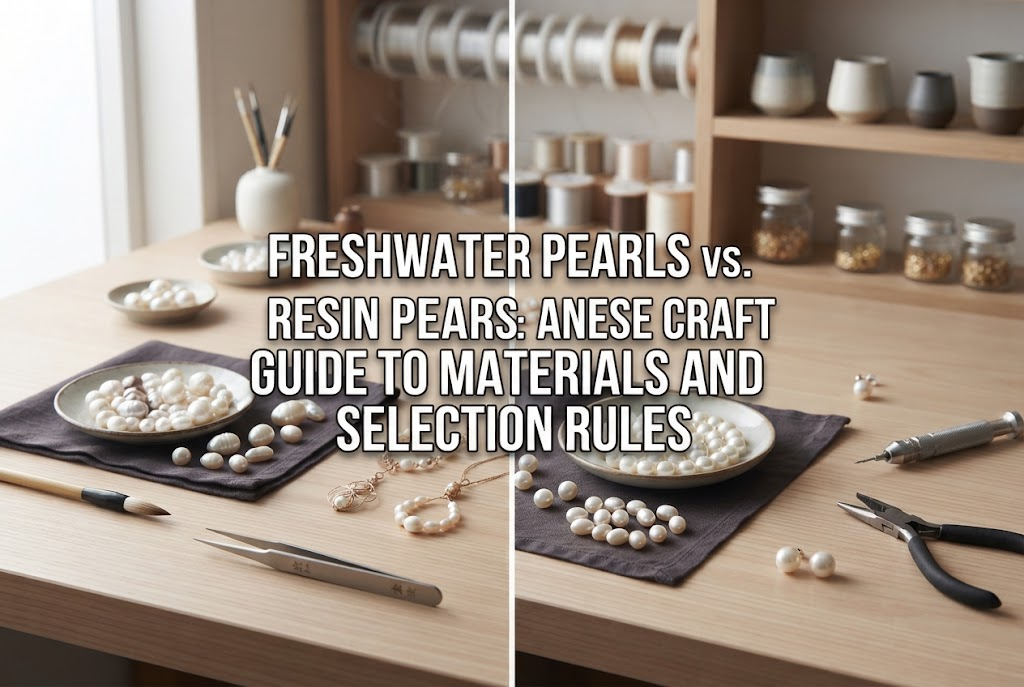
When starting out in handmade jewelry making, almost every crafter faces the exact same dilemma: choosing the right pearl materials. Browse through any craft store supply aisle or online catalog, and you will inevitably see two dominant options side by side: freshwater pearls and resin pearls.
At first glance, both look like lovely, lustrous pearls. However, their underlying structure, origin, and physical properties couldn't be more different. Choosing between them based purely on guesswork can lead to accessories that fail to match your original design vision—or worse, unexpected complaints from disappointed customers.
Over the years, I have crafted countess pearl accessories, purchased pieces at exhibitions and online shops, and thoroughly tested almost every pearl material available on the market. From my hands-on experience, I can say with confidence: freshwater pearls and resin pearls each have distinct reasons for existing and unique areas where they truly shine.
In this guide, I will break down the essential differences between freshwater pearls and resin pearls through a thorough, side-by-side comparison. By the end of this article, you will know exactly which pearl to choose for your specific design, clear up common beginner mistakes, and elevate the overall quality of your handmade jewelry!
Before diving into design choices, it is important to understand how these two types of pearls are made. Grasping their fundamental origins is the first step toward making foolproof material selections for your craft projects.
Freshwater pearls are genuine natural pearls cultured inside freshwater mussels, such as Hyriopsis cumingii or Hyriopsis schlegelii, which live in rivers and lakes. While saltwater Akoya pearls are grown by inserting a spherical bead nucleus into an oyster, most freshwater pearls are tissue-nucleated—meaning a tiny piece of donor mantle tissue is inserted without a rigid central bead.
Because there is no solid spherical core inside, freshwater pearls consist almost entirely of solid nacre from the inside out. This thick layer of nacre gives them a deep, luminous glow and rich iridescent luster (known in Japanese craft terminology as teri).
Since they are formed naturally by living creatures, every single freshwater pearl varies slightly in shape, color, and surface texture (such as subtle ridges or dimples). No two pearls in the world are identical, which is the ultimate appeal of freshwater pearls. They possess a quiet, organic elegance that synthetic materials simply cannot replicate.
Resin pearls are artificial pearls featuring a core made from plastic resins like acrylic or ABS, coated with multiple layers of pearlized lacquer. Because they are manufactured industrial components, their quality and dimensions are exceptionally stable.
They feature near-perfect spherical shapes, uniform colors, and identical sizes from piece to piece. Furthermore, because their base material is lightweight plastic, they are remarkably light in weight.
It would be a mistake to dismiss synthetic pearls as merely cheap imitations. Modern resin pearl manufacturing techniques have advanced dramatically. Many resin pearls available today feature smooth, high-gloss surface coatings that make them look stunning at a glance. Combining lightweight comfort with ease of use, they are an indispensable staple in modern handmade accessory making.
Let's compare these two materials across five critical factors that directly impact accessory creation and daily wear. Keeping these distinctions in mind will eliminate any lingering confusion during material selection.
The most dramatic difference lies in how light interacts with each material.
Freshwater pearls refract light through their thick, layered nacre, producing a deep, velvety luster that seems to radiate from within. Depending on the lighting angle, you can often observe delicate rainbow interference colors like soft pinks and subtle greens.
Resin pearls, on the other hand, reflect light uniformly off their top lacquer coating, producing a crisp, clean, and glassy shine. While visually pristine, resin pearls lack the organic depth and dimensional radiance found in real freshwater nacre.
If your goal is to give your handmade creation an authentic, high-end, or luxurious aesthetic, the deep radiance of freshwater pearls offers an undeniable advantage.
In terms of shape versatility and uniformity, the two materials stand at opposite ends of the spectrum.
Because freshwater pearls grow naturally, perfectly round specimens are rare and costly. Instead, they come in a wide variety of charming shapes, including potato, rice, button, and baroque (asymmetrical) forms. Sizes also vary slightly from pearl to pearl. When crafting matching earrings, you will spend time sorting through your stock to pair pearls with similar shapes and dimensions.
Resin pearls are machine-molded to exact geometric perfection. Standardized sizes like 4mm, 6mm, or 8mm are strictly uniform. For geometric designs requiring crisp alignment, or paired accessories that demand exact mirror images, resin pearls excel completely.
How a pearl feels in your hand—and when worn on the body—differs significantly between the two materials.
Because freshwater pearls are solid nacre all the way through, they carry a dense, substantial weight. While this weight communicates luxury and quality, using large freshwater pearls in heavy, statement-sized designs can make the finished piece uncomfortably heavy for the wearer.
Resin pearls feature lightweight plastic cores, making them amazingly light. Even when designing chunky multi-strand statement necklaces or long, swinging chandelier earrings using 8mm or 10mm pearls, the finished accessory remains light on the ears and neck. For statement jewelry meant for all-day wear, the featherlight nature of resin pearls is a huge advantage.
When it comes to everyday durability, each material has distinct strengths and vulnerabilities.
Freshwater pearls are composed of calcium carbonate, making them sensitive to human sweat, natural skin oils, and acidic substances. If left uncleaned after wear, sweat can gradually erode the delicate nacre layers, permanently dulling their natural luster. They also require protection from excess moisture, as well as a gentle wipe-down after every use.
Resin pearls feature durable surface coatings that stand up remarkably well to sweat and moisture, making them worry-free choices for hot summer months. However, if exposed to harsh friction or scraped by sharp objects, their top pearl coating can scratch off, exposing the underlying plastic core.
In short: resin pearls offer superior resistance to sweat and liquids, while freshwater pearls offer better long-term resistance to surface peeling.
Material cost is another vital consideration for sustaining your crafting journey.
As natural resources, freshwater pearls command a higher price tag. Smooth, highly lustrous, near-round freshwater pearls can cost considerably more per strand (approx. 40cm / 16 inches). Higher material costs naturally require a higher retail price for your finished creations.
Resin pearls are mass-produced and highly affordable, sold in bulk packs containing dozens or hundreds of units for a fraction of the cost per piece. This cost efficiency allows you to experiment, conduct workshops, or build entry-level budget accessory lines without fear of costly mistakes.
Now let's look at a few common pitfalls that beginner crafters encounter when choosing pearl materials. Recognizing these traps in advance will save you time, materials, and customer misunderstandings!
The most common trap is assuming that using authentic freshwater pearls automatically guarantees a better product. This is not necessarily true!
If a material does not align with your design concept or practical use case, your finished piece will suffer. For example, incorporating expensive freshwater pearls into a playful, bright, street-style casual design can make the piece look mismatched and awkward, causing the natural charm of the pearl to be lost.
Shift your mindset from "real equals correct" to "matching the material to the design and purpose equals correct."
Imagine designing a dramatic pair of long statement earrings featuring five 10mm freshwater pearls per side. While the finished piece might look stunning on a display card, wearing them will pull uncomfortably on the earlobes. After just an hour or two, the weight becomes unbearable, rendering the earrings unwearable for daily life.
When designing voluminous or dramatic drop earrings, opting for lightweight resin pearls is a golden rule among professional jewelry makers.
Suppose you craft a casual everyday necklace intended for casual summer t-shirts using freshwater pearls. If the buyer wears it daily throughout hot, humid months without wiping away sweat, the pearls will gradually lose their brilliant luster within a few months, becoming dull and chalky.
For casual daily pieces or summer collections subject to sweat, using sweat-resistant resin pearls results in higher long-term customer satisfaction.
While resin pearls are affordable and convenient, failing to inspect them properly can make your work look cheap.
Due to the manufacturing process, resin pearls often feature small plastic flashing (burrs), paint pooling, or minor peeling around their drill holes. Threading headpins or wire straight through without cleaning these imperfections causes uneven stringing and an untidy appearance.
Always inspect resin pearls beforehand and trim away excess plastic around the drill holes before assembly!
To maximize the value of your creations, here is my professional rule of thumb for choosing the right pearl for any project.
For formal occasions, the deep internal radiance and organic subtle shapes of freshwater pearls bring an unmistakable refined elegance to your jewelry that resin pearls simply cannot duplicate.
Resin pearls shine brightest when light weight, precise round shapes, sweat durability, and low unit costs are required.
Here is my exact thought process when planning and crafting new accessory lines:
1. For Formal & Special Occasion Jewelry:I unhesitatingly choose potato- or rice-shaped freshwater pearls. Even if their forms are slightly irregular, their velvety luster against the skin and substantial feel immediately elevate formal attire. I package these pieces in high-quality gift boxes and price them accordingly.
2. For Casual Everyday Multi-Strand Long Necklaces:I select 6mm resin pearls. A multi-strand long necklace crafted entirely from freshwater pearls would be far too heavy and strain the wearer's shoulders. Using resin pearls keeps the necklace featherlight and effortless to wear all day long.
3. For Dainty Summer Gold & Pearl Jewelry:I select tiny 2mm to 3mm freshwater pearls (baby pearls). Extremely small resin pearls often look synthetic due to coating limitations, whereas mini freshwater pearls pack an incredible shine despite their tiny size. Because they are small, skin contact is minimal, making them a luxurious summer option.
Once you have selected your materials, mastering these practical processing techniques will instantly raise your craftsmanship to a professional level.
The most common hurdle when working with freshwater pearls is dealing with narrow, irregular drill holes.
Because drill holes in natural pearls are bored manually, they are often quite small. Standard jewelry headpins or eyepins (0.6mm–0.7mm thickness) frequently get stuck.
Forcing a thick pin into a narrow hole can crack the pearl or bend your pin beyond repair. Follow these essential rules:
To ensure crisp, clean lines on resin pearl jewelry, follow this simple preparation routine:
Taking just a few seconds to prep your components eliminates unwanted gaps between beads, resulting in clean, professionally finished stringing.
Including proper care instructions with your finished handmade products builds long-term customer trust and brand credibility.
For Freshwater Pearl Jewelry:Include a care note stating: "After wearing, gently wipe away skin oils and sweat using a soft, dry cloth (such as a microfiber glass cleaning cloth). Store in a cool place away from direct sunlight." Remind customers never to submerge freshwater pearls in water or cleansers.
For Resin Pearl Jewelry:Include a note stating: "To preserve the smooth surface luster, store separately from hard metal jewelry to prevent surface scratches."
Both freshwater pearls and resin pearls bring unique strengths to the workbench:
Neither material is universally superior to the other. True craftsmanship lies in understanding the characteristics of both and intentionally selecting the right pearl for the right concept.
Understanding your materials thoroughly and choosing your findings with clear intent is the hallmark of a professional artisan. I hope this guide helps you choose your pearl supplies with complete confidence for your next creative project!
If you found this article helpful, please share it with your fellow crafting friends or on social media! Happy crafting, and see you in the next guide! This was Yassy from Crafters!






For example, if you are looking for articles about mizuhiki, try searching for "mizuhiki"; if you are interested in tools, try keywords like "nippers" or "pliers."
