Gold Plated vs 14K Gold Filled: Secrets of Durability, Hypoallergenic Properties, and Material Selection for Crafters
yassy
Crafters!

Hello, everyone! It's Yassy from Crafters! (・∀・)
I absolutely love making jewelry, browsing through wonderful pieces in artisan shops, and wearing my favorite handmade items!
The world of handmade jewelry making is so exciting, filled with sparkling beads and stylish findings that inspire creativity just by looking at them.
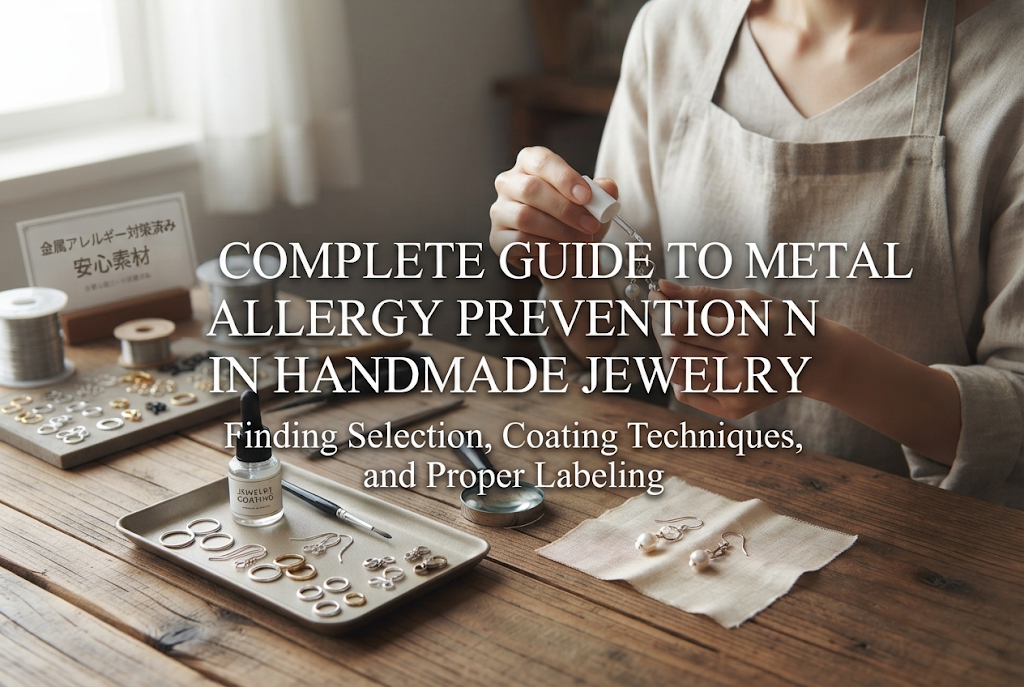
However, there is one critically important topic that we simply cannot avoid when making or purchasing handmade jewelry: metal allergy prevention.
It is heartbreaking if an earring you made for yourself causes your earlobes to turn red, or if a necklace you gave to a friend makes their neck itch. Furthermore, if you sell your handmade creations, this becomes a matter of direct responsibility regarding your customers' health and comfort.
If you vaguely think, "As long as I choose surgical stainless steel, it's 100% safe!" or "If it says nickel-free, it shouldn't cause any allergic reaction!", please reconsider those assumptions right now.
Continuing to make jewelry with vague knowledge about metal allergies can lead directly to product complaints and craft failures. In this article, I want to clearly share my knowledge and experience with all handmade jewelry makers—covering everything from how metal allergies occur and the characteristics of different materials to post-assembly coating techniques and proper disclaimer labels for selling!
Please note: While the methods introduced in this article are effective measures, they do not guarantee 100% prevention for every individual. Please read this as a practical prevention guide.
To implement proper allergy prevention, you must first understand the fundamental mechanism of why skin reactions occur. If you pick findings based on superficial information without understanding the underlying cause, gaps will inevitably form in your prevention strategy.
Here, I will clearly explain the mechanism of allergic reactions and the specific risk levels of various metals commonly used in jewelry making.
The primary trigger for metal allergies is contact with sweat or bodily fluids on the surface of the skin.
The metal itself does not directly attack the skin. Rather, when metal comes into contact with moisture such as sweat, tiny amounts of the metal dissolve. This dissolving process is called ionization.
When these ionized metal particles combine with proteins in the skin, the human body recognizes them as foreign invaders (an enemy). The immune system then reacts overactively and remembers the substance, triggering a strong rejection reaction the next time the same metal touches the skin. This rejection manifests as itching, redness, swelling, and rash—the true nature of a metal allergy.
Therefore, the core foundation of jewelry allergy prevention boils down to two simple goals: preventing metals from ionising and keeping easily ionised metals away from direct skin contact.
The reason allergies flare up more easily during summer or sports is that heavy sweating drastically accelerates the ionization of metals.
Different metals have completely different tendencies to dissolve in sweat (ionization tendency). Here is a clear classification of metals commonly used in craft findings, ordered from highest to lowest risk:
Memorizing this risk hierarchy and selecting your findings accordingly is an absolute fundamental rule of jewelry making.
Beginners in handmade jewelry often fall into common traps when choosing materials or assembling pieces. Relying on assumptions can lead to unexpected allergic reactions for yourself or your buyers.
Here are four widespread misconceptions I frequently see, along with the facts you need to update your knowledge.
Far too many people believe that surgical stainless steel is a magic material that never causes allergies. To state the conclusion clearly: some people do experience allergic reactions to surgical stainless steel.
Surgical stainless steel (specifically the 316L grade used in jewelry) has excellent corrosion resistance and is even used in medical scalpels. It forms a transparent chromium oxide layer on its surface, preventing the metal beneath from leaching out.
However, surgical stainless steel actually contains about 10% to 14% nickel in its alloy composition. Under normal conditions, the strong surface film keeps it trapped. But for individuals with highly acidic sweat, extreme metal sensitivity, or if the surface film gets scratched, microscopic amounts of nickel can dissolve and trigger an allergy.
Claiming that "surgical stainless steel is safe for everyone" is simply incorrect.
14K Gold-Filled (14KGF) is made by bonding a layer of 14K gold onto a base metal (like brass) using heat and pressure. Because the gold layer is significantly thicker than standard gold plating, it is a very popular material known for being durable and less likely to cause allergies.
However, gold-filled is not foolproof. The outer surface is 14K gold (58% pure gold plus 42% alloy metals like copper and silver). People who are allergic to copper or silver can still react to gold-filled components. Furthermore, if the gold layer wears down over years of heavy use or suffers deep scratches, the brass core becomes exposed.
As for standard Gold Plated (GP) findings, the gold layer is extremely thin. It can rub off after just a few wears, exposing the underlying brass or nickel base to the skin and triggering allergies quickly. Treating standard plated findings as allergy-safe is very risky.
When making drop earrings, some crafters attach surgical stainless steel or titanium hooks while using standard alloy metal for the rest of the piece. This is a very common trap.
Even if the ear wire is surgical stainless steel, an allergic reaction can still occur if standard metal parts are used for:
Allergic reactions do not only happen inside the ear hole. If metal ions dissolve from jump rings or decorative elements touching the surface of the earlobe, the surrounding skin will break out in a rash. Every single component that could touch the skin must be allergy-conscious.
When shopping at craft supply stores, you will see many stylish findings labeled "Nickel-Free." Buying them under the assumption that they guarantee complete safety is premature.
"Nickel-free" refers to plating made without using nickel in the coating process. However, labeling standards can vary by manufacturer and region—some mean absolute zero nickel, while others mean trace amounts below a certain threshold.
More importantly, even if nickel is absent, the base metal underneath is often brass or copper. For crafters or wearers who are sensitive to brass or copper itself, nickel-free findings can still trigger a reaction. Understand "nickel-free" as a way to reduce nickel risk, not as a universal allergy cure.
Here is a detailed comparison of the main allergy-conscious materials used in handmade jewelry. Every material has its advantages and disadvantages. Choose the best material based on your design, target audience, and budget.
Surgical stainless steel (SUS316L) is currently one of the most balanced and highly recommended materials for handmade jewelry.
Titanium is widely trusted in the medical field for implants and prosthetics.
Resin and plastic findings eliminate metal contact entirely, providing a safe alternative.
These higher-end materials are chosen when creating fine or semi-fine handmade jewelry.
What if you find a charm design you love, but it isn't available in surgical stainless steel? Or what if you want to wear your favorite metal earrings without irritation?
Here are handy barrier techniques to coat metal surfaces and prevent direct skin contact.
Specialized liquid barrier coatings for jewelry create an invisible, micro-thin protective film over metal findings, physically blocking sweat from reaching the metal.
Pro Tip: Coating is not permanent. Friction from wearing will gradually wear the film down over time, so reapplication is needed periodically. Ensure full coverage without gaps, as sweat can penetrate unsealed spots.
For flat surfaces such as brooch pins, pendant backs, or metal charms, clear UV/LED resin works exceptionally well as a protective shield.
Pro Tip: Uncured resin itself can cause resin allergies upon skin contact, so full curing is vital. Keep the resin layer thin and clean so it does not distort the charm's appearance.
Slip-on silicone covers offer a quick, tool-free physical barrier for ready-made ear wires and clip-on earrings.
These covers provide immediate protection and add comfortable cushioning for clip-on earrings. Note that adding tubing onto an ear post increases its diameter slightly, which might feel snug for smaller ear piercings.
If you sell your handmade creations online or at craft fairs, paying attention to allergy disclosures is essential. Careless phrasing can lead to customer skin irritation, negative reviews, or dispute issues.
To keep customer trust and avoid misleading claims, avoid using absolute statements on your shop pages or social media:
There is no metal or material in existence that is guaranteed 100% non-allergenic for every single human being. Sensitivities vary widely—some individuals react specifically to gold, silver, or titanium.
Using terms like "100% safe" or "completely allergy-proof" can constitute misleading advertising and leaves you liable if a customer experiences an unexpected reaction.
To communicate risk honestly while demonstrating care, always include a clear disclaimer in your product listings. Here is a practical template you can adapt for your handmade store:
Product Materials & Allergy Information:We use [Surgical Stainless Steel 316L / Nickel-Free Plating] for metal parts that come into direct contact with the skin to minimize the risk of irritation and tarnish. However, individual sensitivities vary, and we cannot guarantee that allergic reactions will not occur in all wearers. If you experience any discomfort or irritation while wearing our jewelry, please discontinue use immediately and consult a healthcare professional.
Including a thoughtful statement like this allows shoppers with sensitive skin to make informed decisions based on their own needs.
Understanding metal allergy prevention is just as valuable as mastering design and assembly techniques in handmade jewelry crafting.
Let's review the key takeaways:
Reminder: The methods described here are intended as helpful crafting practices rather than medical guarantees. If skin irritation occurs, discontinue wearing the piece and seek medical advice promptly.
If you found this guide helpful, please share it with your fellow crafting friends! Until next time, happy crafting from Yassy!

For example, if you are looking for articles about mizuhiki, try searching for "mizuhiki"; if you are interested in tools, try keywords like "nippers" or "pliers."
