Protecting the Grain Side from Stains: Proper Application and Quick Cleanup for Edge and Flesh Finishing Agents
yassy
Crafters!
Hello, everyone! It’s Yassy from Crafters! (・∀・)
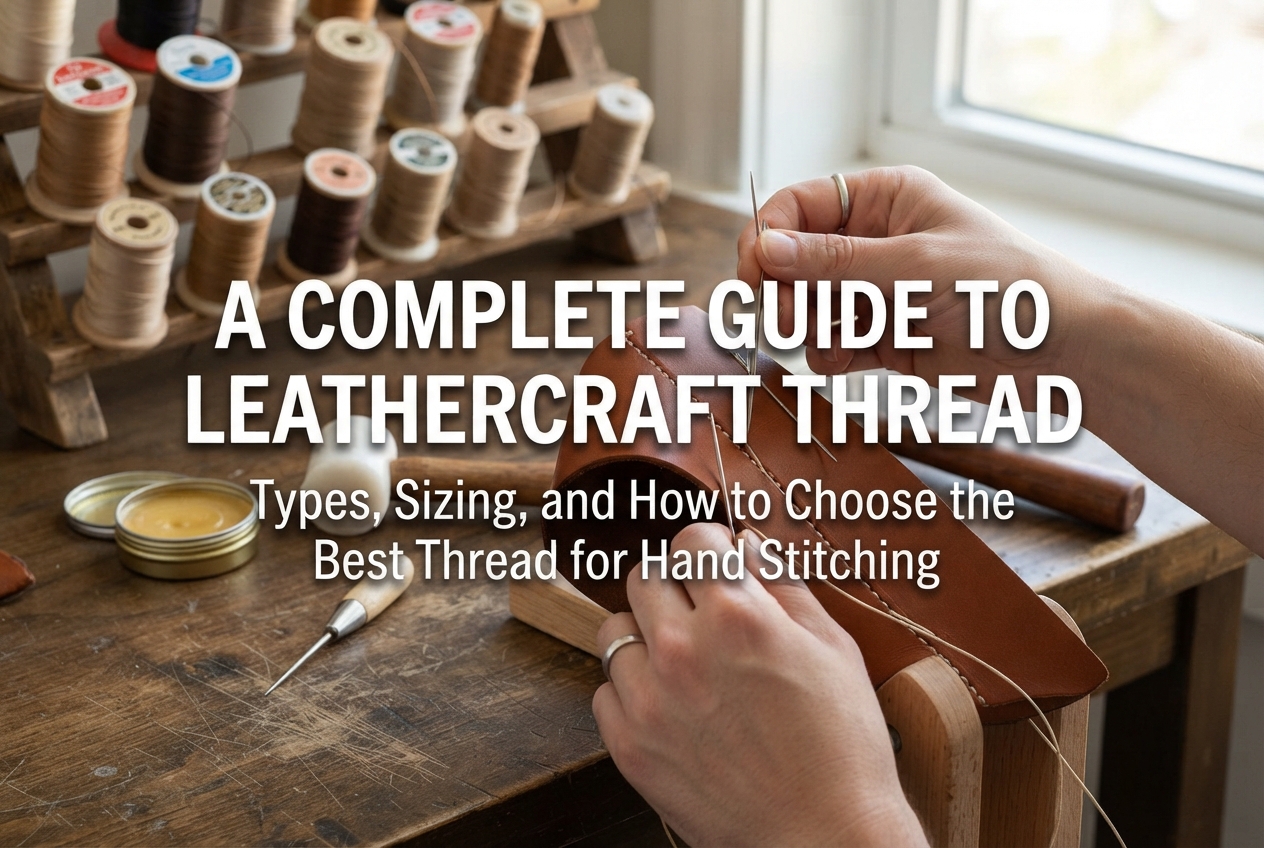
When crafting leather goods, selecting your thread is just as crucial to the finished quality as choosing the leather, cutting cleanly, or burnishing edges. Because hand stitches are highly visible on leather items, picking the wrong type, thickness, or color can leave an otherwise beautifully cut piece looking unpolished.
Many beginners find themselves asking: "Can’t I just use regular sewing thread from a craft store?" "What is the real difference between polyester and linen?" and "How do I know which thickness to pick?"
In this guide, I will explain the different types and characteristics of leathercraft threads, how to select the right thickness and color without making mistakes, and the secrets of waxing thread for smoother hand stitching. Find the perfect thread for your projects to dramatically elevate both their durability and aesthetic quality!
A common pitfall for leathercraft beginners is trying to stitch leather with standard cotton sewing thread or thin machine thread meant for garment sewing.
Hand-stitching leather requires a specialized, heavy-duty thread that functions entirely differently from regular fabric thread. Let’s look at why dedicated leather thread is an absolute necessity.
Standard dressmaking thread (such as thin cotton or polyester) is spun fine and features built-in elasticity to match the supple drape of fabrics. Leather, on the other hand, is significantly stiffer, denser, and thicker.
If you try to stitch leather with regular thread, it cannot handle the intense friction created when passing through holes punched by pricking irons (diamond stitching chisels). The thread will fray or snap mid-stitch. Furthermore, standard threads cannot withstand the tension applied when pulling each stitch tight by hand, often breaking during assembly.
Dedicated hand-stitching threads for leather are crafted by tightly twisting multiple strands together, giving them exceptional tensile strength and friction resistance.
In addition, coating the thread’s surface with wax coats the fibers, prevents fraying, and ensures it glides smoothly through leather holes. To create leather goods that last for years or decades, this rugged durability is non-negotiable.
Leathercraft threads are generally categorized into synthetic fibers (polyester, nylon) and natural fibers (linen, ramie, cotton). There are also specialty options like artificial sinew.
Each material has its own strengths and weaknesses, so crafters choose based on the desired style and function of the project.
Polyester is currently the most widely used thread in leathercraft. In Japan, Vinimo MBT and Escord Polyester are classic, highly regarded brands.
The greatest advantage of polyester is its superb tensile strength and abrasion resistance. It resists moisture and sweat, keeping the risk of thread rot or breakage over time to a minimum. It also comes in an extensive spectrum of vibrant colors.
Another major practical benefit is how you finish seam ends: you can melt the cut ends with a flame to form a secure, melted stopper (known as yaki-dome in Japanese), making thread finishing fast, tidy, and unravel-resistant.
Linen hand-sewing thread is beloved by crafters who prefer a traditional, rustic look. Well-known options include Japan’s Escord linen thread as well as classic European imports.
The defining charm of linen is its natural texture and matte appearance. It pairs wonderfully with vegetable-tanned leather and oiled leathers. As the leather develops a rich patina over time, linen thread also ages gracefully, taking on a warm, vintage character.
On the downside, linen is more susceptible to water damage and abrasion than polyester, and it can snap if pulled with excessive, sudden force. You also cannot melt the ends with a flame; instead, you must finish seams by backstitching and securing the ends with leather glue (bond-dome).
Sinew thread was originally made from animal tendons in traditional Native American leatherwork, and modern artificial sinew replicates this using synthetic fibers like polyester or nylon.
It features flat, waxed bundles of fibers that can be easily split into thinner strands to achieve your desired thickness.
Extremely tough with a rustic, waxy finish, artificial sinew is popular for biker wallets, rugged outdoor gear, and heavy-duty leather items.
Nylon thread offers flexibility, slight elasticity, and excellent tensile strength. Like polyester, the ends can be melted with a flame to finish seams.
However, prolonged exposure to UV sunlight can cause nylon to degrade or discolor slightly over time. For this reason, it is often chosen for areas demanding extreme abrasion resistance or internal structural seams rather than main, high-exposure exterior stitch lines.
Once you have selected your material, the next step is determining the thickness. If your thread does not match the thickness of your leather, the type of project, and the pitch (spacing) of your pricking irons, the overall look will be unbalanced.
Thread sizing notations differ across brands and manufacturers, which often confuses beginners.
For instance, with Japanese Vinimo polyester thread, a smaller number indicates a thicker thread (e.g., #8 is fine, while #1 and #0 are thick). On the other hand, traditional linen threads like Escord often use intuitive labels such as fine, medium, or thick.
The secret to neat, refined stitching lies in optimizing the pairing between hole spacing (pitch) and thread thickness.
If you use thick thread on delicate, narrowly spaced holes (such as a 3.0 mm pitch), the stitches will look overcrowded and clunky. Conversely, using thin thread across wide hole spacing (such as a 5.0 mm pitch) leaves the seam looking sparse, diminishes the stitch's visual presence, and weakens the seam.
A narrow pitch pairs best with finer thread, while a wider pitch calls for thicker thread. Keeping this balance is the golden rule of clean leather stitching.
When shopping for leathercraft thread, you will encounter pre-waxed thread and non-waxed thread. Here is a breakdown of their respective pros and cons.
The biggest advantage of pre-waxed thread is convenience: it is saturated with wax straight out of the package, ready to stitch immediately.
Skipping the waxing process speeds up your workflow considerably. Flat braided polyester wax cords, in particular, are forgiving and very easy for beginners to handle.
The drawback is that some commercial pre-waxed threads carry excess wax, leaving a sticky film on your hands and leather or depositing white waxy buildup around stitch holes.
Alternatively, you can buy non-waxed linen or bonded polyester (such as Vinimo MBT) and coat it yourself with beeswax or leathercraft wax right before sewing.
The primary benefit is control: you can customize the wax level to suit your preference and the leather at hand. For delicate, untreated vegetable-tanned leather, you can apply a light coat that provides smooth passage without transferring excess residue to the grain.
To wax your thread properly, follow these steps:
This second step generates friction heat, which melts the wax deep into the core fibers. If you skip buffing with a cloth, wax will sit unevenly on the surface in clumps, risking smudges on your leather.
Here are three common thread-related troubles beginners run into, along with practical solutions.
As you stitch, the thread fibers near the needle eye may untwist, separate, and slip off the needle or fray into a messy clump.
This happens either because the thread was not locked onto the needle properly or because it lacks adequate wax. When threading a leather hand-sewing needle, always use the standard leathercraft locking technique: pass the thread through the eye, then pierce through the thread strand once or twice with the needle point before pulling it taut. Combining this lock with proper waxing completely eliminates untwisting.
How you secure the final stitch depends entirely on the thread material.
For synthetic threads like polyester or nylon, trim the tail leaving 2 to 3 mm, carefully melt it with the base of a lighter flame into a small bead, and press it flat against the seam using your finger or the side of the lighter (yaki-dome). This creates a durable stopper that will never unravel.
If you attempt this on linen thread, it will simply scorch and burn. For linen, backstitch one or two holes, trim the ends flush, and secure them by dabbing a tiny drop of leathercraft glue into the hole (bond-dome).
When stitching with heavily waxed cords, white wax flakes or residue can settle around pricking holes. This is particularly noticeable on dark brown or black leather.
If this occurs, lightly warm the area from a short distance with a hairdryer on low heat. The gentle heat melts the wax residue, turning it clear and letting it absorb cleanly into the leather surface.
With so many choices available, you might wonder: "Which single spool should I get for my very first project?"
If I were advising a complete beginner, my go-to recommendation is Vinimo MBT in size #5 (or size #1).
Vinimo MBT is a specialty Japanese bonded polyester thread where the plies are bonded together, meaning the twist physically cannot unravel while stitching. Its ease of handling is on another level compared to standard threads.
Size #5 (a versatile medium-fine weight) handles virtually all small leather goods, including keycases, cardholders, and bifold wallets. You get the fun experience of hand-waxing with beeswax, and your seam ends can be neatly finished with a clean flame melt.
Once you settle on material and thickness, selecting the thread color is your next creative step. Stitch color completely alters the final mood of your work.
The most classic, foolproof approach is matching the thread tone directly to the leather (brown thread on brown leather, black on black).
The stitching blends harmoniously into the leather without calling too much attention to itself, producing a refined, understated appearance. An added perk for beginners is that minor stitch misalignments are much less noticeable.
Choosing a contrasting color makes your stitch lines pop—such as white thread on navy leather, or red thread on camel leather.
The stitch line becomes a primary visual feature, highlighting the distinct handmade craftsmanship of your item. Keep in mind that high contrast makes any unevenness in your stitching visible, demanding careful hole punching and consistent hand tension.
When using natural, undyed vegetable-tanned leather, beige or off-white thread is traditional.
As the leather ages into a rich caramel amber over months of use, natural linen or beige polyester thread settles into a warm, vintage look that complements the deepening color of the leather perfectly.
Thread in leathercraft is never just an adhesive holding two pieces of hide together. It forms the structural backbone of your project's longevity and serves as a major design element defining your work's visual appeal.
Whether you choose the resilience and convenience of polyester or the organic, evolving charm of linen, matching your thread to your project's concept makes leathercraft all the more fulfilling.
Start with a reliable, beginner-friendly polyester thread like Vinimo MBT in a versatile standard size, and experience firsthand how clean, sturdy stitching transforms your work. Pick the right spool and enjoy bringing your next leather project to life!
If you found this guide helpful, sharing it with your fellow makers on social media means the world to me!
Until next time—happy crafting! This was Yassy from Crafters!

For example, if you are looking for articles about mizuhiki, try searching for "mizuhiki"; if you are interested in tools, try keywords like "nippers" or "pliers."