Level Up Your Japanese Parts Deco Craft: The Golden Tool Upgrade Order for Beginner Crafters
yassy
Crafters!

Hello, everyone! It’s Yassy from Crafters! (・∀・)
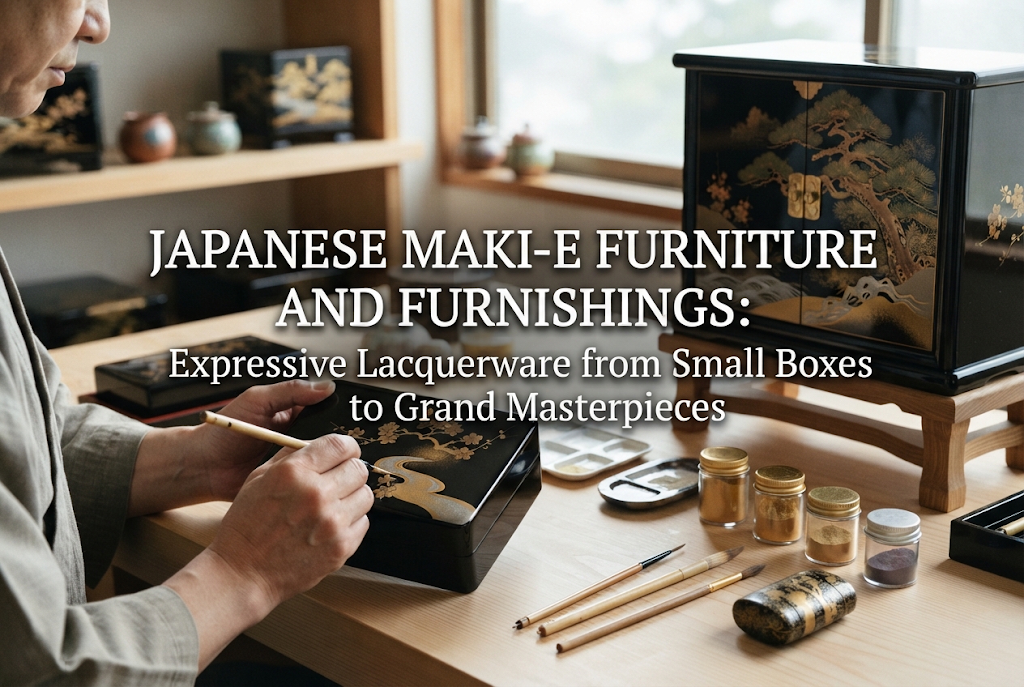
Among Japan’s traditional crafts, Maki-e holds a special place for its extraordinary elegance and radiance. This technique involves drawing patterns with urushi (natural Japanese lacquer) and sprinkling gold or silver powder onto the wet lacquer to fix the design. While often seen on small accessories and hand mirrors, Maki-e is also widely used on everyday interior furnishings and large furniture pieces.
You might think, "Maki-e furniture and decor sound so luxurious and out of reach…" However, the more you learn about the world of Maki-e, the more you will be captivated by its expressive breadth and delicate craftsmanship. From palm-sized treasures like letter boxes (fubako) and medicine cases (inro) to grand, commanding pieces like clothing chests (tansu) and low tables (zataku), Maki-e blooms beautifully across a vast variety of canvases.
In this guide, I will take a deep dive into the world of Japanese Maki-e furniture and furnishings. I’ll explain representative item types, key technical differences, tips for styling them in modern interiors, and essential care advice!
Maki-e furniture and decor items are far more than mere household tools. They represent a flawless blend of daily utility and fine art. The deep, unique luster of natural lacquer paired with the dimensional shimmer of gold and silver powder can instantly elevate the ambiance of any room.
Once cured, urushi becomes remarkably durable, water-resistant, and resistant to chemicals. Because of these qualities, Maki-e objects can maintain their stunning beauty for decades or even centuries. Historically, these pieces were cherished by aristocrats, feudal lords (daimyo), and wealthy merchants as bridal furnishings and high-status interior decorations.
Whether on a tiny box held in the palm of your hand or a large cabinet serving as the centerpiece of a room, the intricate motifs drawn without a single compromise represent the true essence of Maki-e artistry.
Maki-e items can be broadly categorized by their size and function. Understanding the intent and craftsmanship behind each item will completely transform how you view these artworks!
Boxes have long been the most popular stage for Maki-e expression. Common forms include:
On these boxes, lavish Maki-e is often applied not only to the top lid, but also inside the lid and on the bottom surface. Opening a box to reveal a hidden burst of shimmering gold and silver is a delightful surprise reserved just for the user.
Additionally, Inro—portable medicine cases worn suspended from the kimono sash—represent a peak of microscopic precision. For anyone who loves fine handmade work and detailed craft, the intricate designs compressed into such tiny spaces are truly breath-taking.
Tiered food boxes (jubako) and individual serving plates (meimeizara), commonly used for New Year celebrations and festive gatherings, are wonderful examples for experiencing Maki-e in daily life. Decorated with auspicious motifs like cranes, turtles, pine, bamboo, plum blossoms, and seasonal flowers, these lacquer pieces enhance both the food served and the festive mood of the dining table.
Personal grooming items like hand mirrors and dressing stands also frequently showcase elegant Maki-e designs. Adding a favorite piece of Maki-e decor to your daily routine brings a lovely touch of luxury to everyday life.
When it comes to larger Maki-e furniture, notable examples include wedding chests (maki-e tansu), display shelves (kazaridana), low tables for guest rooms (zataku), and folding screens (byobu).
Applying Maki-e to large furniture allows artisans to create expansive compositions, giving the impression of an immersive painting. Folding screens and display shelves that decorate room walls offer some of the finest interior art, showcasing a striking contrast between deep black lacquer and gleaming gold.
Although all referred to as "Maki-e," the surface texture, luster, and dimensionality vary greatly depending on the specific technique used. Here are the three main methods, plus the ultimate pinnacle technique:
This is the most fundamental and popular technique. The artisan draws a pattern with lacquer, sprinkles metal powder over it, applies a thin coat of lacquer over the pattern area only, hardens it, and polishes the surface. The resulting surface has minimal texture, finishing smooth and sleek. It is commonly used on modern tableware and everyday furnishings.
In this advanced technique, the pattern is drawn and metal powder is sprinkled, after which the entire surface—including the background—is covered with coats of black lacquer. Once fully dry, the surface is meticulously burnished down using charcoal until the hidden gold pattern re-emerges.
Because the gold powder is embedded within the lacquer layer, the surface finishes completely flat and smooth without any raised edges. Originating in the Heian period, this high-status technique creates a captivating sense of depth, as if the gold shines through from deep within.
In Taka Maki-e, the pattern is built up in three dimensions using a thick mixture of lacquer and charcoal powder (urushi-sumi-ko) before gold powder is applied. This technique adds realistic texture to rugged mountainsides or plump flower petals.
Touching the surface reveals a clear raised relief, and light hitting the design creates dramatic shadows, producing a rich and majestic impression.
Considered the absolute pinnacle of Maki-e craft, this technique combines the relief of Taka Maki-e with the smooth finish of Togidashi Maki-e. The motifs are raised in relief, and the subtle edges are gently burnished smooth, creating incredibly realistic curved surfaces and realistic shading. It is reserved for high-end letter boxes and extraordinary custom furnishings.
When standing in front of a Maki-e piece, where should you look to fully appreciate it? Here are a few key details that excite me as a craft enthusiast!
The gold powder used in Maki-e comes in various grain sizes and shapes. Coarser gold grains create a bold, dramatic shimmer, while fine dust produces a soft, elegant glow.
Pay attention to bokashi maki-e (gradation technique) as well, where gold is sprinkled densely in some areas for full coverage and lightly in others to let the dark lacquer ground peek through. Depending on the lighting and angle, the expression of the pattern changes dynamically.
Maki-e is often combined with other decorative arts for an even grander finish. Examples include Raden (inlaying cut pieces of mother-of-pearl from abalone or turban shells) and Hiramon (inlaying thin cutouts of gold or silver foil).
When the soft glow of metallic dust meets the iridescent, rainbow brilliance of polished seashells, a magical beauty emerges. Seeing this combination on large furniture or decorative boxes is breathtaking.
You might love Maki-e art but worry that traditional Japanese lacquerware won't fit a modern Western-style interior. Fortunately, with a few styling tricks, these pieces blend wonderfully into contemporary or minimalist spaces!
You don't need to turn your whole home into a traditional Japanese interior. Try placing a small Maki-e box or hand mirror inside a room with crisp white walls or sleek Nordic-style furniture.
Placing an authentic piece of Japanese traditional craft within a modern interior creates a sophisticated mixed style. The deep black or rich vermillion of Japanese lacquer pairs exceptionally well with natural wood grains and green house plants.
Maki-e letter boxes, inro, and small containers are too wonderful to hide away in cupboards! Use them daily as jewelry boxes for your favorite earrings and necklaces, or as a designated spot on your desk for your watch and keys.
Tools truly shine when they are used. Enjoying the feel of fine handcraft in your hands every day is one of the greatest pleasures for craft lovers.
Once you fall in love with Maki-e furnishings, you might feel curious to try making something yourself or wonder how artisans execute these fine steps.
If you're a beginner wanting to experience Maki-e, I recommend starting with a Kintsugi class or a Maki-e workshop to decorate a small lacquer plate or dish!
Tackling raw lacquer and real gold powder on a large piece of furniture right away is far too difficult. Starting with beginner-friendly workshops that use synthetic lacquer substitutes (like shin-urushi) and brass powder is the best way to get hands-on experience with the basic process: painting with a fine brush, sprinkling powder, and dusting away the excess.
Once you've tried sprinkling powder yourself, looking at professional Maki-e furniture will fill you with renewed awe: "Drawing such thin, uniform lines takes incredible skill!" or "Achieving this subtle gradation is amazing!"
If you acquire a treasured piece of Maki-e decor, proper care is essential to keep it beautiful for generations. Here are the key maintenance rules you should know when handling lacquerware.
Although cured lacquer is durable, its main weakness is ultraviolet light. Leaving Maki-e furniture or boxes in direct sunlight for long periods can degrade the lacquer, causing it to lose gloss, discolor, or crack. Always place Maki-e items away from direct sunlight.
Similarly, direct airflow from air conditioners or extreme winter dryness can warp the wooden base and crack the lacquer coating. Using a humidifier to maintain moderate humidity provides an ideal environment.
To remove dust, gently use a soft feather duster or wipe softly with a dry microfiber cloth (like a lens cleaning cloth) or a 100% soft cotton cloth.
Avoid rubbing hard, as strong friction can wear down the delicate gold powder or leave micro-scratches on the glossy surface. The key is to stroke the surface gently.
If dining items like tiered boxes or plates get oily, wash them gently using a soft sponge dampened with warm water and diluted neutral dish soap. After washing, do not leave them to air dry; wipe off all moisture immediately with a soft, dry towel.
Needless to say, never use a dishwasher or microwave! Rapid heating and drying will ruin precious lacquerware instantly.
In this article, we explored the fascinating world of Japanese Maki-e furniture and decor, ranging from delicate keepsake boxes to grand furniture pieces.
Maki-e represents the height of Japanese handcrafts, created by master artisans who dedicate countless hours to perfecting every single step. Learning the distinct qualities of each technique—the smooth finish of Hira Maki-e, the deep dimensionality of Togidashi Maki-e, and the bold texture of Taka Maki-e—opens up endless enjoyment when viewing craft art.
While antique Maki-e furniture can be a major investment, smaller items like hand mirrors and jewelry boxes are easily integrated into modern living, bringing joy every time you see and touch them. If you love handmade creations and craft culture, you will surely find deep inspiration in this uncompromising artisan skill.
I hope you get the chance to appreciate authentic Maki-e in person at a museum, antique shop, or hands-on workshop soon!
If you enjoyed this article, please share it with your craft-loving friends on social media or messaging apps—it truly means a lot to me and keeps me inspired!
See you in the next post! This was Yassy from Crafters!

For example, if you are looking for articles about mizuhiki, try searching for "mizuhiki"; if you are interested in tools, try keywords like "nippers" or "pliers."
