Handmade Brand Logo & Shop Design Guide: 4 Steps to Cohesive Visual Branding
yassy
Crafters!

Hello, it's Yassy from Crafters! (・∀・)
Have you ever spent hours perfecting the shape and color of a handmade piece, only to feel that the final finish somehow missed the mark? The single biggest factor that determines the ultimate quality, atmosphere, and polish of your artwork is the topcoat finish.
Whether you choose a brilliant gloss or a soft, understated matte, the exact same piece can give off a completely different impression. Selecting a finish isn't just a matter of personal preference—it is a crucial design decision that should be calculated based on your craft materials, aesthetic vision, and practical use.
Having crafted countless items myself and collected pieces from crafters all over the world, I've noticed a universal truth: professional crafters and best-selling artisans masterfully match their finishes to their designs. In this article, I'll break down the fundamental differences between gloss and matte finishes, visual mechanisms, category-specific guidelines, common pitfalls, and reliable techniques to elevate your craft quality instantly!
To control surface textures freely, you first need to understand how light interacts with different topcoats. Designing with the science of light in mind will take your craft beyond simple guesswork.
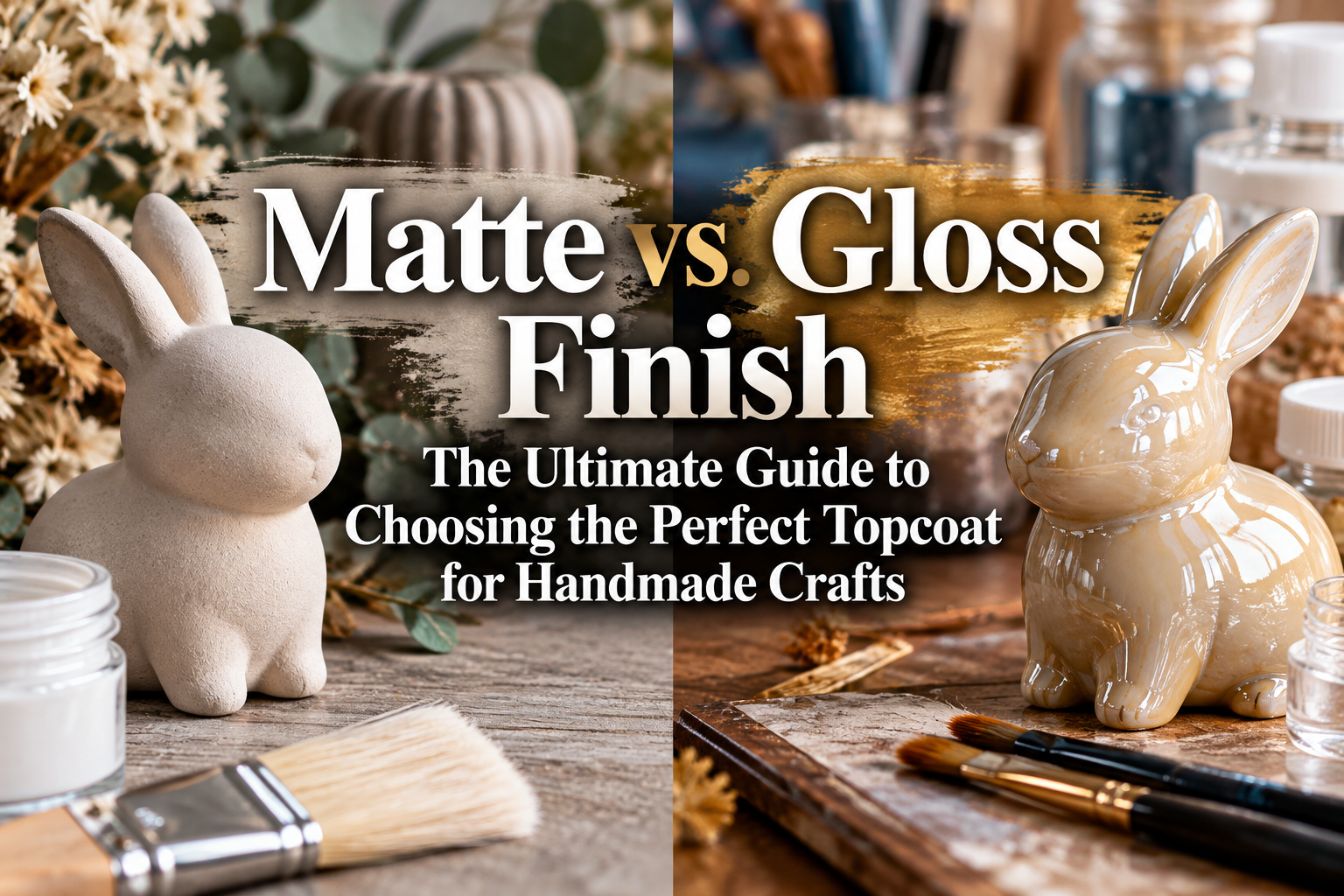
A gloss finish creates a smooth, mirror-like surface that reflects light directly. It imparts a fresh, liquid-like shine and a clear, polished texture to your work.
Visual impressions associated with a gloss finish include luxury, transparency, freshness, and brilliance. Gloss enhances color depth, making base colors look as vibrant and rich as possible. If you want to depict water droplets, glass, polished metal, wet surfaces, or juicy fruits, gloss is the absolute best choice. Its greatest strength is its ability to command attention instantly.
A matte finish minimizes shine to the extreme, diffusing light for a soft, velvety appearance. To the touch, it offers a smooth, delicate feel.
Visual impressions of a matte finish include rustic charm, natural elegance, warmth, and an antique feel. By eliminating harsh glare, it highlights the delicate sculpted details and subtle color tones of your piece. Matte finishes excel when working with natural textures like fabric, leather, ceramics, and wood, or when creating Scandinavian-style interior accents and miniature baked goods. It gives your creation a sophisticated, mature aesthetic.
Why does changing your varnish or topcoat change the reflection so drastically? It all comes down to microscopic surface texture and light physics.
When a gloss coat dries, its surface becomes completely smooth. Light bounces off in a single direction—a phenomenon known as specular reflection—which our eyes perceive as a high shine. In contrast, matte coatings contain microscopic matting agents, such as silica particles. As the coat dries, these particles form a textured microscopic surface that scatters light in every direction (diffuse reflection), reducing visible glare.
Understanding this helps explain why application thickness and drying times alter the level of matte effect: it all depends on how those matting particles settle on the surface.
Here are the practical standards for deciding between gloss and matte across popular craft genres. When in doubt, follow these golden rules to match the realistic texture of your subject matter.
For resin and shrink plastic accessories, a gloss finish is generally the top pick. High transparency and brilliant shine bring out the full depth of embedded glitter and vivid colors. However, if you are making frosted-glass candy charms, stone-textured Japanese traditional accessories, or antique obi-dome (sash clips), opt for a satin or matte coat to evoke a nostalgic, dreamy feel.
In clay crafting and fake sweets, applying selective finishes makes a world of difference. For miniature bread, cookies, cake sponges, doll skin, and clothing, a matte finish is the correct choice; an artificial shine here can make clay look cheap and plastic. On the other hand, use a high-gloss finish for fruit slices, drizzled sauces, chocolate coatings, or fried egg whites. The contrast between matte bases and glossy accents is what separates beginners from pros.
For wooden items, acrylic-painted decor, or decoupaged items, a matte or satin finish is ideal. It highlights the natural warmth of wood and acrylic paints, allowing the item to blend seamlessly into modern interiors. Overly shiny varnish on wood risks looking dated. If you aim for a stylish Scandinavian or vintage aesthetic, matte varnishes and wax finishes are your best friends.
In leathercraft, a satin-to-matte topcoat preserves the rich, organic feel and patina of natural leather. For plaster items like aroma stones, eco-resin casting, or air-dry ceramic clay, a clean matte finish highlights the natural, tactile beauty of the raw materials.
Consider not only visual design but also protection, ease of handling, and durability when making your choice—especially if you sell your creations.
Gloss topcoats win when it comes to color vibrancy. Because the clear resin coat allows light to pass through smoothly, base colors remain vivid—blacks look deeper and reds look richer. Matte finishes, due to the silica particles within, can slightly lighten or mute dark underlying colors. However, this dampening effect is precisely what gives pastel and muted trendy shades their lovely, soft aesthetic.
For items handled daily, like keychains or phone cases, fingerprint visibility is crucial. High-gloss finishes show oil, fingerprints, and hairline scratches easily, especially on dark colors. Matte finishes scatter light, making fingerprints and minor surface scuffs practically invisible and offering a hassle-free user experience.
Gloss finishes generally offer superior water resistance and surface hardness. The tightly packed resin creates a barrier that repels water and oils, allowing dirt to be wiped away easily with a damp cloth. Matte finishes, with their microscopic texture, can trap fine dust or skin oils over prolonged use. Additionally, high-friction areas on matte items can eventually rub smooth, creating unwanted glossy spots over time.
The topcoat is your final step, and a mistake here can ruin hours of hard work. Here is how to prevent the most common finishing issues.
Applying matte spray or varnish can sometimes leave a powdery white haze known as blushing. This is caused by high humidity (above 70%), which traps moisture in the coat as it dries, or by insufficient mixing of the matting agent. Always shake or stir your matte coating thoroughly, apply thin layers, and avoid crafting on rainy or humid days.
Visible brush strokes or trapped bubbles ruin a mirror gloss. Brush marks happen when varnish is too thick or over-brushed as it starts to dry. Dilute your varnish slightly, load your brush generously, and apply it in smooth, single strokes. Let the fluid level itself out naturally. For bubbles, pop them immediately with a toothpick or pass a heat tool lightly over the surface before it sets.
If a coat feels tacky after drying, it either needs more cure time or suffers from a chemical reaction with the underlying material (such as soft PVC plastics reacting with solvent spray propellants). Even if a coat feels dry to the touch, full cure can take 24 hours to several days. Always perform a test application on a scrap piece first.
A secret used by professional artisans is combining both gloss and matte on a single piece. For instance, coat an entire miniature figure with matte spray, then use a detail brush to apply high-gloss varnish only onto specific accents like eyes, jewels, or fruit syrup. The stark contrast between the velvety matte body and the gleaming highlights creates breathtaking depth and realism.
Understanding surface texture allows you to draw out the absolute best in your handmade creations. Gloss brings vibrant brilliance, transparency, and high energy, while matte offers understated elegance, tactile warmth, and natural sophistication.
Applying the topcoat is the final magical touch that brings your artistic vision to life. Try applying these golden rules to your next crafting project and watch your work transform!
If you found this guide helpful, please share it with your fellow craft lovers on social media. See you in the next article—this was Yassy from Crafters!




For example, if you are looking for articles about mizuhiki, try searching for "mizuhiki"; if you are interested in tools, try keywords like "nippers" or "pliers."
