Unlocking the Charm of Mizuhiki and Mizuhiki Crafts: From Traditional Paper Cords to Modern Accessories
yassy
Crafters!

Hello everyone! This is Yassy from Crafters! (・∀・)
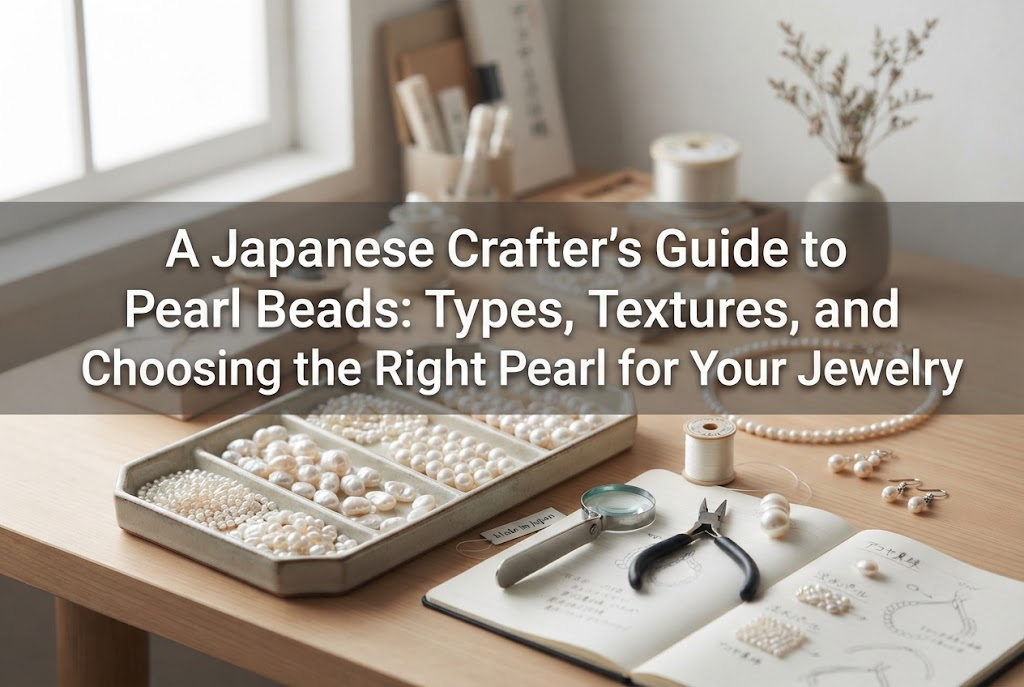
When starting out in handmade jewelry making, one of the first materials you naturally reach for is pearl beads. They bring an elegant, refined charm that instantly elevates any design. I personally adore pearls, and over the years, I've gathered countless varieties from craft shops to incorporate into my creations.
However, when you walk down a craft store aisle or browse online supply shops, the sheer variety of pearl beads can be overwhelming. Names like freshwater pearls, cotton pearls, glass pearls, and resin pearls get thrown around, leaving many beginners confused about what makes each type unique.
Choosing a pearl simply because "it looks similar" can lead to heartbreaking mistakes—like earrings that are too heavy for comfortable wear, or coatings that peel off after just a few uses. To dramatically boost the quality of your work and craft jewelry that lasts, understanding the exact characteristics and differences of each pearl type is essential.
In this guide, I will share my complete knowledge on popular handmade pearl beads, comparing their texture, weight, and durability, along with project-based selection tips and professional techniques to prevent crafting mishaps!
Pearl beads fall into two major categories: natural-origin pearls and synthetic imitation pearls. Understanding this fundamental distinction is your first step.
Natural-origin pearls are real pearls grown inside mollusks over time. Each bead has an organic, unique shape and hue, offering a heavy, luxurious feel and natural beauty. They are ideal for one-of-a-kind handmade pieces and high-end jewelry collections.
Synthetic (imitation) pearls, on the other hand, consist of a spherical core coated with multiple layers of pearl paint. Depending on the core material, they are classified into cotton, glass, resin (plastic), or shell pearls. They offer uniform shapes, consistent sizes, and affordable price points, making them a dependable ally for crafters.
Neither category is inherently better than the other. The secret to professional jewelry making lies in selecting the right material for your specific design, target audience, budget, and wearing comfort.
Let's start with natural pearls, which instantly raise the value of your jewelry with their subtle luster and sophisticated charm.
Freshwater pearls are real pearls cultivated in freshwater mussels, such as the triangle sail mussel. Unlike saltwater Akoya pearls, freshwater pearls are usually grown without a solid spherical nucleus, meaning the entire bead is almost solid nacre. This makes them exceptionally durable and relatively resistant to sweat and skin oils.
They come in a wonderful variety of shapes: classic rounds, ovals, drops, buttons, and asymmetrical baroque pearls. Their subtle, deep luster reveals rainbow-like iridescent overtones of pink and green depending on how the light hits them.
Because they are natural materials, every single bead has a unique personality. If you want to create one-of-a-kind art pieces or sophisticated jewelry for adult fashion, freshwater pearls are the perfect choice.
These are high-end pearls grown in saltwater oysters like Akoya or silver-lip pearl oysters. Known for their brilliant luster (teri) and near-perfect spherical shapes, they are rarely sold as loose craft beads and carry a very high price per bead.
Due to their cost, they are seldom used for everyday handmade jewelry. They are reserved for special occasions, such as bespoke bridal accessories or heirloom milestone pieces.
Next, let's look at synthetic pearls, which are the most widely used materials in handmade crafts. The core material dramatically changes their texture, weight, and overall appearance.
Cotton pearls are a Japan-originated imitation pearl made by compressing cotton fiber into spherical beads and applying a pearl coating. Their greatest appeal is their extraordinary lightness. Even when used in bold, voluminous statement necklaces or oversized dangling earrings, they remain comfortable to wear all day without strain.
The surface features delicate texture unique to compressed cotton, producing a warm, vintage-style soft glow. They are available in classic white and cream, as well as stylish neutral shades like soft pink, gray, and beige. Their versatility allows them to blend effortlessly into both casual and formal outfits, making them extremely popular in the Japanese handmade market.
However, because the core is made of cotton, their main weakness is vulnerability to moisture and water. Avoid using them in pieces meant for damp environments or handling them with wet hands.
Glass pearls feature a small glass bead core baked with multiple layers of pearl paint. They offer a comfortable weight and cool touch that closely replicate the weight of genuine pearls.
Thanks to the smooth glass core, the paint coats evenly, giving off a clear, sleek luster. High-quality versions coated with special paints are marketed as "silky pearls" or premium glass pearls, offering a shine that can easily be mistaken for real cultured pearls.
Glass pearls are an excellent, affordable choice for creating formal necklaces and bracelets. While water-resistant and durable, hard impacts between beads can occasionally chip the surface paint.
Resin pearls feature a plastic or acrylic core covered with a pearl finish. Extremely lightweight, break-resistant, and suitable for mass production, they are the most affordable option available.
They come in the widest variety of colors and shapes, ranging from standard round spheres to stars, hearts, and drop shapes. Water-resistant and resilient, resin pearls are great for summer jewelry, kids' craft projects, and everyday hair accessories.
The main drawback is their distinctly light plastic feel, and the coating can appear synthetic upon close inspection. Additionally, friction can wear away the paint over time, so they are less suited for parts that rub against skin or clothing.
Shell pearls are crafted using a core carved from natural freshwater shells or mother-of-pearl, or compressed shell powder, which is then coated with high-grade pearl paint similar to authentic pearl finishes. Because of their shell core, they carry the substantial, heavy feel of genuine pearls.
They offer the highest level of texture and weight among synthetic pearls and are widely used as accessible substitutes in formal jewelry for ceremonies and formal events. If you want a formal look without any lightweight feel, shell pearls are your top option.
To help you decide which material to choose, here is a quick comparison of the six pearl bead types discussed:
Now that you know the differences, here is my simple formula for choosing the right pearl for your jewelry designs:
When making ear accessories, weight is the single most important factor. Using heavy glass or shell pearls in large sizes pulls on earlobes, causing discomfort for the wearer.
For statement earrings, always choose cotton pearls or resin pearls. Even large sizes like 14mm or 16mm remain feather-light, ensuring comfortable, all-day wear.
Necklaces meant for graduations, weddings, or formal events require an elegant drape and sophisticated feel. Light resin pearls can feel top-heavy or look cheap in formal settings.
Opt for glass pearls (silky pearls) or shell pearls. Their proper weight allows the necklace to rest gracefully along the neckline, providing a realistic sheen that illuminates formal attire.
If you're designing high-quality, everyday jewelry that pairs nicely with casual blouses or t-shirts, freshwater pearls are the ultimate choice. Off-round potato or rice shapes add a relaxed charm while retaining the authentic depth of genuine nacre.
This distinct texture elevates handmade creations above cheap factory imitations, giving your brand a noticeable competitive edge.
Crafters often encounter two main issues when working with pearl beads: clogged drill holes and scratched coatings during wirework. Here is how to avoid them like a pro!
During manufacturing, liquid coating often flows into the drill holes and hardens, blocking the opening. Forcing a thick headpin or wire through will cause the coating around the hole to chip or peel away dramatically.
To prevent this, keep a bead reamer or a sturdy thick needle on hand. Gently insert the needle into both ends of the hole with a twisting motion to clear away excess paint before threading.
Note that freshwater pearls naturally have very narrow holes (often around 0.5mm to 0.6mm). Always check your wire gauge beforehand and keep thin headpins (0.6mm or thinner) in your toolkit.
When using round-nose pliers to loop headpins or eyepins, the metal jaws can press into the pearl surface, scraping or denting the paint. Cotton pearls are especially soft and can easily sustain permanent dents if squeezed too hard.
When working with pliers, leave a tiny 1mm gap between the base of the bead and the bend in the wire. By avoiding direct contact between the tool and the bead, you protect the delicate surface entirely.
To ensure your handcrafted pieces remain beautiful over time, share these care tips with your customers or follow them for your own collection:
When designing jewelry, my favorite technique is creating depth through texture pairing. Using a single type and size of pearl throughout a piece can sometimes look flat or uninspired.
Instead, try mixing different pearl materials or creating size gradations!
For example, try inserting one or two matte cotton pearls as accents into a strand of glossy glass pearls. This simple mix creates subtle variations in light reflection, adding an understated, modern feel to the piece.
When working with freshwater pearls, I love pairing irregular baroque pearls with flat metal spacers, such as hematite or gold beads. The contrast between organic pearl luster and crisp metal highlights creates an artisanal, high-end look that stands out from mass-produced items.
By looking beyond rigid rules and exploring how different weights and shines interact, you can unlock endless creative possibilities!
Understanding pearl bead characteristics empowers you to make smarter material choices for every design. Here is a quick recap of what we covered:
You don't need expensive materials right away to make stunning jewelry. Start experimenting with versatile options like glass pearls or cotton pearls, enjoy the wirework process, and build your confidence step by step!
I hope your pearl creations bring joy and smiles to everyone who wears them. If you found this article helpful, please share it with your craft friends on social media! See you in the next post—this was Yassy from Crafters!






For example, if you are looking for articles about mizuhiki, try searching for "mizuhiki"; if you are interested in tools, try keywords like "nippers" or "pliers."
