Beginner’s Guide to Handmade Soap: First Projects and Step-by-Step Tips for Success
yassy
Crafters!

Hello, this is Yassy from Crafters! (・∀・)
There is nothing quite like the moment you unmold a fresh batch of handmade soap and get enveloped in that lovely, fresh aroma. You carefully blend your favorite essential oils or fragrance oils, watch the batter set, and think, “This might be my best batch yet!” Every soaper knows that feeling of pure excitement as the bars go to cure.
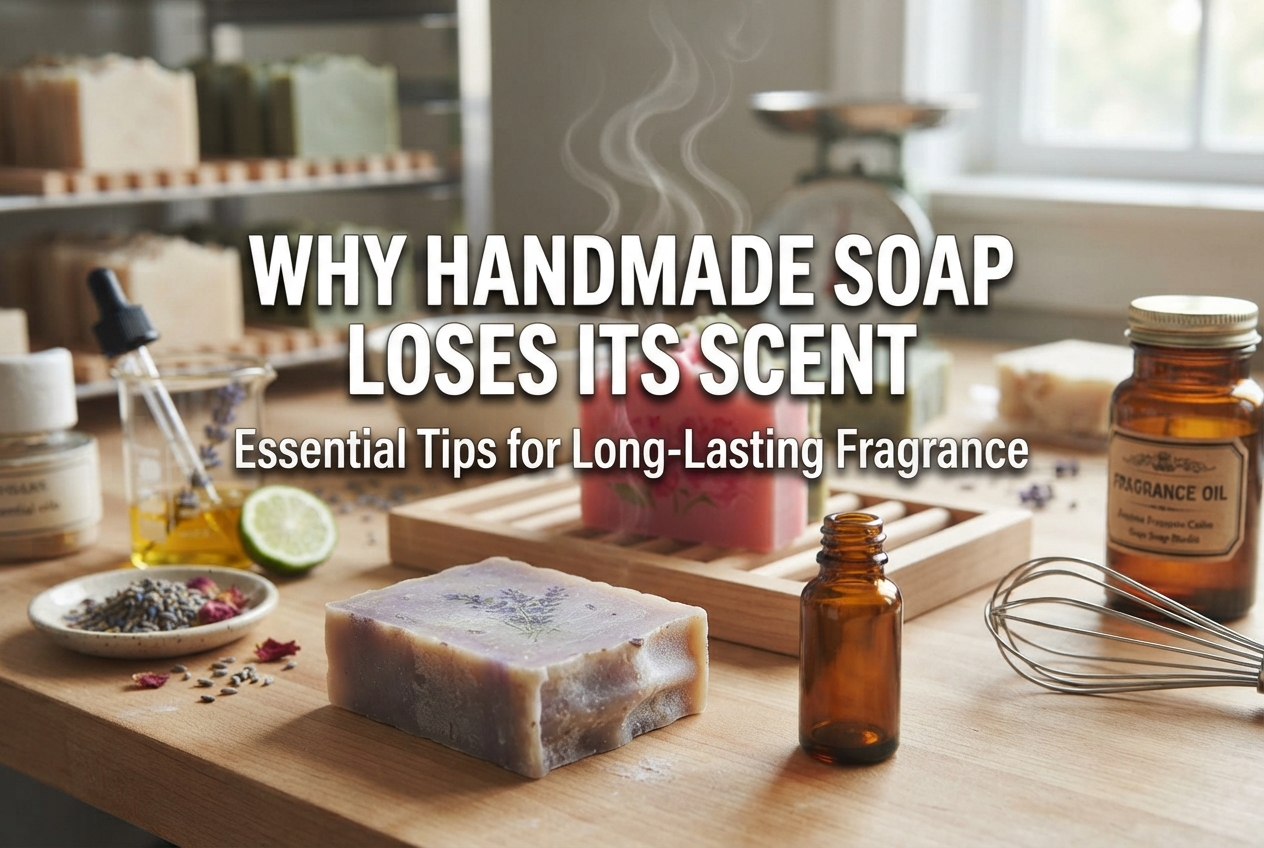
However, after patiently waiting four weeks for the curing period to end, have you ever picked up a bar only to find… almost no scent left? You wonder, “Wait, it smelled so strong when I poured it into the mold. Where did the scent go?” Losing fragrance is actually one of the most common hurdles beginners face in soap making.
Rest assured, a fading scent doesn't mean you lack soap making skills. Cold process soap involves complex chemical reactions, unique properties of aromatic compounds, and specific environmental factors during curing and storage. Once you understand these mechanics and how to address them, you can craft beautiful handmade soaps that hold their rich fragrance past cure day and down to the very last sliver.
In this guide, we will explore the root causes of fragrance loss in handmade soap, practical formulation and blending techniques, and actionable tips for curing and storage. Let’s master the art of keeping your beloved soaps wonderfully fragrant!
Cold process (CP) soap cannot be used immediately after making; it requires an extended cure time of about four weeks. During this period, three main factors contribute to scent dissipation.
Many soap makers prefer 100% natural essential oils for scenting. However, essential oils are naturally volatile substances that evaporate easily into the surrounding air.
On top of that, essential oils are sensitive to heat. In the cold process method, mixing the base oils with a lye (sodium hydroxide) solution triggers an exothermic reaction known as saponification heat. As the batter heats up to 40°C–50°C (104°F–122°F) or higher, this internal warmth causes delicate aromatic compounds to vaporize rapidly.
Citrus oils (like sweet orange, grapefruit, and lemon) consist of particularly small, light molecules that flash off quickly when exposed to heat and air, often leaving behind almost no detectable scent after curing.
Sodium hydroxide is a strong alkaline chemical necessary for soap making. When you add essential oils or fragrance oils into your soap batter, the aromatic components come into direct contact with high alkalinity, triggering chemical reactions.
These reactions can break down delicate aromatic molecules or completely alter their scent profiles. A blend that smelled bright, crisp, and sweet at pour can turn dull, muted, or virtually unscented due to the aggressive environment of fresh lye.
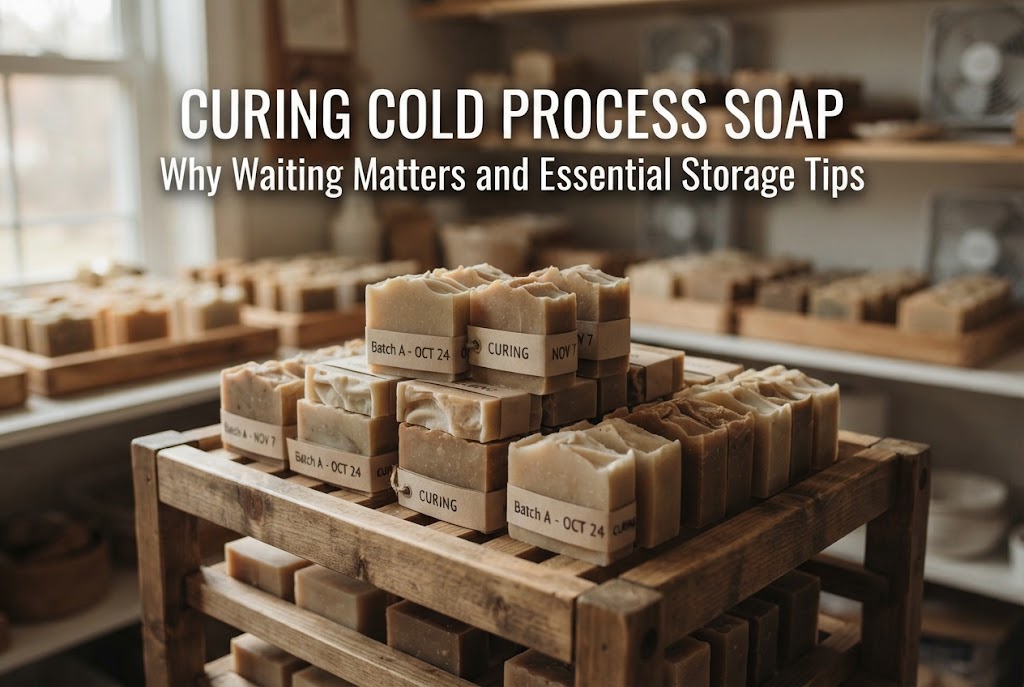
After being unmolded and cut, cold process soap sits in an airy location to dry for about a month. Throughout this curing phase, the bars remain exposed to circulating air.
As water slowly evaporates and the soap hardens, aromatic molecules on the surface ride the moisture into the air. If the bars are kept in areas with shifting humidity, bright light, or strong airflow, surface fragrance disappears even faster.
Now that we know why scents disappear, let’s look at how to anchor them into the soap. Everything starts with smart ingredient selection and blending ratios.
When scenting with essential oils, using a single standalone oil usually causes the scent to fade rapidly. To make the fragrance last, you need to combine oils with different rates of evaporation by blending top, middle, and base notes.
A common beginner mistake is making a soap using solely top notes, like orange or grapefruit alone. By the time the four-week cure finishes, the aroma is often completely gone.
Whenever I want a refreshing citrus scent, I always anchor it with a small amount of a heavier base note. For instance, I might use a ratio like 7 parts sweet orange, 2 parts lavender (middle note), and 1 part patchouli (base note). The base note acts as an “anchor,” dramatically slowing down the evaporation of the lighter top notes.
In soap crafting, you can choose between 100% natural essential oils and synthetic fragrance oils specially formulated for soap making.
Soap-safe fragrance oils are engineered to withstand high alkalinity and heat, which allows them to retain an intense scent even after a full cure. If your priority is a strictly all-natural bar, essential oils are the way to go. But if your main goal is a robust, reliable aroma, fragrance oils are by far the most dependable option.
Another great technique is blending essential oils and fragrance oils in a 1:1 ratio. This gives you the authentic botanical depth of natural oils paired with the staying power of a specialized fragrance oil.
You might think, “If the scent keeps fading, why not just pour in a ton of essential oil?” However, doing so can be hazardous.
Essential oils are concentrated plant extracts with potent pharmacological properties. A standard safe guideline for cold process soap is keeping total essential oils between 0.5% and 1% of the total base oil weight. Exceeding recommended safety margins can lead to severe skin irritation and sensitivities.
Using a full 1% (for example, roughly 100 drops, or about 5 grams for a 500g oil batch) can feel like a lot when measuring it out. But to withstand the alkaline environment and heat of CP soap, you generally need to formulate up to that safe 1% limit. If you hold back and use only a tiny splash, practically nothing will survive the cure.
Beyond recipe formulation, how and when you handle your soap batter makes a significant difference in scent retention.
As oils and lye solution emulsify and thicken, the mixture reaches “trace.” The rule of thumb is to introduce your essential oils or fragrance oils at trace, right before pouring into the mold.
If you add your scents when the batter is still thin and watery, the aromatic compounds will sit in raw lye for much longer, taking the full brunt of early saponification heat and evaporating prematurely.
Wait until your batter reaches a stable light to medium trace, pour in your scent, blend thoroughly but swiftly, and immediately pour the batter into the mold. Minimizing contact time with unreacted lye is key to protecting the fragrance.
After pouring, cold process soap is typically insulated in a box or thermal bag for 24 hours to encourage complete saponification. However, if the internal temperature spikes too high, the heat will vaporize your essential oils directly out of the mold.
If you open your curing box after 24 hours and get hit with a powerful blast of fragrance, that means volatile aromatic oils turned to vapor and escaped the soap mass.
For recipes prone to overheating—such as those containing sugars, honey, or milk—monitor your insulation closely. Use thinner covers or adjust room ventilation so the soap batter doesn't exceed 50°C (122°F).
An effective technique favored by experienced soap makers is incorporating a “fixative” or scent anchor directly into the batter.
My go-to choice is cosmetic clay. For a batch using 500g of base oils, measure out 1 to 2 teaspoons of clay and pre-mix it directly into your measured essential oils before adding them to the batter. The microscopic particles of the clay absorb the essential oil molecules, shielding them from alkaline degradation and facilitating a slower, gradual scent release over time.
As an added benefit, adding clay gives your bars a subtle natural hue and produces a luxuriously creamy lather.
Once your soap is unmolded and sliced, careful storage is essential to keep the scent intact over the coming weeks and months.
Curing soap requires a location that is dry, away from direct sunlight, and well-ventilated. However, too much direct airflow can strip the aroma right off the bars.
Avoid placing your curing racks directly in front of air conditioning vents or right next to strong exhaust fans. A great method is arranging the cut bars in wooden crates or cardboard boxes and loosely draping a sheet of paper towel or lint-free craft wipe over them. This protects the bars from dust while preventing rapid scent loss into open room air.
Once the four-week cure is complete and your soap is ready for use, seal it immediately. Leaving cured bars sitting out unprotected in the room will cause their aroma to decline steadily.
Wrap each cured bar snugly in plastic wrap, or store them in airtight zip-top bags with the excess air pressed out. Shielding the bars from ambient airflow will help preserve a rich scent for six months to a year.
If you are packaging soaps as gifts, heat-sealed OPP (polypropylene) bags preserve fragrance far better than breathable paper wraps.
Even if you took precautions and still feel a cured soap smells too faint, you don't have to write it off. There are simple ways to bring that fragrance back to life.
Often, scent only dissipates from the outermost surface layer. If you pare away a thin sliver with a knife or wet the soap under warm water, the aroma locked inside the interior of the bar will frequently bloom right back out. The core of the soap often retains much more fragrance than the exterior suggests.
If a bar genuinely lacks strength, place it in an airtight container alongside a cotton ball dosed with a few drops of your chosen essential oil for several days before use. The fats in the soap naturally absorb surrounding aromatic vapors, infusing a fresh boost of scent back into the bar.
Soap making is an enchanting craft where chemistry meets creative artistry. By pairing the right balance of notes with temperature control, proper timing at trace, and protected curing conditions, you can dramatically improve the longevity of your scents.
Try these techniques on your next soaping day to create bars that delight your senses from the first slice to the last wash. Stepping into the shower with a bar infused with your own enduring fragrance blend is the ultimate handmade luxury!
If you found this guide helpful, please feel free to share it with your fellow makers. Until next time, happy soap crafting from Yassy!




For example, if you are looking for articles about mizuhiki, try searching for "mizuhiki"; if you are interested in tools, try keywords like "nippers" or "pliers."