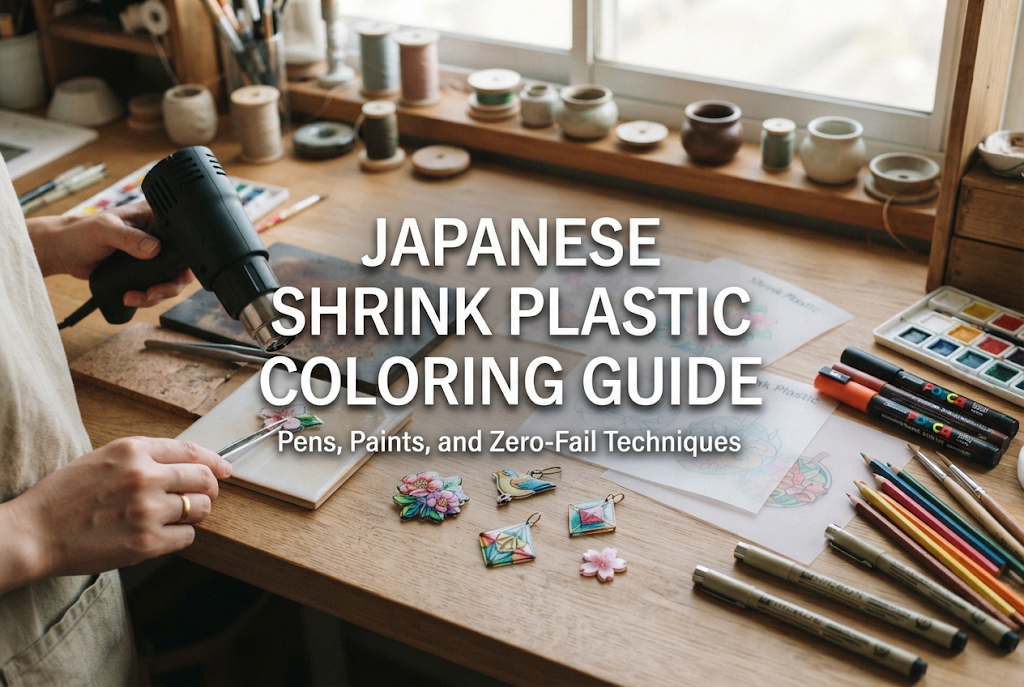
Japanese Shrink Plastic Coloring Guide: Pens, Paints, and Zero-Fail Techniques
yassy
Crafters!
Hello, everyone! This is Yassy from Crafters! (・∀・)
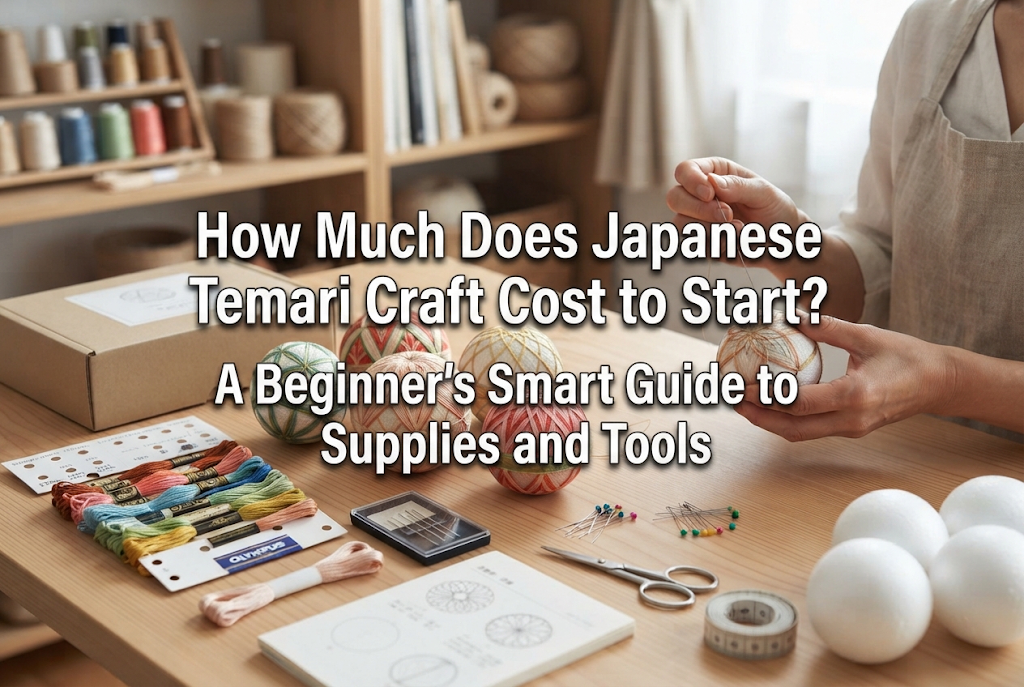
With their vibrant threads woven into mesmerizing geometric patterns, Japanese temari balls are a gorgeous traditional craft. They carry a sense of warm Japanese elegance and make wonderful home decor or unique accessories. While many people think, "Temari looks intimidating" or "Doesn't it require special equipment?", it is actually a surprisingly accessible craft for beginners!
In this article, I’ll break down the initial startup costs for temari making and guide beginners through a step-by-step approach to gathering supplies without making costly mistakes. If you’re wondering where to start, read on!
To put it simply, the initial cost to start temari crafting is roughly 1,500 yen to 5,000 yen (approx. $10 to $35 USD). Unlike resin craft or leathercraft, temari does not require expensive machines or specialized power tools. This makes it one of the most budget-friendly handmade hobbies you can pick up.
Depending on how much you want to invest in high-end materials right from the start, the budget can vary. Let’s look at two start-up options.
If you want to try temari first to see if it suits you, combining items from Japanese 100-yen shops (like Daiso or Seria) with basic stationery you already have at home will let you complete your very first temari ball for under 2,000 yen.
The total comes out to around 1,500 yen. The beauty of this plan is its accessibility—you can gather everything locally or online and start today!
If you want to craft a polished, beautiful piece right away without any unnecessary frustration, I recommend getting your core supplies at a specialized craft store for 3,000 to 5,000 yen.
Since styrofoam balls and thread spools usually come in multi-packs or generous lengths, the cost for your second and third temari balls drops significantly—down to just a few hundred yen per piece!
The core workflow of temari making consists of just three basic steps: making the base ball, ji-wari (subdividing the sphere), and kagari (stitching the pattern). You don’t need high-end liquid materials, heating appliances, or sharp cutting tools. All you need are needles, thread, and small scissors.
Because the process creates no noise and no odor, you can pause and resume your work anytime simply by laying out a few tools on a table. You don't need a dedicated workshop space, making the barrier to entry extremely low.
Here is a breakdown of the basic tools and materials organized by their purpose. Understanding what each item does will help you shop with confidence.
These supplies create the perfectly round core of your temari ball.
In traditional Japanese craftsmanship, the base ball is formed by rolling rice husks or wool yarn scraps into a sphere. However, shaping a perfectly round ball this way requires immense skill. Beginners should definitely use a styrofoam ball as the core. Because it is already a perfect sphere, it drastically reduces the chances of making a mistake.
Ji-wari is the process of marking guideline threads (north/south poles and equator divisions) on the ball surface to ensure your geometric patterns come out symmetrical.
Ji-wari is the single most critical step in temari crafting. If these guidelines are off, the final stitched pattern will end up crooked. Make sure to prepare soft paper tape or a flexible measure along with sturdy pins to secure your placement.
This is the magical step where you thread your needle and embroider stunning patterns along your guidelines.
Standard household sewing needles are too short to pass smoothly through the depth of a sphere. Be sure to select long needles designed for temari or long French embroidery needles.
A question I often get is, "Can I buy everything at a 100-yen store or discount store?" The answer: some items are completely fine from budget shops, but investing in a few specific items at craft stores will dramatically improve your satisfaction and ease of work!
The following items offer plenty of quality even at bargain prices:
For materials hidden deep inside the base, or general auxiliary stationeries, save your money by shopping at budget stores.
For items that directly impact the final look and workability, I strongly recommend visiting a specialized craft store or ordering from an established craft brand.
1. Stitching Thread (Temari Thread or Quality Embroidery Floss)Inexpensive budget embroidery floss tends to fray or pill easily under friction. In temari crafting, you repeatedly pull thread through the ball. If the thread frays or snaps halfway through, it ruins the surface finish. Choosing specialized oriental thread or brand-name No. 25 embroidery floss (such as DMC, Cosmo, or Olympus) provides a lustrous sheen and superior durability.
2. Temari Needles (Long Craft Needles)Assorted needle packs at discount stores usually contain short needles that are hard to guide deep through a sphere. Buying long needles (around 5 cm in length, often labeled as temari needles or long doll needles) at a craft shop will completely transform your stitching experience for the better.
If I were starting out today as a complete beginner, here is my recommended "hybrid shopping strategy"!
The grand total is around 1,750 yen! Keep your overall budget under 2,000 yen while investing in high-quality needles and stitching thread where it counts most. This ensures a smooth, stress-free crafting session!
Let's address a few common questions that confuse beginners when starting out.
Compared to traditional rice husk cores, styrofoam balls offer clear advantages:
Note: Wrapping thread directly onto bare styrofoam can cause the thread to slip. To prevent this, wrap a thin, even layer of polyester batting (or thin plastic wrap) around the styrofoam sphere first.
Once wrapped in batting, wind your sewing thread firmly over the sphere in all directions until fully covered. This creates a soft, grip-friendly surface for your needle—forming the perfect dodai-mari (base ball).
There are several thread choices for stitching temari. Here is how they compare:
For beginners, I highly recommend standard brand-name No. 25 embroidery floss for its color variety, or specialized temari thread for unmatched ease of use.
Avoid these typical pitfalls before you begin your project!
The most frequent mistake is inaccurate division marks. If your north pole, south pole, or equator points are off by even a couple of millimeters, your final geometric pattern will end up asymmetrical.
Solution: Use paper tape to measure the exact circumference of your sphere. Fold the tape in half and quarters to create precise guide marks. When inserting pins, double-check that they are inserted at straight right angles from both top and side views. Take your time—ji-wari is the most important step for success!
Pulling thread too tightly will dent the styrofoam core and distort the ball. On the other hand, pulling too loosely leaves gaps where the background base thread shows through.
Solution: Aim for a gentle tension where the thread rests smoothly against the surface of the base ball. You don't need to yank it tightly! Stitch in a steady rhythm and maintaining a consistent posture will help keep your tension uniform.
When pulling your needle out from deep inside the ball, the tip or thread knot can catch on inner batting fibers, pulling white fuzz out onto the surface.
Solution: Make sure your base sewing thread is wound firmly and densely around the core. Also, when inserting knots or passing your needle, avoid digging too deep into the core—aim to glide through shallow layers just a few millimeters beneath the surface.
Once your tools are ready, follow these simple steps for your first project!
Larger temari balls take a long time to stitch. Start with a palm-sized sphere (5–6 cm). Wrap batting around the styrofoam ball and wind your sewing thread evenly until you have a smooth, round base.
While there are complex divisions like 6, 8, 10, or 12 equal parts, the 8-division setup is the easiest to understand for beginners. Mark your north/south poles and equator line, then lay down gold thread guidelines.
Stitch along your guideline threads, picking up a small stitch from right to left at equal intervals as you rotate the ball. Simply changing thread colors across 3 or 4 shades creates a brilliant, kaleidoscope-like gradation pattern!
Japanese temari craft is a truly charming, affordable handmade hobby that you can start with a budget of just 1,500 to 2,000 yen.
By picking up basic core materials at budget stores and investing in quality needles and stitching threads from specialized craft shops, you can enjoy a smart, successful start without unnecessary cost or stress.
Watching colorful threads cross over a small sphere to create your very own geometric artwork is a relaxing, mesmerizing experience where time just flies by. Gather your favorite thread colors and enjoy crafting your very first unique temari ball!
If you enjoyed this article, sharing it with your craft-loving friends on social media or messaging apps would mean the world to me and keep me motivated!
Until next time, happy crafting! This was Yassy from Crafters! (・∀・)





For example, if you are looking for articles about mizuhiki, try searching for "mizuhiki"; if you are interested in tools, try keywords like "nippers" or "pliers."