How to Combine Japanese Washi Paper with Other Materials: Compatibility & Glue Tips for Wood, Fabric, Thread, Metal, and Mizuhiki
yassy
Crafters!

Hello, crafters! It’s Yassy from Crafters! (・∀・)
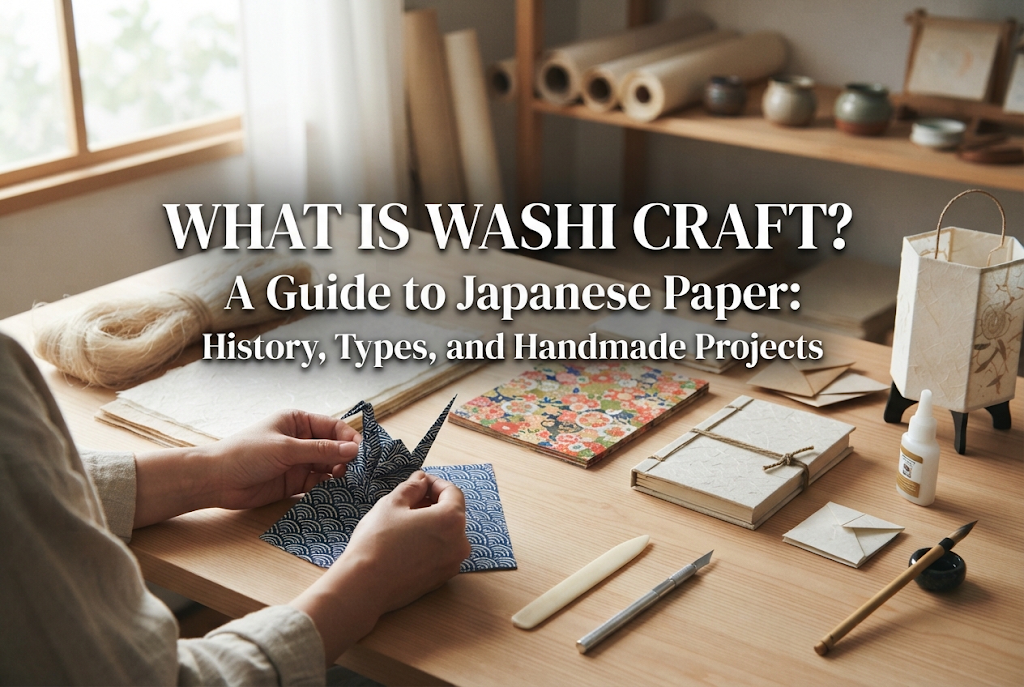
What comes to mind when you hear the word "washi"? Many people might envision shoji sliding screens, traditional calligraphy sheets, or formal cultural artifacts that feel a bit out of reach. In today's handmade and DIY scene, however, Japanese washi craft has gained widespread attention as an approachable, stylish medium for adults.
From its distinctively warm texture and soft translucency to a remarkable durability said to last over a thousand years, washi possesses exceptional qualities that conventional Western paper lacks. Whether you want to make accessories, home decor accents, or personalized stationery, washi allows you to create charming, modern items with ease.
In this guide for beginners interested in washi crafting, I'll walk you through the history of washi, the primary raw materials and varieties available, how it differs from Western paper, its unique creative appeal, and common pitfalls to avoid. Let’s dive into the fascinating world of Japanese paper together!
Washi craft refers broadly to any paper craft made primarily with authentic Japanese paper manufactured using traditional methods. Alongside heritage techniques like origami and chigiri-e (torn paper collage), modern crafters use washi for resin-coated jewelry, dimensional paper flora, lampshades, customized journal covers, and more.
The key distinction between washi craft and standard paper crafting lies in making the paper’s inherent texture and organic character the star of the project. While Western paper excels at delivering a smooth, uniform surface, washi features natural variations, subtle unevenness, and visibly intertwined plant fibers. This unique structure brings depth and an artisan touch to even the simplest silhouette.
Crafters can also choose from an inspiring range of visual options, from sheets dyed in delicate traditional Japanese shades (iro-washi) to vibrant yuzen-washi, which carries opulent screen-printed patterns reminiscent of kimono textiles. Finished works naturally complement Japanese-style settings as well as Scandinavian, minimalist, or rustic decor.
Understanding the roots of washi before working with it makes crafting with it even more meaningful. The story of washi is deeply intertwined with Japan's cultural heritage.
According to the ancient chronicle Nihon Shoki, paper-making techniques were formally introduced to Japan in 610 AD by the Goguryeo Buddhist monk Doncho. While some records suggest paper arrived earlier, organized production in Japan began around this era.
The continental method originally brought over was tame-zuki (accumulation papermaking), in which water and suspended plant fibers are poured into a stationary mold and left to settle. However, Japanese artisans—blessed with abundant pure water and superior bast fibers—developed an original technique known as nagashi-zuki (discharge papermaking). In this method, the craftsman rocks a bamboo sieve (sugeta) back and forth, weaving the fibers evenly across the mesh while allowing excess water to drain away.
This innovative action created a remarkably resilient paper that resists tearing even when crafted thin. During the Heian period, washi evolved into elegant dyed papers used by court nobles for poetry and letters. By the Edo period, it became a daily household essential, used across society for lanterns, umbrellas, partitions, and everyday packaging.
In 2014, three regional styles under the designation "Washi, craftsmanship of traditional Japanese hand-made paper" were inscribed on the UNESCO Representative List of the Intangible Cultural Heritage of Humanity: Sekishu-Banshi from Shimane Prefecture, Hon-minoshi from Gifu Prefecture, and Hosokawa-shi from Saitama Prefecture.
These papers are crafted using only natural plant fibers, historic tools, and pure manual technique. Even today, with machine-made paper everywhere, hand-pulled washi remains renowned worldwide as an indispensable material for restoring priceless cultural artifacts. The washi we handle holds the wisdom and skill of craftspeople passed down for over a millennium.
One of the first challenges beginners face is knowing which sheet to pick from the craft store. Washi's working characteristics depend heavily on the raw plant fiber used, where it was made, and how it was processed. Here is an overview of the fundamentals.
Traditional washi is predominantly crafted from three botanical fibers, each offering distinct fiber lengths, textures, and physical strengths:
If you are just starting out with dimensional shapes, covered boxes, or torn-paper collages, kozo-based washi is the most reliable, forgiving, and tear-resistant option to choose.
Here are several popular washi variations you are likely to spot in craft stores and specialty paper shops:
Working with washi brings distinct advantages over standard wood-pulp papers. Below are four key features that make washi a joy to use in DIY projects.
Western paper relies on ground wood pulp bound tightly with chemical additives. In contrast, washi consists of long, naturally intertwined plant fibers. Because of this structural weave, even paper that is exceptionally thin can withstand substantial pulling, folding, and manipulating.
You can repeatedly crease washi or smooth it over curved forms without the corners tearing or crumbling. This flexibility and tensile toughness offer a major advantage for three-dimensional handcrafts.
Cutting Western paper with scissors leaves a stiff, sharp edge. Tearing washi by hand, however, draws out its long fibers, leaving a soft, cloud-like fringe known as keba (feathering). This texture represents the true hallmark of washi art.
In chigiri-e (torn-paper art) and paper collage, these feathered margins softly blur transitions between adjacent sections like watercolor gradations. By slightly overlapping contrasting shades, you can create soft, painterly depth without using paint.
Western paper often uses acidic sizing or bleaching agents, which degrade over time as ultraviolet light and oxygen turn the paper brittle and yellow. Conversely, traditional hand-formed washi retains a neutral-to-alkaline pH balance, preventing acidic deterioration.
There is an old Japanese saying: "Washi lasts a thousand years; Western paper lasts a hundred." When properly cared for, washi remains remarkably stable over centuries, allowing your handmade pieces to age gracefully and develop richer character over time.
Having evolved alongside shoji partitions and traditional lanterns (chochin), washi possesses an unmatched ability to soften and scatter light. When illumination passes between the plant fibers, it dampens harsh glare and casts warm, gentle shadows.
Paired with LED light sources for tea light holders, lampshades, or window suncatchers, washi exhibits an atmospheric glow that cannot be replicated with synthetic materials or standard paper.
Despite washi's versatility, applying conventional paper-crafting habits can lead to frustrating mistakes. Keep these essential tips in mind to achieve clean results right away.
The most frequent beginner mishap is paper puckering immediately after applying paste. Because washi is highly absorbent, moisture causes the fibers to expand rapidly and buckle.
Avoid slathering standard white PVA wood glue straight from the bottle onto thin washi. If you use craft glue, dilute it with a tiny amount of water and apply it in a sheer, uniform layer using a flat brush.
For attaching small die-cuts or creating flat collages, a low-moisture, strong-bond glue stick or specialized paper-craft paste is much safer. After placing your sheet, smooth it from the center outward toward the edges using a soft cloth or brayer, working through a clean sheet of scrap paper to push out trapped air without rubbing the fibers directly.
Ripping washi freehand often results in erratic tears that cut straight through essential motifs. When you want a precise silhouette accented by soft fiber fringe, use a water brush or a fine watercolor brush dipped in plain water.
Trace a thin line of water along the outline you wish to tear. Wait a few seconds for the liquid to soften the fibers, then gently pull the paper apart horizontally with both hands using your fingertips. The paper will separate smoothly along your wet guide, leaving a gorgeous, fuzzy edge exactly where you planned.
Both handmade and machine-produced washi have a grain direction (kami-me) formed by the flow of plant fibers. The paper bends and tears cleanly along the grain, while folding perpendicular to the grain produces more resistance and uneven edges.
Before cutting or scoring, lightly flex the edge of your sheet in both directions. The direction that bends effortlessly is the grain line. Aligning this grain when wrapping box corners or shaping rounded components will make your work much cleaner and easier to shape.
If you are excited to start but unsure what to make first, here are three accessible project ideas that require minimal tools.
This is my absolute favorite recommendation for beginners. Cut heavy cardstock into bookmark-sized strips, then glue vibrant yuzen or chiyogami paper across both sides.
Round the corners slightly, punch a neat hole at the top, and tie off with a tassel or braided mizuhiki cord. You'll have an artisan-quality bookmark ready to use. It provides great practice for cutting and pasting while creating a functional item you can enjoy every time you read.
Give empty confection tins, clean tea canisters, or wooden trays from the dollar shop a fresh look by covering them with washi. Dressing a basic box in yuzen washi or mingei paper instantly transforms it into an elegant keepsake storage case.
This project is great for practicing crisp corner wraps and seamless joins. Your completed box makes a lovely organizer for jewelry, craft notions, or desk supplies.
A wildly popular trend in modern handmade jewelry is sealing patterned washi under clear UV or LED resin. You can punch geometric forms out of yuzen paper or fold miniature origami cranes, coat them in resin, cure them, and attach ear wires or studs.
Because the core material is paper, the finished jewelry is feather-light and exceptionally comfortable to wear. As resin saturates the washi, the colors deepen slightly, lending rich dimension and a ceramic-like sheen that suits both casual daily outfits and dressier styles.
Proper storage and everyday maintenance will help keep your washi items looking fresh for years to come.
Washi is a breathable, organic material that naturally responds to ambient humidity. It thrives in well-ventilated rooms, but direct, extended sunlight will cause dyed colors to fade. Display your finished work in bright, indirect natural light rather than against hot, sunlit windowpanes.
If dust accumulates on your washi art, never wipe it with a damp sponge or cloth, as moisture can raise the fibers or bleed non-waterproof dyes. Instead, gently sweep dust away with a soft, clean makeup or blush brush using light, sweeping strokes.
Washi is infused with the warmth and texture of a craft cultivated over a thousand years—qualities often missing from mass-produced digital goods. Taking an afternoon to tear, arrange, and shape washi offers a calming, restorative break from busy daily routines.
Next time you visit a stationery shop or craft retailer, pick out a single sheet whose color or pattern speaks to you. Start small with a coaster or a simple bookmark, and discover the tactile pleasure of crafting with Japanese paper firsthand.
If you enjoyed this guide, sharing it with your creative friends on social media means the world to me!
Until next time, happy crafting! This was Yassy from Crafters!







For example, if you are looking for articles about mizuhiki, try searching for "mizuhiki"; if you are interested in tools, try keywords like "nippers" or "pliers."
