4 Ways to Print on Fabric at Home: Wash-Safe Techniques and Troubleshooting
yassy
Crafters!

Hello, this is Yassy from Crafters! (・∀・)
When you decide to make a handmade tote bag, have you ever stood in front of shelves filled with fabrics at a craft store or scrolled through online shops, wondering, "Which fabric should I actually choose?" Picking a fabric based solely on a cute pattern or nice color might result in a bag that loses its shape, or worse, lead to broken sewing machine needles and ripped fabric.
The right fabric for a tote bag depends greatly on how heavy your load will be and whether you want the bag to stand upright on its own. In some cases, a thick and sturdy fabric is essential; in others, using a lightweight, soft fabric reinforced with fusible interfacing produces a much cleaner result.
In this article, I'll walk you through the most popular fabrics for tote bag making, their unique characteristics, practical thickness guidelines for home sewing machines, and how to pick the perfect material based on your bag's purpose. By the end of this guide, you will definitely find the ideal fabric for your next tote bag project!
Before you get caught up in print designs and colors, there are three crucial criteria you should evaluate. Understanding these will dramatically reduce any mistakes in your fabric selection process.
First, decide whether you want a crisp, structured tote bag that stands upright when placed on a table or floor, or a soft, slouchy bag. If you want a self-standing tote, you'll need to pick a heavy, sturdy fabric like heavy cotton canvas or thick denim, or apply firm fusible interfacing to the back of a lighter fabric.
On the other hand, if you want a foldable sub-bag or market tote to carry inside your main purse, heavy fabrics will become too bulky when folded. Defining how much stiffness your bag needs is the very first step.
Consider what you plan to carry inside your tote bag. If it's meant for daily heavy lifting—such as A4 documents, laptops, or water bottles—you need a durable, tightly woven fabric that resists friction.
If it's just a mini tote for quick errands carrying your wallet and phone, or a lightweight bag for extra clothes, high durability isn't as critical. Match the fabric's weave density to the weight it will carry.
The most common mistake beginners make is choosing an extremely thick fabric because they want a heavy-duty tote, only to find out their home sewing machine can't stitch through it. During tote bag construction, there are always areas where 4 to 8 layers of fabric overlap.
Even if a fabric looks manageable on a single layer, your machine may stall or bend needles when sewing over bulkier spots like handle attachments or boxed corner seams. Knowing your machine's limits is essential.
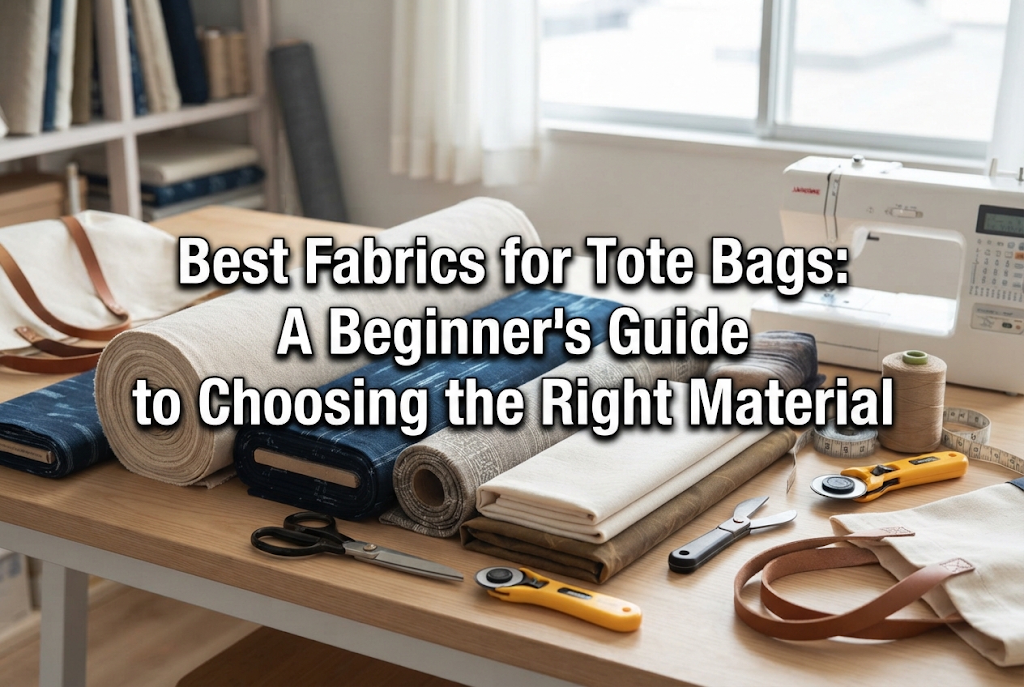
Here are five of the most popular and recommended fabrics for tote bag making. Understanding their advantages and ease of handling will help you create better bags.
Canvas (known as hanpu in Japan) is the undisputed king of tote bag materials. It is a plain-woven cotton or linen fabric known for its exceptional durability and natural stiffness.
In Japan, canvas weight is measured by a numbering unit called go (号, #). Counterintuitively, the smaller the number, the thicker the canvas; the larger the number, the thinner it is.
For beginners, I wholeheartedly recommend starting with #11 canvas. It provides nice structure without needing extra interfacing, and sewing machine needles tailored for heavy fabrics will handle it with ease.
Oxford fabric is woven with two warp threads over two weft threads. It features good breathability, moderate thickness, and a soft feel.
Many printed cotton fabrics sold in craft shops are oxford cloth. It comes in an incredible variety of printed designs, cuts easily, and sews smoothly, making it one of the most beginner-friendly fabrics around.
On its own, oxford cloth lacks sufficient structure for a sturdy tote bag. However, backing the outer layer with fusible interfacing or pairing it with a #11 canvas lining creates a fantastic, well-structured bag.
Twill is a diagonal weave fabric recognized by its subtle diagonal ridges. Commonly used for chinos and jackets, it balances flexibility with solid durability.
Compared to plain-woven fabrics, twill resists wrinkling better and offers a soft yet durable texture. It is perfect for casual, soft totes or drawstring-topped bags.
Even in solid colors, twill has a refined sheen and texture, making it an excellent choice for a sophisticated, mature tote bag.
Denim gains wonderful character and patina the more you use it, making it a favorite material for stylish, casual totes.
Denim weight is measured in ounces (oz). The higher the number, the heavier and thicker the material.
When making a denim tote at home, choosing an 8 to 10 oz light-weight denim is the secret to avoiding broken needles. Also, remember that denim can transfer color through friction or moisture, so take care when pairing it with light-colored clothing.
For rainy-day totes, foldable shopping eco-bags, or diaper bags, nylon and laminated fabrics (cotton coated with a vinyl film) are top picks.
Nylon taffeta and nylon oxford are lightweight and resist water and dirt, making them ideal for totes that fold up compact. Laminated fabric adds firm structure on its own, allowing you to sew a water-repellent, self-standing tote without any lining.
Keep in mind that laminated fabrics can stick to standard sewing machine presser feet and feed dogs. Using a Teflon (silicone) presser foot or placing tissue paper over the seam line will ensure smooth feeding.
Many beginners run into trouble when sewing tote bags: the machine jams, thread tangles underneath, or the needle snaps. Most of these issues happen because the machine settings aren't matched to the fabric thickness.
Tote bag construction creates spots where multiple layers assemble. For instance, consider the top hem where you insert handles between the outer fabric and lining, fold the hem down, and topstitch. At that point, you might be sewing through: 2 layers of outer fabric + 2 layers of lining + 2 layers of webbing handles = 6 layers total!
Before cutting, pinch the prospective fabric layers together with your fingers to ask yourself, "Can my presser foot lift high enough, and can my needle comfortably pass through this?"
Sewing thick canvas with standard needles (size 11/75) and standard thread (60-weight) causes bent needles and snapped threads. Always adjust your tools according to your fabric weight:
When sewing #11 canvas or light denim, swap in at least a size 14/90 heavy-duty needle. The thicker shank and stronger tip provide the necessary piercing power for smooth stitching.
If you fall in love with a cute lightweight printed fabric at the store, don't walk away thinking it's too flimsy for a tote bag! By applying fusible interfacing (known as sechaku-shin in Japan), you can give lightweight cotton the body and strength required for a tote bag.
Fusible interfacing generally comes in two types: non-woven and woven (cloth). For tote bags, medium to heavy woven fusible interfacing is strongly recommended.
Non-woven interfacing is inexpensive and readily available, but with repeated flexing and washing, it tends to tear, wrinkle, or bubble away from the fabric over time. Woven interfacing preserves the fabric's natural texture while adding long-lasting structure that won't peel off easily.
If interfacing isn't applied properly, your finished bag might end up puckered or bubbly. Follow these steps for a clean finish:
Even light cotton fabrics like quilting cotton or broadcloth will transform into sturdy, self-standing tote materials when backed with heavy woven interfacing.
Pairing your outer and lining fabrics thoughtfully changes both the functionality and professional finish of your tote bag. Here are three foolproof combination recipes:
Using #11 canvas for the exterior keeps the bag structured even without interfacing. Choosing a charming printed oxford for the interior gives a delightful pop of color whenever you open your bag. Perfect for carrying A4 books and folders daily.
Use your favorite patterned oxford cloth for the outside and back it with stiff interfacing, then line it with solid #11 canvas. The canvas lining acts as an internal skeleton, giving the mini tote a neat, crisp shape.
Designed to be tucked inside a main purse and pulled out when extra shopping arises. Skip the interfacing and lining to keep it flexible and ultra-lightweight. Using nylon allows you to roll it up tightly with an elastic band for easy travel.
When you bring home beautiful new fabric, it's tempting to start cutting right away, but hold on a second! If you're working with natural fibers like cotton or linen, mizutooshi (water soaking / pre-washing) and jinaoshi (grain straightening) are essential before cutting.
Cotton and linen fibers shrink when exposed to water. If you skip pre-washing, complete your bag, and later wash it when it gets dirty, the fabric may shrink unevenly, distorting the bag's shape and causing the lining to bunch up.
Canvas and denim in particular can shrink noticeably, so pre-treating them saves your hard work from future distortion.
Taking this brief extra time ensures your handmade tote stays straight, durable, and washable for years to come.
If a beginner crafter friend asked me, "Yassy, what fabric should I buy for my very first tote bag?" here is my real-talk advice!
My top pick for a first project is an outer layer of #11 canvas paired with an oxford lining in a fun floral or plaid print.
The reason is simple: this combination offers the highest chance of success and produces a remarkably polished result!
With #11 canvas as your main fabric, you can skip the fuss of fusing interfacing altogether. Applying interfacing can be intimidating for beginners due to unexpected wrinkling. Plus, #11 canvas sews smoothly on standard home machines as long as you insert a size 14/90 needle.
Adding a cute pattern on the oxford lining turns a simple solid canvas tote into a stylish personal piece every time you peek inside!
And if sewing self-fabric handles seems tricky, don't hesitate to use pre-made acrylic webbing straps (about 2.5 to 3 cm wide). Simply choosing complementary colors creates a boutique-quality tote bag in no time.
Selecting the right fabric for your tote bag comes down to understanding structure, machine capabilities, and intended use. Here is a quick recap of our main points:
Visualizing where you'll carry your bag and what will go inside while picking fabrics is one of the most exciting parts of handmade crafting!
Grab your favorite fabric and enjoy crafting your very own custom tote bag. If you found this helpful, sharing it with your crafty friends on social media means the world to me!
See you in the next article! Happy crafting from Yassy!

For example, if you are looking for articles about mizuhiki, try searching for "mizuhiki"; if you are interested in tools, try keywords like "nippers" or "pliers."
