Candle Making Fragrance Guide: Adding Temperatures, Essential Oils vs. Fragrance Oils, and Scent-Throw Blending Tips
yassy
Crafters!

Hello, craft enthusiasts! It's Yassy from Crafters! (・∀・)
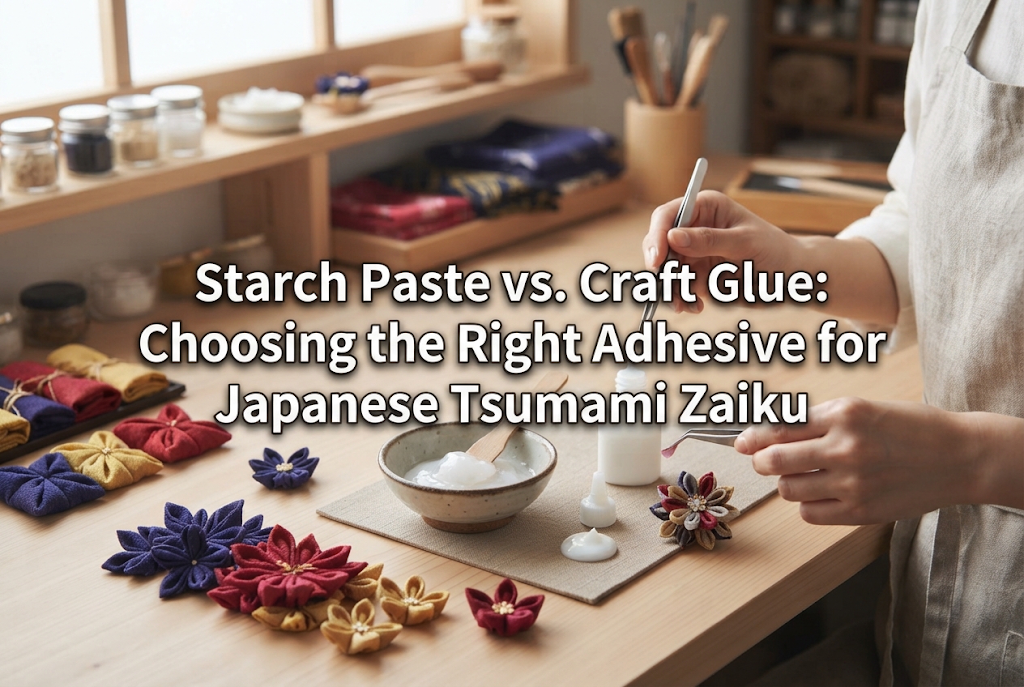
When first starting out with tsumami zaiku (the traditional Japanese craft of folding small fabric squares into intricate flowers), one of the most common questions beginners face is: "Should I use traditional starch paste or craft glue?"
If you look at commercial craft kits, they often instruct you to use craft glue. On the other hand, specialized Japanese instructional books will tell you to "spread starch paste across a wooden paste board (nori-ita)…" It is completely normal to feel confused!
To give you the short answer: there is no single "correct" choice in tsumami zaiku. Both starch paste (denpun-nori) and craft glue (often PVA/wood glue or fabric glue) have distinct advantages and drawbacks. The secret to achieving beautiful results lies in choosing the right adhesive based on your design, fabric type, and the specific step in your workflow.
In this guide, I will break down the characteristics of both adhesives, provide step-by-step recommendations, explain fabric compatibilities, and share common pitfalls to help you master your craft!
Understanding the fundamental nature of these two adhesives makes it clear why and when you should use each one.
In traditional Japanese tsumami zaiku, artisans use starch paste made from wheat flour or cornstarch. This includes professional-grade artisan paste called hime-nori, as well as specialized starch paste sold for tsumami zaiku.
The biggest advantages of starch paste are its slow drying time and its gentle moisture content.
The paste is kneaded and spread thinly across a flat wooden board called a nori-ita. Folded fabric petals are placed onto this paste bed, allowing the fabric to gradually absorb moisture. Because it dries very slowly, you have plenty of time to reposition and adjust petal angles without rushing.
Furthermore, as the fabric absorbs moisture from the paste, it becomes pliable, allowing you to achieve soft, rounded contours and three-dimensional, plump petal shapes.
Craft glue is widely favored in modern handmade crafting. Crafters typically use standard Japanese wood glue (PVA), quick-drying craft glue, or specialized fabric glue.
The greatest strengths of glue are its rapid drying speed, high bonding strength, and convenience.
Using the tip of tweezers or a bamboo skewer, you apply a tiny pinpoint of glue to the edge of the fabric. Pinching it lightly holds it in place within seconds to minutes. There is no need to prepare a paste board or wash away excess paste afterward, making it perfect for quick crafting sessions or beginner workshops.
Once dry, craft glue turns transparent and firmly bonds mixed materials such as metal hardware, wires, and plastic embellishments.
Here is a quick side-by-side comparison to highlight their key differences:
Starch paste excels in delicate finishing and repositionability, but requires more preparation and longer drying time. In contrast, craft glue offers convenience and instant hold, but leaves little room for error and can stiffen fabric if applied too heavily.
You do not need to stick to one single adhesive throughout your entire project. In fact, alternating between glue and starch paste depending on the step will dramatically improve your efficiency and the final quality of your work.
Recommended: Craft Glue
When preparing the round backing base (a cardboard disc wrapped in fabric), bundling stamens (pep parts), or attaching brooch pins and hair comb hardware, craft glue is the clear choice.
The base is the structural foundation of your piece. If you use starch paste, the cardboard may warp from the moisture, and non-fabric materials like metal and wire will not adhere properly. A quick-drying wood glue or strong multi-purpose craft glue creates a secure, lasting foundation.
Recommended: Starch Paste (or Craft Glue for the "Glue Folding" Method)
This is the step where you fold fabric squares with tweezers into pointed petals (ken-tsumami) or rounded petals (maru-tsumami).
In the traditional method (nori-tsumami), the raw base edge of each folded petal is placed into the bed of starch paste spread on the paste board. The paste gradually permeates the fabric, holding the fold in place without flattening it. This method is incredibly efficient when making dozens of petals at once.
However, if you only need a few petals or are using the modern glue method (bond-tsumami), you can apply a tiny dot of glue to the base of each folded petal using a bamboo skewer and press lightly to secure it.
Recommended: Depends on Fabric and Complexity
Arranging the folded petals onto the base (a process called fuki in Japanese) is often the most enjoyable part of tsumami zaiku.
When using starch paste, you apply a generous layer of paste on the base and insert each petal into it. Because the paste does not dry immediately, you can gently nudge petals with a bamboo skewer to balance the overall symmetry. If you are making an elaborate, multi-layered bloom, starch paste offers an unmatched advantage.
On the other hand, for simple blossoms with fewer petals, or when you want each petal locked into place right away, applying craft glue to the base works smoothly.
Recommended: Craft Glue
When joining multiple finished flowers together or twisting floral wires into a larger hair accessory arrangement, always use craft glue. The firm hold of dried glue ensures that parts will not loosen or fall apart when worn.
The type of fabric you use has a major impact on which adhesive will work best. Choosing the wrong combination can cause unwanted shrinkage or staining.
For ultra-thin silk fabrics such as habutae (traditionally used for kanzashi hairpins) or genuine silk crepe, starch paste is the ideal match.
Applying craft glue to delicate silk can leave stiff patches, cause bleed-through, and ruin the natural sheen of the fabric. Properly kneaded starch paste allows the silk to retain its natural luster, softness, and elegant volume.
Rayon crepe is widely accessible and very popular among beginners. However, rayon shrinks dramatically when exposed to water.
If you place rayon chirimen into moist starch paste, the fabric will contract, rounding sharp corners and wrinkling the surface. For rayon chirimen, craft glue with low moisture content is the safest, most reliable choice. (If you must use starch paste with rayon, knead it thoroughly until very firm to remove as much moisture as possible.)
When using cotton prints or polyester fabrics for contemporary-style tsumami zaiku, craft glue is generally recommended. Synthetic fibers and stiff cottons do not absorb starch paste well and can slip on the paste board, making it hard to maintain their shape. Glue bonds these fabrics cleanly and securely.
Cause: Too much moisture in the paste. Freshly opened starch paste often contains excess water.Solution: Place the paste onto your wooden board and knead it repeatedly using a palette knife or spatula. Working it against the board exposes it to air, removing excess water and turning it into a smooth, tacky paste. If stains still occur, knead it longer to evaporate more moisture.
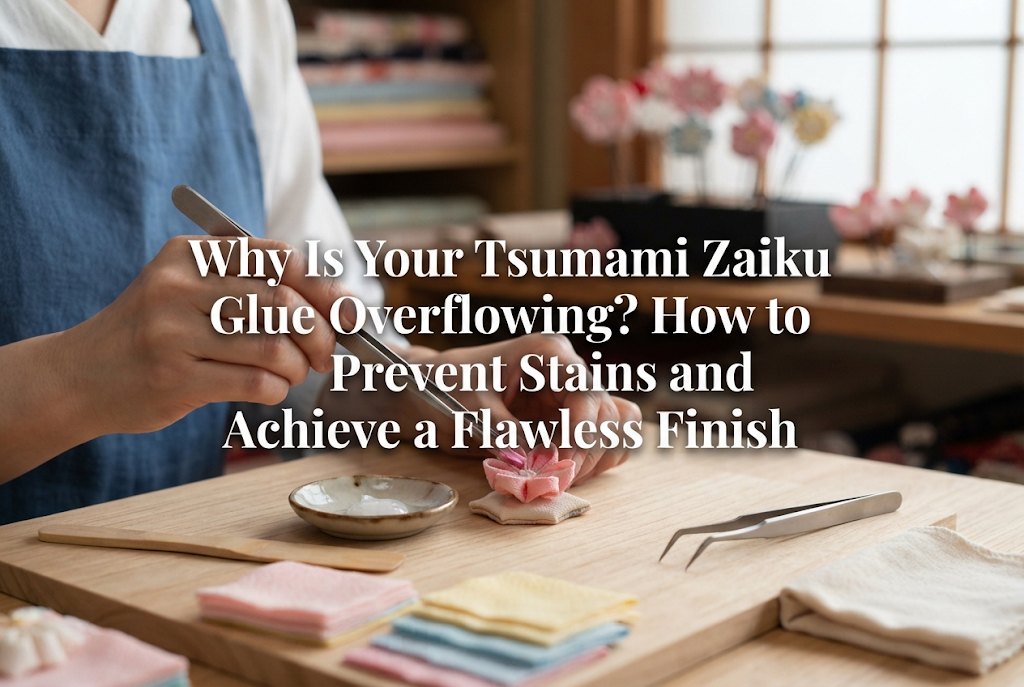
Cause: Applying too much glue.Solution: Never squeeze glue directly from the nozzle onto your fabric! Dispense a small amount onto a scrap piece of plastic or cardstock, then pick up a tiny pinpoint of glue using a bamboo skewer or toothpick. A minuscule amount is more than enough for tsumami zaiku.
Cause: Handling the piece before it completely dried.Solution: Unlike glue, starch paste takes half a day to a full 24 hours to cure completely. Even if the surface looks dry, the center may still be damp. Allow your project to rest in a well-ventilated area away from direct sunlight for at least a full day. Once fully cured, starch paste creates a surprisingly strong and lasting bond.
If you are wondering where to begin as a beginner, here is my recommendation:
If you want to start casually without buying too many specialized tools, start with rayon chirimen and quick-drying craft glue! It requires minimal setup and cleanup, and you get the immediate satisfaction of holding a finished piece on the same day.
Once you fall in love with tsumami zaiku and want to make larger pieces, work with delicate silk habutae, or take time perfecting petal placement, step up to traditional starch paste techniques!
Personally, my favorite approach is the "Hybrid Method":
By combining both adhesives strategically, you can craft stress-free while achieving professional aesthetics and long-lasting durability!
Starch paste allows for delicate, nuanced petal placement and soft textures, while craft glue provides rapid workflow, ease of use, and dependable strength for modern materials.
Rather than deciding which one is "better," learning to pick the right adhesive for your materials and goals will make your tsumami zaiku journey far smoother and more rewarding.
Feel free to share this guide with your fellow crafters! Happy making, and see you in the next article! — Yassy from Crafters


For example, if you are looking for articles about mizuhiki, try searching for "mizuhiki"; if you are interested in tools, try keywords like "nippers" or "pliers."
