Why Is Your Tsumami Zaiku Glue Overflowing? How to Prevent Stains and Achieve a Flawless Finish
yassy
Crafters!

Hello, craft lovers! It’s Yassy from Crafters! (・∀・)
Tsumami zaiku is the traditional Japanese craft of pinching and folding tiny squares of chirimen rayon or silk fabric to create delicate blossoms, ranging from charming little buds to magnificent large flowers. After spending so much time and care crafting each petal, watching these flowers bloom is an absolute delight.
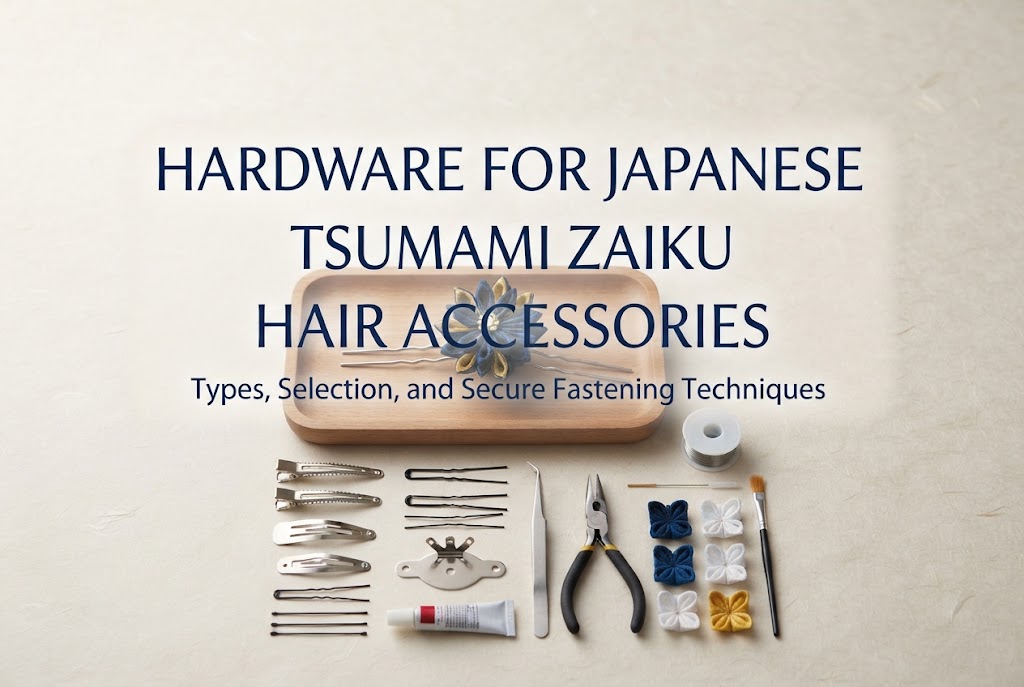
However, when it comes to turning your finished flowers into wearable hair accessories, have you ever found yourself wondering which hardware or finding to use? Browse any craft store or online shop, and you will see a dizzying array of options: hair combs, U-pins, traditional kanzashi sticks, alligator clips, and more.
Beginners often stumble on questions like: "Which hardware should I use for a large statement piece?" "What won't slip out of fine hair or a child's hair?" or "What if my flower snaps right off the metal base?"
Choosing the right hardware isn't just about picking something to stick into hair. Selecting the right finding based on the size and weight of your piece, the wearer's hairstyle, and the occasion is the single most important factor in making professional-quality, durable hair ornaments that are comfortable to wear and won't wobble. In this guide, I will thoroughly explain the typical types of hardware used for Japanese tsumami zaiku hair accessories, how to choose the right one, and professional techniques to ensure your flowers stay permanently attached!
There are several classic findings used in tsumami zaiku hair ornaments. Each has its own strengths and ideal flower sizes. Let's explore the characteristics and best uses of each.
The wire or sheet-metal hair comb is the most popular finding used for authentic, statement-sized tsumami zaiku hairpieces. You secure it by sliding its prongs directly into styled hair. Combs vary in size depending on the number of prongs (teeth).
Metal combs (usually available in gold, silver, or black) typically come with 5, 10, 15, or 20 prongs. Smaller 5-prong combs work well for accent pieces, but grand ornaments for events like Coming of Age Day (Seijin-shiki) or Shichi-Go-San usually call for 10- to 20-prong combs. The more prongs a comb has, the wider its top mounting bar, allowing it to firmly support heavier, elaborate arrangements.
The biggest advantage of a comb is its superior stability and holding power. Even if you assemble multiple large blossoms or attach long dangling streamers (sagari), sliding the prongs into the base of a hair bun or an updo locks the ornament firmly in place without wobbling. The wide top bar also makes it easy to anchor multiple floral stems and wires together, creating dynamic, three-dimensional arrangements.
A common mistake beginners make is attempting to insert a comb into smooth, loose, unstyled hair. Combs require the grip of tied hair, braids, or structured updos to stay put; in completely loose hair, they will easily slide right out. Additionally, because the metal surface is slick, gluing tsumami flowers directly onto the bare metal can cause them to pop off upon impact. Always wrap the comb base with fabric or prepare a cloth foundation first, as explained below.
In professional hairstyling, sets mounted on U-shaped hairpins (U-pins) are invaluable. They are the ideal choice for small accent flowers that sit alongside a main ornament or scatter throughout an updo.
U-pins are formed by bending a thin metal wire into a U-shape, available in various lengths and thicknesses. For tsumami zaiku, steel U-pins measuring around 5 cm to 7 cm (about 2 to 2.8 inches) are standard. Their greatest appeal is styling flexibility. If you mount individual small flowers on U-pins, the hairstylist can place them wherever they look best—clustered tightly on one side or scattered delicately across braids and curls.
Beyond single blossoms, mounting a small branch of buds or a standalone dangling sagari pendant on a U-pin is a fantastic idea. Combining these with a primary comb piece gives you a versatile, layered set with a polished, professional look.
To attach a flower to a U-pin, take the floral stem wire extending from the flower's base, align it with the curved top bend of the U-pin, and tightly wrap them together using floral tape. Wrapping the wire firmly around the pin legs prevents the flower from spinning or twisting loosely. Don't rely solely on the tape's adhesive; the physical wire wrap provides the real holding strength.
For short hair that cannot be tied up, or for babies and young children with fine, soft hair, alligator hair clips (called yattoko pins in Japan) offer unmatched convenience.
Shaped like a beak, you squeeze the clip to open it and clamp it directly onto the hair. Many styles feature a flat upper surface, making it easy to glue down the flat base of a tsumami zaiku piece. The key advantage is that the wearer does not need tied hair or an updo. They work wonderfully on bob cuts and short hairstyles. For 3-year-old Shichi-Go-San celebrations, where toddlers struggle to sit still, parents love these clips because they can be snapped on or taken off in a single second.
Bare metal alligator clips can slip out of very fine, sleek hair. To prevent this, wrap and glue grosgrain ribbon or chirimen fabric around the clip. This fabric wrap adds friction, hides the industrial metal for a softer look, and elevates the piece's quality. Adding a tiny strip of non-slip silicone tape inside the clip teeth ensures it stays put even in an infant's ultra-fine hair.
When most people envision tsumami zaiku, they picture a traditional kanzashi hairpin. Made of metal, wood, or resin, kanzashi instantly evoke classic Japanese beauty.
Kanzashi generally come in two designs: single-prong and double-prong.
Using a hirauchi kanzashi finding, which features a round, flat plate at the tip, allows you to glue the flat backing of your tsumami flower directly onto the mount. Selecting antique gold or silver finishes adds a dignified, heirloom-quality touch.
There are also convenient hardware options designed for casual, everyday enjoyment beyond traditional occasions.
Familiar snap-action hair clips are wonderful for tiny tsumami ornaments made for babies and toddlers. By encasing the metal clip in chirimen fabric before gluing down the flower, you create a gentle, scalp-safe accessory.
Featuring an alligator clip alongside a standard safety brooch pin, 2-way findings are popular in handmade markets. Customers can wear them in their hair, clip them to an obi cord (as an obidome accent), attach them to a handbag, or pin them to a jacket lapel. They are beloved by anyone who wants to enjoy their handmade piece long after the main event is over.
Now that you know the hardware types, how do you decide which one to use? The most critical rule is balancing the finding with the size and weight of your piece.
Intricate blossoms exceeding 7 cm (around 2.8 inches) in diameter or arrangements combining several flowers carry noticeable weight. Attaching a heavy piece to a tiny U-pin or a flimsy clip will cause it to droop or fall. For large, weighty creations, choose a 15- to 20-prong comb or a sturdy double-prong kanzashi. The wide prong base anchors securely into the hair, keeping the ornament upright all day.
For small flowers around 2 cm to 4 cm (about 0.8 to 1.6 inches) or small sprigs of two to three buds, U-pins or small alligator clips are ideal. When crafting ornaments for graduation hakama or Coming of Age ceremonies, crafting one large centerpiece on a comb and three to five separate accent flowers on individual U-pins is the most versatile and foolproof combination.
The wearer's age, hairstyle, and the occasion also dictate the right choice.
Young children have fine, delicate hair, and they often fidget or touch their accessories. Many attend celebrations with natural short or bobbed hair rather than elaborate updos. Avoid sharp metal sticks or heavy combs. Ribbon-wrapped alligator clips with non-slip padding or fabric-covered snap clips are the safest, kindest choices—lightweight, gentle, and attached in seconds.
When hair is formally styled into an updo by a professional, the traditional "Comb + U-Pin Set" shines brightest. For traditional Japanese hairstyles (such as the Katsuyama style), combining front-insert combs, back combs, and dangling kanzashi creates breathtaking, ceremonial luxury.
If a friend or client asked me to make a tsumami zaiku hairpiece for a graduation ceremony paired with a hakama, I would choose this set configuration:
Dividing the set across different findings lets the wearer or stylist adjust the arrangement's volume to fit any hairstyle. Whether gifting or selling your creations, this combination yields great satisfaction!
The most dreaded failure for any tsumami zaiku maker is a flower falling off its metal finding mid-event. Gluing fabric directly to smooth, non-porous metal rarely lasts, as the joint lacks friction. Here is the step-by-step technique professionals use for an unbreakable hold.
Always build a firm base on the back of your tsumami flower. Cut a neat circle of sturdy cardstock (such as clean milk carton card or heavy paper) and wrap it in a slightly larger circle of chirimen fabric, gluing the edges down neatly on the reverse. This base stabilizes the petals and creates a smooth, uniform surface to bond with the finding.
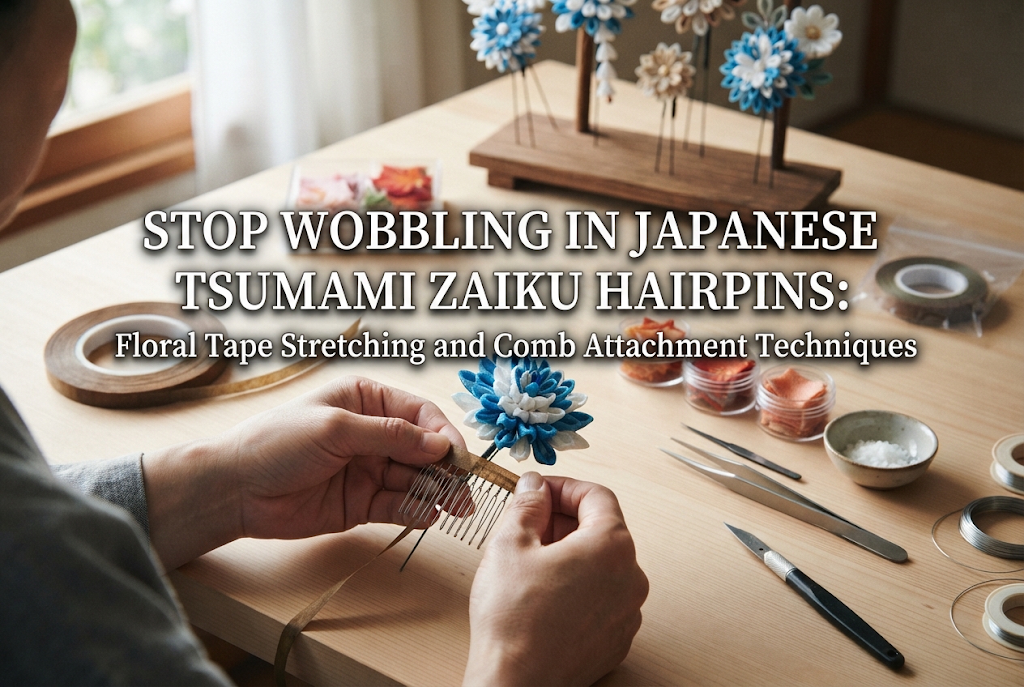
Prepare the metal finding as well. Take the flat mounting bar of a comb or the upper surface of a clip, cover it with strong double-sided tape, and wrap a strip of chirimen fabric or ribbon tightly around it. Creating a fabric-to-fabric contact point is the key. Adhesive bonds significantly stronger when joining fabric to fabric than when bonding fabric directly to slick metal.
For heavier comb ornaments, do not rely on glue alone—add a physical wire connection. When creating the flower's backing base, embed paper-covered craft wire (jimaki wire) securely inside. Thread those wire ends through the teeth of the comb, pulling tightly, and twist them around the comb's spine using pliers. After securing the wire mechanically, apply your adhesive over the wrapped joint. The result is a rock-solid ornament that will not budge even when pulled.
Your choice of glue also impacts durability. Here are three dependable options for mounting tsumami zaiku:
Here is a quick recap of the essential points:
Perfecting your petal folds is wonderful, but properly finishing your work with the right hardware turns it into a functional, heirloom-worthy accessory that shines when worn. Keep the wearer's hairstyle, comfort, and occasion in mind, and have fun creating your one-of-a-kind tsumami zaiku accessories!
If you found this guide helpful, please share it with your fellow crafting friends! See you in the next post—this was Yassy from Crafters!


For example, if you are looking for articles about mizuhiki, try searching for "mizuhiki"; if you are interested in tools, try keywords like "nippers" or "pliers."
